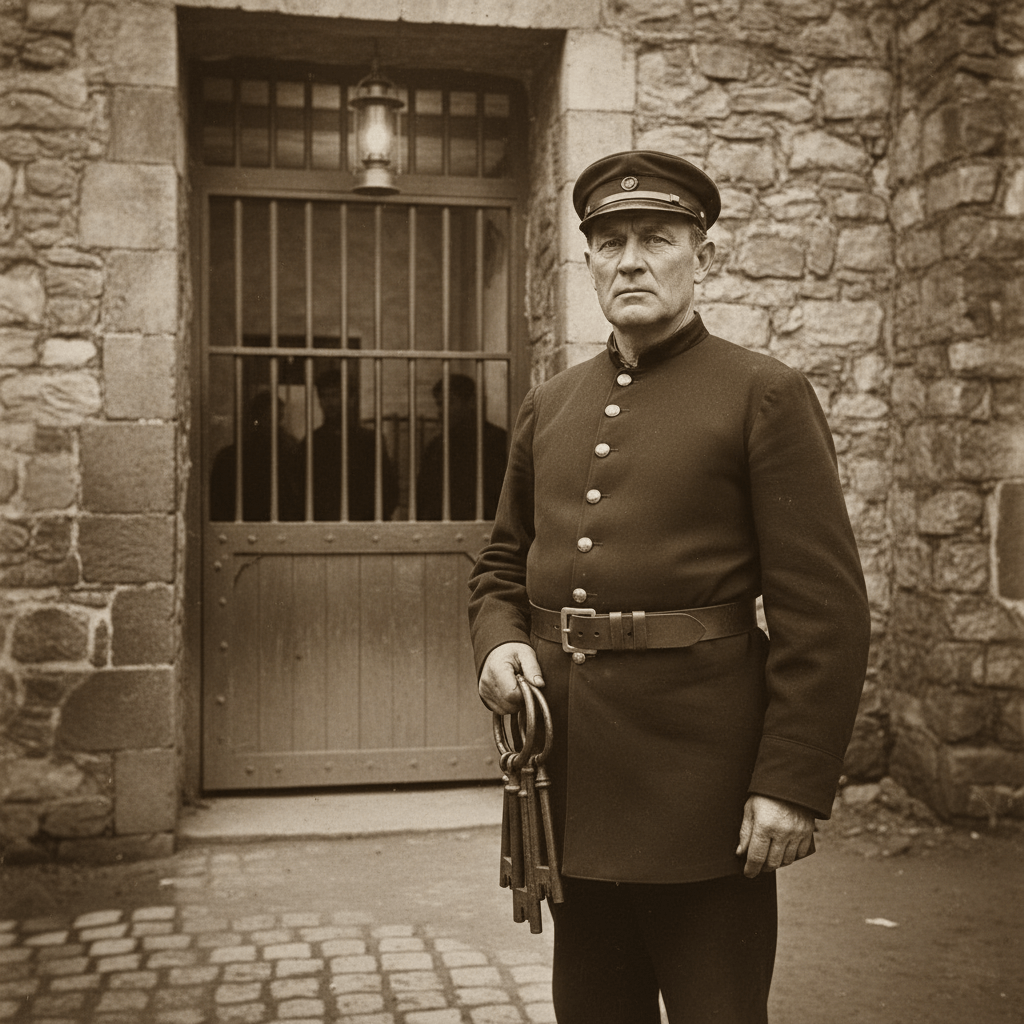
About the Turnkey Profession
The role of a turnkey was pivotal in the management of prisons and correctional facilities during the Victorian Era, a time marked by significant social reform and a burgeoning interest in criminal justice. A turnkey was essentially a custodian of the prison, responsible for the daily oversight of inmates and the maintenance of order within the facility. This position required a unique blend of authority, vigilance, and interpersonal skills, as turnkeys were often the first line of contact between the inmates and the outside world. They were tasked with ensuring that the rules of the prison were followed, which included monitoring inmate behavior, conducting headcounts, and facilitating the daily routines of the prisoners, such as meals and exercise.
Turnkeys also played a crucial role in the rehabilitation process, as they were often involved in the educational and vocational programs offered to inmates. Their interactions could significantly influence the inmates' experiences and outcomes, making their role both challenging and impactful. The job was not without its dangers; turnkeys had to navigate the complexities of inmate relationships and the potential for violence, requiring them to maintain a firm yet fair demeanor.
As the Victorian Era progressed, the role of the turnkey began to evolve, reflecting broader changes in societal attitudes towards crime and punishment. The introduction of more structured prison systems and the rise of professional correctional officers began to overshadow the traditional turnkey role, leading to its gradual decline.
Day in the Life of a Turnkey
Morning: The Start of Duty
The day for a turnkey typically began at dawn, with the first task being a thorough inspection of the prison facilities. This included checking the locks on cells, ensuring that all inmates were accounted for, and assessing the overall security of the premises. After the morning headcount, the turnkey would oversee the distribution of breakfast, ensuring that each inmate received their allotted meal while maintaining order in the dining area.
Midday: Monitoring Activities
As the day progressed, the turnkey's responsibilities expanded to include supervising the inmates during their daily activities. This could involve leading them to the exercise yard, where they would engage in physical activity under the watchful eye of the turnkey. During this time, the turnkey would also be responsible for mediating any disputes that arose among inmates, using their skills in conflict resolution to maintain peace.
Afternoon: Administrative Duties
In the afternoon, the turnkey would often have administrative tasks to complete, such as documenting inmate behavior, reporting any incidents to the prison warden, and preparing for any scheduled visits from family members or legal representatives. This aspect of the job required strong organizational skills and attention to detail, as accurate records were essential for the management of the facility.
Evening: Closing Duties
As the day came to a close, the turnkey would conduct another headcount to ensure that all inmates were present and accounted for. They would then oversee the evening meal and prepare the inmates for lockdown. This involved securing the cells and ensuring that all inmates were settled in for the night, often requiring a final round of checks to maintain security before the end of their shift.