
Victorian Era
Towel Horse
An extinct profession from Victorian Era that became obsolete due to technological advancement and societal change.
Media Gallery
About the Towel Horse Profession
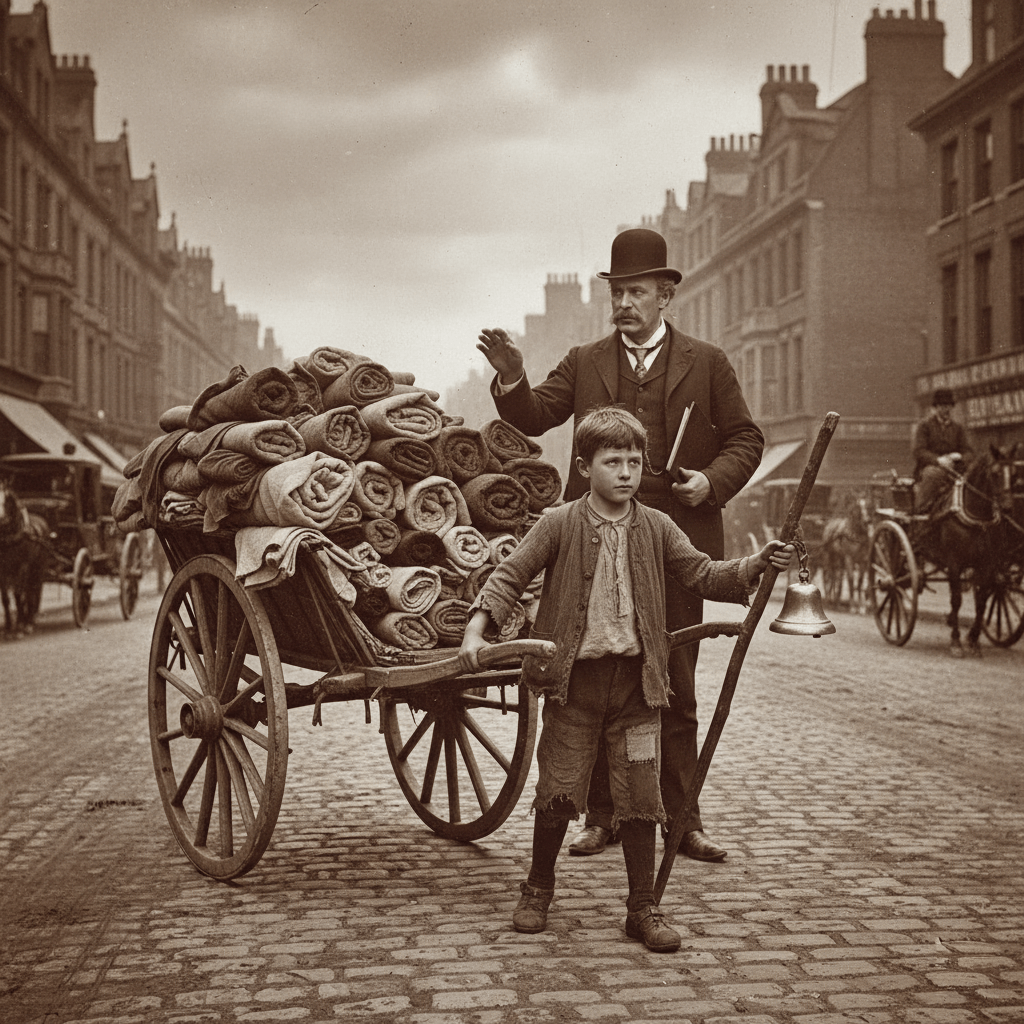
The towel horse was a common fixture in Victorian households, serving as a practical solution for drying and airing out freshly laundered towels. This job involved the creation and maintenance of these wooden frames, which were designed to hold towels in a way that maximized air circulation and minimized mildew. Craftsmen known as towel horse makers would construct these items from sturdy wood, often incorporating decorative elements to enhance their aesthetic appeal. The towel horse was not merely a functional item; it was a symbol of domesticity and cleanliness in an era that placed great emphasis on hygiene and the proper management of household chores.
In the bustling homes of the Victorian middle class, the towel horse was an essential accessory, often placed in bathrooms or near wash basins. It allowed families to dry their towels efficiently, reflecting the era's values of order and propriety. The towel horse was typically designed with multiple rungs or bars, allowing several towels to be hung at once, and was often collapsible for easy storage.
As the Victorian Era progressed, the towel horse became a staple in many households, with variations in design reflecting the tastes and preferences of the time. Craftsmen took pride in their work, often handcrafting each piece with attention to detail, ensuring that the towel horse was both functional and visually appealing.
However, as the 20th century approached, the advent of modern plumbing and the introduction of electric dryers began to change domestic practices. The need for towel horses diminished as households adopted new technologies that made drying towels faster and more efficient. The towel horse, once a common sight in homes, gradually faded into obscurity, becoming a relic of a bygone era.
Day in the Life of a Towel Horse Maker
Morning: Crafting the Frame
The day begins early for a towel horse maker, often at dawn. The workshop is filled with the scent of freshly cut wood, and the sound of saws and chisels fills the air. The craftsman selects high-quality timber, typically oak or pine, known for its durability and resistance to moisture. Using a combination of hand tools and simple machinery, he measures and cuts the wood into precise lengths, preparing the frame that will support the towels.
Midday: Assembly and Finishing Touches
As the sun rises higher, the craftsman assembles the pieces, carefully joining them with dowels and glue to ensure stability. He takes pride in the craftsmanship, often adding decorative carvings or a coat of varnish to enhance the appearance of the towel horse. This part of the day is labor-intensive, requiring both skill and patience as he ensures that each joint is secure and the finish is flawless.
Afternoon: Quality Control and Delivery
After lunch, the craftsman inspects his completed towel horses, checking for any imperfections. Once satisfied, he prepares them for delivery to local households or shops. This may involve loading them onto a horse-drawn cart, a common mode of transport at the time. The afternoon is often spent visiting clients, discussing custom orders, and building relationships within the community.
Evening: Record Keeping and Planning
As the day winds down, the towel horse maker returns to his workshop to record sales and plan for the next day. He reflects on the designs that have been popular and considers new ideas to attract more customers. The evening is a time for creativity, as he sketches out potential new designs that could appeal to the evolving tastes of Victorian households.
Related Exhibits
Ice Cutter
In the 19th century, before the advent of modern refrigeration, the Ice Cutter was a vital occupation, especially in regions where lakes and rivers froze during the winter months. These skilled laborers harvested ice from frozen bodies of water, which was then stored in icehouses and used to preserve food and cool drinks in the sweltering summer heat. The process was labor-intensive and required not only physical strength but also a keen understanding of the ice's thickness and quality. Ice was cut into large blocks, often weighing several hundred pounds, and transported to markets and homes, where it played a crucial role in daily life. The Ice Cutter's work was not just about brute force; it involved precision and technique to ensure that the ice remained intact during the cutting and hauling process. As the demand for ice grew, so did the complexity of the job, with cutters often working in teams to maximize efficiency and safety.
Knife Grinder
The knife grinder was a skilled tradesperson responsible for sharpening and honing blades, from kitchen knives to industrial cutting tools. This occupation flourished during the Industrial Revolution, a period marked by rapid technological advancement and a growing demand for precision tools in both domestic and industrial settings. Knife grinders often worked in small workshops or as itinerant tradespeople, traveling from town to town with their grinding wheels and tools, providing essential services to local communities. The sound of the grinding wheel, a rhythmic and reassuring noise, was a familiar part of daily life, as these craftsmen ensured that the tools of the trade remained sharp and effective. The process of knife grinding involved several steps. First, the grinder would assess the blade's condition, determining the level of wear and the type of sharpening needed. Using a foot-powered grinding wheel, the grinder would carefully sharpen the blade, maintaining the correct angle to ensure optimal cutting performance. After sharpening, the blade would often be polished to a fine finish, sometimes using a leather strop to achieve a razor-sharp edge. Knife grinders were not only skilled in their craft but also had a deep understanding of the various types of steel and the specific needs of different tools, making them invaluable to both domestic households and industrial operations.
Explore More Exhibits
Discover the full collection of past and future professions in The Jobs Museum.