
Victorian Era
Thimblerigger
An extinct profession from Victorian Era that became obsolete due to technological advancement and societal change.
Media Gallery
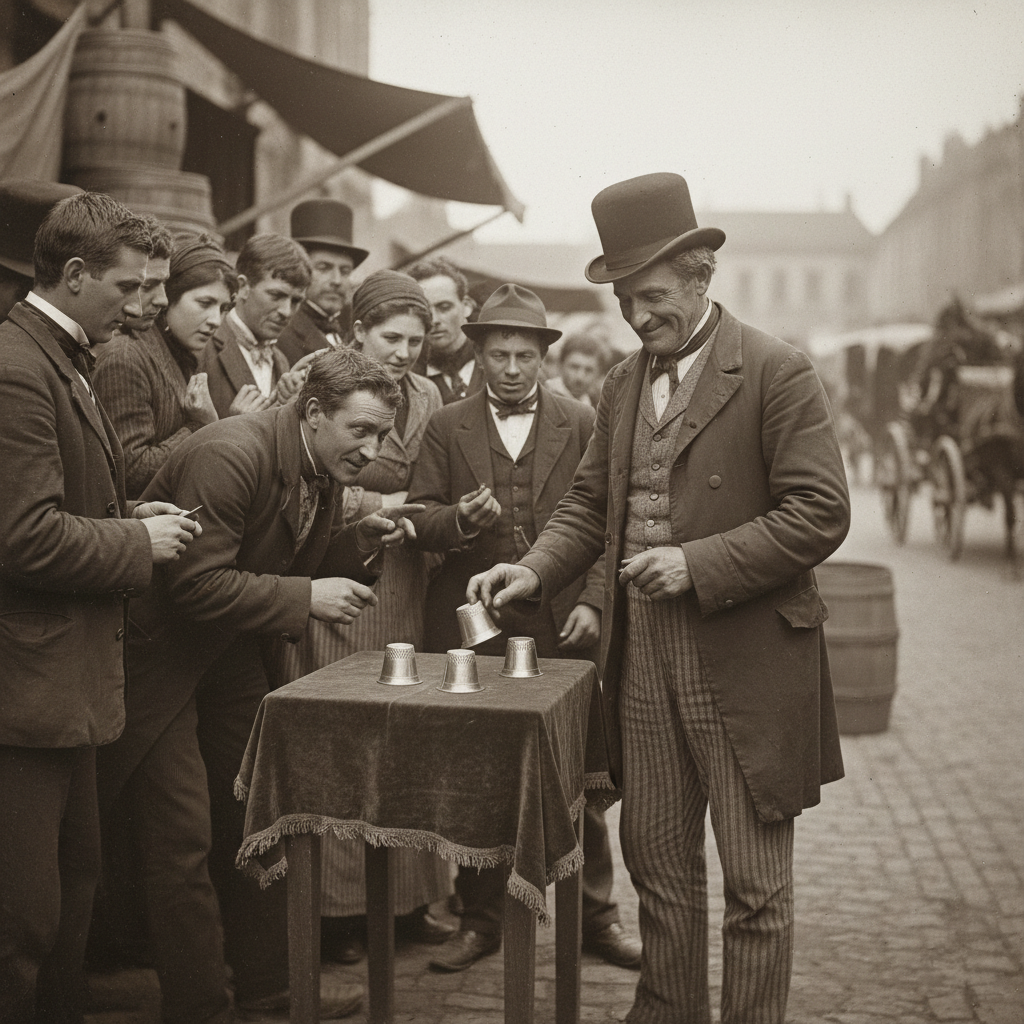
About the Thimblerigger Profession
The thimblerigger was a street performer and con artist who specialized in a game of chance known as the 'thimblerig' or 'three shells and a pea.' This game involved three thimbles (or cups) and a small object, typically a pea or a ball, which was hidden under one of the thimbles. The thimblerigger would skillfully shuffle the thimbles around, challenging onlookers to guess which thimble concealed the object. The allure of easy winnings drew crowds, and the thimblerigger would often employ sleight of hand to ensure that the game was rigged in their favor. This occupation thrived in the bustling streets and fairs of the Victorian era, where entertainment and gambling were popular pastimes. However, the thimblerigger was not merely a performer; they were also a master of deception, using charisma and cunning to manipulate the audience and create an illusion of fairness.
Day in the Life of a Thimblerigger
Morning: Setting Up the Game
As dawn breaks, the thimblerigger begins their day by selecting a prime location in a busy market square or near a popular public park. They set up a small table, laying out their tools: three thimbles, a small pea, and a cloth to catch the attention of passersby. The thimblerigger practices their shuffling technique, ensuring that their movements are smooth and deceptive. They may also prepare a few lines of banter to engage the crowd, drawing in curious onlookers.
Midday: The Performance
By midday, the thimblerigger is ready to perform. They call out to the crowd, inviting them to join in the game. With a confident smile, they begin to shuffle the thimbles, their hands moving with practiced speed. The crowd watches intently, some eager to place bets. The thimblerigger uses misdirection, occasionally glancing at the audience to gauge their reactions and build excitement. As the game progresses, they may allow a few participants to win small amounts, creating an illusion of fairness and encouraging more bets.
Afternoon: The Con
As the day continues, the thimblerigger becomes more aggressive in their tactics. They may employ accomplices in the crowd to feign interest and excitement, further enticing others to join in. The thimblerigger’s sleight of hand becomes more pronounced, ensuring that the pea is never where the players believe it to be. As the sun begins to set, the thimblerigger counts their earnings, often pocketing a significant amount from unsuspecting players.
Evening: Packing Up
As night falls, the thimblerigger packs up their tools, often moving to a different location to avoid law enforcement or angry players who may have lost money. They reflect on the day’s earnings, planning for the next day’s performance. The thrill of the game and the art of deception keep them returning to the streets, despite the risks involved.
Related Exhibits
Knitting Mill Worker
The knitting mill worker played a crucial role in the textile industry during the Industrial Revolution, a period marked by rapid industrial growth and technological innovation. These workers were primarily responsible for operating knitting machines that produced a variety of knitted goods, including socks, sweaters, and other garments. The work was often performed in large factories, known as knitting mills, where rows of machines hummed with activity, creating a rhythmic backdrop to the labor-intensive environment. Workers were typically assigned to specific machines, where they would monitor the knitting process, troubleshoot any issues, and ensure that the quality of the output met the factory's standards. The job required a keen eye for detail, as even a small mistake could result in significant waste of materials and time. Knitting mill workers were often women and children, who were drawn to the mills by the promise of steady wages. The work was physically demanding, requiring long hours of standing and repetitive motion, which could lead to fatigue and injury. Despite the harsh conditions, knitting mills provided a vital source of income for many families during a time when economic opportunities were limited, particularly for women. The rise of the knitting mill worker was emblematic of the broader changes occurring in society, as traditional hand-knitting practices were replaced by mechanized production, leading to increased efficiency and lower costs for consumers.
Typist Pool Worker
The Typist Pool Worker was a vital cog in the machinery of mid-20th century office life, particularly in the bustling corporate environments of the Post-War Era, from the late 1940s to the early 1980s. These skilled individuals were responsible for producing typed documents, correspondence, and reports, often under tight deadlines. They worked in a shared office space known as a 'typist pool,' where multiple typists would be stationed at rows of typewriters, each contributing to the efficiency of the office. The typist pool was a reflection of the era's burgeoning corporate culture, where the demand for clerical work surged as businesses expanded in the post-war economic boom. The role required not only speed and accuracy in typing but also a keen understanding of office protocols and etiquette. Typist Pool Workers were often the first point of contact for incoming correspondence, and their ability to produce clear, professional documents was crucial for maintaining the image of the organization. They utilized carbon paper for duplicating documents and were adept at using various typewriter models, each with its own quirks and features. The job was often seen as a stepping stone for women entering the workforce, providing them with financial independence and a foothold in the corporate world.
Explore More Exhibits
Discover the full collection of past and future professions in The Jobs Museum.