
Victorian Era
Leech Collector
An extinct profession from Victorian Era that became obsolete due to technological advancement and societal change.
Media Gallery
About the Leech Collector Profession
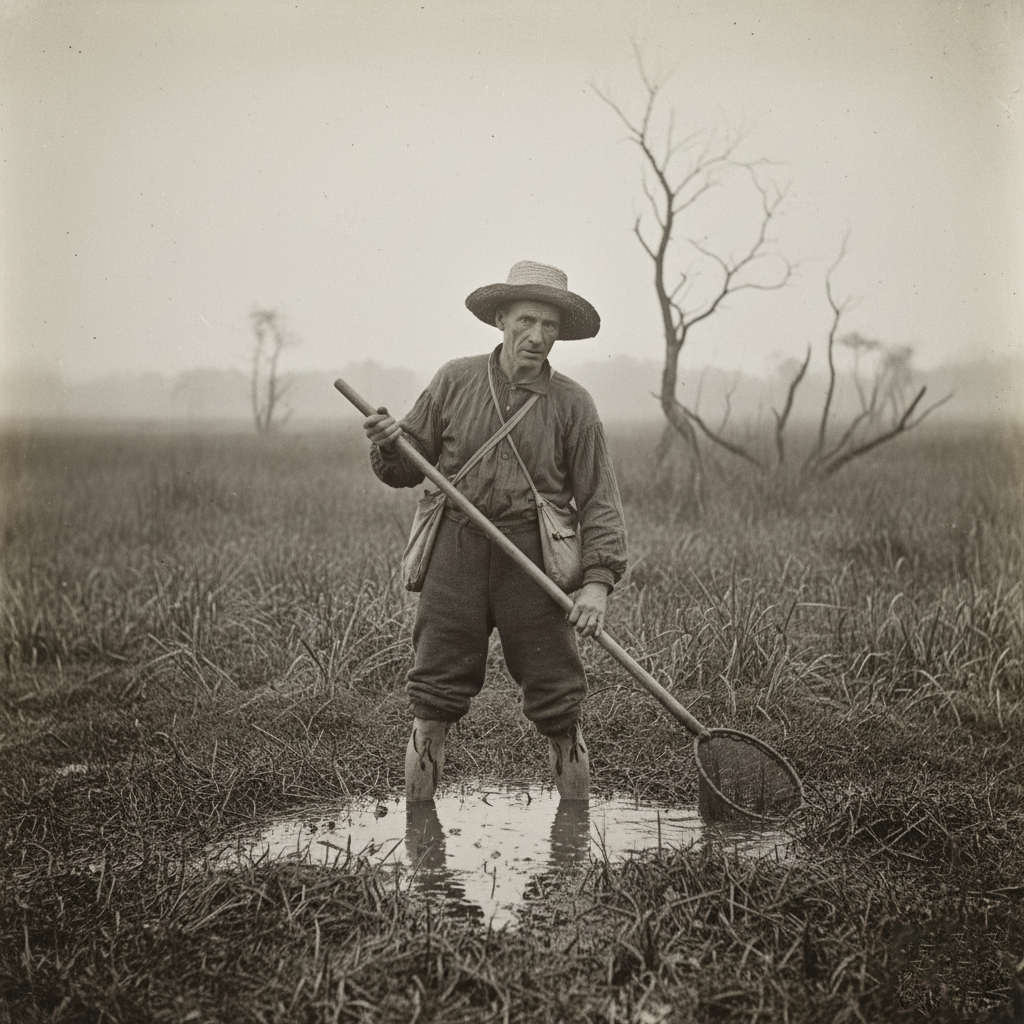
In the Victorian Era, the leech collector played a crucial role in the burgeoning field of medicine. These individuals were tasked with harvesting leeches from freshwater bodies, primarily for use in bloodletting—a common medical practice of the time. Leeches were believed to cure a variety of ailments by drawing out 'bad blood,' and their demand surged as the medical community embraced this practice. Leech collectors would often wade into muddy waters, using nets and their bare hands to gather these slimy creatures, which were then sold to physicians and apothecaries. The job required not only physical endurance but also a keen understanding of the leeches' habitats and behaviors, as well as the ability to handle them without causing harm to themselves or the creatures.
The leech collector's work was often conducted in remote, marshy areas, where they would spend hours in the water, sometimes in harsh weather conditions. The collectors would return home with buckets filled with leeches, which they would keep alive in water-filled containers until sold. The job was labor-intensive and often poorly paid, but it was essential in an era when medical practices relied heavily on the use of leeches for therapeutic purposes.
As the medical field evolved and the understanding of human anatomy and disease progressed, the practice of bloodletting fell out of favor. By the late 19th century, with the advent of modern medicine and more effective treatments, the demand for leeches diminished significantly, leading to the decline of this once vital occupation.
Day in the Life of a Leech Collector
Early Morning: The Journey Begins
As dawn breaks, the leech collector rises before the sun, preparing for a long day ahead. Clad in sturdy boots and weather-resistant clothing, they gather their tools: a net, a bucket, and a small knife for handling the leeches. With a sense of purpose, they set out towards the nearest freshwater marsh, often traveling several miles on foot. The air is crisp, and the sounds of nature awaken as they approach their destination.
Mid-Morning: The Harvest
Upon reaching the marsh, the collector carefully surveys the water, looking for signs of leeches. They wade into the muddy shallows, feeling the cool water against their legs. Using the net, they sweep through the water, searching for the telltale wriggle of leeches. Each successful catch is placed into the bucket, which is filled with water to keep the leeches alive. The collector must be patient and observant, as leeches can be elusive, hiding among rocks and vegetation.
Afternoon: The Return
After several hours of collecting, the leech collector returns home, their bucket now heavy with the day’s haul. They carefully transfer the leeches into larger containers, ensuring they have enough water and oxygen. This part of the job requires gentle handling, as the leeches are delicate and can easily be harmed. Once settled, the collector cleans their tools and prepares for the next day’s work.
Evening: The Market
In the evening, the collector may visit a local market or apothecary to sell their leeches. Here, they interact with physicians and other buyers, discussing the quality and health of their catch. The price of leeches can vary, depending on demand and the collector’s reputation. After selling their leeches, they return home, exhausted but satisfied with a day’s work, ready to rest and prepare for another day in the marshes.
Related Exhibits
Rag-and-Bone Man
The Rag-and-Bone Man was a familiar figure in the streets of Victorian and Edwardian England, embodying the spirit of recycling long before it became a modern environmental concern. These itinerant traders collected unwanted items from households, ranging from old clothes and rags to bones and scrap metal. The rag-and-bone men played a crucial role in the economy of the time, as they provided a means for families to dispose of their waste while also offering a small income for themselves. They would often call out their trade with a distinctive cry, 'Rags, bones, and bottles!' as they pushed their carts through the neighborhoods, creating a sense of community and nostalgia for many.
Barber Surgeon
The barber surgeon was a unique figure in medieval society, serving as both a barber and a surgeon. This dual role emerged in the 12th century and persisted into the 17th century, reflecting the limited medical knowledge and the social structure of the time. Barber surgeons were responsible for a variety of tasks, including hair cutting, shaving, and performing surgical procedures such as bloodletting, tooth extraction, and even amputations. They were often the first point of contact for medical care in their communities, providing essential services in an era when formal medical training was scarce. The barber's pole, a symbol of their trade, features red and white stripes, representing blood and bandages, a nod to their surgical duties. Barber surgeons operated in a time when the boundaries between medicine and personal grooming were blurred. They were often found in small shops or stalls, where they would set up their equipment and await customers. The role required a blend of practical skills, a steady hand, and a certain level of anatomical knowledge, albeit rudimentary by modern standards. Despite their contributions, barber surgeons were often viewed with suspicion by the more educated physicians, who considered their practices to be unrefined and lacking in scientific rigor. As the Renaissance ushered in a new era of medical understanding and the establishment of formal medical schools, the role of the barber surgeon began to decline. The rise of trained physicians and surgeons, who had undergone extensive education and training, rendered the barber surgeon's services increasingly obsolete. By the 18th century, the profession had largely disappeared, replaced by specialized medical practitioners who could offer more effective and safer treatments.
Explore More Exhibits
Discover the full collection of past and future professions in The Jobs Museum.