
Victorian Era
Crossing Sweeper
An extinct profession from Victorian Era that became obsolete due to technological advancement and societal change.
Media Gallery
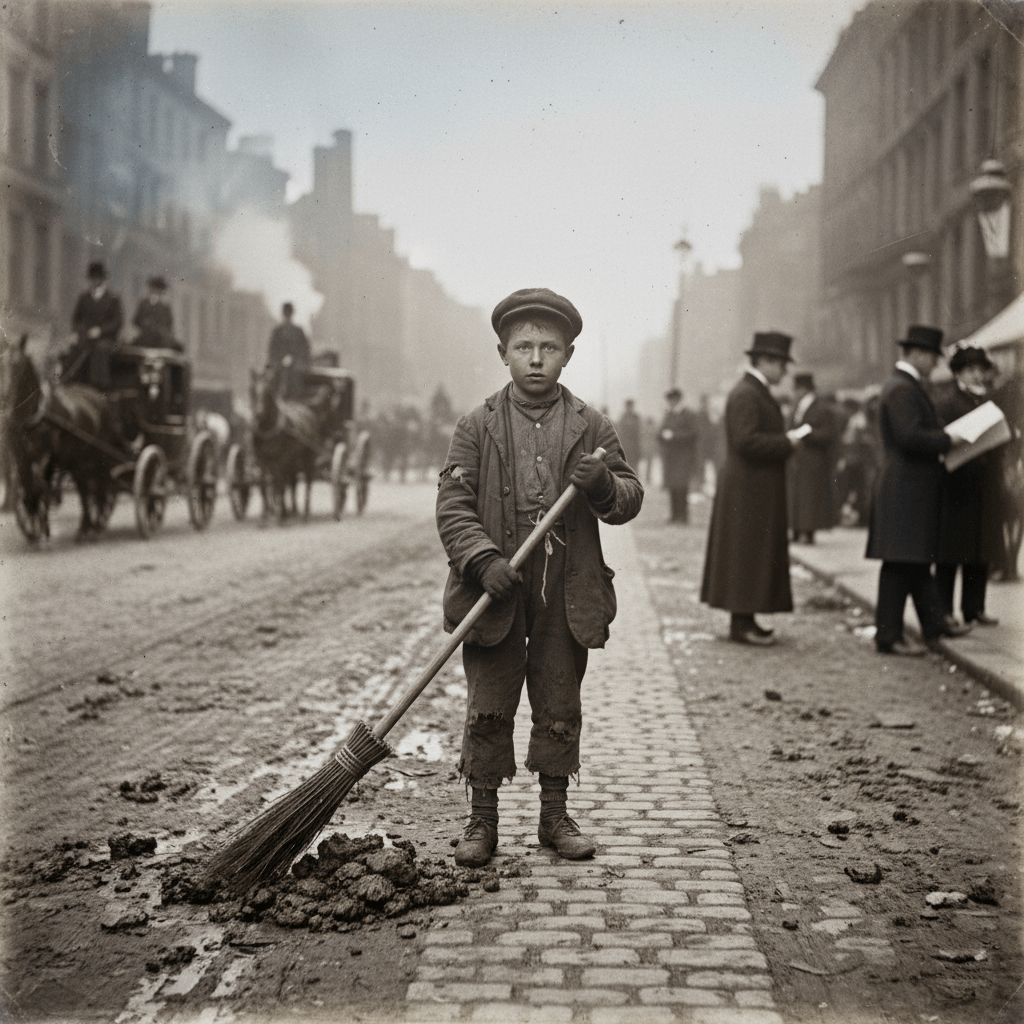
About the Crossing Sweeper Profession
The role of a Crossing Sweeper emerged in the bustling streets of Victorian England, where the rapid growth of urban centers and the advent of horse-drawn carriages created a unique set of challenges for pedestrians. Crossing Sweepers were tasked with keeping the roadways clean, particularly at busy intersections, where mud, horse manure, and debris accumulated. These workers, often children or the impoverished, would stand at street corners with brooms, ready to sweep away the filth to create a cleaner path for passersby. Their work was not only about cleanliness but also about ensuring the safety and comfort of those navigating the often chaotic urban landscape.
Crossing Sweepers were a common sight in cities like London, where the streets were teeming with traffic and the air was thick with the sounds of hooves and wheels. They would often wear tattered clothing, reflecting their low social status, and their earnings were meager, relying on the generosity of pedestrians who would toss coins in gratitude for a clean crossing. This job was emblematic of the social issues of the time, highlighting the stark divide between the wealthy and the working poor, as well as the challenges faced by children in the labor force.
Day in the Life of a Crossing Sweeper
Early Morning: Setting Up for the Day
As dawn breaks over the city, a Crossing Sweeper rises early to prepare for the day ahead. With a simple broom made of twigs bound together, they head to their designated corner, often near busy thoroughfares or marketplaces. The air is crisp, and the streets are still quiet, but this tranquility will soon give way to the hustle and bustle of the day.
Mid-Morning: The First Rush
By mid-morning, the streets are alive with activity. The Crossing Sweeper stands ready, broom in hand, as horse-drawn carriages and pedestrians begin to fill the roads. With each passing vehicle, they sweep away the remnants of the previous night’s rain and the inevitable droppings from horses. They must be vigilant, as a clean crossing is essential for the comfort of those who walk by. Occasionally, a passerby will toss a coin into their outstretched hand, a small reward for their labor.
Afternoon: The Heart of the City
As the sun reaches its zenith, the Crossing Sweeper continues their work, now amidst a throng of people. They engage in brief conversations with regulars, perhaps a shopkeeper or a local resident, who appreciate the effort to keep the streets clean. The work is physically demanding, requiring constant bending and sweeping, but the Sweeper remains focused, knowing that their livelihood depends on the cleanliness of the crossing.
Evening: Wrapping Up
As the day winds down and the sun sets, the streets begin to empty. The Crossing Sweeper takes a moment to survey their corner, ensuring it is tidy before leaving for the day. They gather their meager earnings, often just enough to buy a simple meal, and head home, tired but fulfilled, knowing they played a small part in the daily life of the city.
Related Exhibits
Breaker Boy
The role of a Breaker Boy emerged during the Industrial Revolution, particularly in the coal mining regions of the United States, where the demand for coal surged to fuel the burgeoning industries. Breaker Boys were young boys, often between the ages of 8 and 12, who worked in coal breaker facilities. Their primary responsibility was to separate impurities from coal, a crucial step in preparing the coal for market. This labor-intensive job involved sitting on a high platform above a conveyor belt, where they would pick out rocks, slate, and other debris from the coal as it passed by. The work was not only monotonous but also hazardous, as the boys were exposed to coal dust and the risk of injury from the machinery. Breaker Boys typically worked long hours, often from dawn until dusk, in poorly ventilated and unsafe conditions, earning a meager wage that reflected the exploitative labor practices of the time. The job was emblematic of the harsh realities faced by child laborers during the Industrial Revolution, highlighting the intersection of economic necessity and social injustice.
Aircraft Listener
The role of an Aircraft Listener emerged in the mid-20th century, primarily during the Post-War Era, when aviation technology was rapidly advancing and air traffic was increasing significantly. Aircraft Listeners were tasked with monitoring and interpreting the sounds of aircraft engines, particularly in military contexts, where understanding the nuances of engine noise could indicate the type of aircraft, its operational status, and even potential mechanical issues. This job was crucial for military intelligence and air traffic control, as it provided valuable information about aircraft movements and capabilities without the need for visual confirmation. Listeners would often work in pairs or small teams, stationed at strategic locations such as airbases or observation posts. They utilized their acute hearing to distinguish between different aircraft types, noting variations in sound that could indicate changes in speed, altitude, or engine performance. This auditory skill was honed through extensive training and experience, as the ability to identify aircraft by sound alone was a rare and valuable talent. The job required not only a keen ear but also a deep understanding of aviation technology and the specific characteristics of various aircraft engines. Listeners would often keep detailed logs of their observations, contributing to intelligence reports and operational assessments. The role was a blend of art and science, requiring both technical knowledge and an intuitive grasp of sound dynamics.
Explore More Exhibits
Discover the full collection of past and future professions in The Jobs Museum.