
19th Century
Phrenologist
An extinct profession from 19th Century that became obsolete due to technological advancement and societal change.
Media Gallery
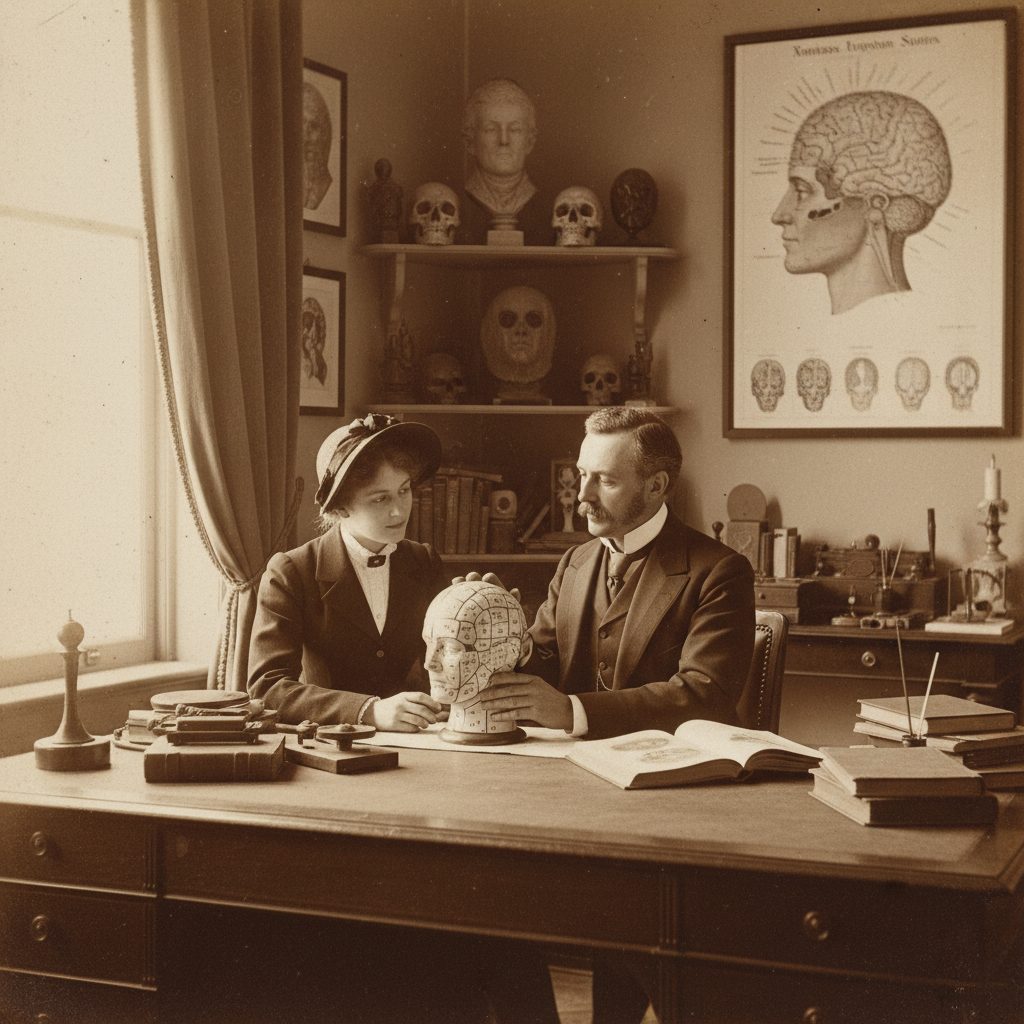
About the Phrenologist Profession
Phrenology, a now-discredited field of study, emerged in the early 19th century as a popular method for assessing personality traits and intellectual capabilities based on the shape and contours of the skull. Phrenologists believed that the brain was the organ of the mind, and that specific areas of the brain corresponded to different character traits. By examining the bumps and indentations on a person's skull, phrenologists claimed they could determine an individual's character, tendencies, and even potential for success in various fields.
Phrenologists often set up practices in urban centers, where they would offer consultations to clients seeking insights into their personalities or those of their children. They would use a combination of observation, intuition, and rudimentary anatomical knowledge to assess the skull's shape, often employing plaster casts or models to illustrate their findings. The practice was not only popular among the general public but also found its way into educational and occupational settings, influencing hiring practices and social interactions.
Despite its initial popularity, phrenology faced increasing skepticism from the scientific community as the 19th century progressed. Critics pointed out the lack of empirical evidence supporting its claims and the ethical implications of using skull shape to judge character. By the late 19th century, advances in psychology and neuroscience began to overshadow phrenology, leading to its decline and eventual obsolescence.
Day in the Life of a Phrenologist
Morning: Setting Up the Practice
A phrenologist's day typically began early, with the practitioner preparing their workspace. This involved arranging various tools of the trade, including a phrenological chart, calipers for measuring skull dimensions, and plaster for making casts. The phrenologist would also review their notes from previous consultations, ensuring they were ready to provide personalized insights to their clients.
Mid-Morning: Client Consultations
As clients arrived, the phrenologist would greet them warmly, often engaging in light conversation to put them at ease. The consultation would begin with a brief interview, where the phrenologist would ask about the client’s background, interests, and concerns. After gathering this information, the phrenologist would carefully examine the client's skull, using their calipers to measure specific areas and referencing the phrenological chart to interpret the findings. This process could take anywhere from 30 minutes to an hour, depending on the complexity of the case.
Afternoon: Record Keeping and Research
After the morning consultations, the phrenologist would spend time documenting their findings and recommendations. This included writing detailed reports for clients, which often included suggestions for personal development based on their phrenological profile. Additionally, the phrenologist might engage in research, reading the latest literature on phrenology and attending meetings with fellow practitioners to discuss advancements in the field.
Late Afternoon: Public Demonstrations
Many phrenologists also participated in public demonstrations to promote their practice. These events were often held in community centers or fairs, where the phrenologist would showcase their skills by analyzing the skulls of volunteers from the audience. This not only served as a marketing tool but also helped to educate the public about phrenology and its purported benefits.
Evening: Networking and Community Engagement
As the day wound down, the phrenologist might attend social gatherings or lectures, networking with other professionals in the field of alternative medicine. These interactions were crucial for building a client base and staying informed about the latest trends in phrenology and related disciplines.
Related Exhibits
Toad Doctor
The Toad Doctor was a unique and somewhat peculiar figure in medieval society, often found in rural areas where folk medicine thrived. This practitioner was believed to possess the knowledge and skills necessary to treat ailments using toads and their byproducts. The Toad Doctor's practice was steeped in superstition and folklore, with many believing that toads had magical properties that could cure various diseases. Treatments often involved the use of toad fat, which was rendered down and applied to wounds or ingested to alleviate ailments such as warts, skin conditions, and even more serious illnesses. The Toad Doctor would also prescribe charms and incantations, blending herbal remedies with the mystical qualities attributed to the toad. In a time when formal medical training was scarce, the Toad Doctor filled a vital niche in the community, often serving as the primary healthcare provider for the rural populace. Their role was not only to heal but also to provide comfort and reassurance in an era rife with superstition and fear of the unknown. Despite their importance, the practice of the Toad Doctor began to wane with the rise of more formalized medical practices and the advent of the scientific method, which sought to replace superstition with empirical evidence. As the understanding of human anatomy and disease progressed, the reliance on folk remedies and magical beliefs diminished, leading to the eventual extinction of this once-revered occupation.
Sin Eater
The role of the Sin Eater was a unique and somber occupation that emerged in medieval Europe, particularly in England and Wales, during the 11th to 19th centuries. Sin Eaters were individuals who performed a ritualistic act of consuming food, often bread and ale, placed on the body of a deceased person. This act was believed to absolve the deceased of their sins, allowing their soul to ascend to heaven. The Sin Eater was often a marginalized figure, sometimes a beggar or outcast, who took on this role for a small fee or in exchange for food. The practice was steeped in superstition and reflected the deep-seated beliefs about sin, guilt, and the afterlife prevalent in medieval society. The Sin Eater's work was not merely a job; it was a profound engagement with the community's spiritual beliefs. Families would hire a Sin Eater to ensure that their loved ones could pass into the afterlife unburdened by sin. This role was particularly significant in times of plague or death, when the community was desperate for solace and closure. The Sin Eater's presence at funerals was often met with a mix of reverence and fear, as they were seen as both a necessary part of the grieving process and a reminder of the community's own mortality.
Explore More Exhibits
Discover the full collection of past and future professions in The Jobs Museum.