
20th Century
Milkman
An extinct profession from 20th Century that became obsolete due to technological advancement and societal change.
Media Gallery
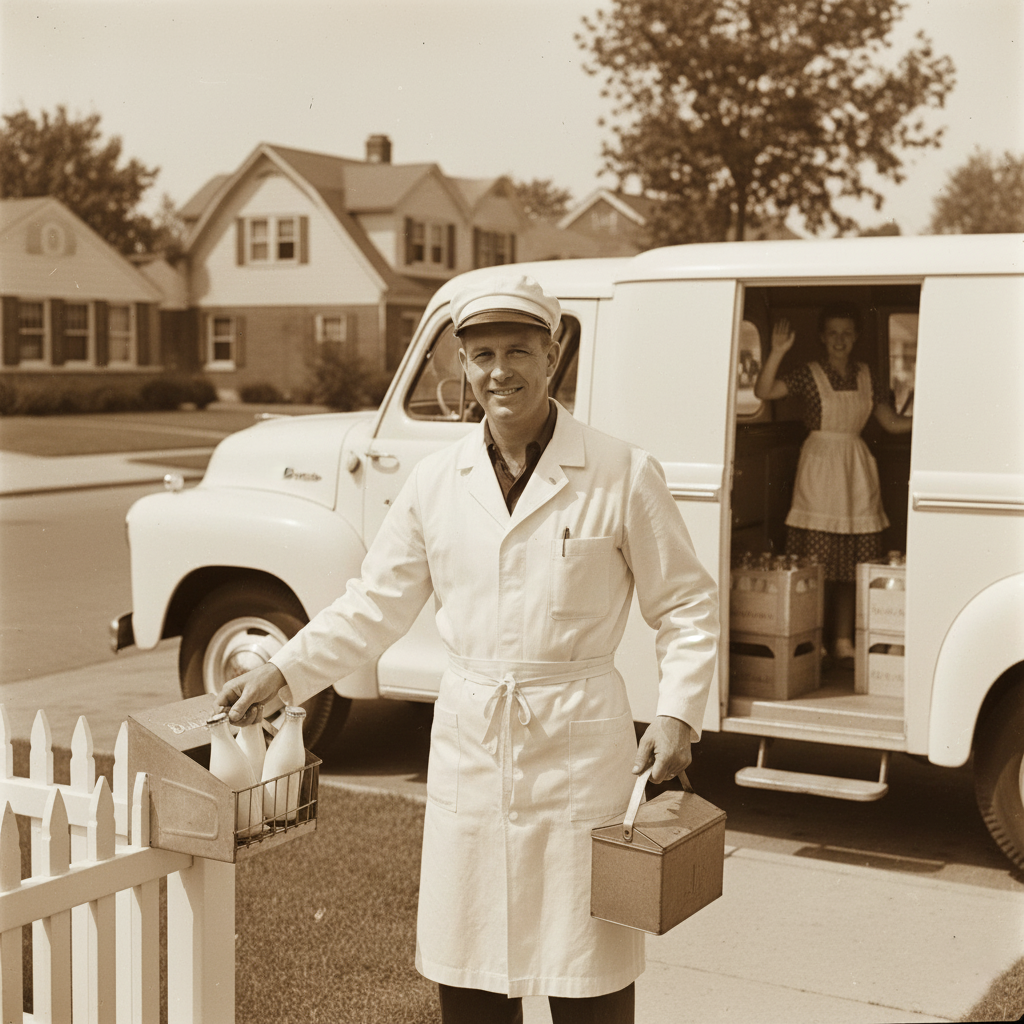
About the Milkman Profession
The milkman was a familiar figure in the neighborhoods of the 20th century, a symbol of a time when fresh dairy products were delivered directly to homes. Clad in a crisp uniform, often with a cap, the milkman would rise before dawn, preparing for a day of delivering fresh milk, cream, and other dairy products to families. The job was not merely about transportation; it was a vital service that ensured households received their daily supply of milk, often still warm from the farm. The milkman would navigate his route, typically using a horse-drawn cart or later, a motor vehicle, stopping at each home to leave bottles of milk on doorsteps, often exchanging empty bottles from the previous delivery. This daily ritual fostered a sense of community, as the milkman became a trusted figure, known by name to the families he served. The job required not only physical stamina but also a keen sense of time management and customer service, as the milkman had to maintain a strict schedule to ensure freshness and reliability.
Day in the Life of a Milkman
Early Morning: The Preparation
The day began before the sun rose, often around 4:00 AM. The milkman would arrive at the dairy, where he would load his cart with fresh milk bottles, cream, and sometimes eggs or butter, depending on the orders. Each bottle was carefully checked for quality, and the milkman would ensure that he had enough supplies for his route. The clinking of glass bottles and the low hum of the dairy machinery were the sounds of the early morning hustle.
Morning: The Route
By 5:00 AM, the milkman was on the road. With a clipboard in hand, he would follow a predetermined route, often on foot or with a horse-drawn cart in the earlier years, transitioning to a motor vehicle as the century progressed. The milkman would stop at each house, placing bottles on doorsteps, sometimes exchanging them for empty ones. This was a time for brief chats with residents, building rapport and trust. The morning air was crisp, and the streets were quiet, save for the soft sounds of the cart wheels and the occasional greeting from a neighbor.
Mid-Morning: Customer Relations
As the morning progressed, the milkman would often encounter children on their way to school or mothers preparing breakfast. He would take a moment to chat, answer questions, and sometimes even take special requests for the next delivery. This personal touch was a hallmark of the profession, as the milkman was not just a delivery person but a part of the community fabric.
Late Morning: Return to the Dairy
By 10:00 AM, the milkman would return to the dairy to restock and prepare for the next day. He would account for the bottles delivered and those returned, ensuring that inventory was managed efficiently. This was also a time for cleaning and maintaining the delivery vehicle, ensuring it was ready for the next day’s early start.
Afternoon: Administrative Duties
In the afternoon, the milkman would handle administrative tasks, such as billing customers and managing accounts. This aspect of the job required attention to detail and organizational skills, as he needed to keep track of payments and customer preferences. The day would typically end around 2:00 PM, allowing the milkman to rest before the next early morning shift.
Related Exhibits
Switchboard Night Watch
The Switchboard Night Watch was a crucial role in the early 20th century, particularly during the rise of telephone communication. As cities expanded and the demand for instant communication grew, telephone switchboards became the backbone of urban connectivity. The Switchboard Night Watch was responsible for overseeing the operation of these switchboards during the night hours, ensuring that calls were connected efficiently and that any issues were promptly addressed. This role required a keen sense of responsibility and a deep understanding of the switchboard's mechanics, as well as the ability to handle emergencies and troubleshoot problems in the dark hours of the night. Night watch operators worked in dimly lit rooms filled with the hum of electrical equipment and the soft clicks of switches being flipped. They were often the only person on duty, tasked with maintaining the flow of communication for hospitals, police stations, and other essential services that operated around the clock. The job was not only about connecting calls but also about providing a sense of security and reliability to the community, as the night watch was often the first point of contact in emergencies. As technology advanced, the need for manual switchboard operators diminished. The introduction of automated switching systems in the mid-20th century rendered the role of the Switchboard Night Watch obsolete, as machines could perform the tasks more efficiently and without the need for human oversight.
Armourer
The role of the armourer was pivotal in the medieval period, a time when warfare and personal protection were paramount. Armourers were skilled craftsmen responsible for creating, repairing, and maintaining the protective gear worn by soldiers and knights. Their work encompassed a variety of tasks, including forging metal plates, shaping chainmail, and crafting helmets, shields, and other defensive equipment. The craftsmanship of an armourer was not only functional but also often artistic, with intricate designs and embellishments that reflected the status and wealth of the wearer. The armourer’s workshop was a hub of activity, filled with the sounds of hammering metal, the glow of the forge, and the smell of heated iron. Each piece of armour was custom-fitted to the individual, ensuring both protection and mobility in battle. As warfare evolved, so too did the demands on armourers, who had to adapt their techniques and designs to meet the changing needs of their clients.
Explore More Exhibits
Discover the full collection of past and future professions in The Jobs Museum.