
Victorian Era
Pit Brow Lass
An extinct profession from Victorian Era that became obsolete due to technological advancement and societal change.
Media Gallery
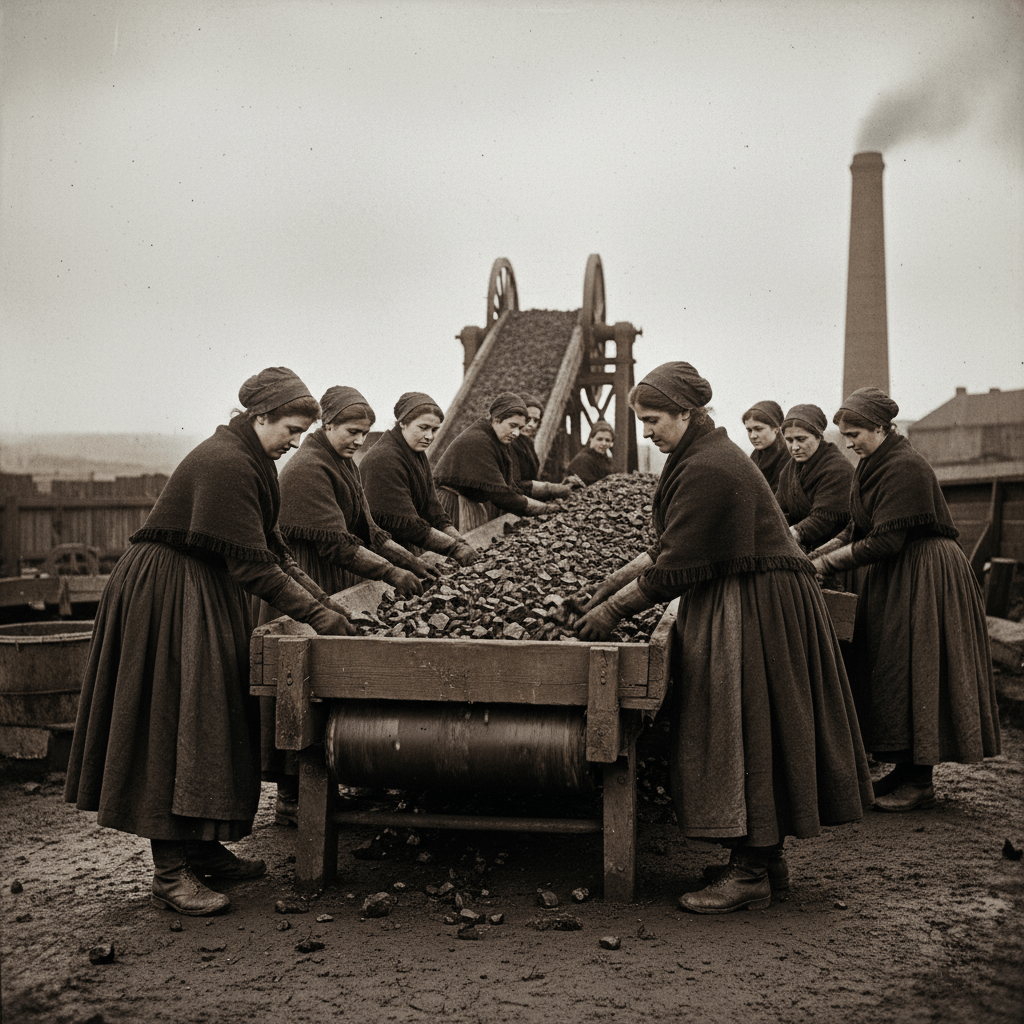
About the Pit Brow Lass Profession
The Pit Brow Lass was a vital yet often overlooked figure in the coal mining industry during the Victorian Era, particularly in the northern regions of England. These women worked at the surface of coal mines, known as the 'pit brow,' where they played a crucial role in the extraction and processing of coal. Their responsibilities included sorting coal from the waste material, loading it onto carts, and ensuring that the coal was ready for transport to markets. The work was physically demanding and often conducted in harsh conditions, with women frequently exposed to the elements and the dangers of the mining environment. Despite the grueling nature of their labor, Pit Brow Lasses were known for their resilience and camaraderie, often forming close-knit communities among themselves as they navigated the challenges of their work.
Day in the Life of a Pit Brow Lass
Early Morning: Rise and Shine
The day began before dawn, with the Pit Brow Lass rising early to prepare for a long day ahead. After a quick breakfast, she donned her work attire, which typically consisted of a sturdy dress, apron, and a bonnet to shield her from the dust and dirt of the coal yard.
Morning Shift: Sorting and Loading
Arriving at the pit brow, the Lass would join her fellow workers, ready to tackle the day’s tasks. The first order of business was to sort through the freshly mined coal, separating the usable coal from the slate and other debris. This required keen eyes and strong hands, as the women would often work in teams, chatting and laughing to keep spirits high amidst the labor. Once sorted, the coal was loaded onto carts, a task that demanded both strength and endurance.
Midday: Break and Community
Around midday, the women would take a brief break, sharing packed lunches and stories. This time was not only for nourishment but also for bonding, as the Pit Brow Lasses supported one another through the rigors of their work.
Afternoon Shift: Continued Labor
The afternoon was a continuation of the morning’s work, with the Lasses often racing against time to meet the demands of the coal merchants. As the sun began to set, the work would become more challenging, with diminishing light and fatigue setting in. The camaraderie among the women was palpable, as they encouraged one another to push through the final hours of labor.
Evening: Homeward Bound
As the day came to a close, the Pit Brow Lasses would return home, often covered in coal dust and exhausted from the day’s toil. Despite the hardships, there was a sense of pride in their work, knowing they contributed significantly to the industrial growth of their communities.
Related Exhibits
Toad Doctor
The Toad Doctor was a unique and somewhat peculiar figure in medieval society, often found in rural areas where folk medicine thrived. This practitioner was believed to possess the knowledge and skills necessary to treat ailments using toads and their byproducts. The Toad Doctor's practice was steeped in superstition and folklore, with many believing that toads had magical properties that could cure various diseases. Treatments often involved the use of toad fat, which was rendered down and applied to wounds or ingested to alleviate ailments such as warts, skin conditions, and even more serious illnesses. The Toad Doctor would also prescribe charms and incantations, blending herbal remedies with the mystical qualities attributed to the toad. In a time when formal medical training was scarce, the Toad Doctor filled a vital niche in the community, often serving as the primary healthcare provider for the rural populace. Their role was not only to heal but also to provide comfort and reassurance in an era rife with superstition and fear of the unknown. Despite their importance, the practice of the Toad Doctor began to wane with the rise of more formalized medical practices and the advent of the scientific method, which sought to replace superstition with empirical evidence. As the understanding of human anatomy and disease progressed, the reliance on folk remedies and magical beliefs diminished, leading to the eventual extinction of this once-revered occupation.
Powder Monkey
The term 'powder monkey' refers to young boys, typically between the ages of 10 and 18, who were employed on naval ships during the Age of Exploration and beyond, particularly in the 17th to 19th centuries. Their primary responsibility was to transport gunpowder from the ship's magazine to the cannons during naval battles. This role was crucial, as the effectiveness of a ship's artillery depended on the swift and safe delivery of gunpowder, which was highly volatile and dangerous. Powder monkeys were often orphans or boys from impoverished backgrounds, seeking work on ships as a means of survival. They were known for their agility and speed, which were essential for navigating the often cramped and chaotic conditions aboard a ship during battle. The job was perilous; the boys had to be quick and careful, as a single spark could lead to catastrophic explosions. In addition to their role in battle, powder monkeys also assisted in the maintenance of the ship's armaments and were sometimes tasked with cleaning and loading cannons. Their work was physically demanding and required a level of bravery that belied their youth. Despite the dangers, many powder monkeys were proud of their roles, often dreaming of becoming full sailors or officers one day.
Explore More Exhibits
Discover the full collection of past and future professions in The Jobs Museum.