
c. 1760–1870
The industrial revolution
The mill, the mine, and the first machines that took a hand trade.
These jobs were created or destroyed by mills, pits, and the early railway. Handloom weavers, hurriers, and pit-sawyers belong here even when a later label would call the same years Victorian.
The change is one of place: from a cottage or a pit-bank to a works with a clock.
In this period
26
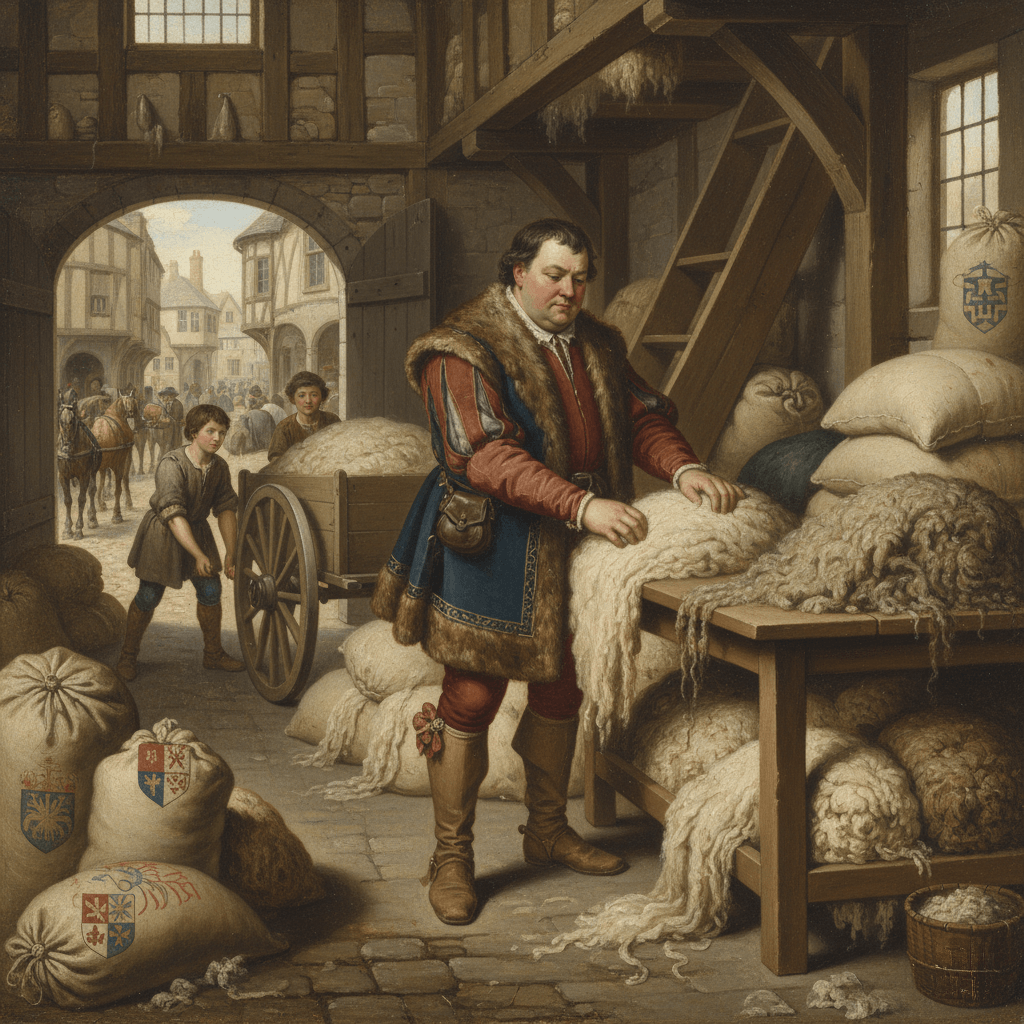 Past · Industrial RevolutionWool-staplerThe wool-stapler was a vital figure in the textile industry during the Industrial Revolution, primarily active from the late 18th century to the mid-19th century. This occupation revolved around the preparation and sorting of wool before it was spun into yarn. Wool-staplers were responsible for assessing the quality of raw wool, which involved separating it into different grades based on factors such as fiber length, fineness, and cleanliness. They played a crucial role in ensuring that only the best quality wool was sent to the spinning mills, thus influencing the quality of the final textile products.
Wool-staplers worked in warehouses or wool depots, often in close proximity to sheep farms and textile mills. Their work was labor-intensive and required a keen eye for detail, as they had to identify the subtle differences in wool quality. The wool was often delivered in large bales, and the wool-stapler would open these bales, inspect the contents, and then sort the wool into piles according to its grade. This sorting process was essential for the efficient operation of the textile industry, as different grades of wool were used for different types of fabrics.
In addition to sorting, wool-staplers also had to keep meticulous records of the wool they processed, noting the quantities and grades for inventory and pricing purposes. They often worked long hours, especially during peak seasons when wool was harvested, and their expertise was highly valued in the supply chain of the textile industry.
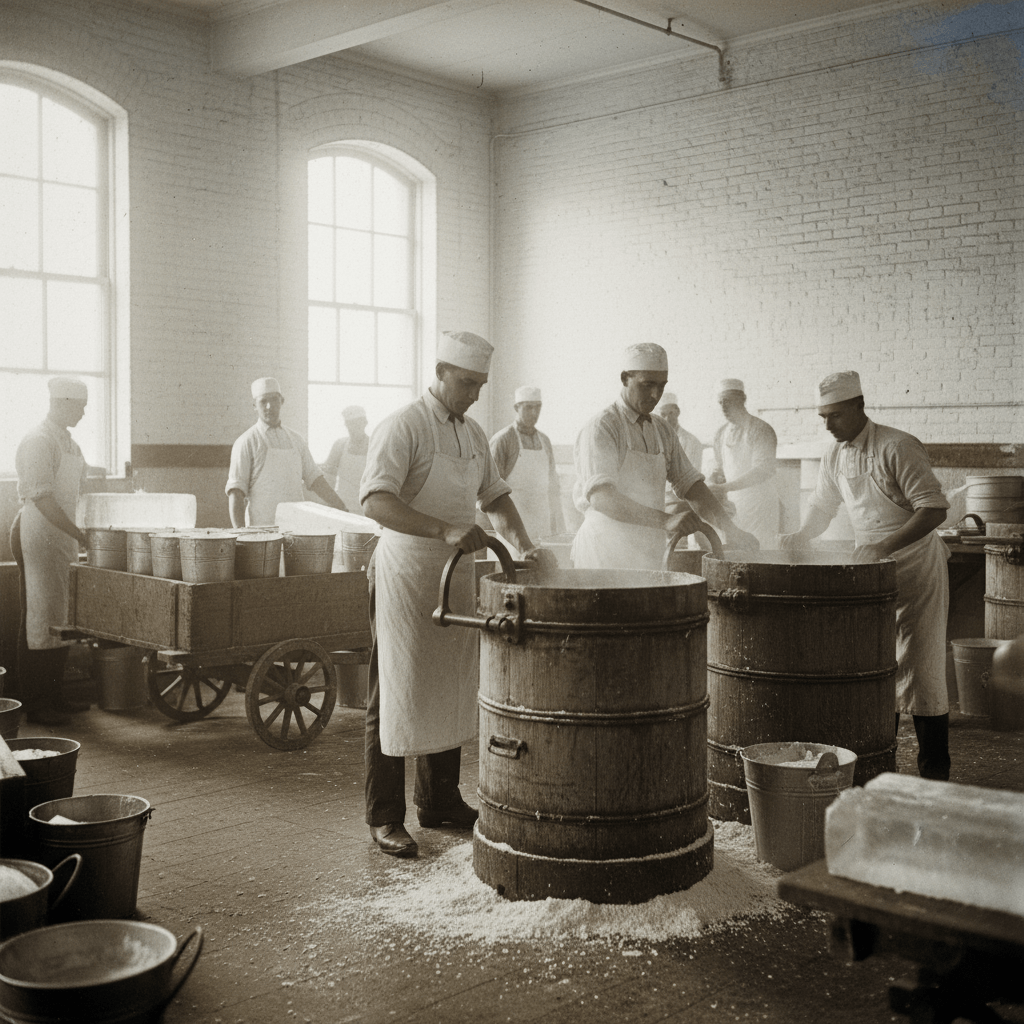 Past · Industrial RevolutionIce Cream FreezerThe Ice Cream Freezer was a vital role in the production of one of the most beloved treats in history. Emerging during the Industrial Revolution, this occupation involved the manual freezing of ice cream mixtures, a process that required both skill and precision. Ice cream freezers were responsible for ensuring that the mixture reached the perfect consistency and temperature, creating a smooth and creamy texture that delighted consumers. They worked in ice cream parlors, factories, and even at fairs, where they would often be seen churning large batches of ice cream in traditional ice cream makers, surrounded by blocks of ice and salt, which were essential for the freezing process. The job required not only a keen understanding of the freezing process but also an ability to adapt to varying temperatures and ingredient qualities, making it a unique blend of art and science.
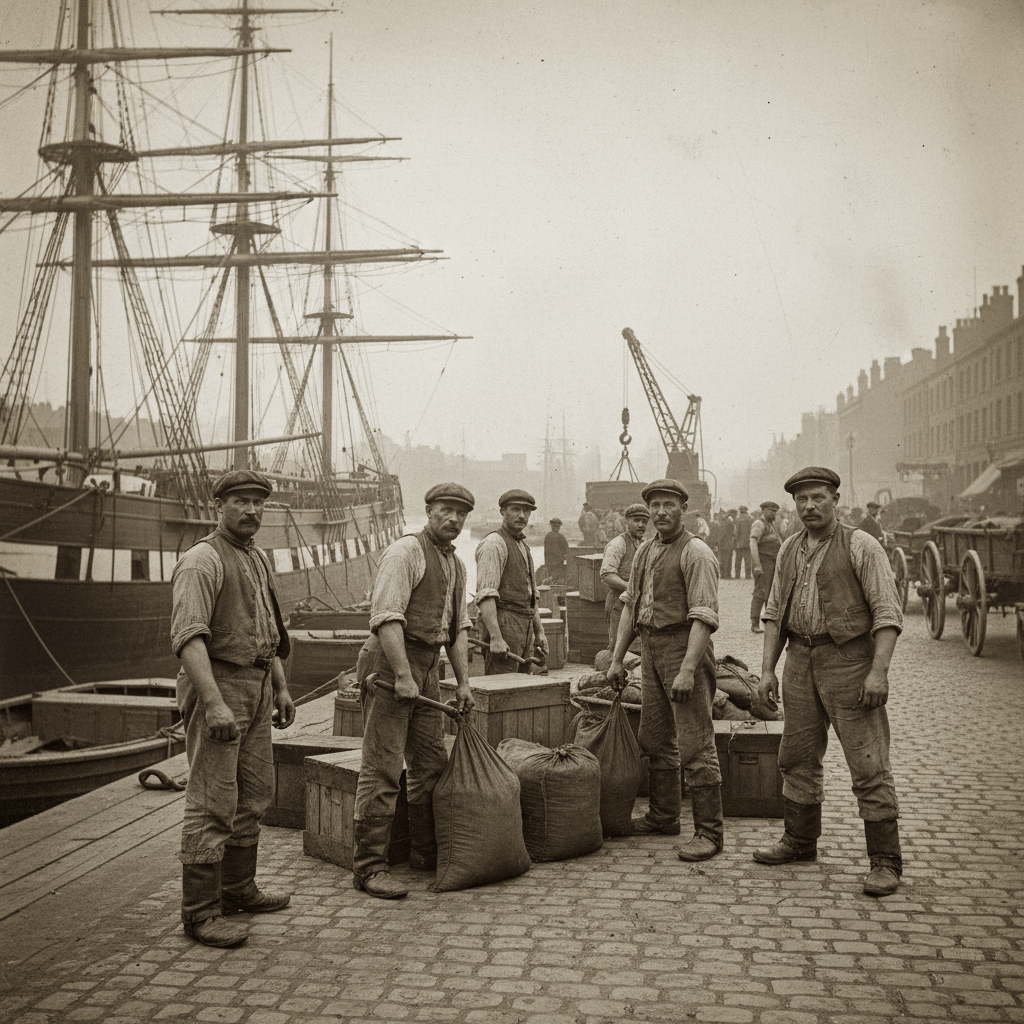 Past · Industrial RevolutionStevedoreThe stevedore, often referred to as a longshoreman, was a vital figure in the shipping industry during the Industrial Revolution and beyond. These laborers were responsible for the loading and unloading of cargo from ships, a task that required not only physical strength but also a keen understanding of maritime operations. Stevedores worked in bustling ports, where the clamor of ships, the shouts of dockworkers, and the creaking of cargo nets created a symphony of industry. They were the backbone of trade, ensuring that goods moved efficiently from sea to shore and vice versa.
The work of a stevedore was physically demanding and often dangerous. They operated in all weather conditions, lifting heavy crates and barrels, often using tools such as hooks, slings, and winches. The stevedore's role was not merely about brute strength; it also required coordination and teamwork, as they worked alongside ship captains, dock managers, and other laborers to ensure that cargo was handled safely and efficiently. The stevedore's expertise in stowing cargo was crucial, as improper loading could lead to accidents at sea or damage to goods.
As the shipping industry evolved, so too did the role of the stevedore. The introduction of containerization in the mid-20th century revolutionized cargo handling, leading to a decline in the traditional stevedore's role. Containers allowed for faster loading and unloading, reducing the need for manual labor and specialized skills that stevedores had honed over decades. This shift marked the beginning of the end for the stevedore as a distinct occupation, as automation and mechanization took over the docks.
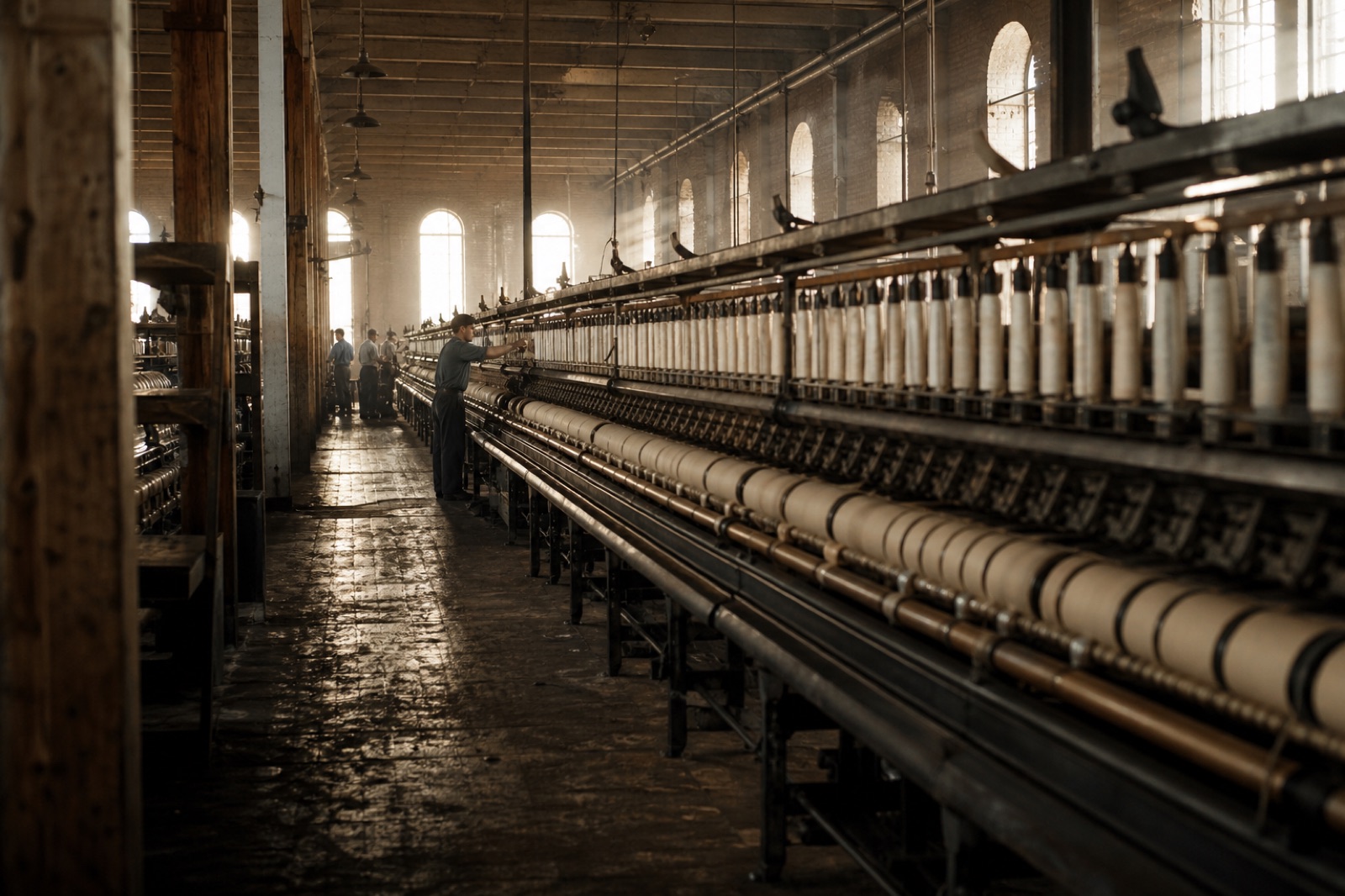
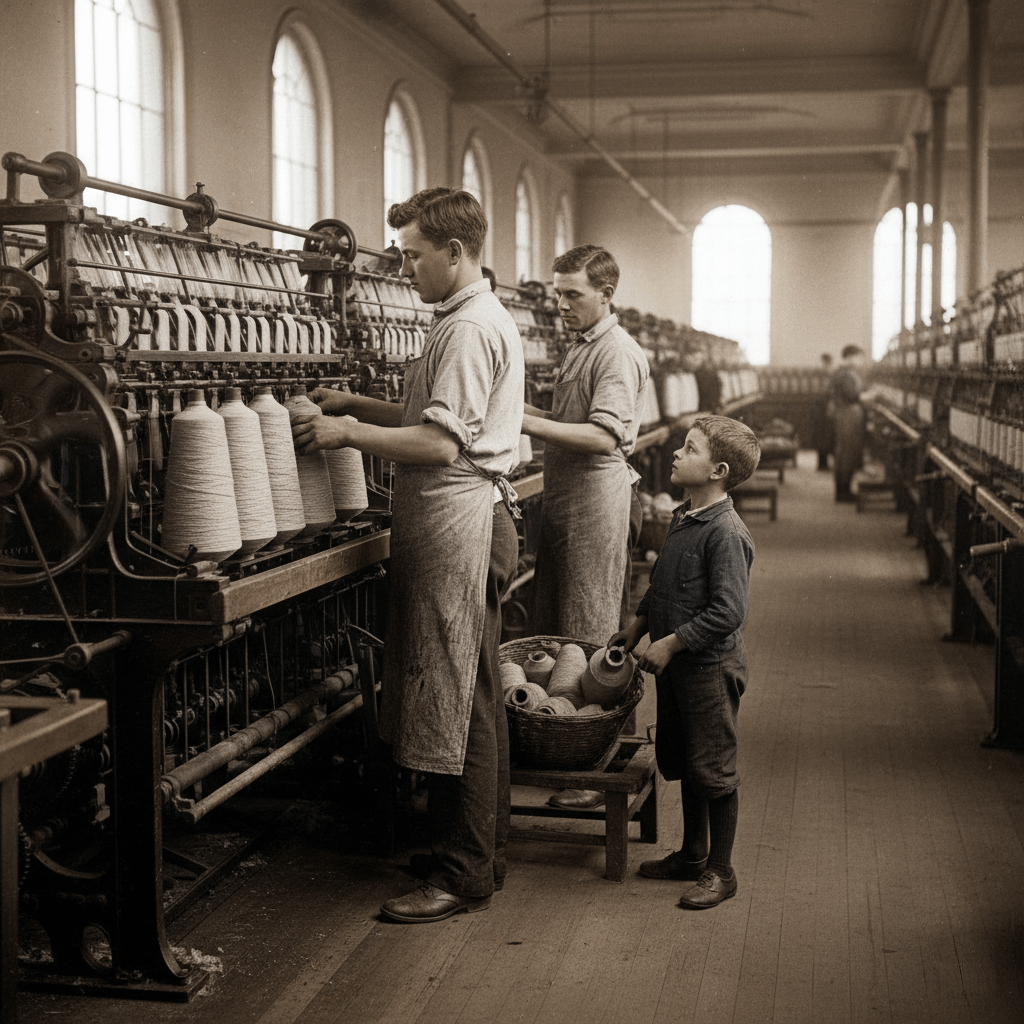 Past · Industrial RevolutionSlubber DofferThe slubber doffer was a crucial figure in the textile industry during the Industrial Revolution, primarily responsible for the maintenance and operation of spinning machines. These workers played a vital role in ensuring that the production of yarn and thread ran smoothly in the bustling textile mills of the 18th and 19th centuries. The term 'slubber doffer' specifically referred to those who removed the full bobbins of spun yarn from the spinning frames and replaced them with empty ones, a task that required both physical dexterity and a keen understanding of the machinery involved. The slubber doffer's work was often performed in a noisy, fast-paced environment, where the clatter of machines filled the air, and the smell of raw cotton and wool was ever-present.
The job was typically held by young boys and girls, often as young as eight or nine, who were employed in the mills due to their small stature, which allowed them to navigate the cramped spaces between the machines. The slubber doffer's day was filled with the repetitive yet essential task of ensuring that the spinning process continued without interruption, a job that was physically demanding and required a high level of attention to detail.
Despite the harsh working conditions, slubber doffers were an integral part of the textile production process, contributing to the rapid growth of the textile industry, which was a cornerstone of the Industrial Revolution. Their labor was essential in meeting the increasing demand for textiles, which fueled both domestic and international markets.
 Past · Industrial RevolutionBreaker BoyThe role of a Breaker Boy emerged during the Industrial Revolution, particularly in the coal mining regions of the United States, where the demand for coal surged to fuel the burgeoning industries. Breaker Boys were young boys, often between the ages of 8 and 12, who worked in coal breaker facilities. Their primary responsibility was to separate impurities from coal, a crucial step in preparing the coal for market. This labor-intensive job involved sitting on a high platform above a conveyor belt, where they would pick out rocks, slate, and other debris from the coal as it passed by. The work was not only monotonous but also hazardous, as the boys were exposed to coal dust and the risk of injury from the machinery. Breaker Boys typically worked long hours, often from dawn until dusk, in poorly ventilated and unsafe conditions, earning a meager wage that reflected the exploitative labor practices of the time. The job was emblematic of the harsh realities faced by child laborers during the Industrial Revolution, highlighting the intersection of economic necessity and social injustice.
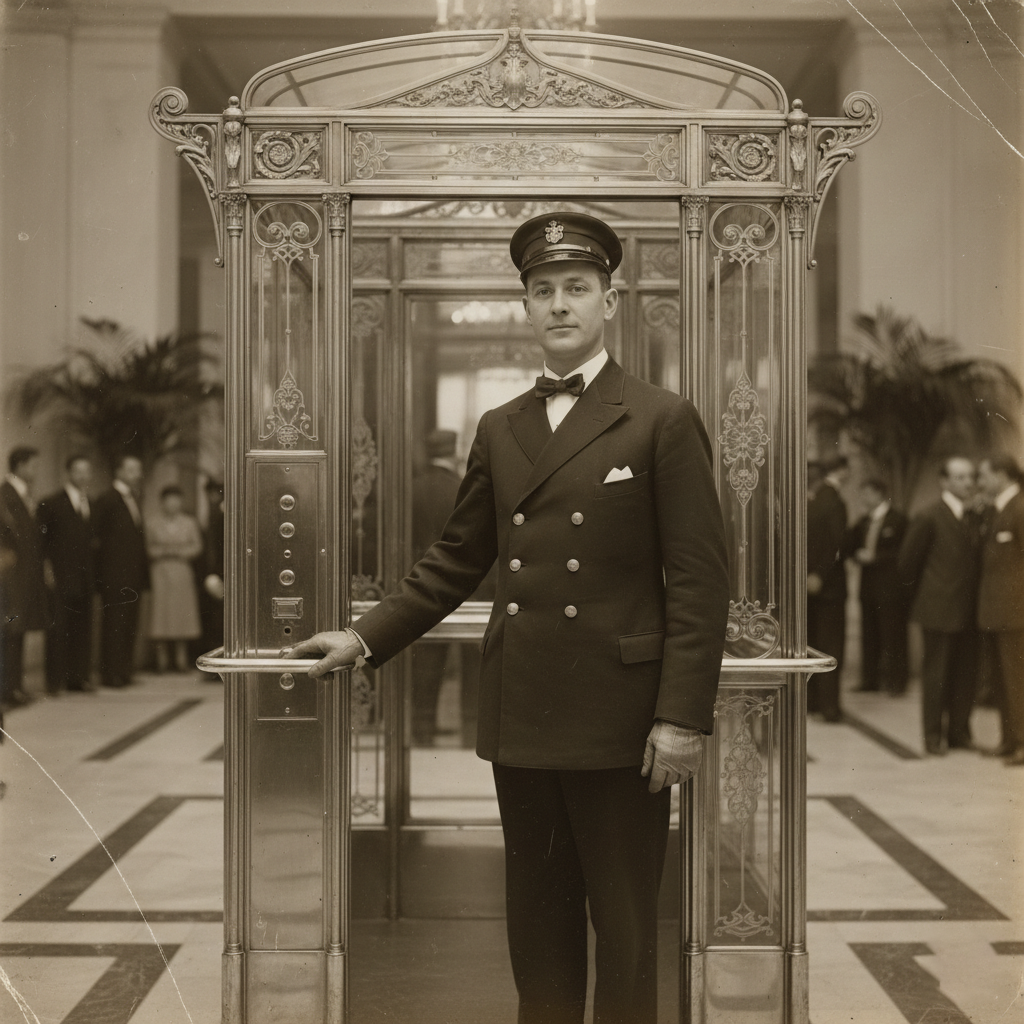 Past · Industrial RevolutionElevator OperatorIn the bustling urban landscapes of the late 19th and early 20th centuries, the elevator operator emerged as a vital figure in the daily operations of skyscrapers and multi-story buildings. These skilled individuals were responsible for the safe and efficient transport of passengers between floors, often in ornate, manually operated elevators that were a marvel of engineering at the time. With a keen understanding of the building's layout and a friendly demeanor, elevator operators greeted patrons, assisted them in entering and exiting the elevator, and ensured that the doors closed securely before ascending or descending. Their role was not merely mechanical; it was a blend of customer service and technical skill, as they had to manage the intricate workings of the elevator machinery, often using a lever or a set of controls to navigate the complex system of pulleys and cables. The elevator operator was a familiar face in the urban environment, often dressed in a crisp uniform, complete with a cap, and sometimes even a badge indicating their position. They were the gatekeepers of vertical transportation, providing a personal touch in an increasingly mechanized world.
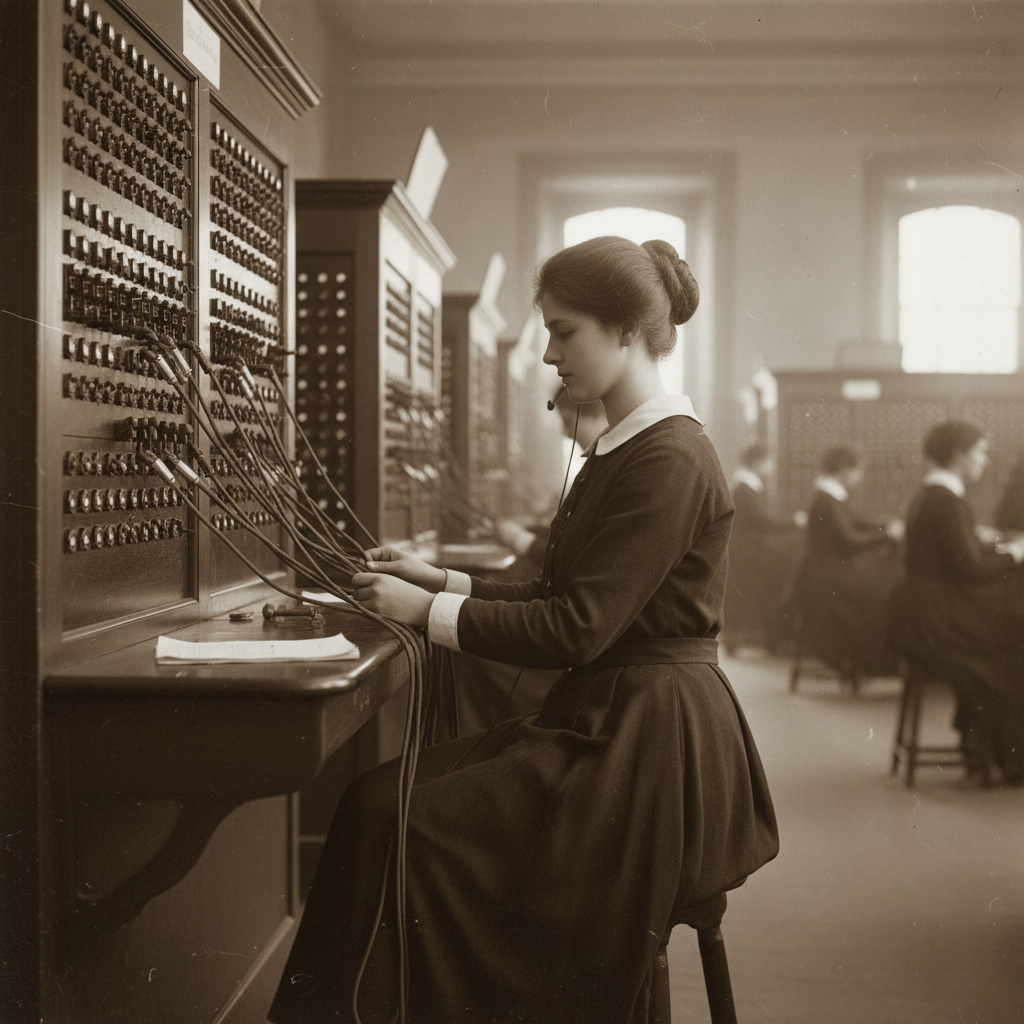 Past · Industrial RevolutionSwitchboard OperatorIn the bustling world of the late 19th and early 20th centuries, the role of the switchboard operator emerged as a vital cog in the machinery of communication. These skilled individuals were the unsung heroes of the telephone network, connecting calls and facilitating conversations that bridged distances and brought people together. With the advent of the telephone, the need for a human intermediary became apparent, and thus, the switchboard operator took center stage in the realm of telecommunications.
Switchboard operators worked in large, often crowded rooms filled with rows of switchboards, each adorned with a myriad of plugs and wires. Their primary responsibility was to connect callers by manually plugging and unplugging telephone lines into the appropriate jacks on the switchboard. This intricate dance of wires required not only dexterity but also a keen ear for voices and an ability to quickly assess and respond to the needs of callers. Operators were often the first point of contact for individuals seeking to connect with friends, family, or businesses, making their role both crucial and highly regarded.
The job was not without its challenges. Operators had to manage multiple calls simultaneously, often dealing with a cacophony of voices and requests. They were trained to handle emergencies, providing vital assistance during crises, such as connecting calls to hospitals or fire departments. The work environment was typically fast-paced and required a high level of concentration, as even a small mistake could lead to misdirected calls or delays in communication.
As technology advanced, the role of the switchboard operator began to wane. The introduction of automated switching systems in the mid-20th century marked the beginning of the end for this once-essential occupation. These systems could connect calls without human intervention, leading to a decline in demand for operators. By the 1980s, the role had largely disappeared, replaced by automated systems that could handle the volume of calls with greater efficiency and reliability.
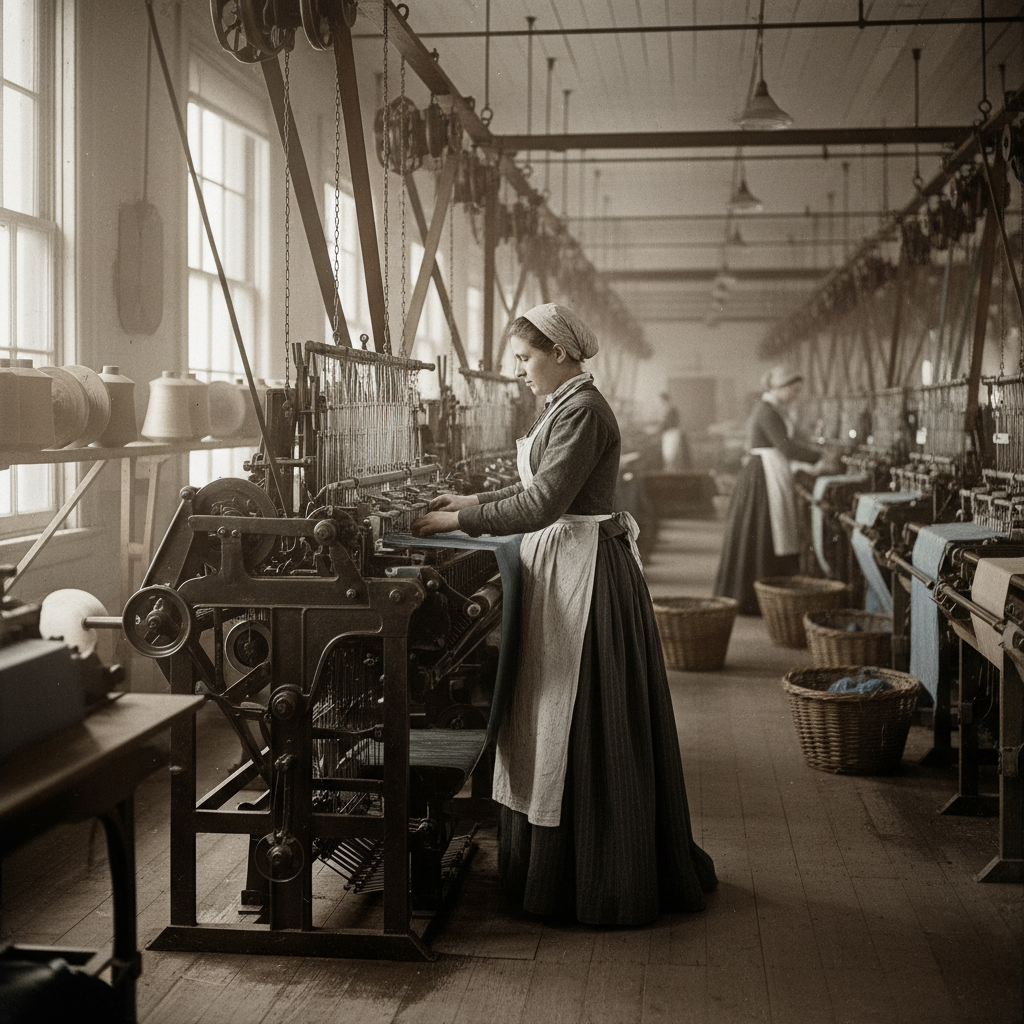 Past · Industrial RevolutionKnitting Mill WorkerThe knitting mill worker played a crucial role in the textile industry during the Industrial Revolution, a period marked by rapid industrial growth and technological innovation. These workers were primarily responsible for operating knitting machines that produced a variety of knitted goods, including socks, sweaters, and other garments. The work was often performed in large factories, known as knitting mills, where rows of machines hummed with activity, creating a rhythmic backdrop to the labor-intensive environment. Workers were typically assigned to specific machines, where they would monitor the knitting process, troubleshoot any issues, and ensure that the quality of the output met the factory's standards. The job required a keen eye for detail, as even a small mistake could result in significant waste of materials and time.
Knitting mill workers were often women and children, who were drawn to the mills by the promise of steady wages. The work was physically demanding, requiring long hours of standing and repetitive motion, which could lead to fatigue and injury. Despite the harsh conditions, knitting mills provided a vital source of income for many families during a time when economic opportunities were limited, particularly for women. The rise of the knitting mill worker was emblematic of the broader changes occurring in society, as traditional hand-knitting practices were replaced by mechanized production, leading to increased efficiency and lower costs for consumers.
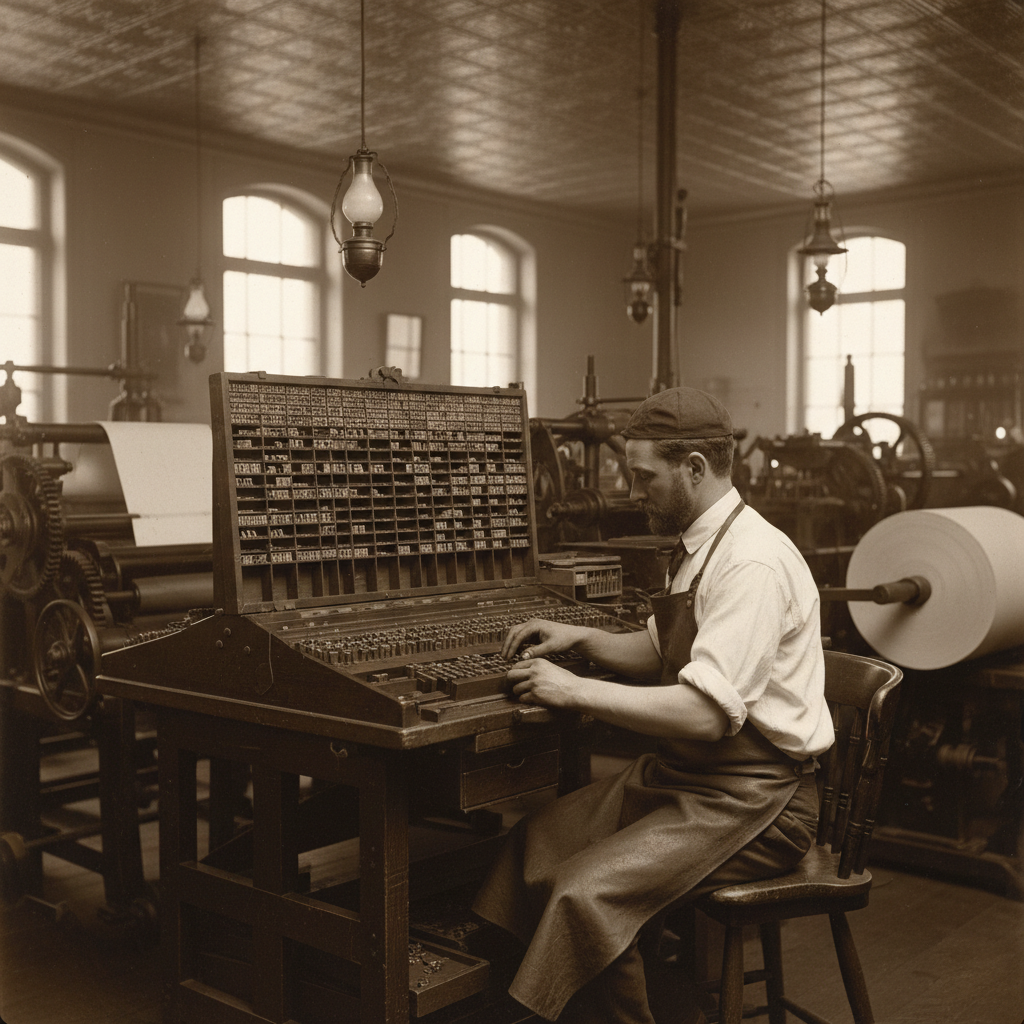 Past · Industrial RevolutionNewspaper TypesetterThe role of a newspaper typesetter was pivotal in the production of printed media during the Industrial Revolution and well into the 20th century. Typesetters were responsible for arranging the text and images that would be printed in newspapers, ensuring that each page was visually appealing and legible. This intricate process involved selecting individual metal type pieces, known as 'sorts', and arranging them into words and sentences on a composing stick. Once the text was set, it was locked into place in a chase, ready for the printing press. Typesetters worked in a noisy, bustling environment, often alongside other skilled tradespeople, such as printers and proofreaders, in a print shop. The job required not only technical skill but also a keen eye for detail and a strong understanding of typography and layout.
 Past · Industrial RevolutionLog TelegraphistThe role of a Log Telegraphist emerged during the Industrial Revolution, a period marked by rapid technological advancement and the expansion of communication networks. These skilled workers were responsible for operating telegraph systems, which were crucial for transmitting messages over long distances using electrical signals. The Log Telegraphist specifically focused on the logging and recording of messages sent and received via telegraph, ensuring that communications were accurately documented and relayed. This job was vital for businesses, government agencies, and the military, as it facilitated timely decision-making and coordination across vast distances.
Log Telegraphists were often found in telegraph offices, railway stations, and military outposts, where they worked in close proximity to the telegraph equipment. Their work environment was typically bustling, filled with the sounds of clicking keys and the hum of electrical machinery. The Log Telegraphist's role required not only technical proficiency in operating the telegraph but also a keen attention to detail, as they meticulously recorded each message, noting the time of receipt and dispatch, and ensuring that no errors occurred in the transmission process.
As the world became increasingly interconnected, the demand for efficient communication grew, and the Log Telegraphist played a pivotal role in this transformation. However, as technology advanced, the telegraph system began to be replaced by more sophisticated communication methods, such as the telephone and eventually the internet, leading to the decline of this occupation.
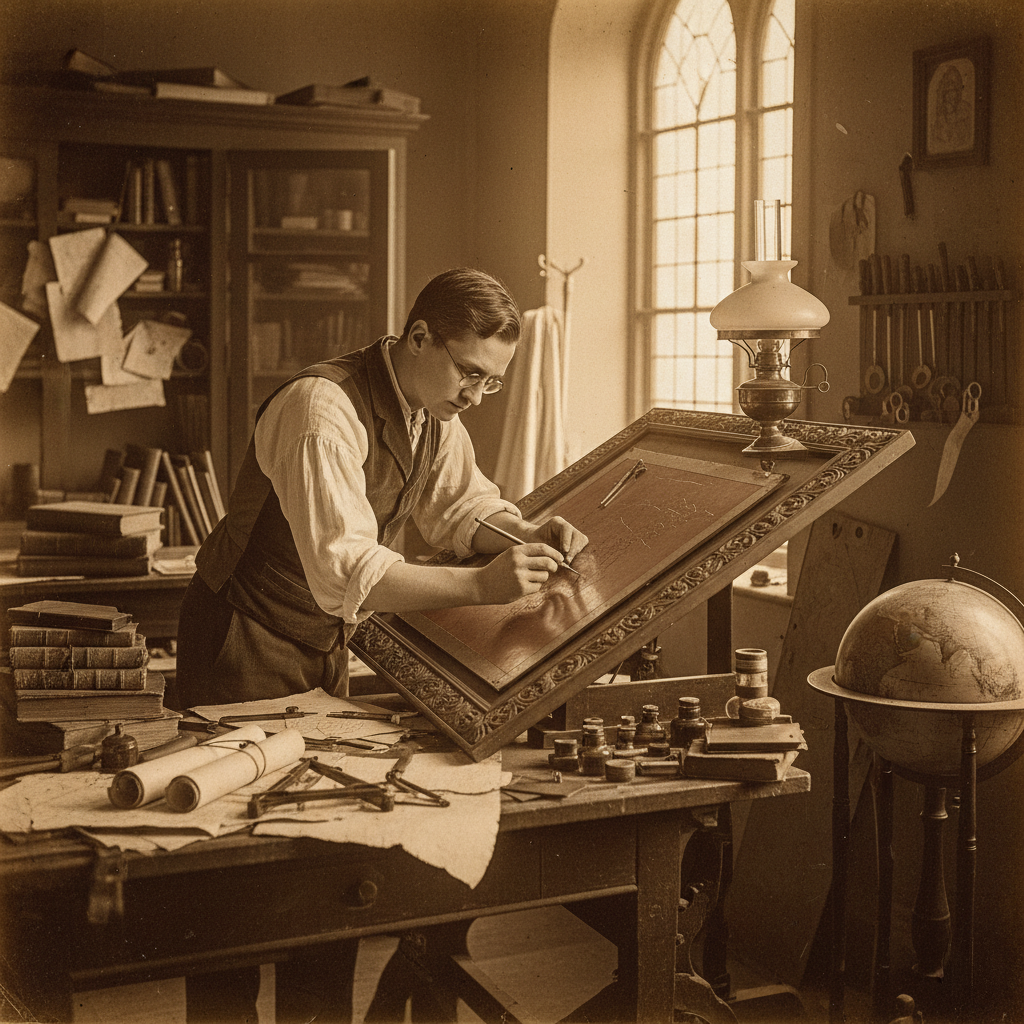 Past · Industrial RevolutionMap EngraverMap engravers were skilled artisans responsible for the intricate task of transferring cartographic designs onto metal plates, which were then used for printing maps. This occupation flourished during the Industrial Revolution, a period marked by rapid advancements in technology and a growing demand for accurate geographical representations. The engraver's work was crucial for the production of maps that guided explorers, navigators, and the general public, reflecting the expanding knowledge of the world and the increasing importance of navigation in trade and exploration.
The process of map engraving was meticulous and required a deep understanding of both art and science. Engravers would begin with a detailed drawing of the map, often created by cartographers who specialized in the art of map-making. Using tools such as burins and gravers, the engraver would carve the design into a copper or zinc plate, creating a reverse image of the map. This required not only precision but also an artistic eye to ensure that the final product was both accurate and aesthetically pleasing. Once the engraving was complete, the plate would be inked and pressed onto paper, producing the final map that would be distributed for use.
Map engravers played a vital role in the dissemination of knowledge during a time when maps were essential for navigation, land ownership, and military strategy. Their work contributed to the Age of Exploration, as accurate maps were crucial for explorers venturing into uncharted territories. As such, map engravers were respected members of the printing and publishing industries, often working closely with publishers and cartographers to produce high-quality maps for various purposes, including atlases, travel guides, and educational materials.
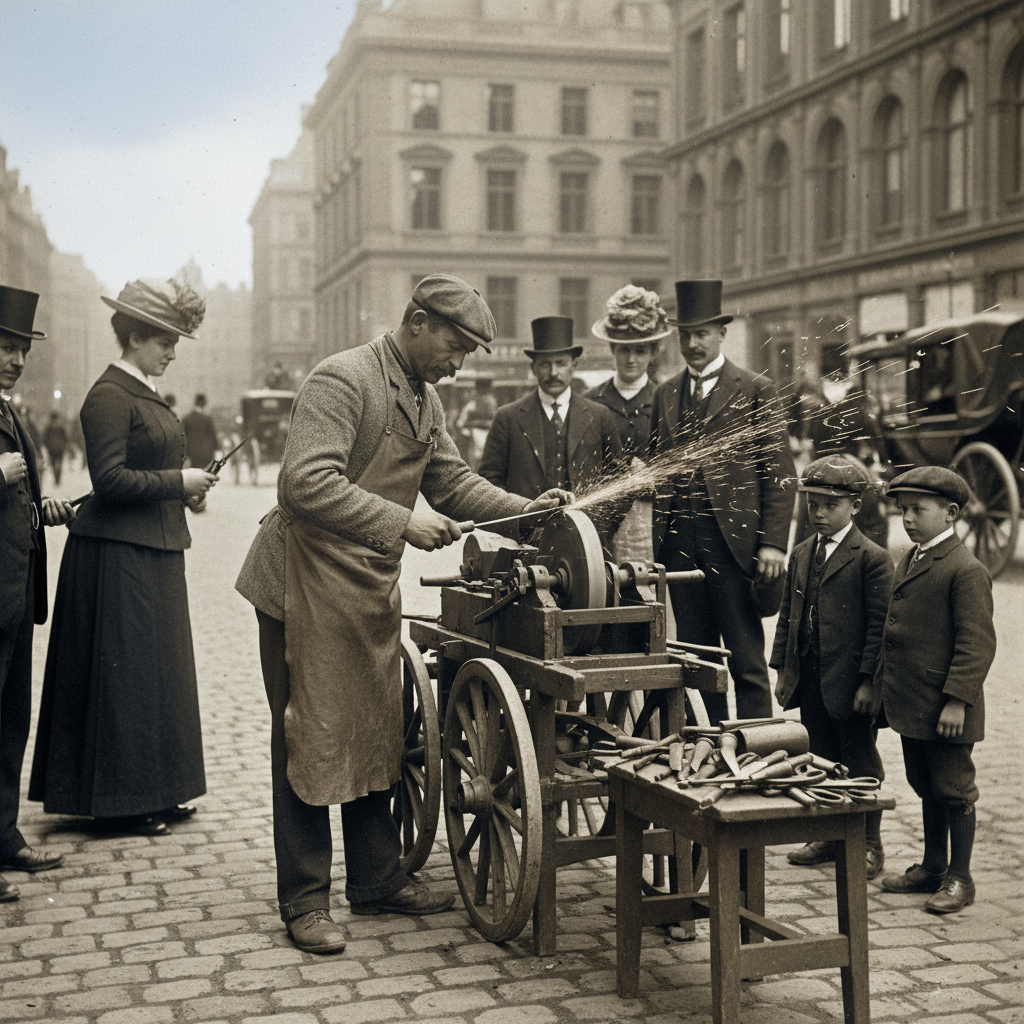 Past · Industrial RevolutionKnife GrinderThe knife grinder was a skilled tradesperson responsible for sharpening and honing blades, from kitchen knives to industrial cutting tools. This occupation flourished during the Industrial Revolution, a period marked by rapid technological advancement and a growing demand for precision tools in both domestic and industrial settings. Knife grinders often worked in small workshops or as itinerant tradespeople, traveling from town to town with their grinding wheels and tools, providing essential services to local communities. The sound of the grinding wheel, a rhythmic and reassuring noise, was a familiar part of daily life, as these craftsmen ensured that the tools of the trade remained sharp and effective.
The process of knife grinding involved several steps. First, the grinder would assess the blade's condition, determining the level of wear and the type of sharpening needed. Using a foot-powered grinding wheel, the grinder would carefully sharpen the blade, maintaining the correct angle to ensure optimal cutting performance. After sharpening, the blade would often be polished to a fine finish, sometimes using a leather strop to achieve a razor-sharp edge. Knife grinders were not only skilled in their craft but also had a deep understanding of the various types of steel and the specific needs of different tools, making them invaluable to both domestic households and industrial operations.
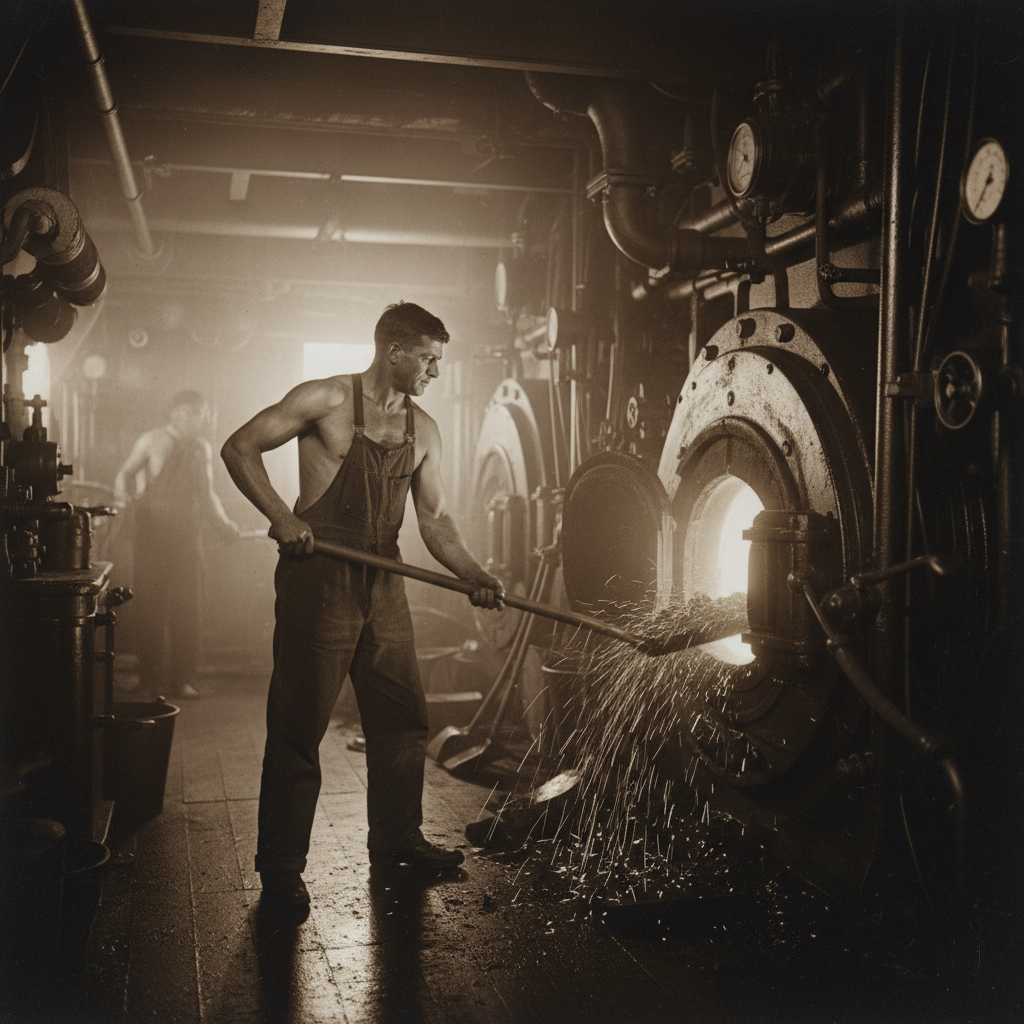 Past · Industrial RevolutionCoal StokerThe coal stoker was a vital role during the Industrial Revolution, responsible for feeding coal into steam boilers that powered locomotives, ships, and factories. These workers were the unsung heroes of the industrial age, ensuring that the engines of progress ran smoothly. The job required physical strength and endurance, as stokers often worked in hot, cramped, and dark conditions, shoveling coal into the fireboxes of boilers to maintain the necessary temperature for steam production. The stoker's work was crucial for the operation of steam engines, which were the backbone of industrial transportation and manufacturing during this period. The job was labor-intensive and often dangerous, with workers exposed to high temperatures, coal dust, and the risk of burns or injuries from heavy equipment. Stokers were typically employed in coal-fired power plants, on ships, and in factories, where they played a key role in the efficiency of steam-powered machinery. As the Industrial Revolution progressed, the demand for coal stokers grew, but so did the mechanization of the industry, leading to significant changes in the workforce.
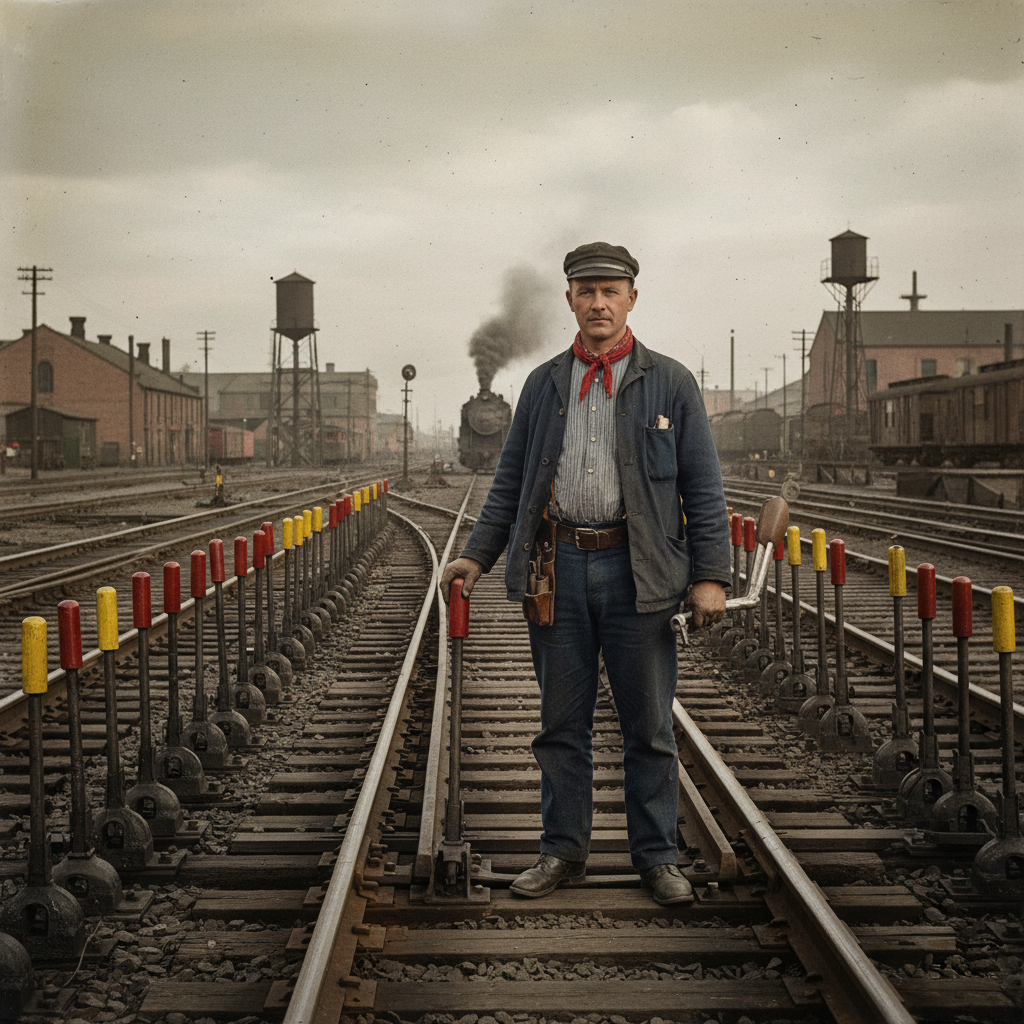 Past · Industrial RevolutionSwitchmanThe role of a switchman was pivotal in the operation of railroads during the Industrial Revolution, a period marked by rapid industrial growth and the expansion of rail networks. Switchmen were responsible for directing the movement of trains by operating track switches, which allowed trains to change tracks and navigate complex rail systems. This job required a keen understanding of the rail network, as well as the ability to communicate effectively with engineers and conductors. Switchmen often worked in pairs or teams, coordinating their actions to ensure the safe and efficient movement of trains. They were also tasked with monitoring signals and ensuring that tracks were clear of obstructions, making their role critical to the safety of rail operations. The job was often performed in all weather conditions, requiring physical stamina and alertness, as switchmen had to be ready to respond quickly to changing circumstances on the tracks.
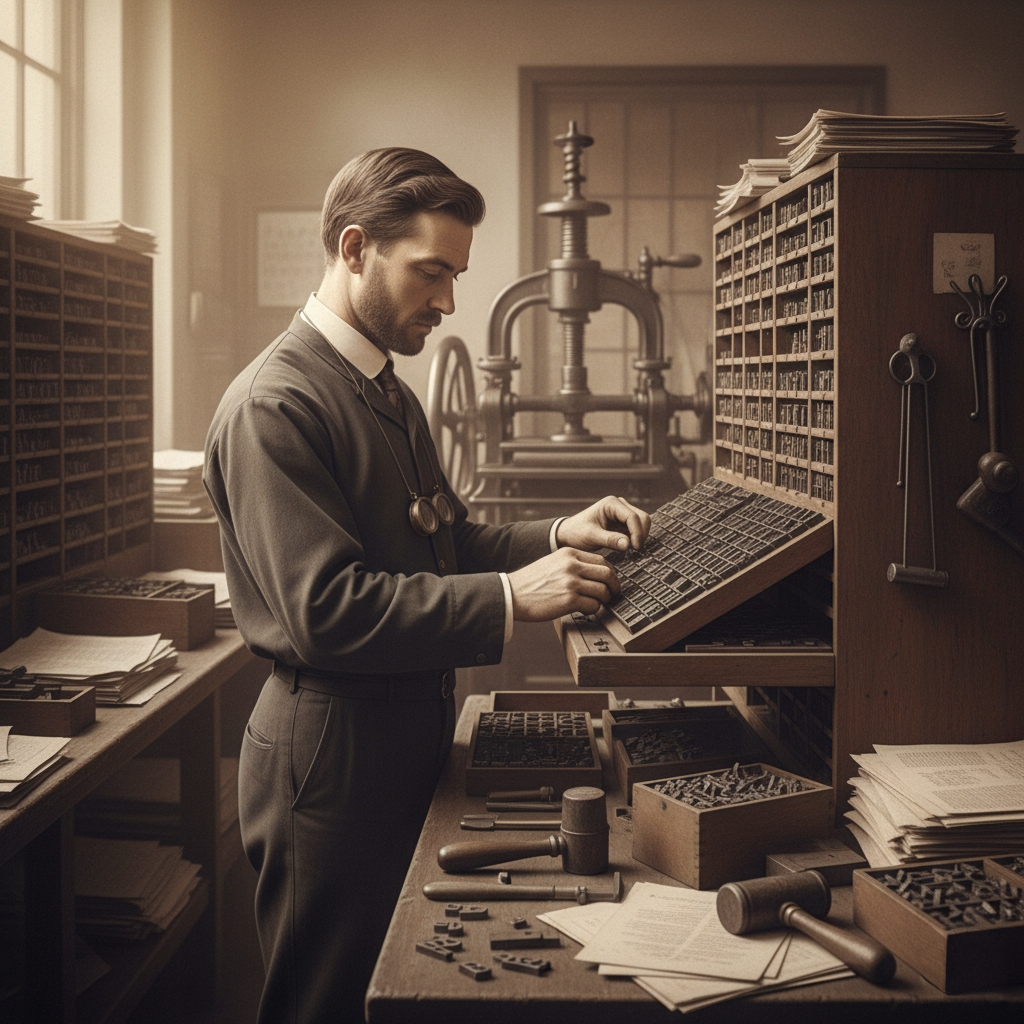 Past · Industrial RevolutionTypesetterThe role of a typesetter was pivotal in the evolution of printed communication, particularly during the Industrial Revolution. Typesetters were responsible for arranging the individual letters and characters of type to create pages of text for printing. This meticulous work required not only a keen eye for detail but also a deep understanding of typography and layout. Typesetters worked primarily in printing houses, where they would set type for newspapers, books, and other printed materials. The job involved selecting the appropriate typefaces, adjusting spacing, and ensuring that the text was aligned correctly. Each letter was cast in metal or made from wood, and typesetters would often work with a variety of fonts to achieve the desired aesthetic for each publication. The process was labor-intensive and required a high level of craftsmanship, as any errors in the typesetting could lead to costly mistakes in the final print.
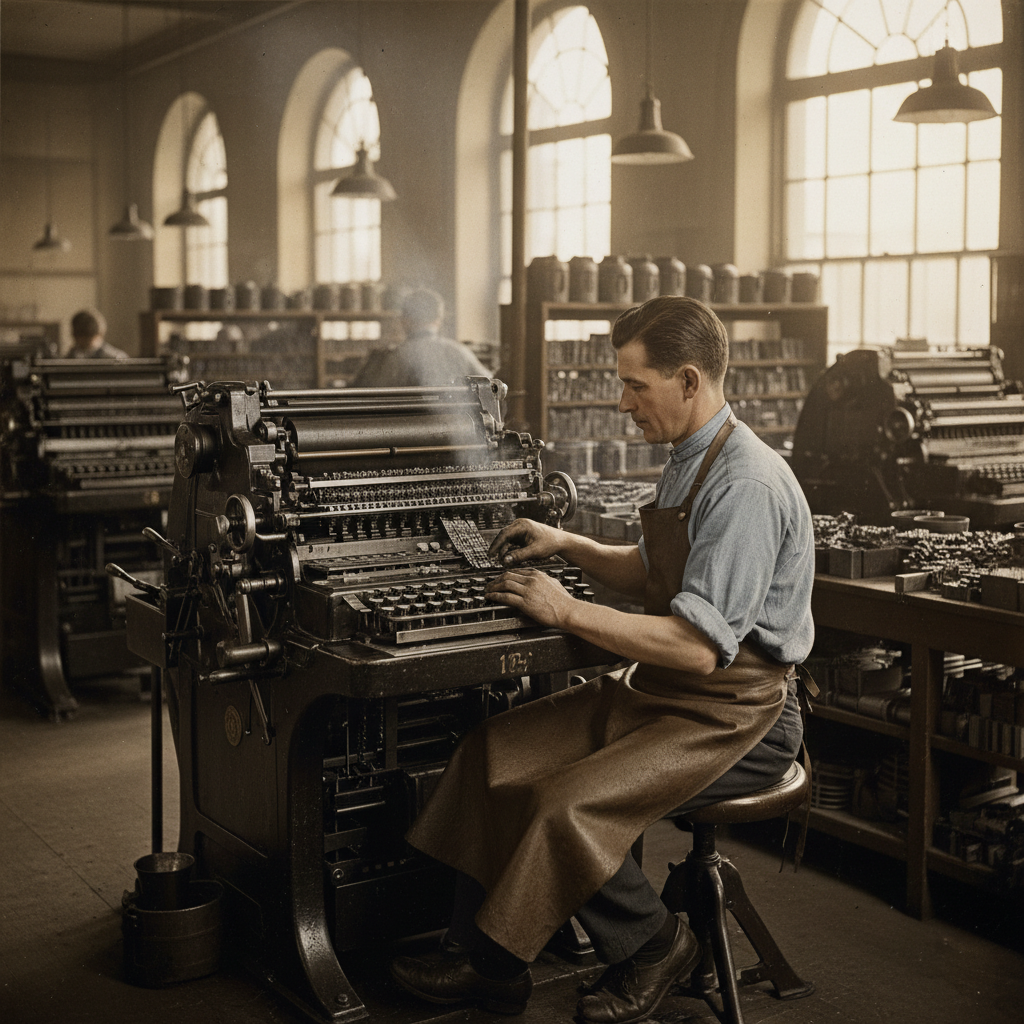 Past · Industrial RevolutionLinotype OperatorThe Linotype Operator was a crucial figure in the world of printing from the late 19th century until the mid-20th century. This skilled artisan operated the Linotype machine, a revolutionary device that allowed for the efficient typesetting of text for newspapers, books, and other printed materials. The Linotype machine, invented by Ottmar Mergenthaler in 1884, enabled operators to cast entire lines of type in metal, significantly speeding up the printing process compared to the labor-intensive method of setting type by hand.
Linotype Operators were responsible for not only operating the machine but also for maintaining it, ensuring that it was in good working order to produce high-quality print. They worked in bustling print shops, often surrounded by the sounds of machinery and the smell of ink and paper. The job required a keen eye for detail, as operators had to ensure that the type was set correctly and that the text was free of errors before it was sent to the press.
The role of the Linotype Operator was not just technical; it was also creative. Operators often collaborated with typesetters and editors to achieve the desired layout and design of printed materials, making their work an integral part of the publishing process. As the demand for printed materials surged during the Industrial Revolution, so too did the need for skilled Linotype Operators, who played a vital role in the dissemination of information and culture during this transformative period.
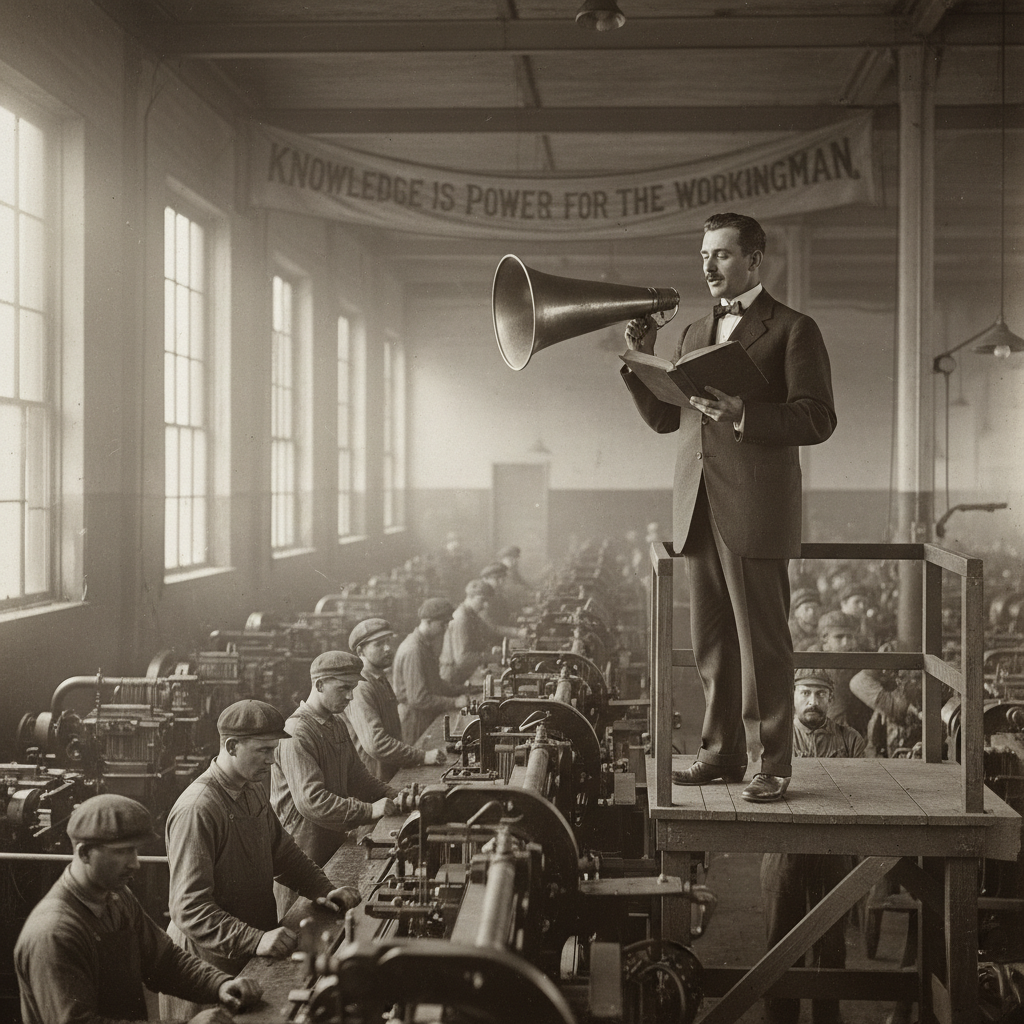 Past · Industrial RevolutionLectorThe lector was a unique and fascinating occupation that emerged during the Industrial Revolution, particularly in the late 19th and early 20th centuries. This role was primarily found in cigar factories, where workers would spend long hours engaged in repetitive tasks. To alleviate the monotony and foster a sense of community, a lector would read aloud to the workers, providing them with entertainment, education, and a connection to the outside world. The readings often included literature, newspapers, and political essays, allowing workers to stay informed and engaged with current events while they toiled away. The lector was not merely a reader; they were a storyteller, a commentator, and sometimes even a social activist, using their platform to inspire and provoke thought among the laborers. This role was vital in creating a shared cultural experience among workers, fostering camaraderie and solidarity in an otherwise isolating environment.
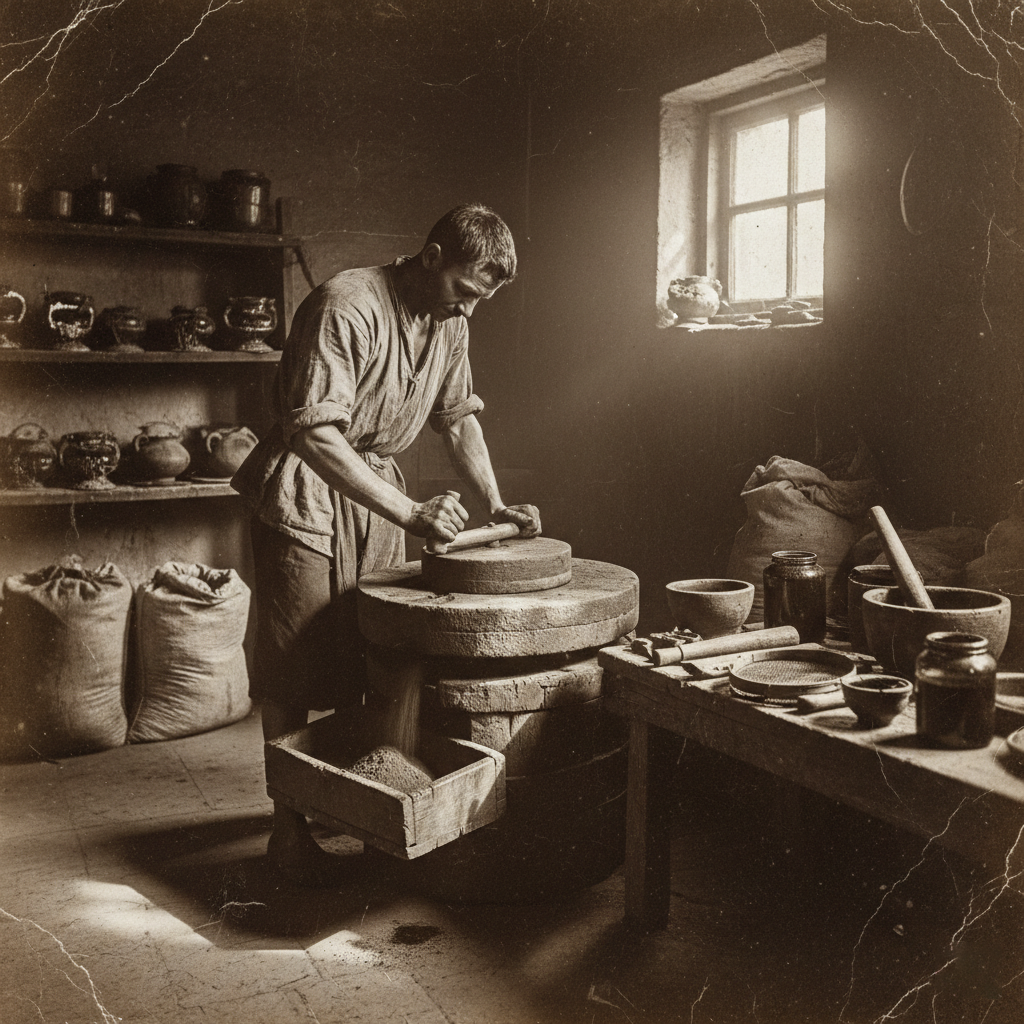 Past · Industrial RevolutionLampblack GrinderIn the bustling factories of the Industrial Revolution, the role of the Lampblack Grinder was both vital and hazardous. These skilled laborers were responsible for producing lampblack, a fine black powder made from soot, which was used as a pigment in inks, paints, and varnishes. The process involved collecting soot from burning oils or resins, then grinding it into a fine powder. The lampblack produced was prized for its deep, rich color and was essential for the burgeoning art and manufacturing industries of the time.
The work environment was often grimy and poorly ventilated, with workers exposed to clouds of fine black dust that filled the air. Lampblack Grinders typically worked long hours, often in shifts that extended from dawn until dusk, in factories that were often overcrowded and lacked proper safety measures. Despite the health risks, including respiratory issues and skin irritations, the demand for lampblack surged as the use of oil lamps and paints became widespread during this era.
Lampblack Grinders were often men, but women and children also participated in this labor, particularly in smaller workshops. The job required not only physical strength to operate the grinding machinery but also a keen eye for quality, as the fineness of the powder directly affected its market value. As the Industrial Revolution progressed, the role of the Lampblack Grinder became increasingly important, yet perilous, as the soot they handled was not only a source of income but also a potential health hazard.
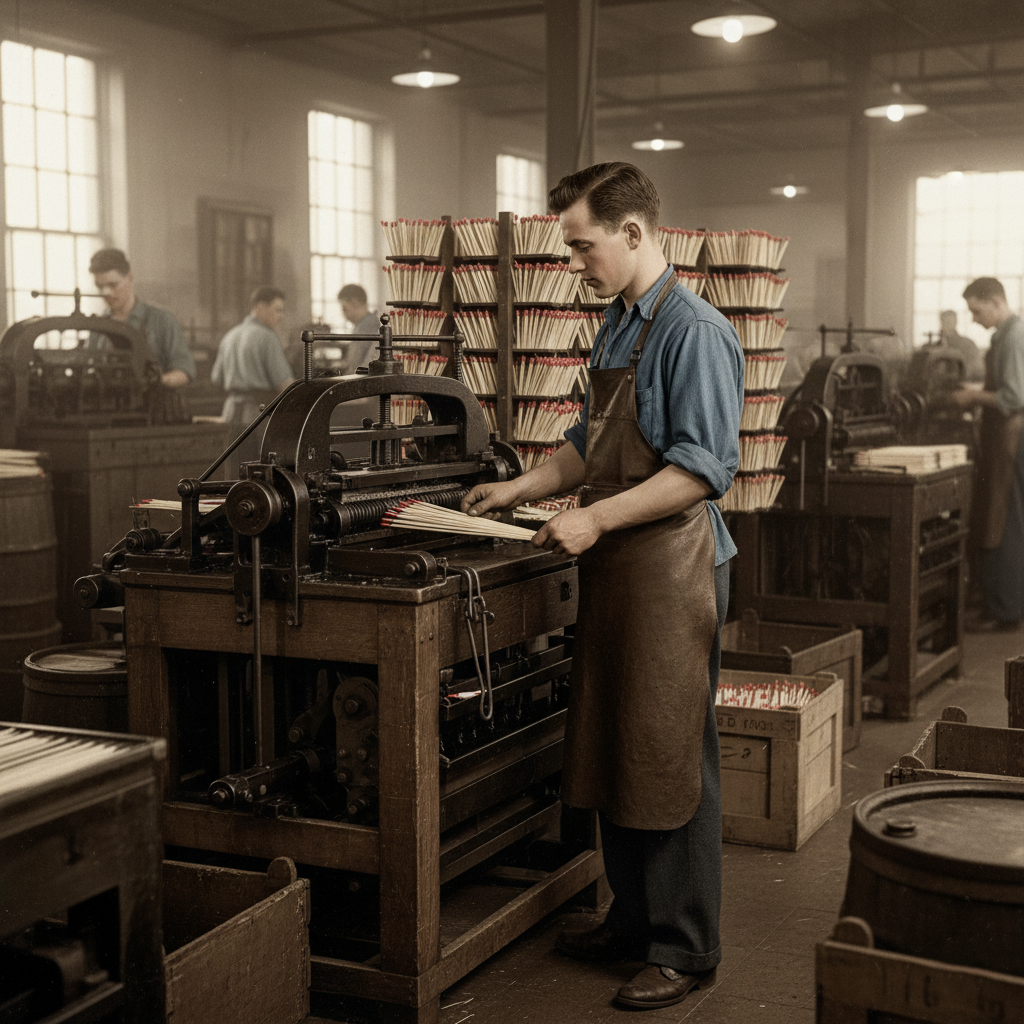 Past · Industrial RevolutionMatchstick MakerIn the bustling factories of the Industrial Revolution, the matchstick maker played a crucial role in the production of one of the era's most essential commodities: matches. These small, slender sticks, tipped with a flammable substance, revolutionized the way people ignited fires, making them a staple in households and businesses alike. The matchstick maker was responsible for crafting these vital tools, often working in dimly lit workshops filled with the scent of sulfur and wood.
The process of match production was labor-intensive and required a keen eye for detail. Workers would begin by cutting thin strips of wood, typically from readily available softwoods like aspen or pine. These strips were then meticulously dipped into a mixture of chemicals, including potassium chlorate, sulfur, and glass powder, to create the striking head of the match. The matchsticks were then dried, packaged, and prepared for distribution.
The job was not without its hazards; the chemicals used in match production were often toxic, leading to health issues such as 'phossy jaw,' a painful condition caused by exposure to phosphorus. Despite these dangers, matchstick makers were essential to the growing demand for convenience in lighting fires, which was a significant aspect of daily life during the Industrial Revolution.
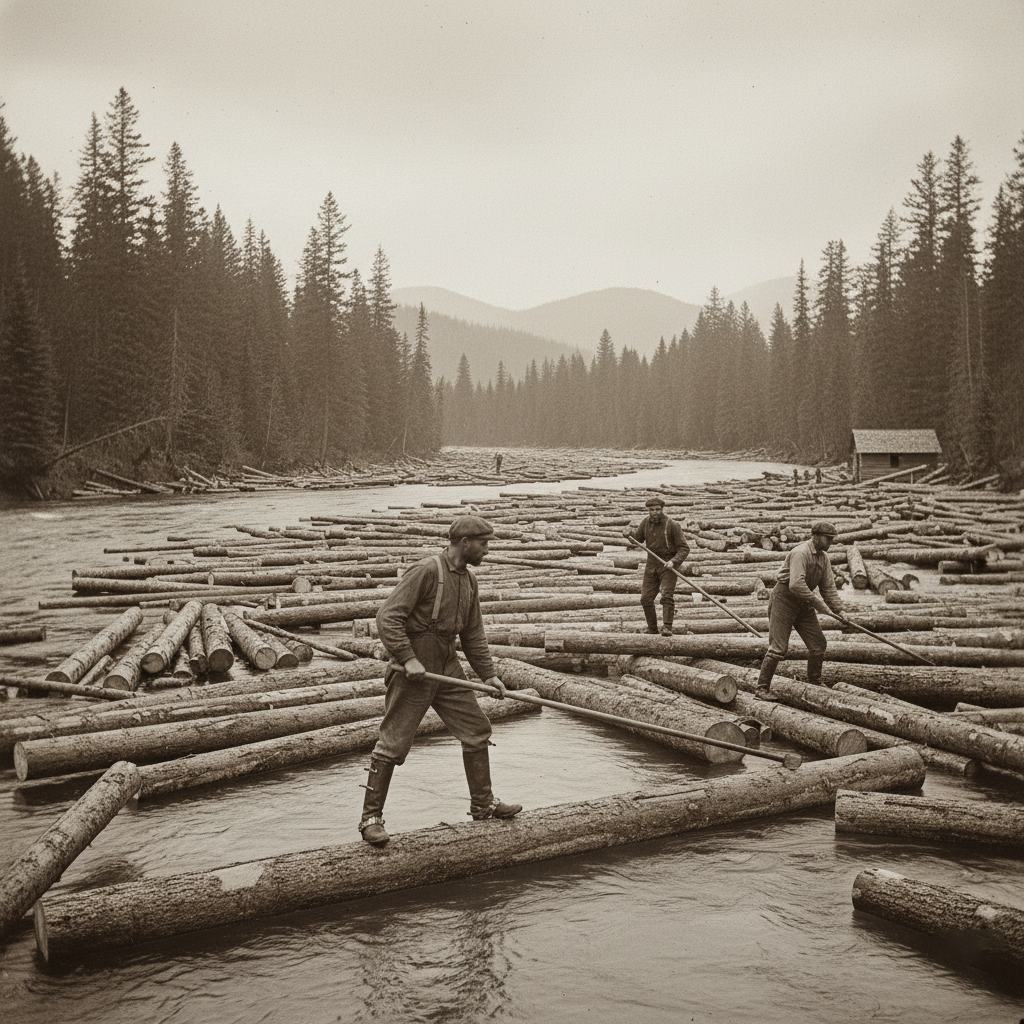 Past · Industrial RevolutionLog DriverIn the rugged landscapes of North America during the Industrial Revolution, the log driver emerged as a vital figure in the timber industry. These skilled laborers were responsible for guiding and maneuvering logs down rivers and streams to sawmills, where they would be processed into lumber for construction and other uses. The job required not only physical strength and endurance but also a deep understanding of the waterways and the behavior of timber. Log drivers often worked in teams, using their knowledge of currents and eddies to navigate the logs safely through treacherous waters, avoiding obstacles such as rocks and fallen trees. The sight of a log driver skillfully balancing on a floating log, using a long pole to steer, was a common and iconic image of the era.
The work was grueling and dangerous, with log drivers facing the constant threat of injury from the logs themselves, as well as the unpredictable nature of the rivers. Despite the hazards, the job was a source of pride, as log drivers were seen as rugged individuals embodying the spirit of the frontier. Their contributions were crucial to the booming timber industry, which fueled the growth of towns and cities across the continent, providing the lumber necessary for homes, railroads, and infrastructure.
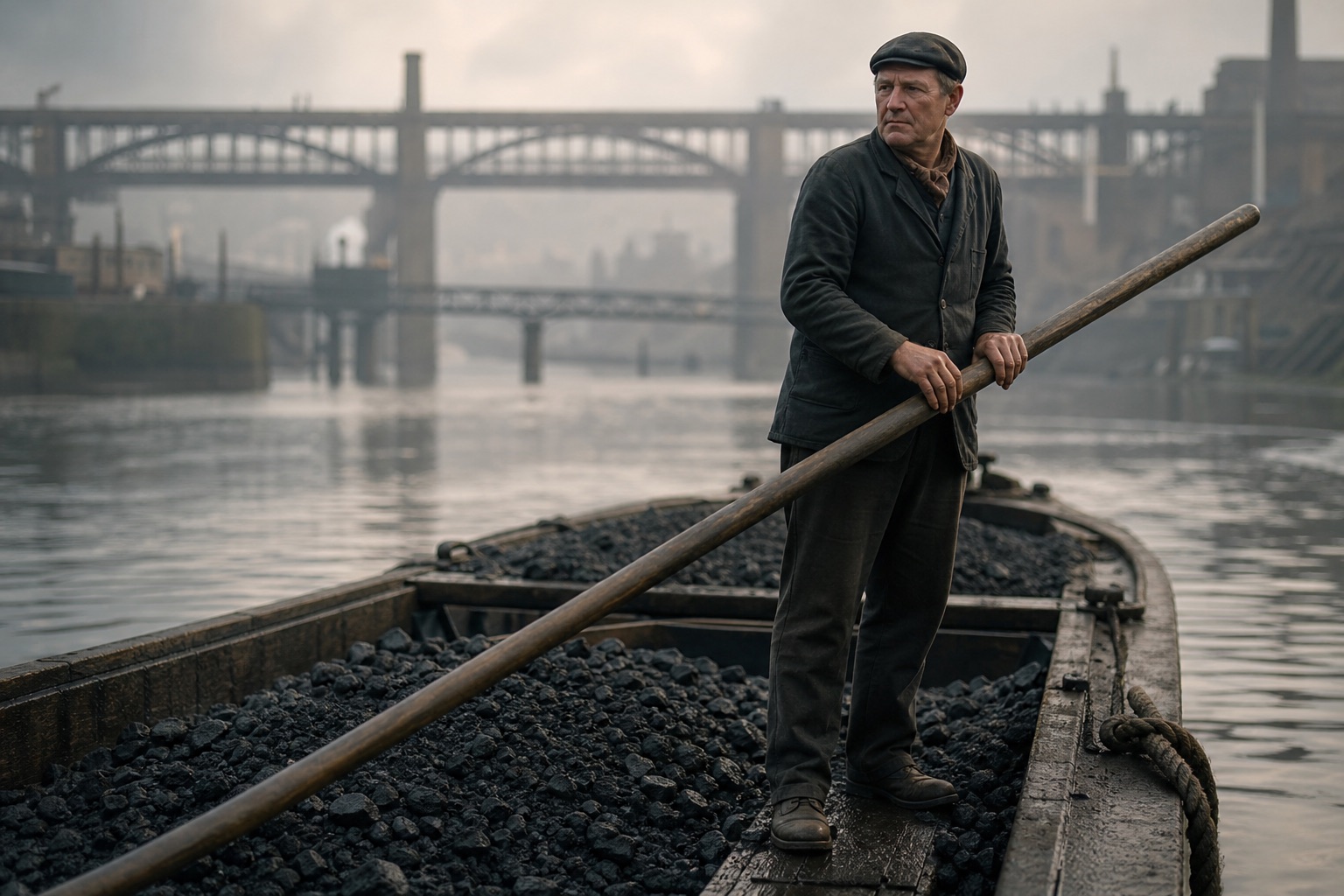 Past · Industrial RevolutionKeelmanA keel was a blunt, heavy barge, and a keelman was one of the crew that took coal down the Tyne from the upriver staiths to the colliers waiting in deeper water. The boat was too clumsy for a sail in that crowded river. The men drove it with a long sweep, a great oar worked over the side, and they lived in the Sandgate when they were not on it.
The keelmen were a closed community with their own society, their own hospital, and a habit of striking when the coal owners tried to cut the load or bypass them. The strike of 1819 is the famous one. It did not stop the staiths, the spouts, and the railways from eventually dropping coal straight into the ships. When the river no longer needed a barge in the middle, the keel went with it.
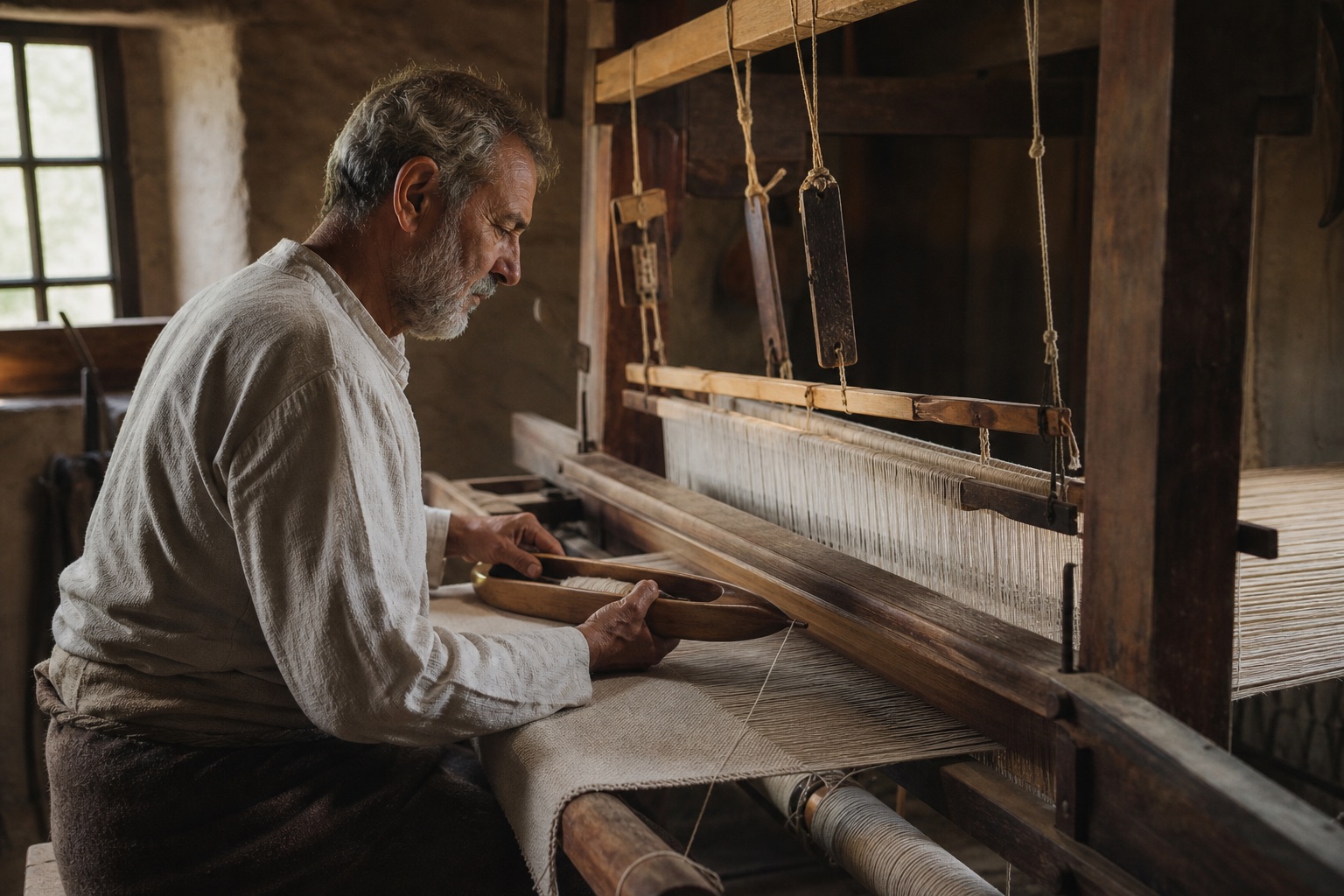 Past · Industrial RevolutionHandloom WeaverA handloom weaver worked at home. The loom stood in a cottage room, often kept damp so that cotton ends would not snap, and the weaver threw the shuttle and beat the weft a few inches an hour. Yarn came from a spinning mill or a woolstapler through a putter-out. The finished length went back to a warehouse to be measured, examined, and paid by the piece. Lancashire cotton villages were the centre of this work in the boom of the 1790s. Woollen weavers in the West Country, around Frome and Trowbridge, and in the West Riding lived by the same bargain: the loom and the room were the family's, and the cloth belonged to the merchant who had put out the yarn.
The ruin was a collapse of the piece rate, not a cartoon of men who hated machines. A cotton weaver earning close to a pound a week in the late 1790s was, in the parliamentary returns of the 1830s, often down to a few shillings for a longer week at the same loom. Power looms, patented in crude form by Edmund Cartwright in the 1780s and practical in Lancashire from the 1810s, were widespread in ordinary cottons by the 1840s, and woollen mills followed. Some crowds broke looms. Most weavers did not. They worked longer hours, asked Parliament for a legal minimum, were refused, and lost the trade when the warehouse cut the price below a living.
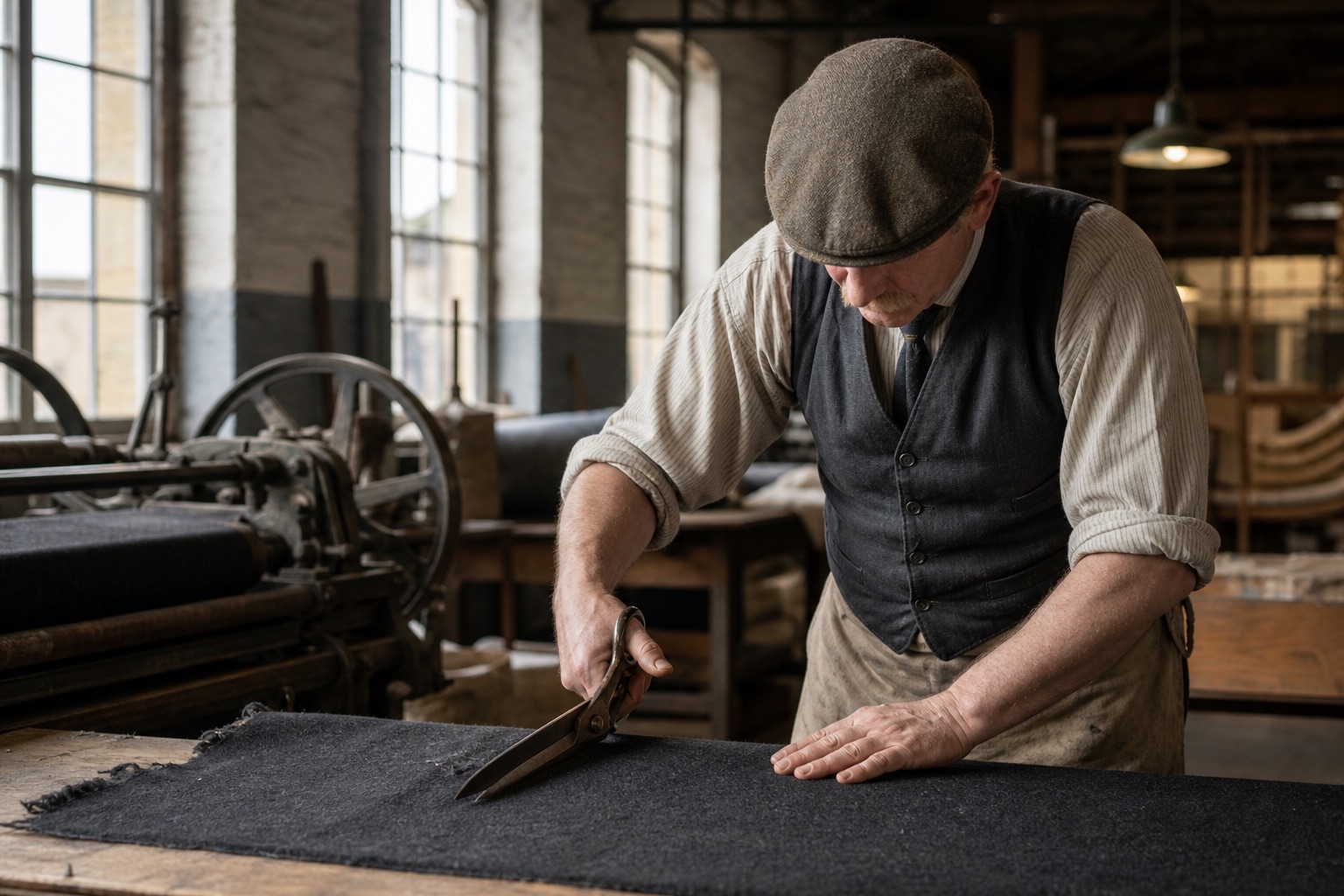 Past · Industrial RevolutionCropperA cropper, also called a shearman, finished woollen cloth. After fulling, he raised the nap with teazle heads and then cut that nap level with shears unlike a tailor's: blades several feet long, heavy enough that the work took a man's whole strength, used flat across a shearboard. A good cropper left a face as even as a close pile, without a ridge or a hole, and West Riding clothiers paid him as one of the aristocrats of the woollen trades. Huddersfield, Leeds, and the cloth villages of the Spen Valley were his ground. The shears were the skill. The cloth remained the clothier's property, brought to the shop and taken away dressed.
Gig mills, which raised the nap on teazles fixed round a cylinder, and shearing frames, which cropped with driven blades, took the skill off the board. In 1811 and 1812 Yorkshire croppers attacked those machines, including the assault on William Cartwright's mill at Rawfolds in the Spen Valley in April 1812. The attacks belong in the story of the trade. They are not what ended it. The frames dressed cloth faster and cheaper than a man with shears, the clothiers kept installing them, and the piece rate for hand cropping disappeared. Parliament answered the violence with the Frame Breaking Act of 1812. The finishing shops answered it by cropping on the machine.
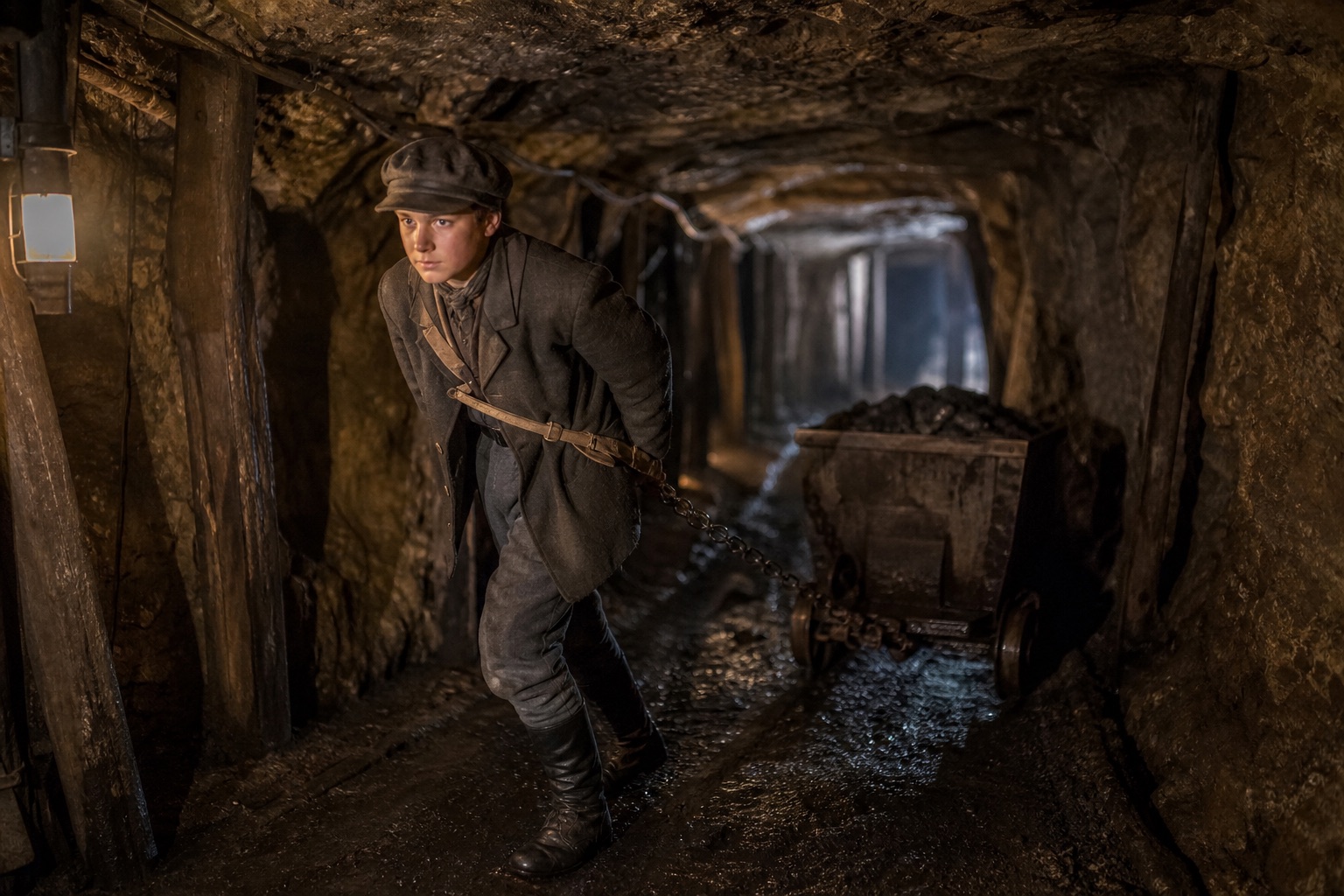 Past · Industrial RevolutionHurrierA hurrier moved coal along the low underground road between the face and the next stage of haulage. In thin British seams of the early nineteenth century that road was often too low for a pony, so a leather girdle was buckled at the waist and a chain ran back to a corve or a wooden tub. The hewer filled the box. The hurrier drew it, bent or on hands and feet, then returned for the next. In some pits a second child, the thruster, pushed from behind. Scottish coal bearers, usually women with creels, did a related but different carry, and this label stays with the chain and the tub.
Girls and boys both hurried, and adult women hauled underground in some districts, until the Mines and Collieries Act 1842. That Act barred every woman and girl from underground work and barred boys under ten. Lord Ashley's bill followed the Children's Employment Commission, whose sub-commissioners had gone into the pits and published the harness, the hours, and the ages. This exhibit is that pre-1842 haul. The wording stays on the road, the girdle, the tub, and the statute. It does not describe injuries. Parliament's answer was an age line, a sex line, and inspectors, which is the fact the label is built to carry.
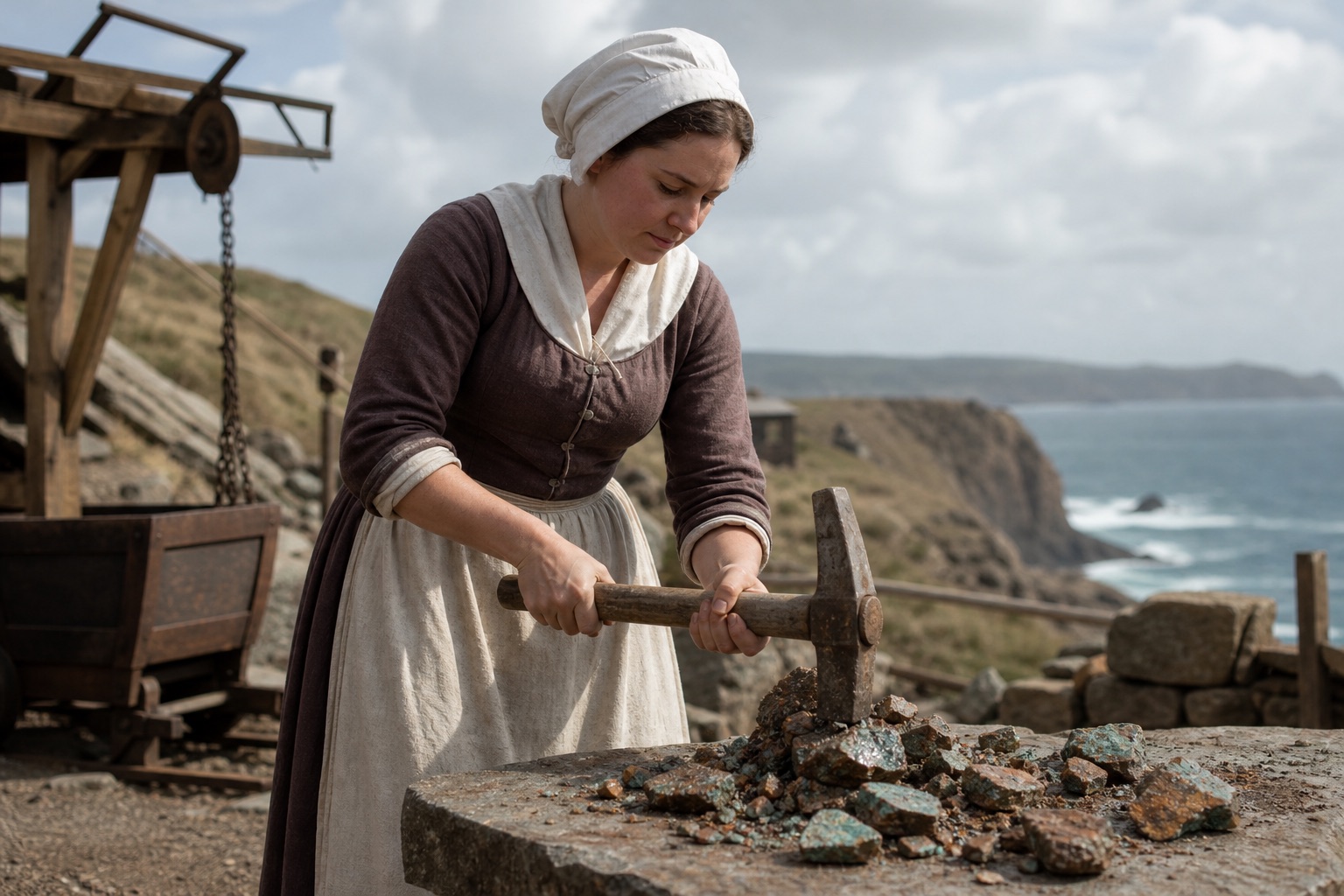 Past · Industrial RevolutionBal-maidenA bal-maiden broke and sorted copper ore, and sometimes tin, on the surface dressing floor of a Cornish or West Devon mine. She was not underground. The word bal is the mine itself. On a paved or boarded floor open to the weather she used a bucking hammer, a short-handled flat-faced tool, to crush ore small enough to be washed, and a heavier cobbing hammer on the larger stones. Waste rock was picked out by eye. Dressed ore went on to buddles and the rest of the surface plant, where water separated the heavier mineral.
The trade runs from the eighteenth century, when these copper mines expanded, into the early twentieth, when the same mines closed and mechanical stamps, crushers, and later flotation did the breaking. The Mines and Collieries Act 1842 cleared women from underground work. It did not clear the dressing floor, and bal-maidens remained a normal part of the surface payroll long after that Act. Census returns use the title in Cornwall and around Tavistock. Devon Great Consols was among the large employers. The label is this hand floor, not a romantic pit woman and not a child-haulage job.
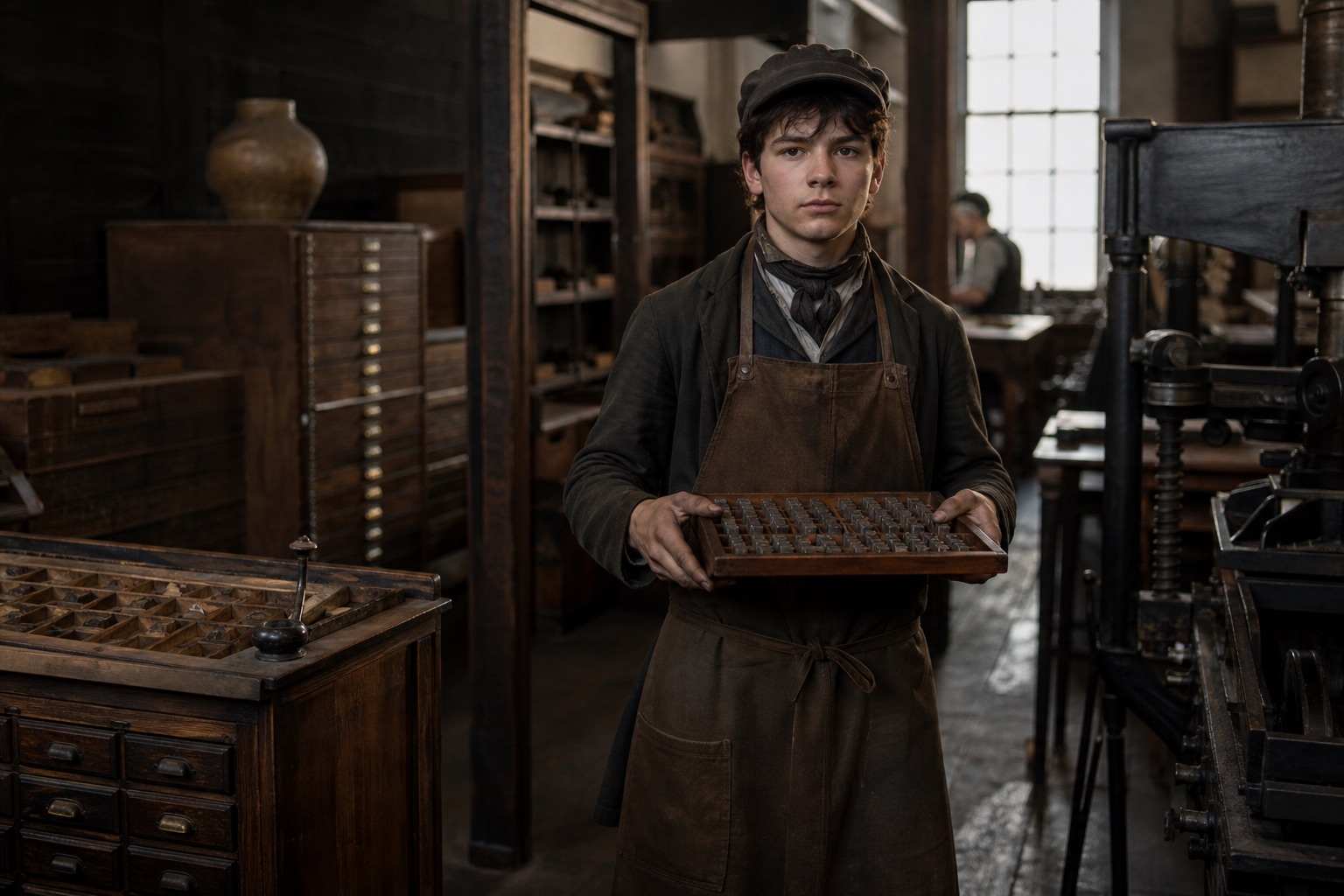 Past · Industrial RevolutionPrinter's DevilA printer's devil was the youngest pair of hands in a letterpress shop. He fetched missing sorts from the type case, put used letters back into their boxes, inked the forme, and swept metal dust off the floor. He learned the lay of the case by running for letters, not from a chart pinned on the wall. Chapel custom, the shop's own little government, fixed his place at the bottom: fines, errands, and the order of the room were not written in a schoolbook. Visitors saw black nails and a paper cap, not a mascot performing for the trade.
The post runs from eighteenth-century hand presses into early twentieth-century newspaper rooms. It assumed a boy could grow into a compositor because every line was still set by hand. Jobbing shops that printed cards and bills used him as surely as book houses did. County weeklies kept such a boy after many city dailies had already bought a linecaster. The work was ordinary juvenile labor inside a proud craft, documentary rather than theatrical, and it ended when that ladder was taken away.