
c. 1800–1920
Children at work
Exhibits in which the worker was a child, and the law that took them out is part of the story.
Hurriers, breaker boys, match girls, climbing boys, and the printer's devil. The 1842 reports and the factory acts are the documents.
The job is described. The injury is not staged.
In this theme
14
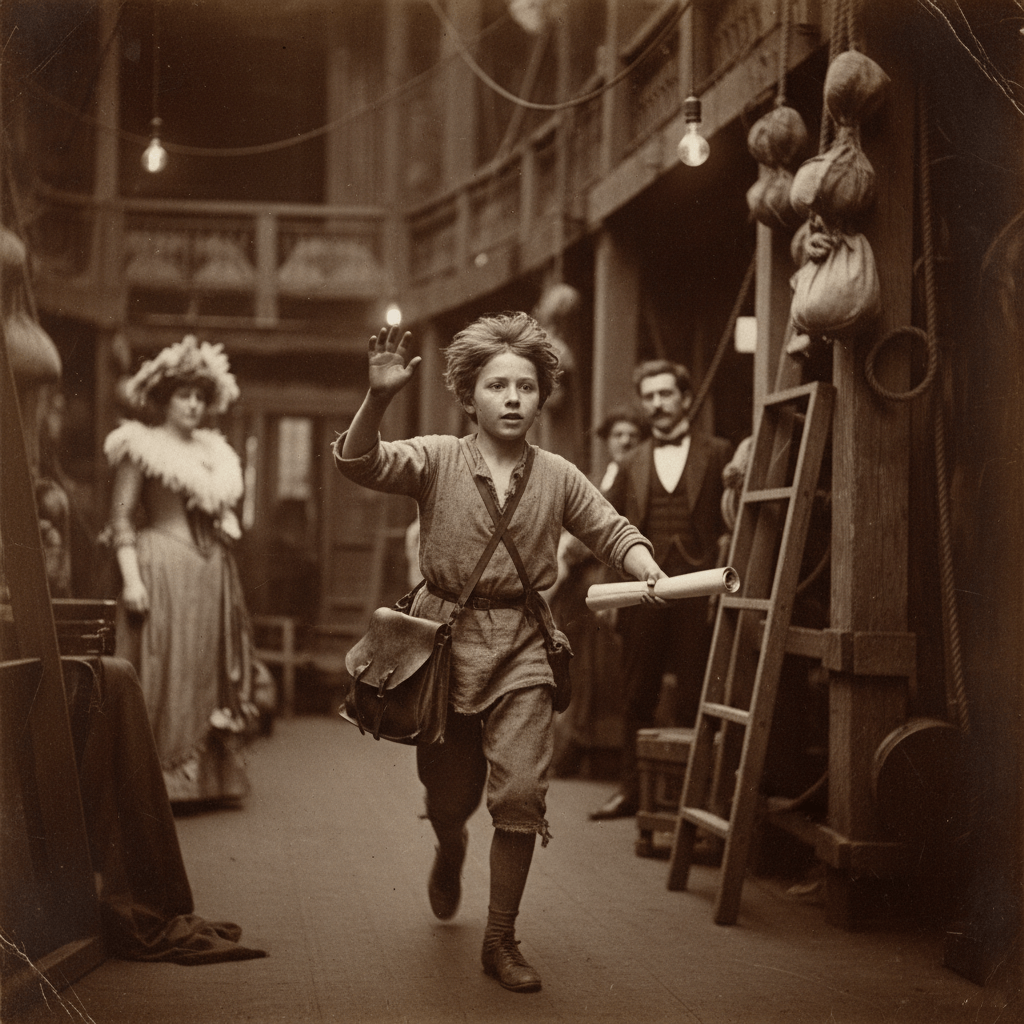 Past · Victorian EraTheatre Call BoyThe Theatre Call Boy was an essential figure in the vibrant world of Victorian theatre, acting as the vital link between the stage and the backstage. This young boy, often between the ages of 10 and 15, was responsible for ensuring that the performance ran smoothly by delivering messages and calls to actors, stagehands, and other crew members. With a keen sense of timing and an ability to navigate the bustling theatre environment, the call boy would often be found darting through the dimly lit corridors, his footsteps echoing against the wooden floors, as he relayed cues for entrances, exits, and scene changes.
The role required not only speed and agility but also a deep understanding of the production schedule and the ability to communicate effectively under pressure. The call boy would often carry a small bell or whistle to signal the start of a performance or a scene change, ensuring that everyone was in their proper place at the right time. In an era when performances were often elaborate and lengthy, the call boy's role was crucial in maintaining the rhythm and flow of the show, making him a beloved figure among the cast and crew alike.
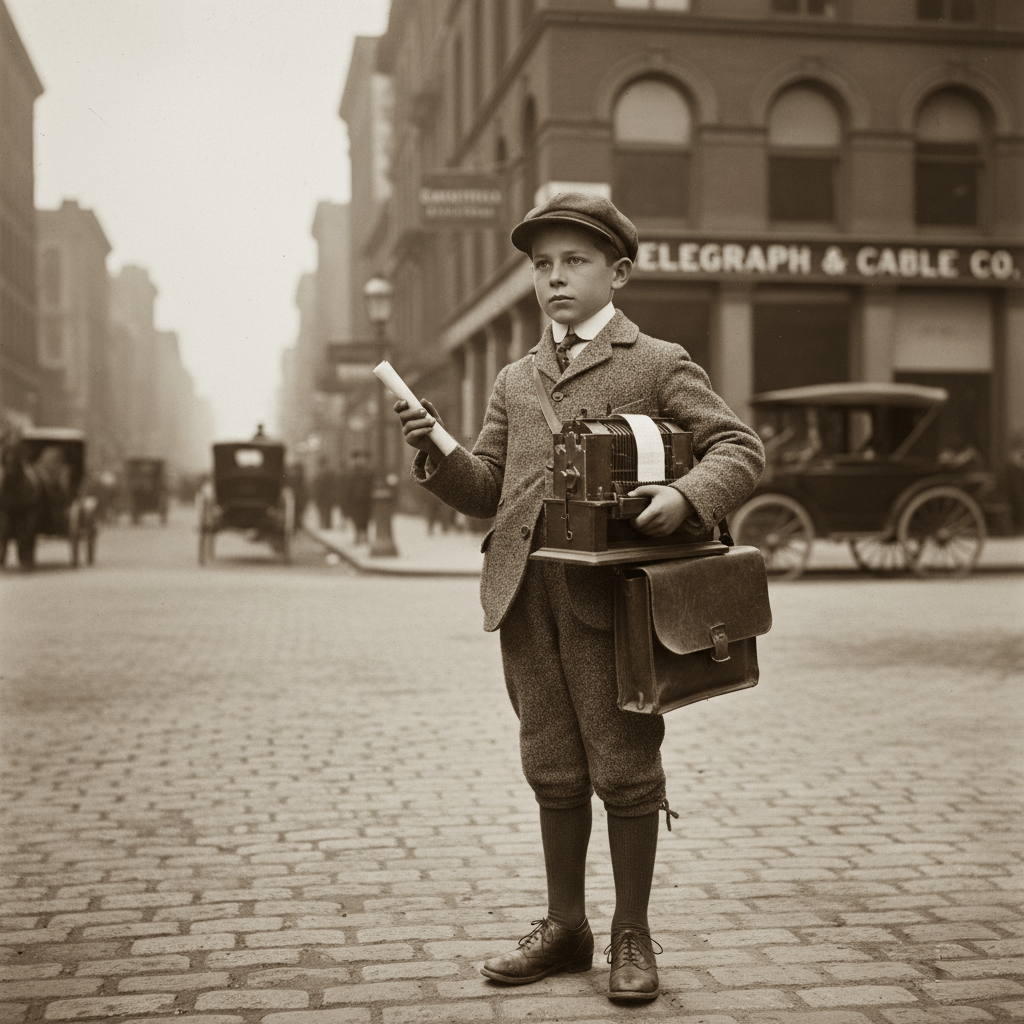 Past · Victorian EraTelemark BoyThe role of the Telemark Boy emerged during the Victorian Era, a time marked by rapid industrialization and the expansion of the British Empire. These young boys, typically between the ages of 10 and 15, were employed in the bustling telegraph offices that dotted cities and towns across the United Kingdom. Their primary responsibility was to assist telegraph operators by delivering messages and relaying information between offices and clients. The telegraph was a revolutionary technology of the time, allowing for near-instantaneous communication over long distances, and the Telemark Boys were essential to its operation.
Dressed in simple, often worn clothing, these boys navigated the busy streets, carrying messages in leather satchels. They were known for their speed and agility, darting through crowds and dodging horse-drawn carriages to ensure that messages reached their destinations promptly. The job required not only physical stamina but also a keen sense of direction and the ability to read and write, as they often had to transcribe messages before delivering them.
The social context of the era saw many children entering the workforce at a young age, often out of necessity due to family financial pressures. The work of a Telemark Boy was seen as a stepping stone for many, providing them with a glimpse into the burgeoning world of communication and technology, while also exposing them to the harsh realities of child labor during this period.
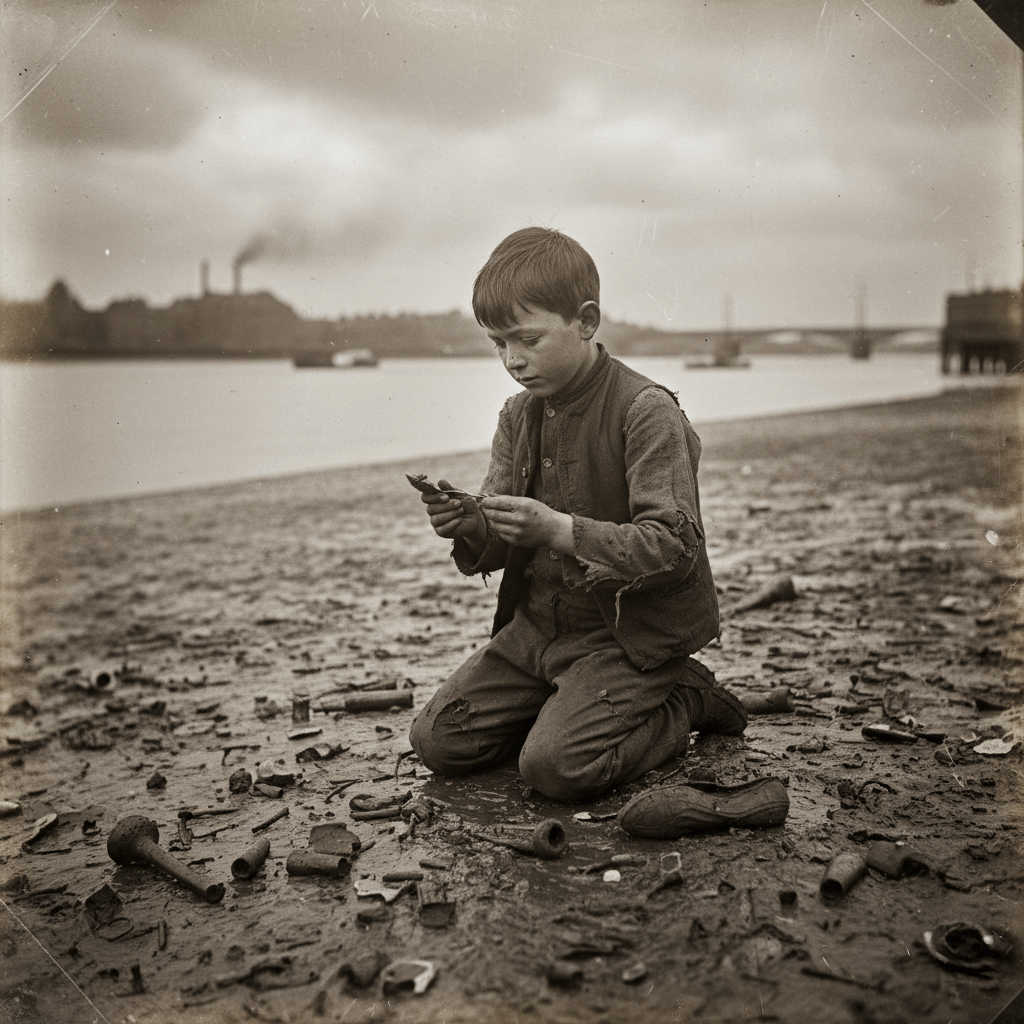 Past · Victorian EraMudlarkThe term 'mudlark' refers to individuals, often children or the impoverished, who scavenged the banks of rivers, particularly the River Thames in London, during the Victorian Era. These individuals would sift through the mud and debris left behind by the receding tide, searching for anything of value that could be sold or repurposed. The job was born out of necessity, as many families faced extreme poverty and relied on the meager earnings from scavenging to survive. Mudlarks would find items such as old coins, jewelry, pottery, and even discarded household goods, which they could sell to local traders or at markets. The work was physically demanding and often dangerous, as the muddy banks could be treacherous, and the waters of the Thames were known for their strong currents and pollution. Despite the harsh conditions, mudlarks played a crucial role in the urban economy, contributing to the recycling of materials long before the concept became mainstream.
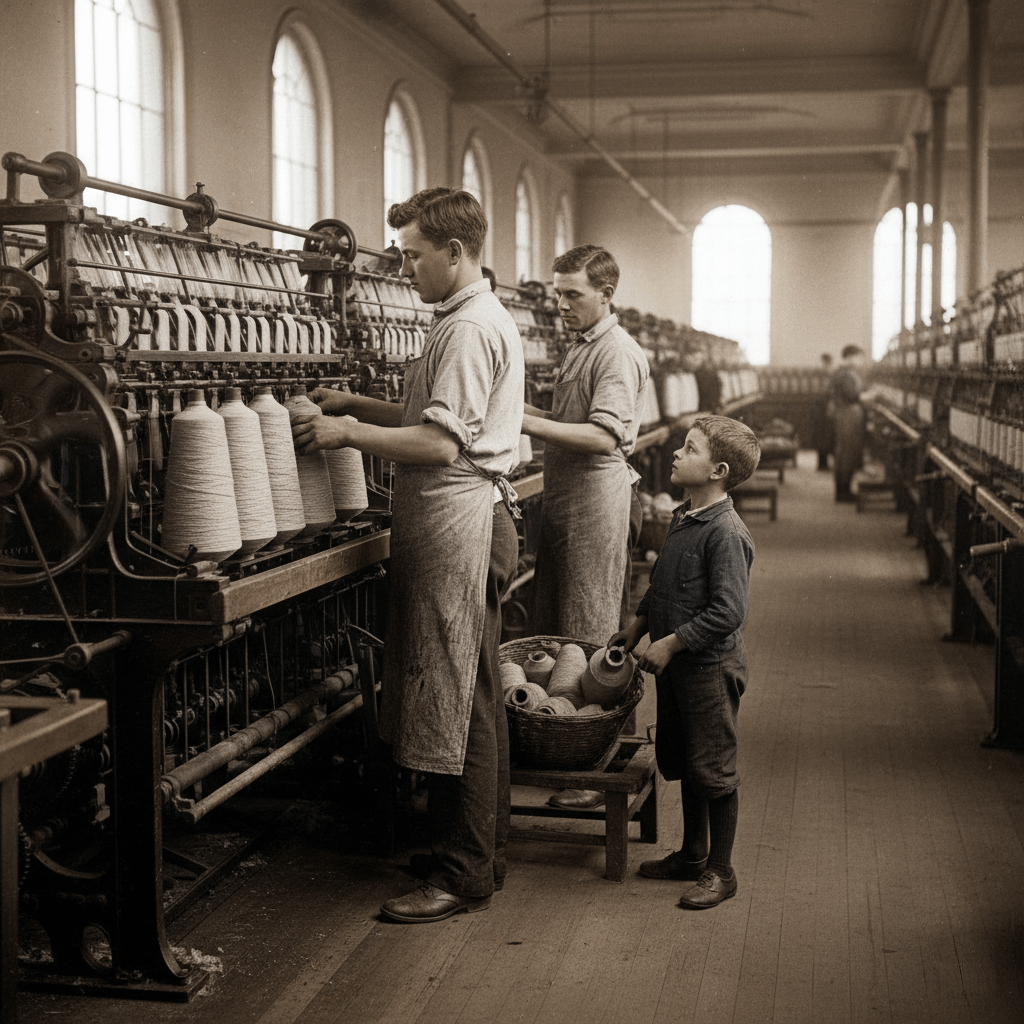 Past · Industrial RevolutionSlubber DofferThe slubber doffer was a crucial figure in the textile industry during the Industrial Revolution, primarily responsible for the maintenance and operation of spinning machines. These workers played a vital role in ensuring that the production of yarn and thread ran smoothly in the bustling textile mills of the 18th and 19th centuries. The term 'slubber doffer' specifically referred to those who removed the full bobbins of spun yarn from the spinning frames and replaced them with empty ones, a task that required both physical dexterity and a keen understanding of the machinery involved. The slubber doffer's work was often performed in a noisy, fast-paced environment, where the clatter of machines filled the air, and the smell of raw cotton and wool was ever-present.
The job was typically held by young boys and girls, often as young as eight or nine, who were employed in the mills due to their small stature, which allowed them to navigate the cramped spaces between the machines. The slubber doffer's day was filled with the repetitive yet essential task of ensuring that the spinning process continued without interruption, a job that was physically demanding and required a high level of attention to detail.
Despite the harsh working conditions, slubber doffers were an integral part of the textile production process, contributing to the rapid growth of the textile industry, which was a cornerstone of the Industrial Revolution. Their labor was essential in meeting the increasing demand for textiles, which fueled both domestic and international markets.
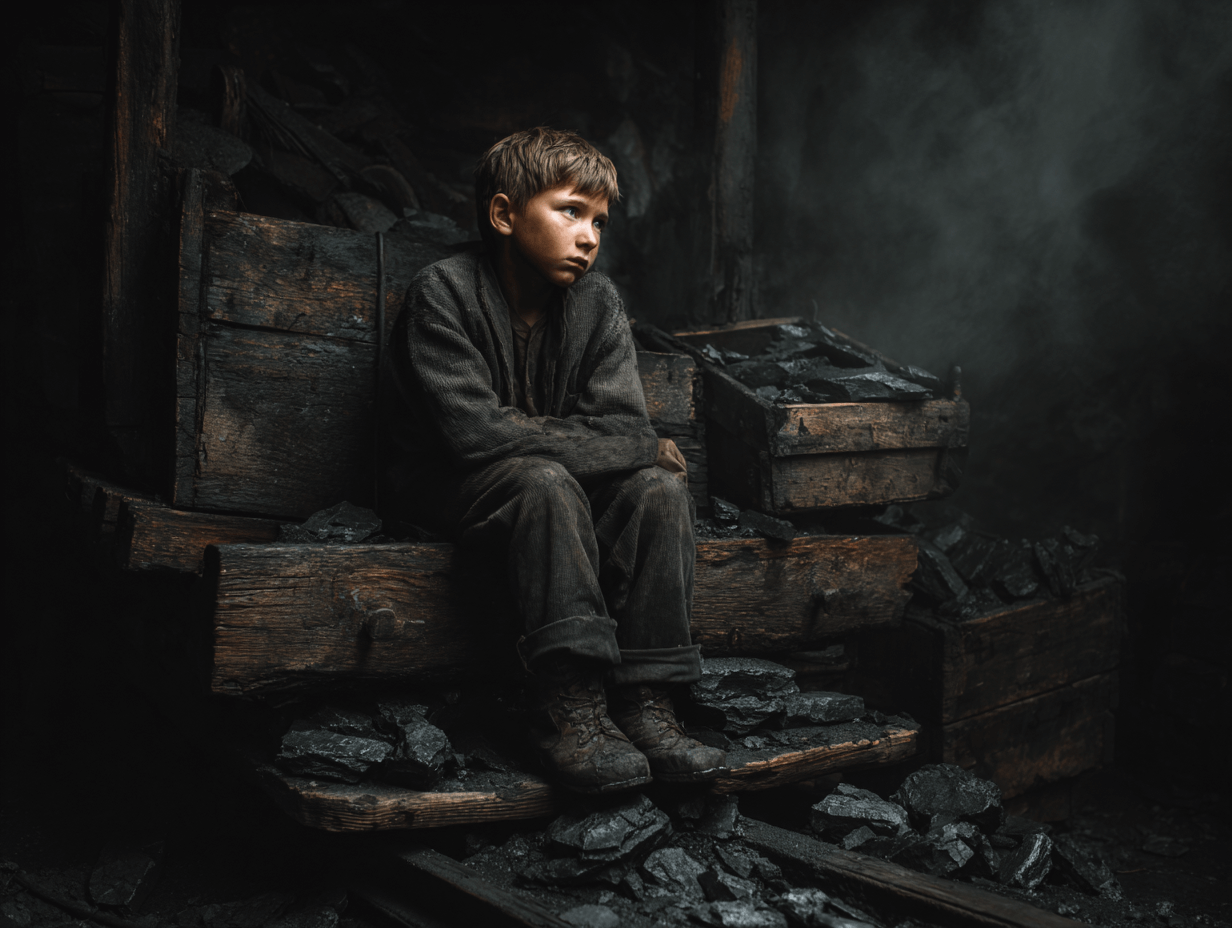 Past · Industrial RevolutionBreaker BoyThe role of a Breaker Boy emerged during the Industrial Revolution, particularly in the coal mining regions of the United States, where the demand for coal surged to fuel the burgeoning industries. Breaker Boys were young boys, often between the ages of 8 and 12, who worked in coal breaker facilities. Their primary responsibility was to separate impurities from coal, a crucial step in preparing the coal for market. This labor-intensive job involved sitting on a high platform above a conveyor belt, where they would pick out rocks, slate, and other debris from the coal as it passed by. The work was not only monotonous but also hazardous, as the boys were exposed to coal dust and the risk of injury from the machinery. Breaker Boys typically worked long hours, often from dawn until dusk, in poorly ventilated and unsafe conditions, earning a meager wage that reflected the exploitative labor practices of the time. The job was emblematic of the harsh realities faced by child laborers during the Industrial Revolution, highlighting the intersection of economic necessity and social injustice.
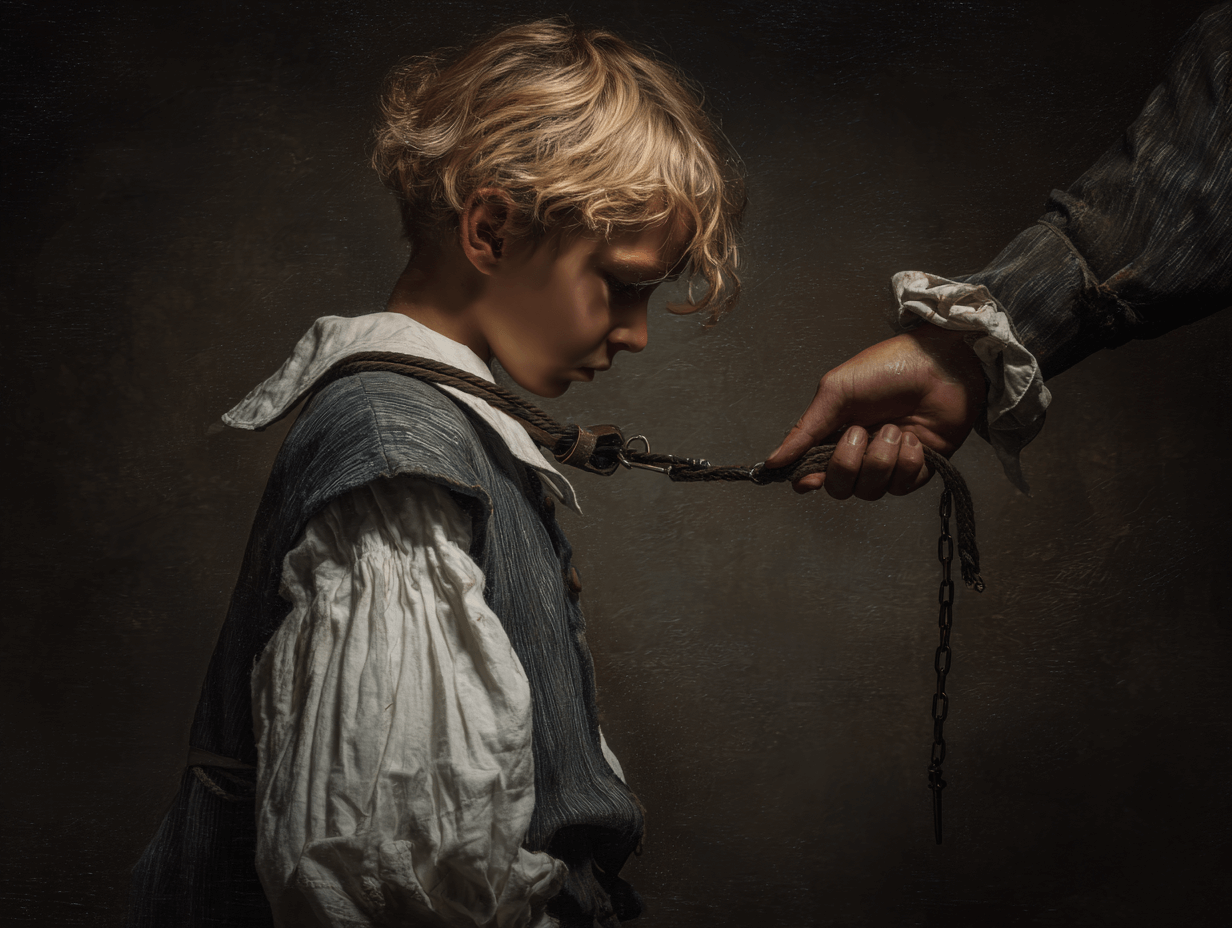 Past · Medieval PeriodWhipping BoyThe role of a whipping boy was a peculiar and often misunderstood position in the royal courts of Europe, particularly during the 15th to 17th centuries. A whipping boy was a young boy, often of noble birth, who was assigned to a prince or young nobleman. The unique aspect of this role was that the whipping boy would receive punishment on behalf of the prince when the latter misbehaved or failed to meet educational expectations. This practice stemmed from the belief that it was inappropriate to physically punish a royal child, so the whipping boy served as a surrogate for discipline.
The relationship between the prince and his whipping boy was complex; while the whipping boy was subjected to physical punishment, he often enjoyed privileges and a close bond with the prince, sharing in the education and courtly life. This role was not merely one of suffering; it involved companionship, loyalty, and sometimes even friendship, as the boys grew up together in the opulent yet demanding environment of the court.
The whipping boy's existence highlights the social hierarchies and educational practices of the time, where the nobility sought to instill discipline and responsibility in their heirs without tarnishing their royal status. The role was a reflection of the era's values, where physical punishment was a common method of discipline, yet the nobility sought to protect their own from such indignities.
 Past · Age of ExplorationPowder MonkeyThe term 'powder monkey' refers to young boys, typically between the ages of 10 and 18, who were employed on naval ships during the Age of Exploration and beyond, particularly in the 17th to 19th centuries. Their primary responsibility was to transport gunpowder from the ship's magazine to the cannons during naval battles. This role was crucial, as the effectiveness of a ship's artillery depended on the swift and safe delivery of gunpowder, which was highly volatile and dangerous.
Powder monkeys were often orphans or boys from impoverished backgrounds, seeking work on ships as a means of survival. They were known for their agility and speed, which were essential for navigating the often cramped and chaotic conditions aboard a ship during battle. The job was perilous; the boys had to be quick and careful, as a single spark could lead to catastrophic explosions.
In addition to their role in battle, powder monkeys also assisted in the maintenance of the ship's armaments and were sometimes tasked with cleaning and loading cannons. Their work was physically demanding and required a level of bravery that belied their youth. Despite the dangers, many powder monkeys were proud of their roles, often dreaming of becoming full sailors or officers one day.
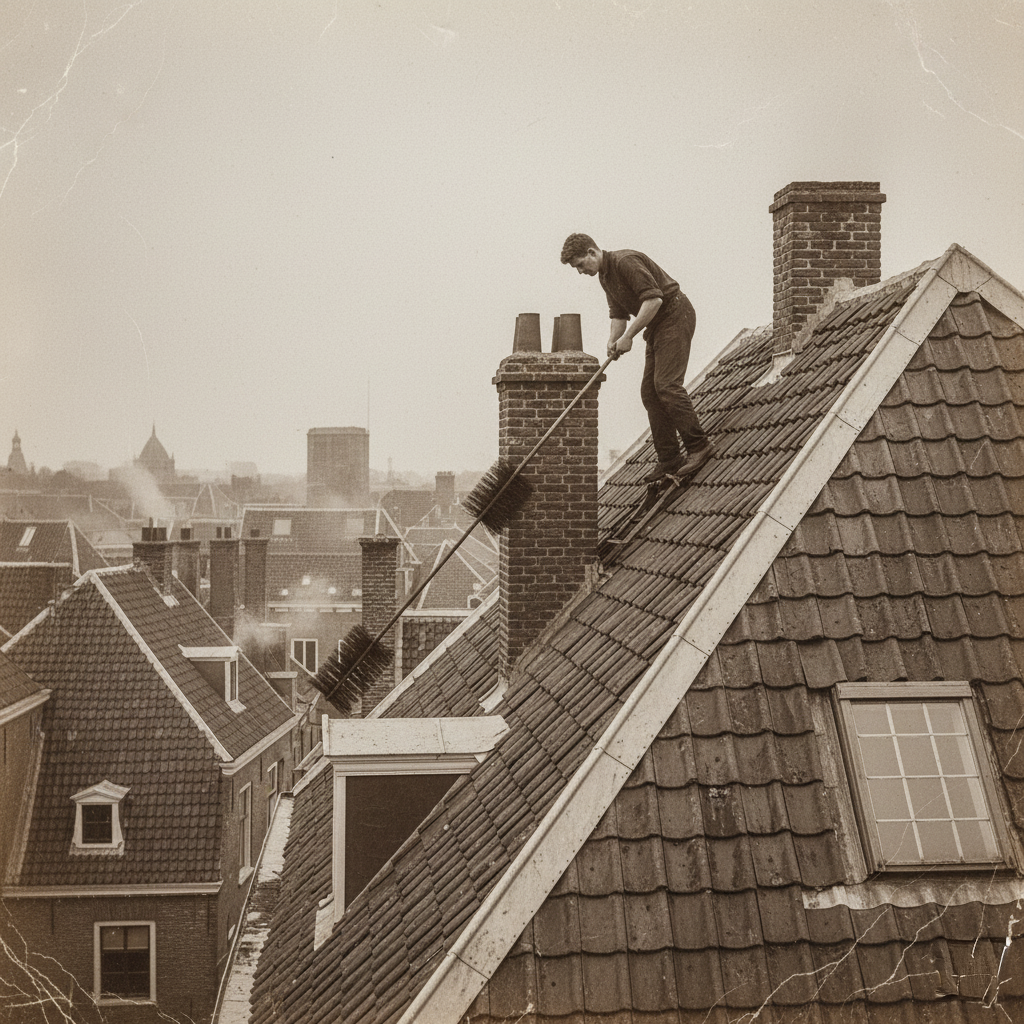 Past · Victorian EraChimney SweepThe role of a chimney sweep was crucial in the Victorian Era, particularly in urban areas where coal was the primary source of heating. As homes and factories proliferated, so did the need for clean chimneys to prevent dangerous chimney fires and ensure proper ventilation. Chimney sweeps were responsible for cleaning soot and creosote buildup from chimneys, which could lead to hazardous conditions if left unchecked. The job was often performed by young boys, some as young as six, who would climb into narrow flues to scrape away the soot. This labor-intensive work required not only physical agility but also a keen understanding of the structure of chimneys and the dangers associated with them. The job was often grueling, with sweeps working long hours in cramped, dark spaces, and it was not uncommon for them to suffer from respiratory issues due to the soot they inhaled. Despite the harsh conditions, chimney sweeps played a vital role in maintaining the safety of homes during a time when coal was the dominant fuel source.
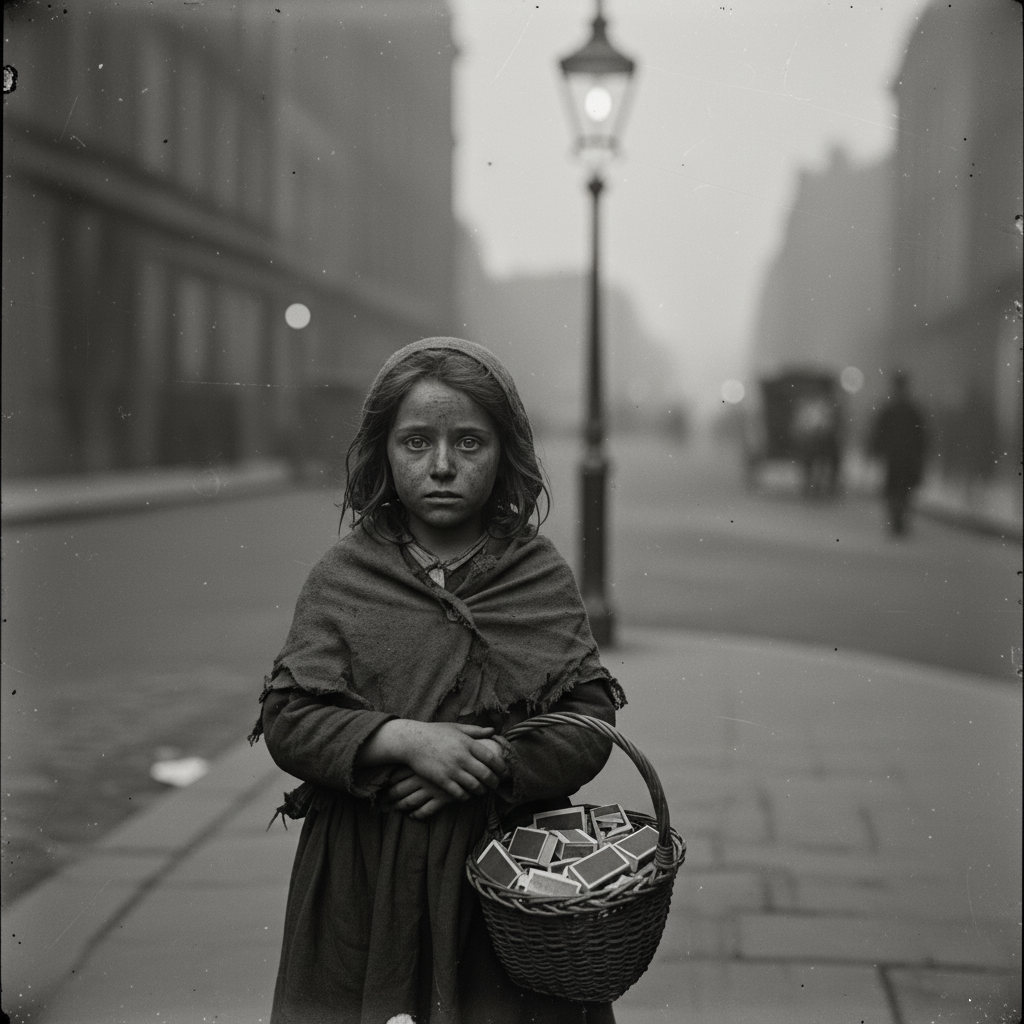 Past · Victorian EraMatchstick GirlThe role of a Matchstick Girl emerged during the Victorian Era, a time marked by rapid industrialization and urbanization in Britain. These young girls, often as young as six years old, were employed to sell matches on the streets of cities like London. The job was not only a means of survival for the girls and their families but also a reflection of the harsh realities of the working class during this period. The matchstick girls were typically from impoverished backgrounds, and their earnings were crucial for their families' subsistence. They would often work long hours, braving the elements, to sell boxes of matches to passersby, including shopkeepers and households. The matches were sold at a low price, and the girls would often carry their wares in small baskets or bags, calling out to potential customers in hopes of making a sale.
The work was grueling and dangerous; the girls were exposed to the elements, and many suffered from health issues due to malnutrition and the harsh conditions of street life. The matches themselves were often made with hazardous materials, leading to serious health risks, including phosphorus poisoning, which was a common affliction among those who worked with match production. Despite these dangers, the job was a vital source of income for many families, and the plight of the matchstick girls eventually drew public attention, leading to social reform movements aimed at improving working conditions for children.
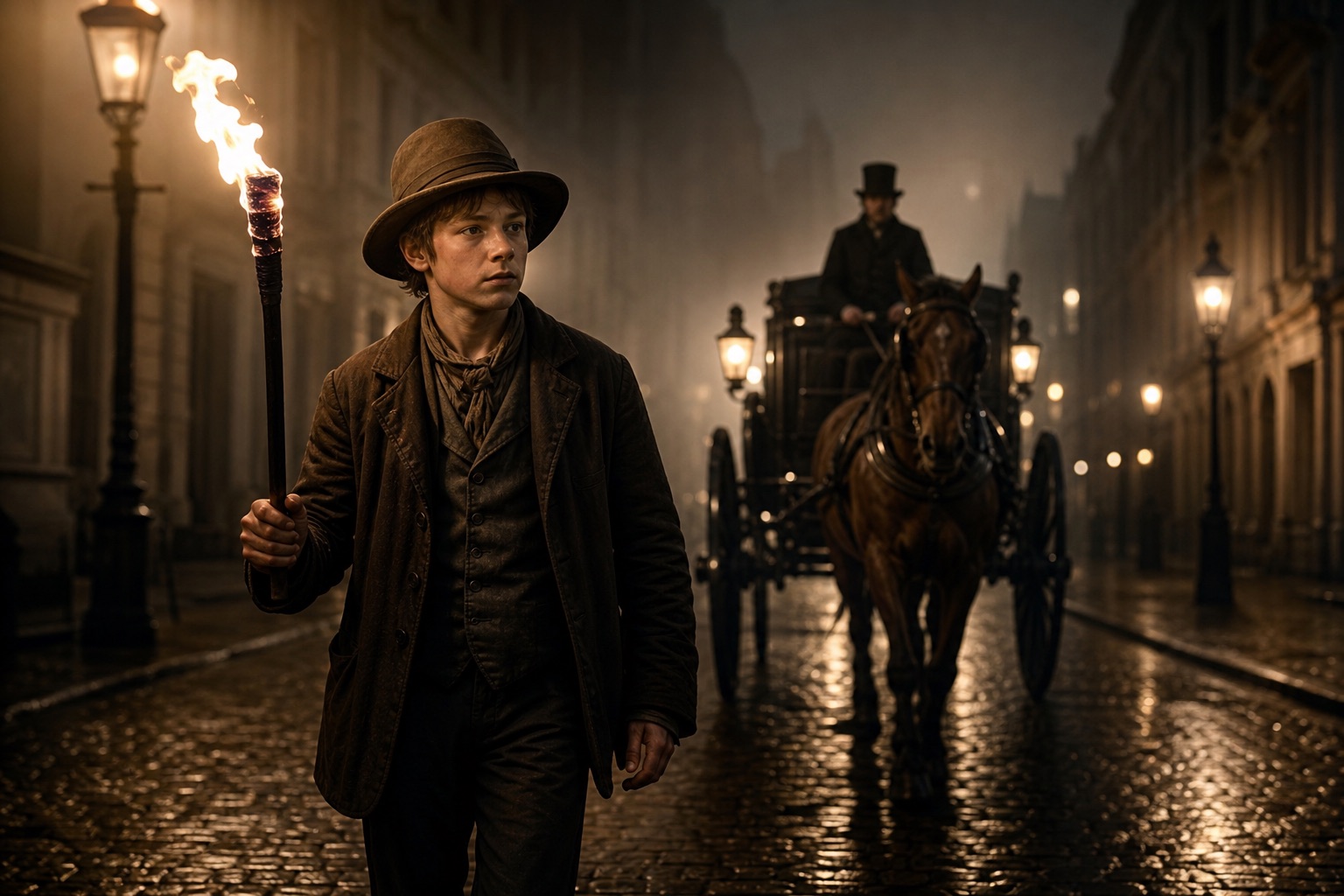 Past · Georgian EraLinkboyA linkboy carried fire through a city that had not yet been given street lamps. In London, from the later seventeenth century into the early nineteenth, anyone who left a playhouse, a tavern, or a private house after dark had to cross streets that were muddy, uneven, and often deliberately dark. The link was a torch of rope, pitch, or resin on a pole. The boy, or sometimes a grown man in the same trade, walked ahead of the fare and sold the light by the journey.
The work sat in a bad reputation as well as a useful one. An honest linkboy was a piece of street infrastructure. A dishonest one could lead a drunk customer into a court where companions were waiting. Parish officers and satirists treated the whole trade as a nuisance, which did not stop theater crowds from shouting for a light when the doors opened. The job lasted as long as the darkness did.
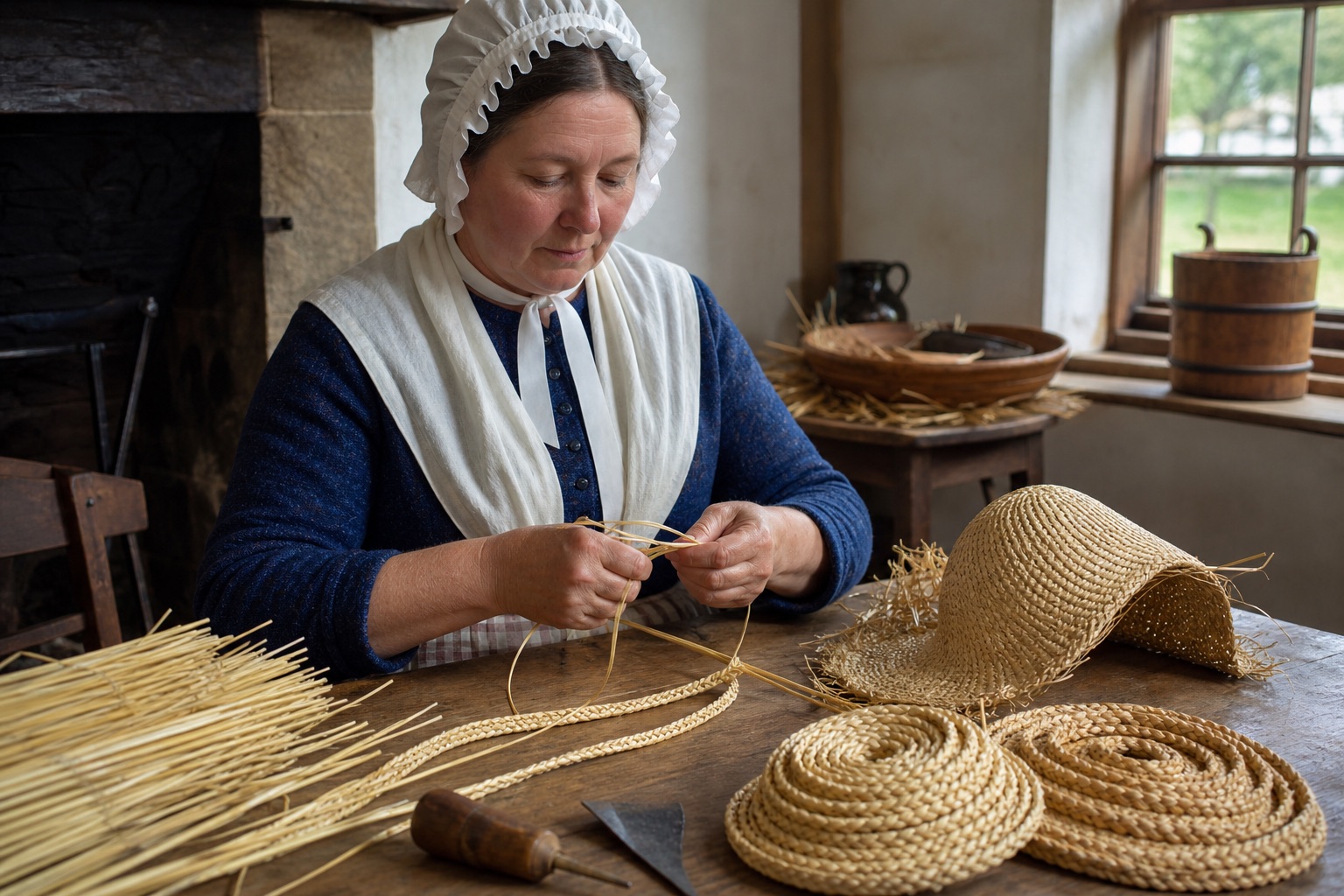 Past · Victorian EraStraw-PlaiterStraw plait was a narrow braid of split wheat straw, made in the cottages of Bedfordshire, Buckinghamshire, and Hertfordshire and sold to the hat trade of Luton and Dunstable. The plaiter damped the straws, split them, and worked a set pattern, joining a fresh straw so the edge did not lump, until she had a score of twenty yards. That score was the unit of the weekly plait market. Women and children did the work. In a village plait school a child could sit the day for pence, and a mother made her own scores in the evening for a few shillings when the buyers were kind. The hat factories turned the braid into bonnets and hats. The cottage sold them braid, not hats.
Luton's hat industry continued. The local hand plait did not. Italian straw, including the Leghorn and Tuscan kinds, had long been a finer rival for the best hats. In the late nineteenth century cheap plait from China arrived in amounts the south Midlands could not underbid. Sewing machines and factory blocking then made hats from that imported braid, or from other materials, without a village score at all. By the early twentieth century a girl in a Bedfordshire parish was no longer set to plait as her mother had been. The market had stopped paying an English hand price for the hours in the braid.
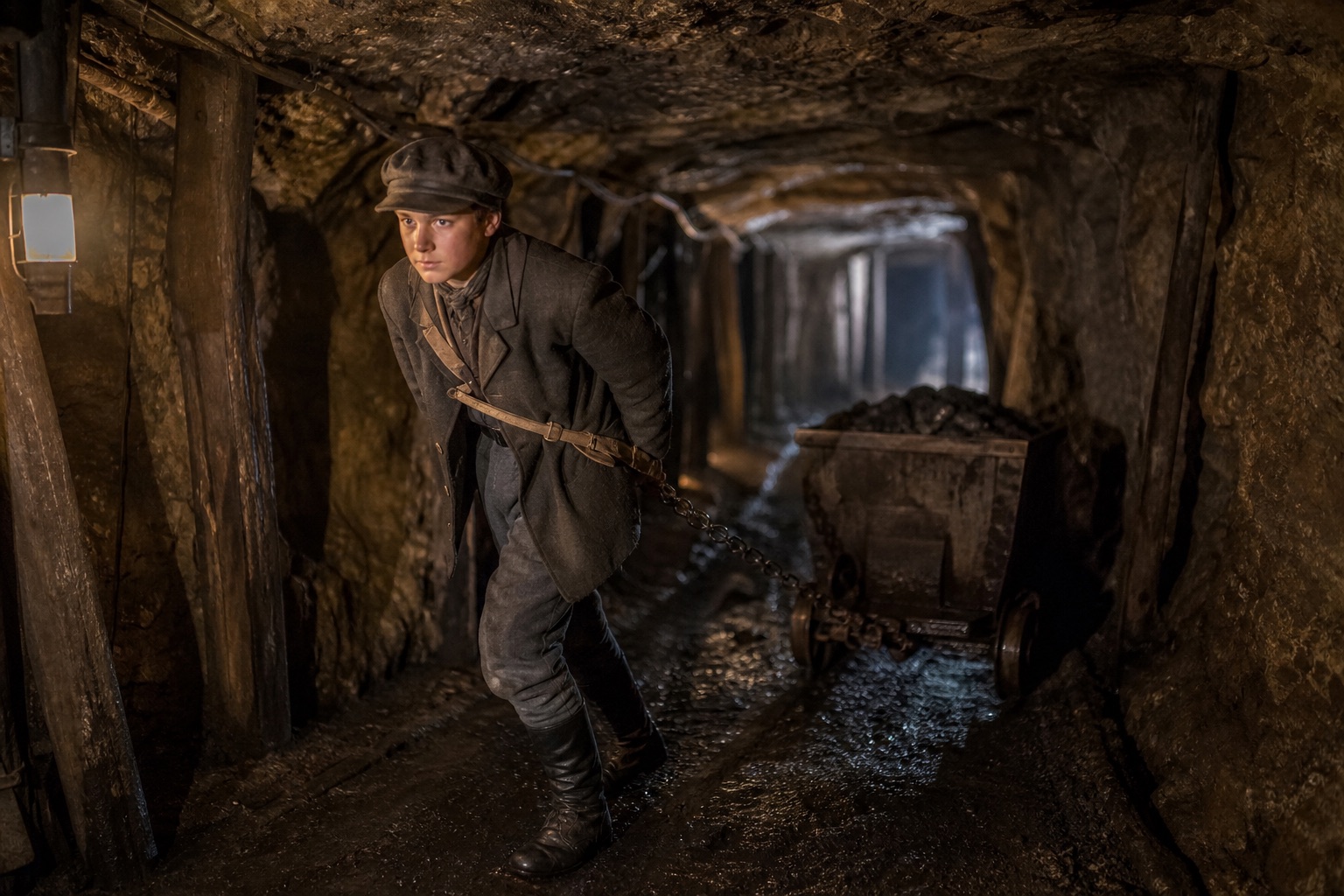 Past · Industrial RevolutionHurrierA hurrier moved coal along the low underground road between the face and the next stage of haulage. In thin British seams of the early nineteenth century that road was often too low for a pony, so a leather girdle was buckled at the waist and a chain ran back to a corve or a wooden tub. The hewer filled the box. The hurrier drew it, bent or on hands and feet, then returned for the next. In some pits a second child, the thruster, pushed from behind. Scottish coal bearers, usually women with creels, did a related but different carry, and this label stays with the chain and the tub.
Girls and boys both hurried, and adult women hauled underground in some districts, until the Mines and Collieries Act 1842. That Act barred every woman and girl from underground work and barred boys under ten. Lord Ashley's bill followed the Children's Employment Commission, whose sub-commissioners had gone into the pits and published the harness, the hours, and the ages. This exhibit is that pre-1842 haul. The wording stays on the road, the girdle, the tub, and the statute. It does not describe injuries. Parliament's answer was an age line, a sex line, and inspectors, which is the fact the label is built to carry.
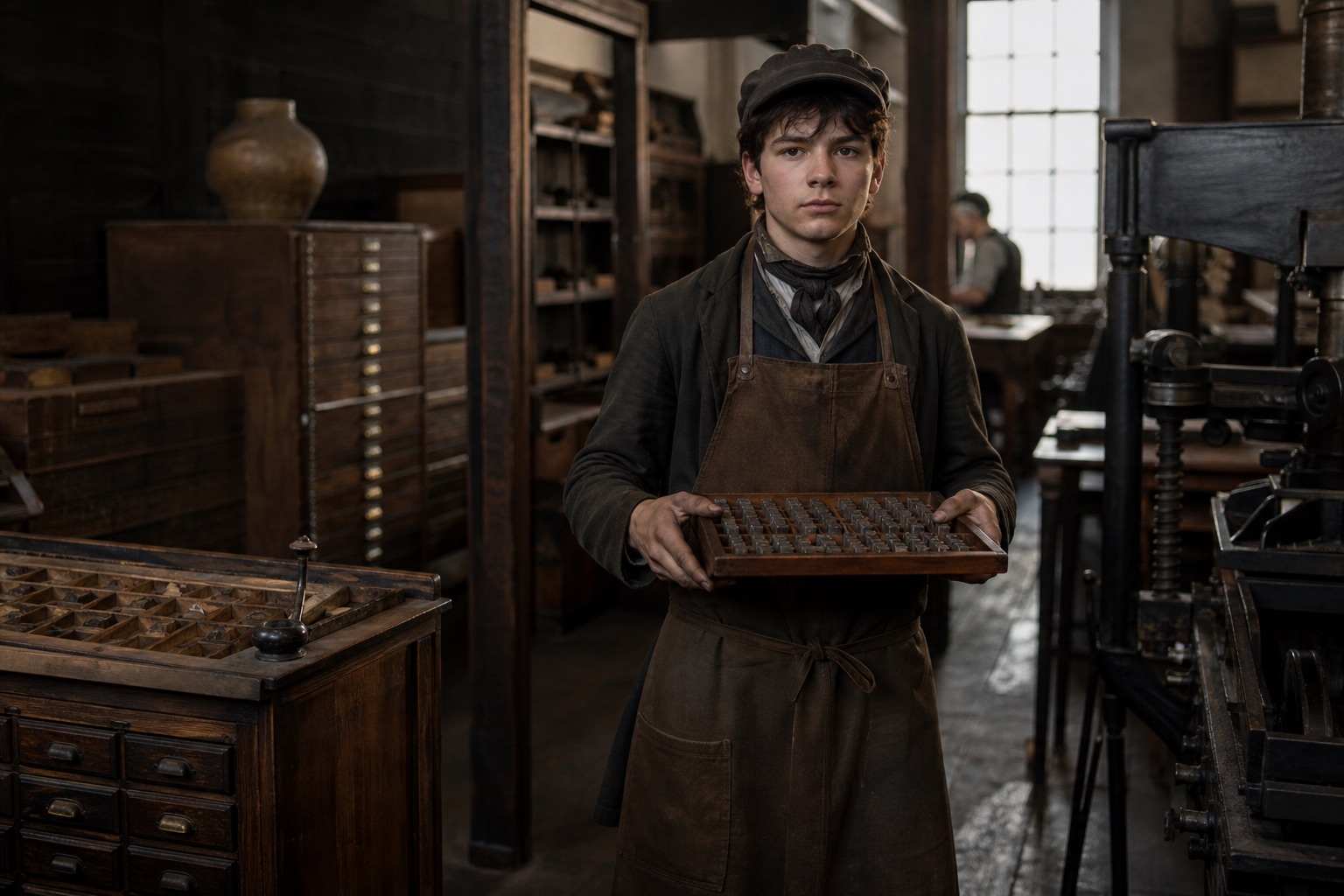 Past · Industrial RevolutionPrinter's DevilA printer's devil was the youngest pair of hands in a letterpress shop. He fetched missing sorts from the type case, put used letters back into their boxes, inked the forme, and swept metal dust off the floor. He learned the lay of the case by running for letters, not from a chart pinned on the wall. Chapel custom, the shop's own little government, fixed his place at the bottom: fines, errands, and the order of the room were not written in a schoolbook. Visitors saw black nails and a paper cap, not a mascot performing for the trade.
The post runs from eighteenth-century hand presses into early twentieth-century newspaper rooms. It assumed a boy could grow into a compositor because every line was still set by hand. Jobbing shops that printed cards and bills used him as surely as book houses did. County weeklies kept such a boy after many city dailies had already bought a linecaster. The work was ordinary juvenile labor inside a proud craft, documentary rather than theatrical, and it ended when that ladder was taken away.
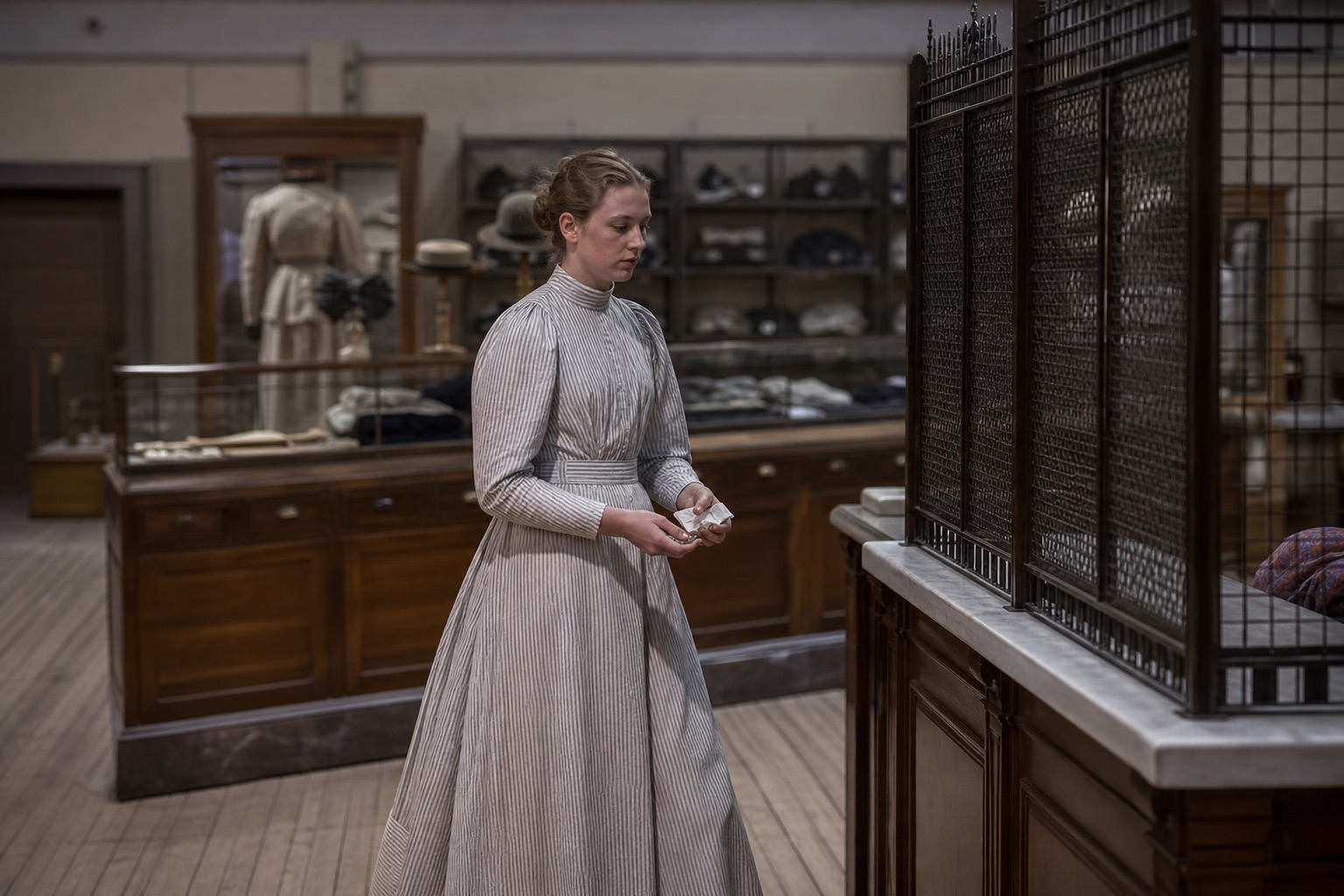 Past · Victorian EraCash GirlA cash girl was a department-store junior, often a girl or a young woman, who carried the customer's money and the written bill to a cashier and brought the receipt and the change back. The counter itself had no register yet. She waited where the sale was made, took the cash and the slip, walked the floor to the desk, and returned without mixing one purchase with another in a crowded aisle. The work was ordinary and public, a pair of errands repeated for every sale. This record keeps that walk concrete and calm.
The practice belongs to the late nineteenth century in the United States and in Britain, in dry-goods houses and the new department stores. Cable systems such as Lamson's cash railway, pneumatic tubes to a central desk, and the cash register on the counter each removed a reason to send a junior across the floor. She was not the buyer and not the cashier. She was the distance between them, and when that distance was mechanized the walk ended.