
machine
The mill and the machine tool
Hand trades whose price was set by a machine in a mill.
Power looms, shearing frames, sawmills, pin machines, and nail machines. The Luddite attacks belong to this force. So does the quiet undercutting of lace and straw plait.
Under this force
10
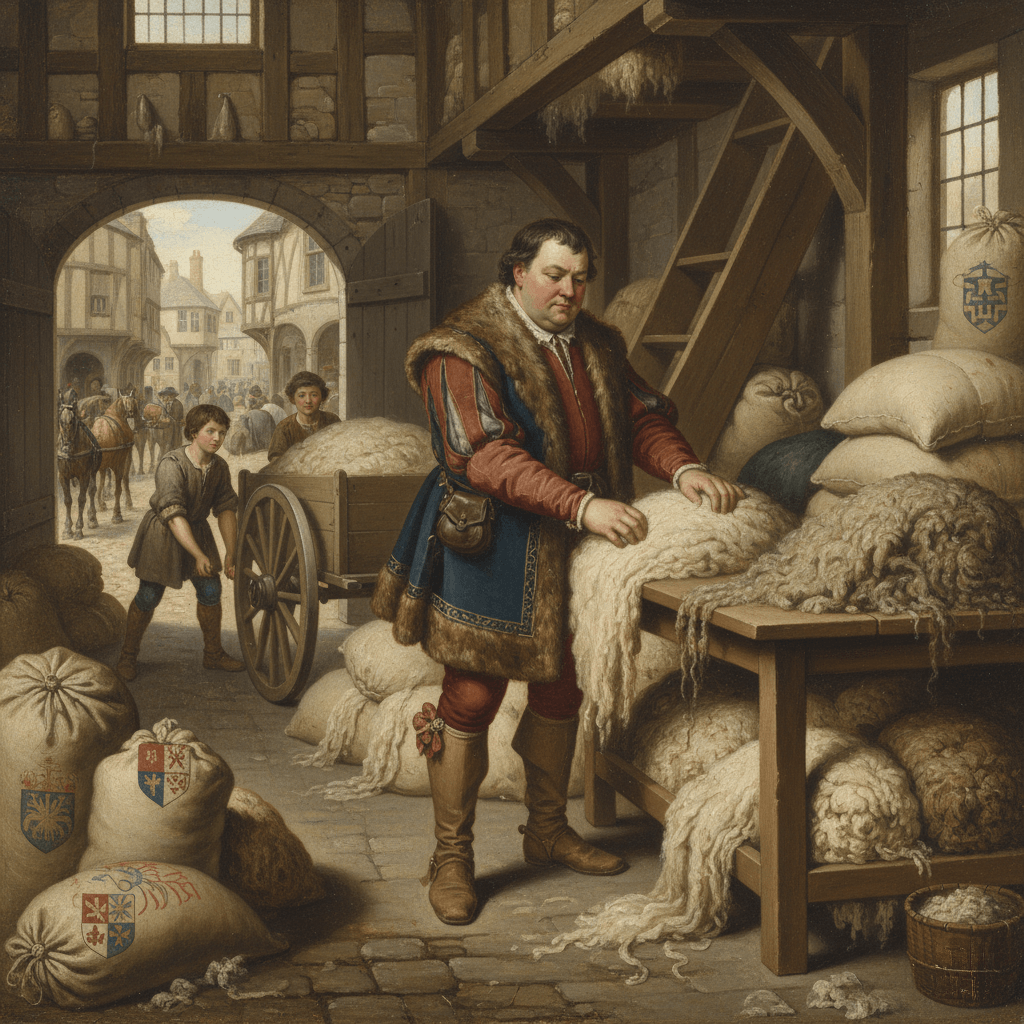
- Past · Industrial RevolutionWool-staplerThe wool-stapler was a vital figure in the textile industry during the Industrial Revolution, primarily active from the late 18th century to the mid-19th century. This occupation revolved around the preparation and sorting of wool before it was spun into yarn. Wool-staplers were responsible for assessing the quality of raw wool, which involved separating it into different grades based on factors such as fiber length, fineness, and cleanliness. They played a crucial role in ensuring that only the best quality wool was sent to the spinning mills, thus influencing the quality of the final textile products.
Wool-staplers worked in warehouses or wool depots, often in close proximity to sheep farms and textile mills. Their work was labor-intensive and required a keen eye for detail, as they had to identify the subtle differences in wool quality. The wool was often delivered in large bales, and the wool-stapler would open these bales, inspect the contents, and then sort the wool into piles according to its grade. This sorting process was essential for the efficient operation of the textile industry, as different grades of wool were used for different types of fabrics.
In addition to sorting, wool-staplers also had to keep meticulous records of the wool they processed, noting the quantities and grades for inventory and pricing purposes. They often worked long hours, especially during peak seasons when wool was harvested, and their expertise was highly valued in the supply chain of the textile industry.
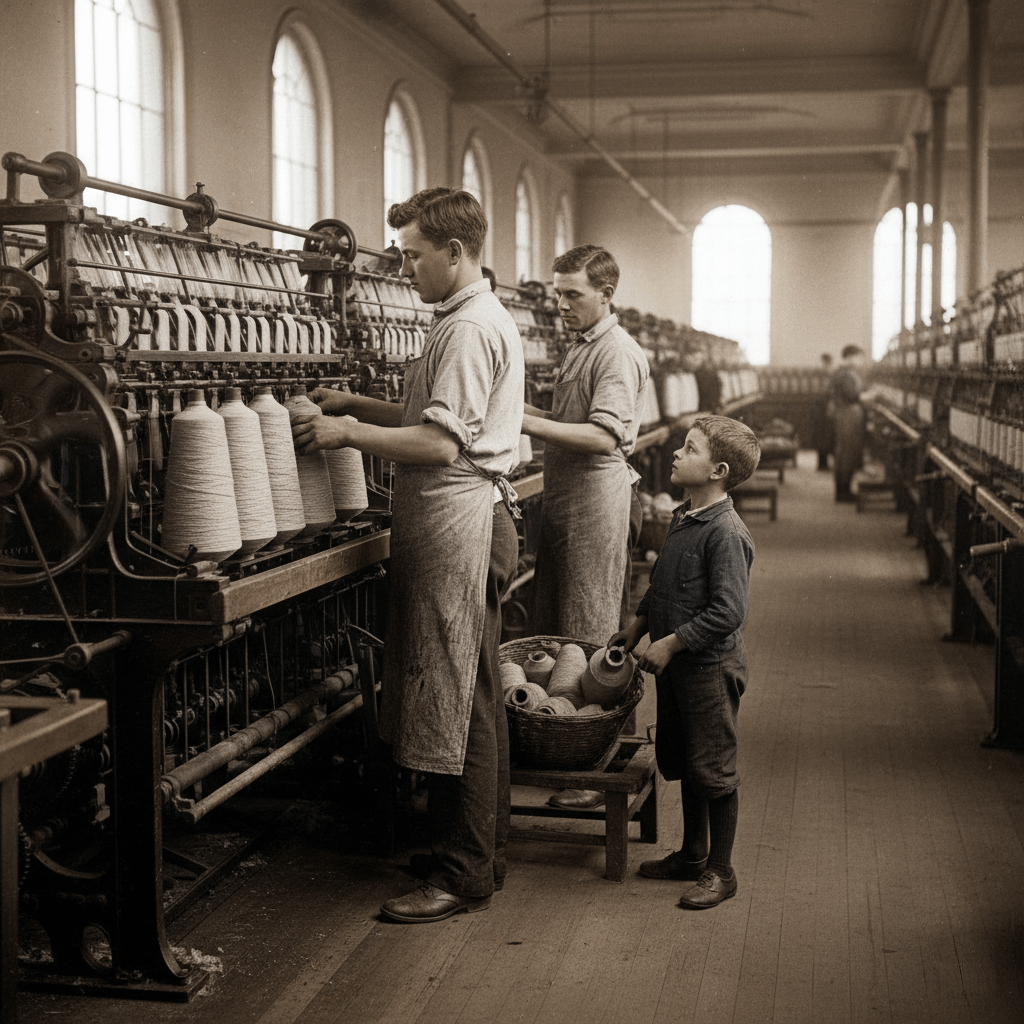 Past · Industrial RevolutionSlubber DofferThe slubber doffer was a crucial figure in the textile industry during the Industrial Revolution, primarily responsible for the maintenance and operation of spinning machines. These workers played a vital role in ensuring that the production of yarn and thread ran smoothly in the bustling textile mills of the 18th and 19th centuries. The term 'slubber doffer' specifically referred to those who removed the full bobbins of spun yarn from the spinning frames and replaced them with empty ones, a task that required both physical dexterity and a keen understanding of the machinery involved. The slubber doffer's work was often performed in a noisy, fast-paced environment, where the clatter of machines filled the air, and the smell of raw cotton and wool was ever-present.
The job was typically held by young boys and girls, often as young as eight or nine, who were employed in the mills due to their small stature, which allowed them to navigate the cramped spaces between the machines. The slubber doffer's day was filled with the repetitive yet essential task of ensuring that the spinning process continued without interruption, a job that was physically demanding and required a high level of attention to detail.
Despite the harsh working conditions, slubber doffers were an integral part of the textile production process, contributing to the rapid growth of the textile industry, which was a cornerstone of the Industrial Revolution. Their labor was essential in meeting the increasing demand for textiles, which fueled both domestic and international markets.
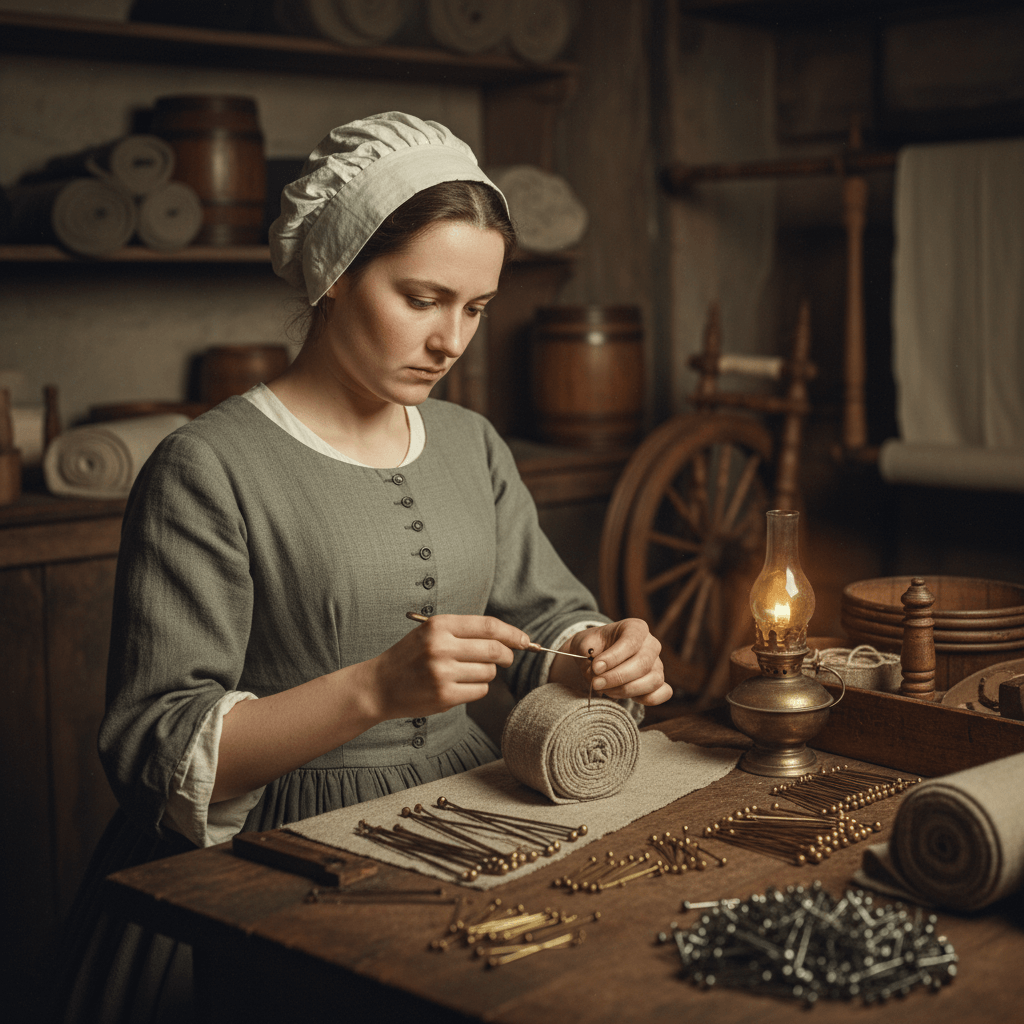 Past · Pre-Industrial EraPinnerThe role of a pinner was crucial in the textile industry, particularly before the advent of mechanized production. Pinners were skilled artisans responsible for the intricate task of pinning fabric pieces together before they were sewn into garments. This job required a keen eye for detail and a steady hand, as the precision of the pinning process directly influenced the quality of the final product. Pinners worked primarily in workshops or at home, often in close-knit communities where they would collaborate with seamstresses and tailors. The work was labor-intensive and required a deep understanding of fabric types, patterns, and garment construction. Pinners used a variety of pins, including straight pins and safety pins, to hold fabric in place, ensuring that seams aligned perfectly and that the finished garments fit well. The role was often filled by women, who contributed significantly to the family income through this work, especially in urban areas where the textile industry thrived. As the demand for clothing increased, so did the need for skilled pinners, making this occupation a vital part of the pre-industrial economy.
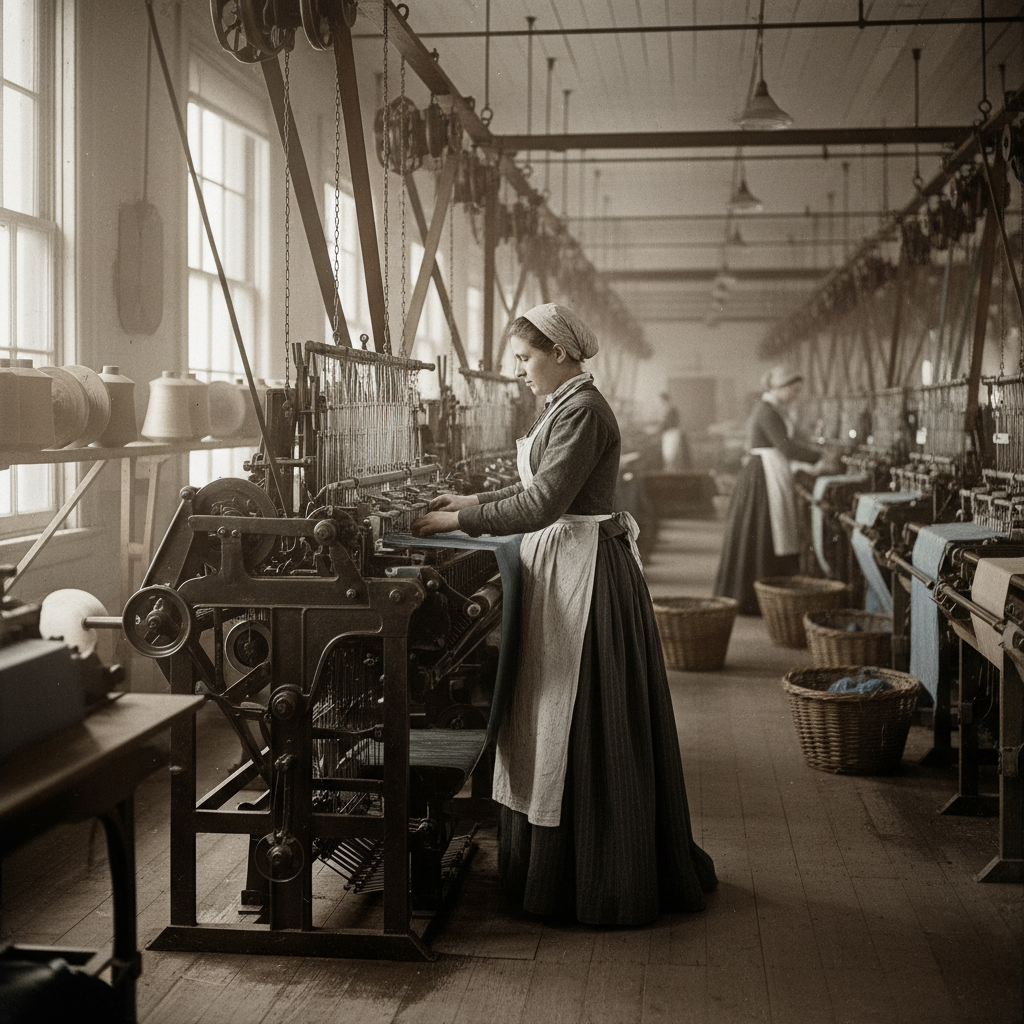 Past · Industrial RevolutionKnitting Mill WorkerThe knitting mill worker played a crucial role in the textile industry during the Industrial Revolution, a period marked by rapid industrial growth and technological innovation. These workers were primarily responsible for operating knitting machines that produced a variety of knitted goods, including socks, sweaters, and other garments. The work was often performed in large factories, known as knitting mills, where rows of machines hummed with activity, creating a rhythmic backdrop to the labor-intensive environment. Workers were typically assigned to specific machines, where they would monitor the knitting process, troubleshoot any issues, and ensure that the quality of the output met the factory's standards. The job required a keen eye for detail, as even a small mistake could result in significant waste of materials and time.
Knitting mill workers were often women and children, who were drawn to the mills by the promise of steady wages. The work was physically demanding, requiring long hours of standing and repetitive motion, which could lead to fatigue and injury. Despite the harsh conditions, knitting mills provided a vital source of income for many families during a time when economic opportunities were limited, particularly for women. The rise of the knitting mill worker was emblematic of the broader changes occurring in society, as traditional hand-knitting practices were replaced by mechanized production, leading to increased efficiency and lower costs for consumers.
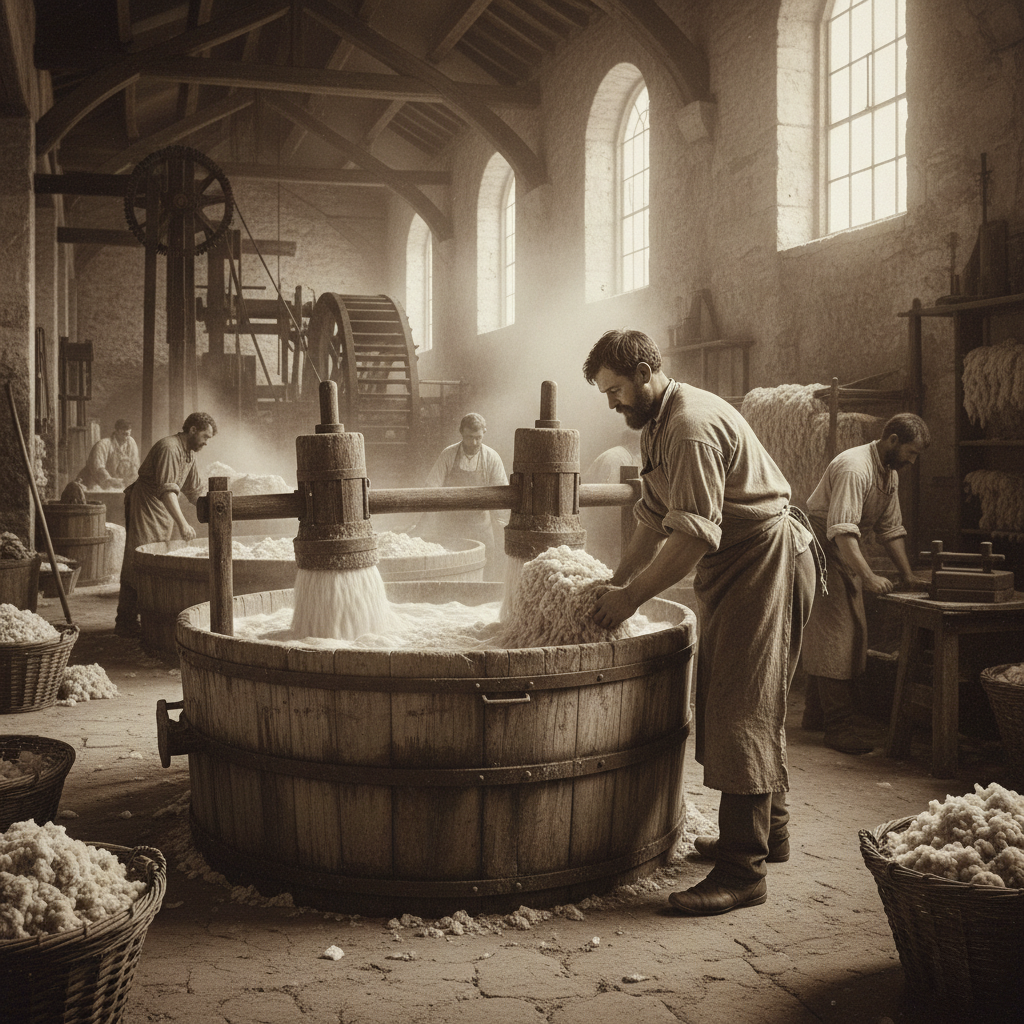 Past · Pre-Industrial EraFullerThe role of a fuller was integral to the textile industry, particularly in the processing of woolen fabrics. Fullers were responsible for a crucial step in the cloth-making process known as 'fulling,' which involved cleaning and thickening the fabric. This was achieved through a combination of water, heat, and mechanical action, often using a foot-powered or water-powered mill. The fulling process not only removed impurities such as grease and dirt but also helped to mat the fibers together, resulting in a denser and more durable fabric. Fullers worked closely with weavers and dyers, ensuring that the cloth was ready for the final stages of production. The fulling process was labor-intensive and required a keen understanding of the materials and techniques involved, making the fuller a respected figure in the textile trade.
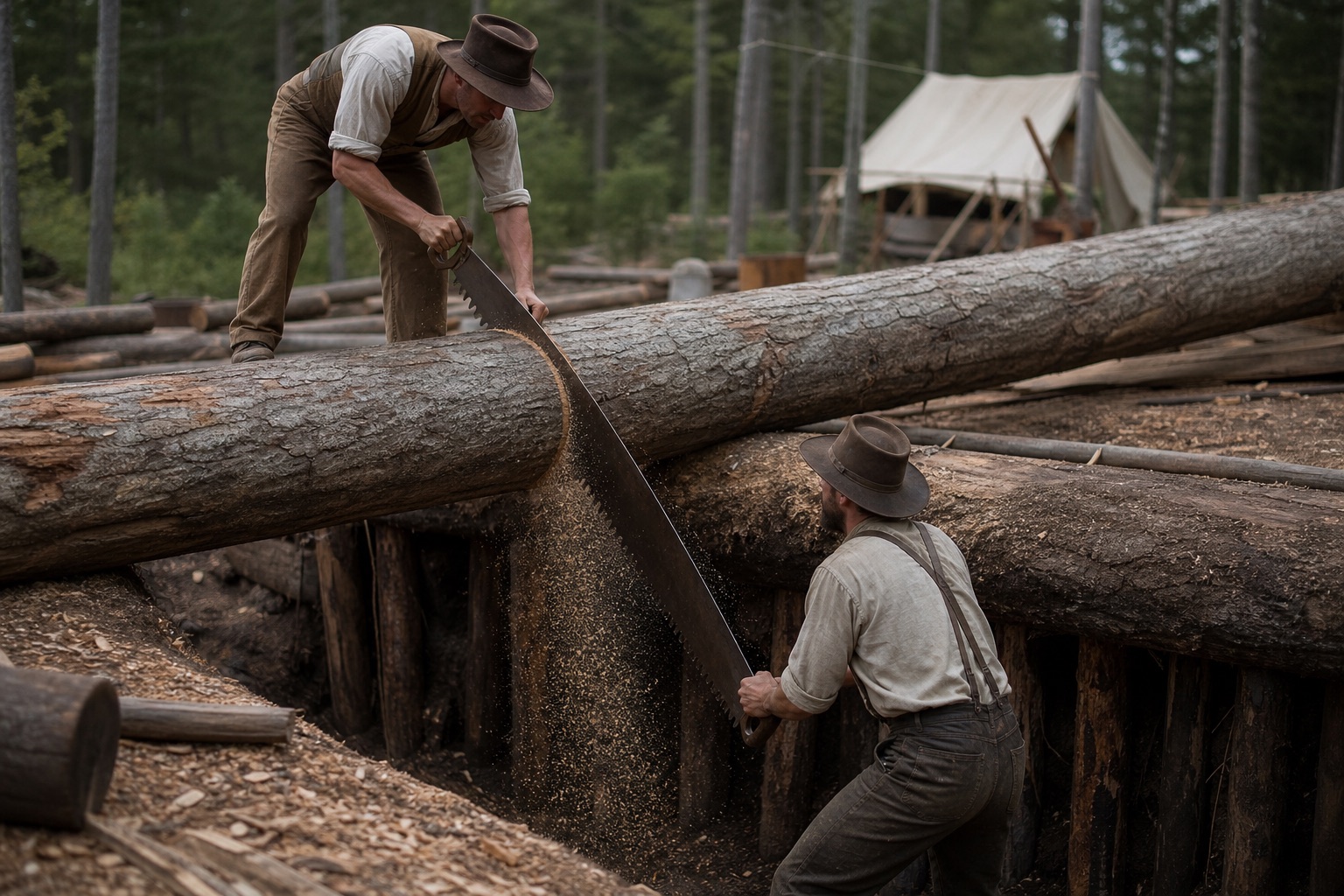 Past · Georgian EraPit-SawyerTwo men and one long saw turned a balk of timber into boards. The top-sawyer stood on the log, chalk line between his boots, and guided the blade. The pitman stood in the pit beneath, hauling the saw down through oak, elm, or deal while the dust settled on him. Iron dogs held the balk. Wooden wedges kept the kerf from pinching the plate. In a royal dockyard the pit might be a dug hole or a raised cradle; in a country yard it was often opened where the trees had been felled. A straight deal could come off in a morning. Compass timber for a shipwright, curved and stubborn, took the rest of the day and a higher price on the tally.
From the seventeenth century into the middle of the nineteenth this pair supplied house carpenters and shipyards in Britain, and the same pit was dug in colonial timber towns that had logs and no mill. Water-driven saws already existed in some districts, yet a pit could be set up wherever a merchant landed timber, and British yards were slow to give the work up. The top-sawyer's name even passed into ordinary speech for the person who stood first at a job. What ended the pit was the steam sawmill in the timber ports, which cut the same balk faster and sold the deals cheaper. The pits were not closed by proclamation. Builders bought mill-sawn stock, and the hundred-foot bargain stopped being offered.
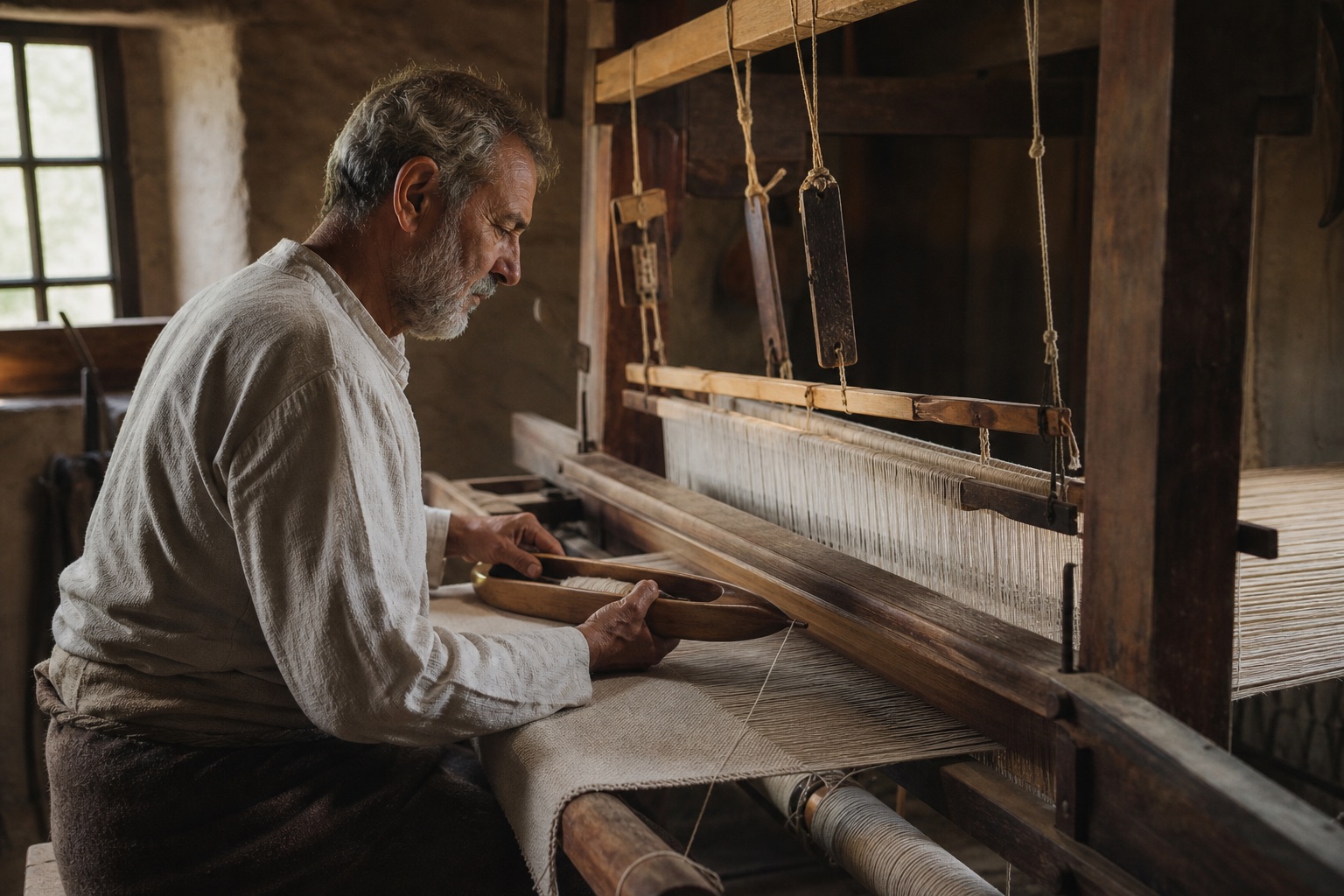 Past · Industrial RevolutionHandloom WeaverA handloom weaver worked at home. The loom stood in a cottage room, often kept damp so that cotton ends would not snap, and the weaver threw the shuttle and beat the weft a few inches an hour. Yarn came from a spinning mill or a woolstapler through a putter-out. The finished length went back to a warehouse to be measured, examined, and paid by the piece. Lancashire cotton villages were the centre of this work in the boom of the 1790s. Woollen weavers in the West Country, around Frome and Trowbridge, and in the West Riding lived by the same bargain: the loom and the room were the family's, and the cloth belonged to the merchant who had put out the yarn.
The ruin was a collapse of the piece rate, not a cartoon of men who hated machines. A cotton weaver earning close to a pound a week in the late 1790s was, in the parliamentary returns of the 1830s, often down to a few shillings for a longer week at the same loom. Power looms, patented in crude form by Edmund Cartwright in the 1780s and practical in Lancashire from the 1810s, were widespread in ordinary cottons by the 1840s, and woollen mills followed. Some crowds broke looms. Most weavers did not. They worked longer hours, asked Parliament for a legal minimum, were refused, and lost the trade when the warehouse cut the price below a living.
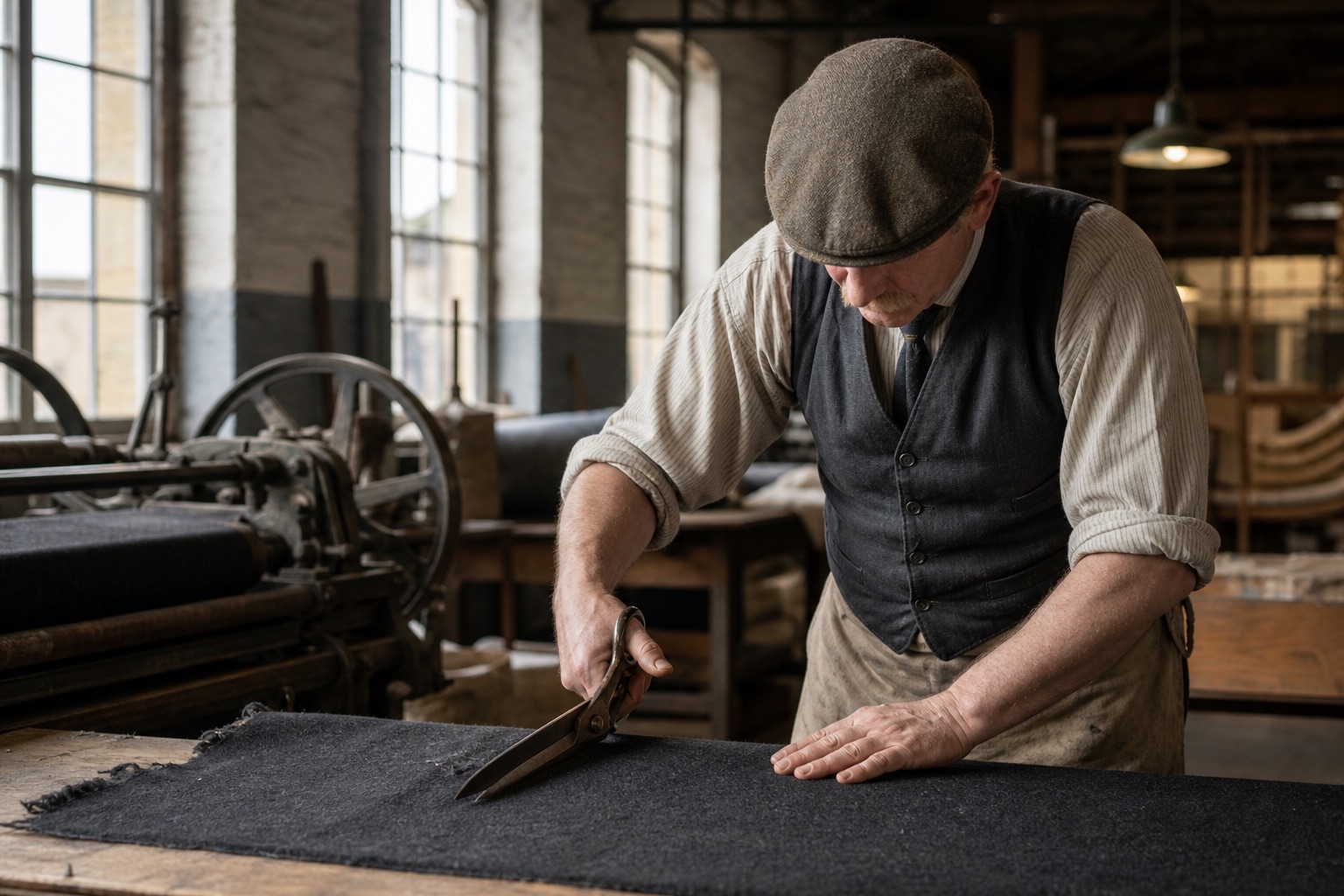 Past · Industrial RevolutionCropperA cropper, also called a shearman, finished woollen cloth. After fulling, he raised the nap with teazle heads and then cut that nap level with shears unlike a tailor's: blades several feet long, heavy enough that the work took a man's whole strength, used flat across a shearboard. A good cropper left a face as even as a close pile, without a ridge or a hole, and West Riding clothiers paid him as one of the aristocrats of the woollen trades. Huddersfield, Leeds, and the cloth villages of the Spen Valley were his ground. The shears were the skill. The cloth remained the clothier's property, brought to the shop and taken away dressed.
Gig mills, which raised the nap on teazles fixed round a cylinder, and shearing frames, which cropped with driven blades, took the skill off the board. In 1811 and 1812 Yorkshire croppers attacked those machines, including the assault on William Cartwright's mill at Rawfolds in the Spen Valley in April 1812. The attacks belong in the story of the trade. They are not what ended it. The frames dressed cloth faster and cheaper than a man with shears, the clothiers kept installing them, and the piece rate for hand cropping disappeared. Parliament answered the violence with the Frame Breaking Act of 1812. The finishing shops answered it by cropping on the machine.
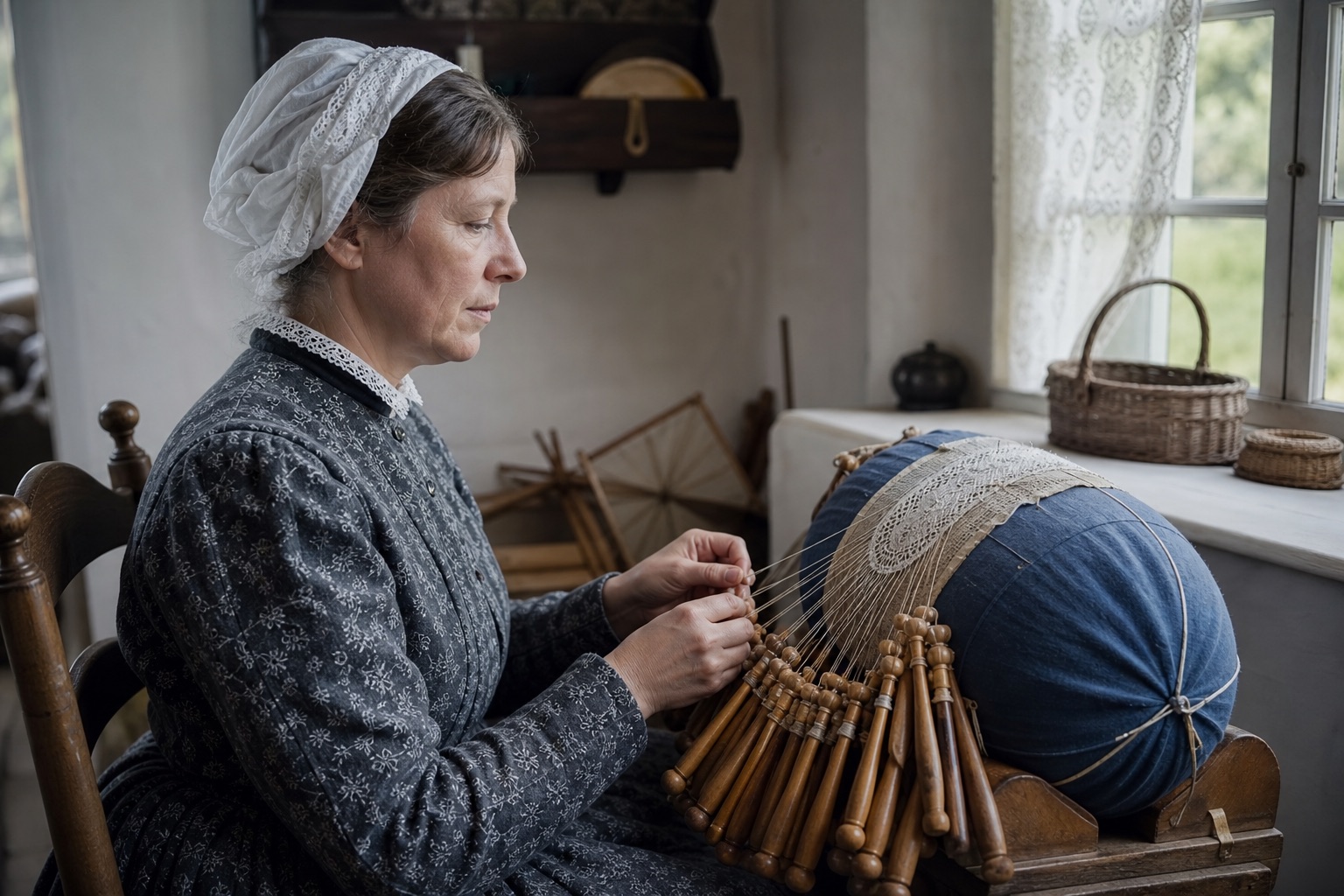 Past · Victorian EraLacemakerPillow lace was made on a cushion. A parchment pricking carried the pattern, and the thread moved on dozens of bobbins that the worker crossed, twisted, and pinned. The Midlands trade, in Buckinghamshire, Bedfordshire, and Northamptonshire, made continuous lace, ground and motif growing as one web. Bucks point was an older pride of that country. After the Great Exhibition put Maltese lace in fashion, Bedfordshire workers also made a plaited lace to sell into that taste. Devon worked differently. At Honiton and in the villages toward Beer the lacemaker made separate sprigs, sewn onto net. From the early nineteenth century that net was usually machine-made, so a celebrated Honiton piece could sit on a ground the pillow had never worked.
Women and girls did most of the hand work. Lace schools sat small children at pillows for eight or ten hours and a few pence, the mistress selling their output and keeping a margin. A woman at home might make a few shillings in a week and still work into the evening to finish a yard. John Heathcoat's bobbin-net machine of 1809, and the Leavers machine developed from it in Nottingham, put patterned lace on the market below the pillow's price. Hand lace did not stop on a given Monday. It became a poorly paid remnant beside a machine that already supplied the ordinary buyer.
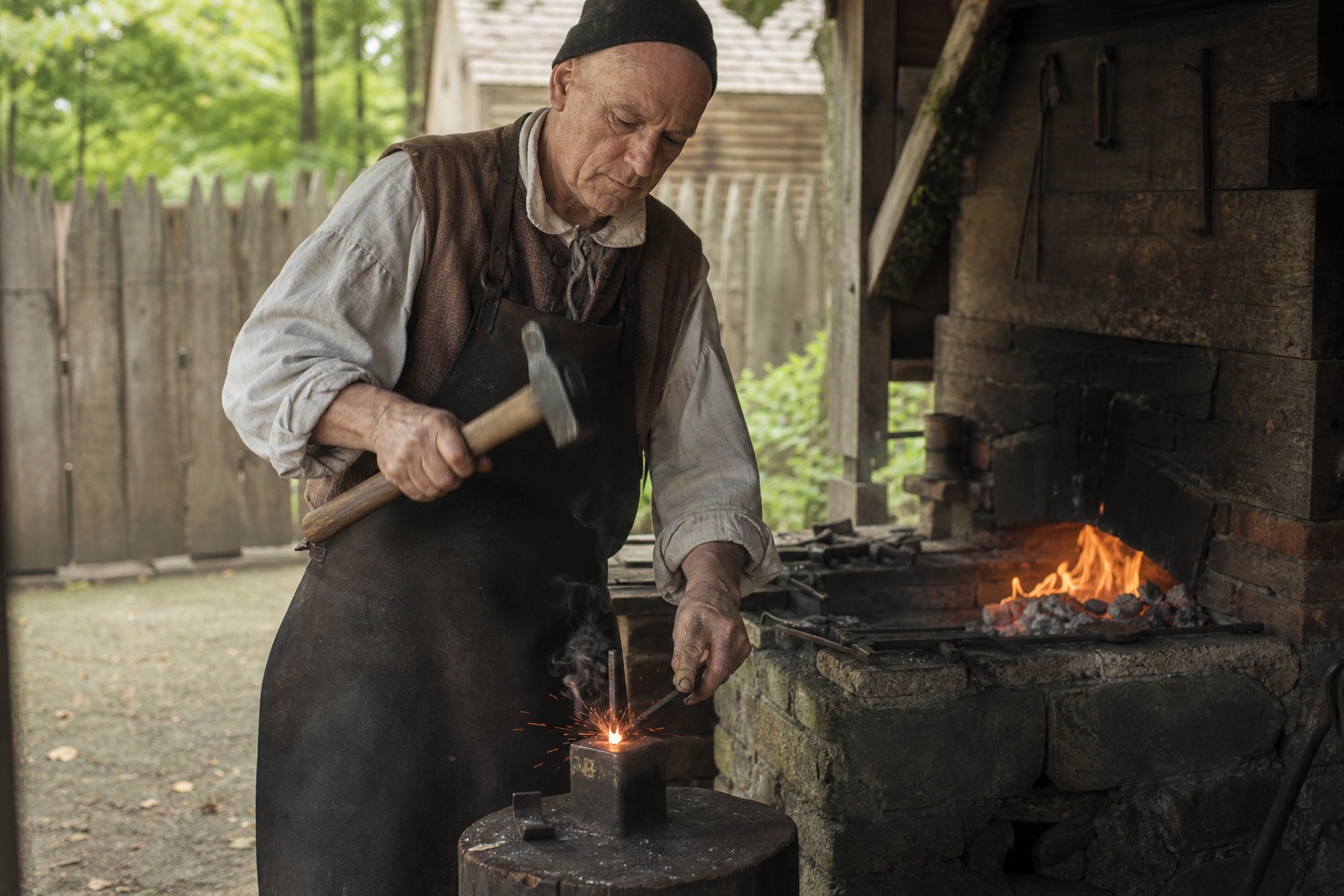 Past · Victorian EraNailerA nailer in the Black Country made nails one at a time at a hearth in the house. Rod iron, taken from a fogger, was heated, pointed, cut, and headed in a bore, often under an oliver, the foot-worked hammer that put a heavier blow behind a small hand. Dudley, Sedgley, Gornal, Lye, Halesowen, and the shops toward Bromsgrove were dense with these hearths. The count was the thousand. The fogger who had supplied the rod bought the nails back, and his prices on both sides of the bargain were deducted before the family saw cash. It was outwork, not a factory bell, and the workshop was the room where the household also lived.
Cut nails, sheared from sheet by machine from the early nineteenth century, undercut the common wrought nail. Wire nails, cheap in quantity by the 1880s and 1890s, destroyed what was left of the price. Reporters for the children's employment inquiries of the 1840s already found whole families at the block, children old enough to heat a rod or head a small nail working a long day inside a tally of a few shillings. The reports list hours and prices. Horse nails and a few special sorts lingered as hand work after general nails had gone. The nail in an ordinary carpenter's bag had become a machine nail, and the hearth could not sell against it.