
Trade
Script and the hand-made image
Copying, illuminating, colouring, and engraving before the press finished the job.
These are the jobs that made a unique page. Printing, and then photographic transfer, made the unique page a luxury.
In this trade
6
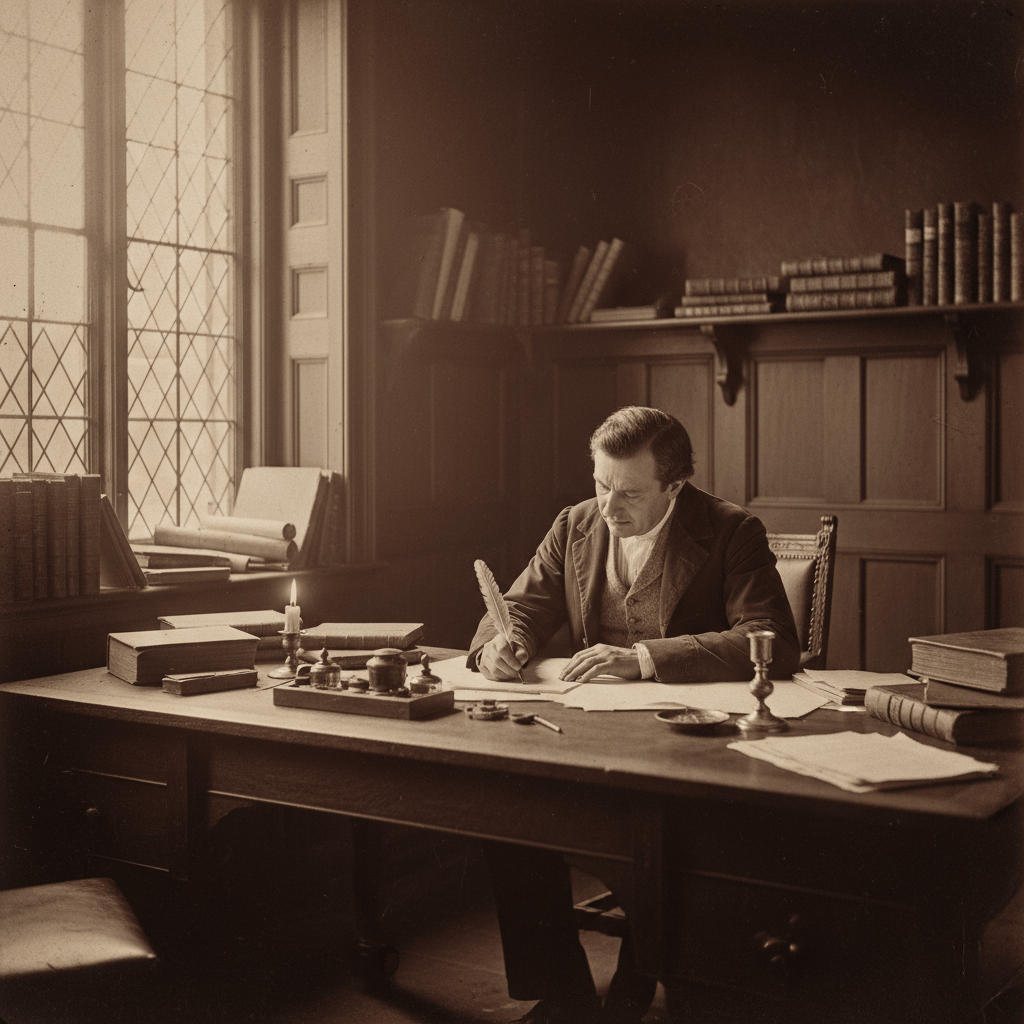
- Past · Medieval PeriodScrivenerThe scrivener was a vital figure in the medieval and early modern periods, serving as a professional scribe who specialized in writing documents by hand. Often employed by merchants, nobility, and the church, scriveners were responsible for drafting legal documents, contracts, letters, and other important texts. Their work was essential in an era when literacy was limited to a small segment of the population, and the written word held significant power. Scriveners were not only skilled in penmanship but also had a deep understanding of legal terminology and the nuances of language, making them indispensable in the administration of both public and private affairs. They often worked in scriptoriums or their own workshops, surrounded by parchment, ink, and quills, meticulously crafting each document with precision and care. The role of the scrivener was not merely to transcribe; they often provided advice on legal matters and helped clients navigate the complexities of written agreements, thus acting as both a writer and a consultant.
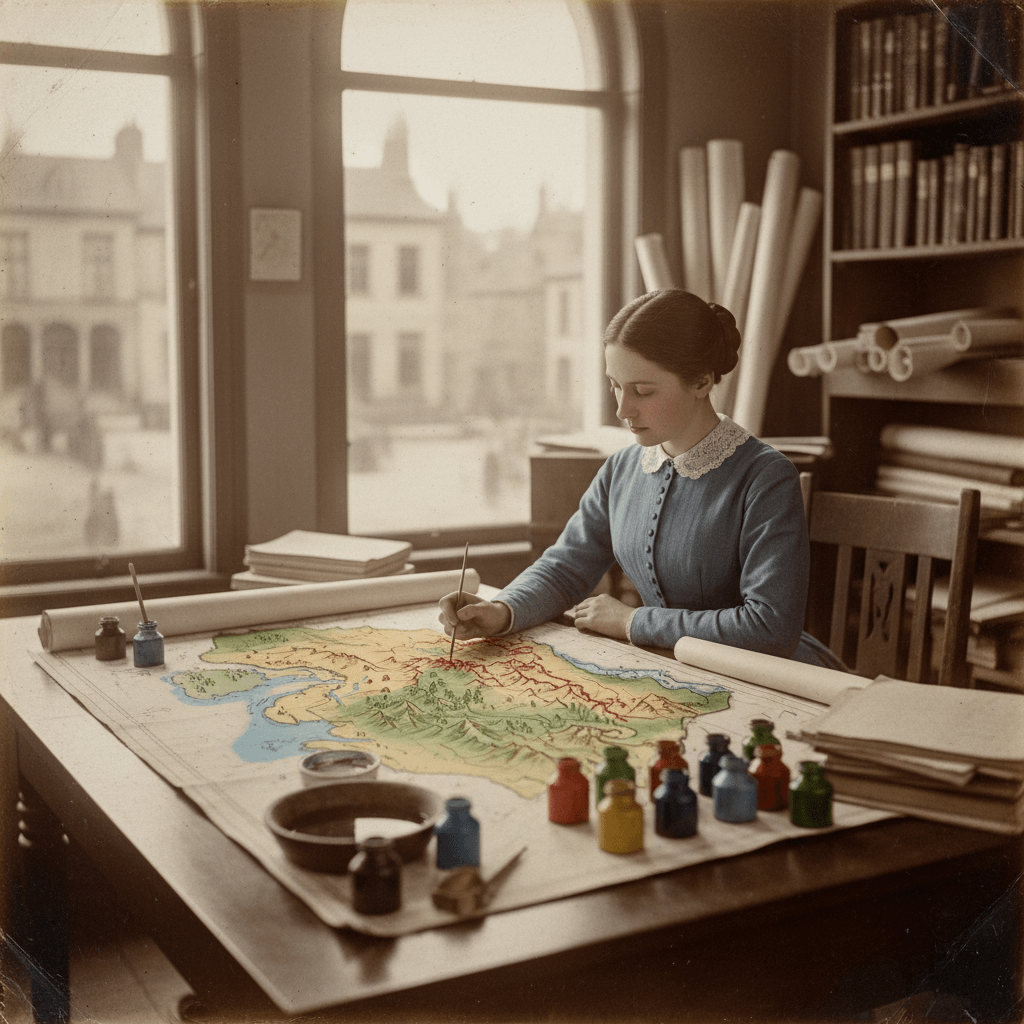 Past · Victorian EraMap ColouristThe role of a Map Colourist was integral to the production of maps during the Victorian Era, a time when cartography was both an art and a science. Map Colourists were responsible for the meticulous task of hand-painting maps, adding vibrant colors to delineate various geographical features, political boundaries, and land use. Each color had a specific meaning; for instance, blue often represented water bodies, green indicated forests, and brown was used for mountains. The work required not only artistic skill but also a deep understanding of geography and the significance of different regions.
Map Colourists worked in printing houses or cartographic firms, often alongside surveyors and engravers. They would receive printed maps, typically in black and white, and then apply their artistic talents to bring these maps to life. The process was labor-intensive, requiring precision and patience, as even the slightest mistake could lead to misinterpretation of the map's information. The final product was a beautifully colored map that was both functional and aesthetically pleasing, often used for educational purposes, navigation, and decoration.
As the demand for maps grew with the expansion of the British Empire and the rise of global exploration, the role of the Map Colourist became increasingly important. However, this job was not without its challenges, as the work environment could be cramped and poorly lit, leading to eye strain and fatigue. Despite these conditions, the Map Colourist took pride in their craft, knowing that their work contributed to the understanding of the world around them.
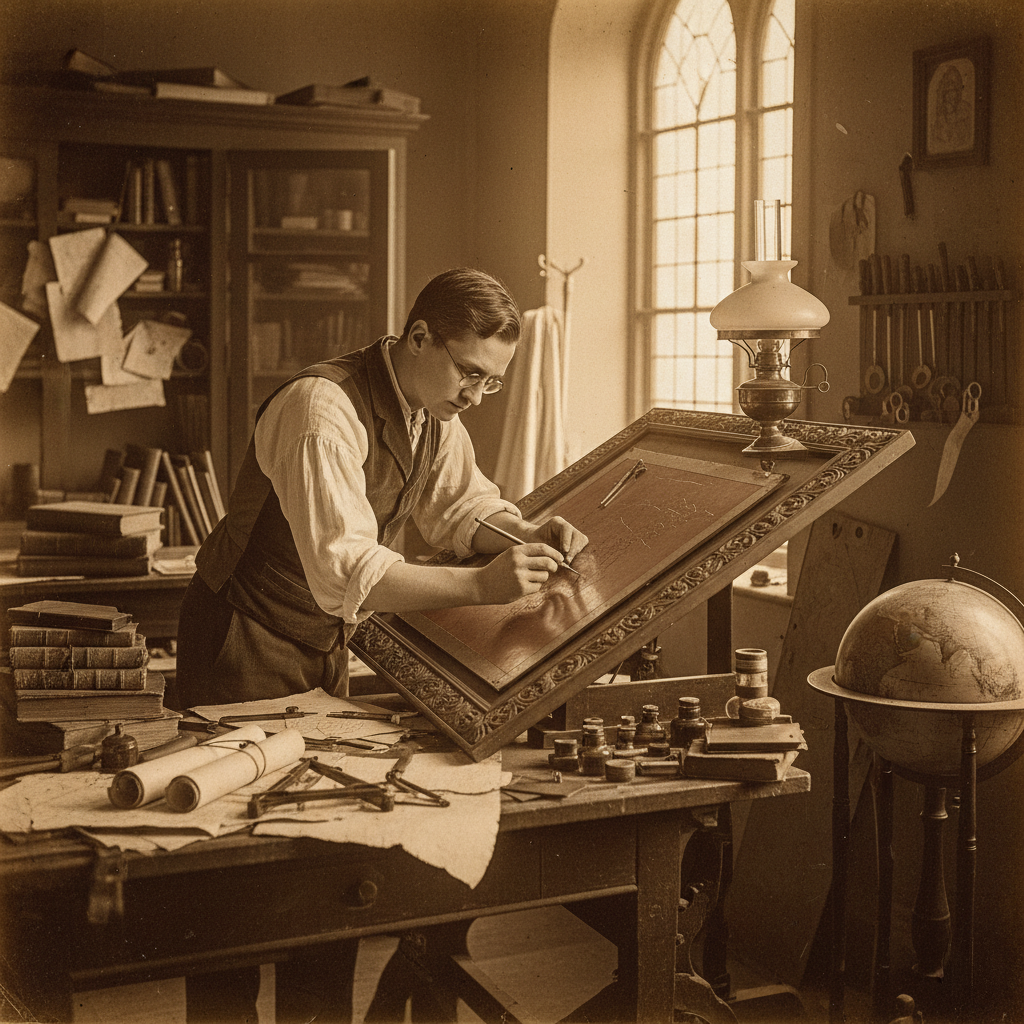 Past · Industrial RevolutionMap EngraverMap engravers were skilled artisans responsible for the intricate task of transferring cartographic designs onto metal plates, which were then used for printing maps. This occupation flourished during the Industrial Revolution, a period marked by rapid advancements in technology and a growing demand for accurate geographical representations. The engraver's work was crucial for the production of maps that guided explorers, navigators, and the general public, reflecting the expanding knowledge of the world and the increasing importance of navigation in trade and exploration.
The process of map engraving was meticulous and required a deep understanding of both art and science. Engravers would begin with a detailed drawing of the map, often created by cartographers who specialized in the art of map-making. Using tools such as burins and gravers, the engraver would carve the design into a copper or zinc plate, creating a reverse image of the map. This required not only precision but also an artistic eye to ensure that the final product was both accurate and aesthetically pleasing. Once the engraving was complete, the plate would be inked and pressed onto paper, producing the final map that would be distributed for use.
Map engravers played a vital role in the dissemination of knowledge during a time when maps were essential for navigation, land ownership, and military strategy. Their work contributed to the Age of Exploration, as accurate maps were crucial for explorers venturing into uncharted territories. As such, map engravers were respected members of the printing and publishing industries, often working closely with publishers and cartographers to produce high-quality maps for various purposes, including atlases, travel guides, and educational materials.
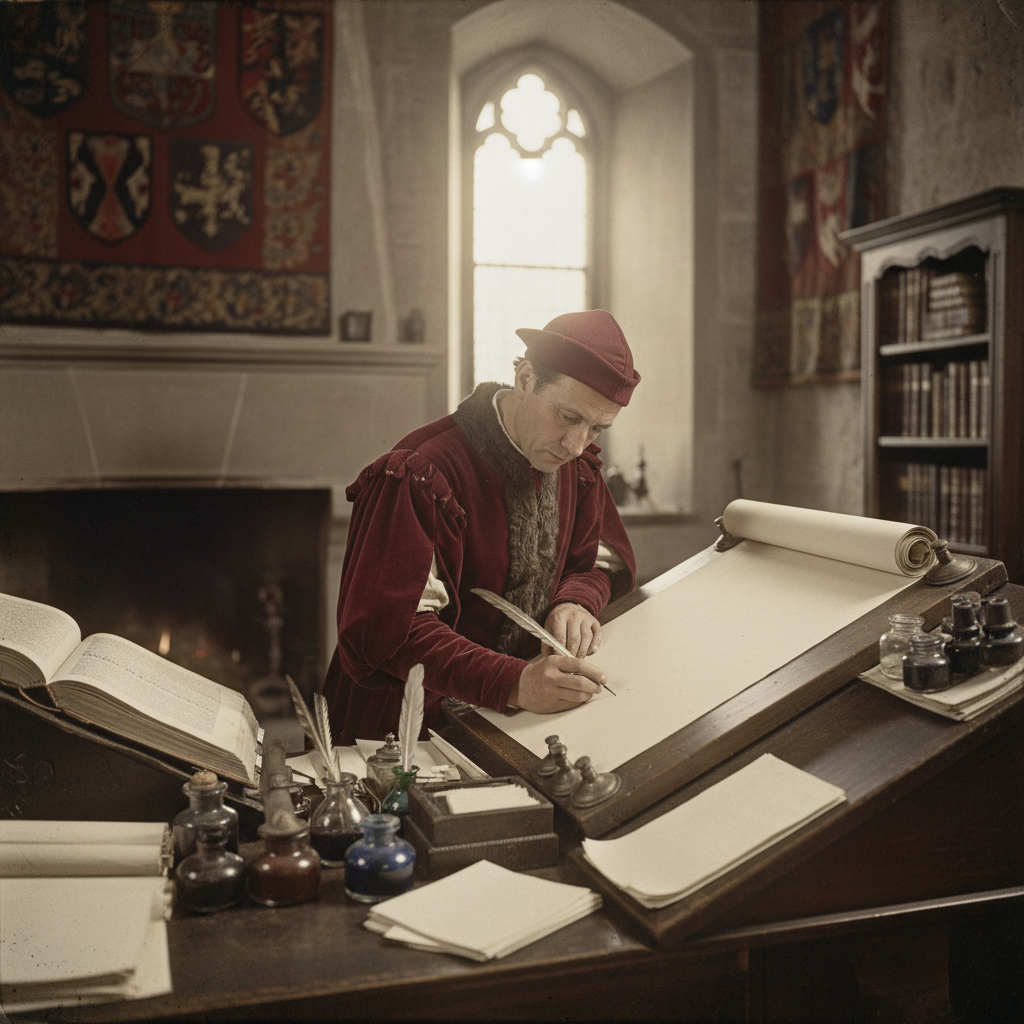 Past · Medieval PeriodCalligrapherThe art of calligraphy, often referred to as 'beautiful writing,' flourished during the Medieval Period, where skilled calligraphers played a crucial role in the preservation and dissemination of knowledge. These artisans were not merely writers; they were artists who transformed the written word into a visual spectacle. Calligraphers were responsible for creating manuscripts, religious texts, and important documents, often using intricate scripts that varied by region and purpose. Their work was characterized by the use of quills, ink, and parchment, and they often employed elaborate techniques such as gilding and illumination to enhance their creations. The calligrapher's role was not only to write but to imbue each piece with a sense of beauty and reverence, making their work essential in an era where printed materials were scarce and literacy was a privilege of the few.
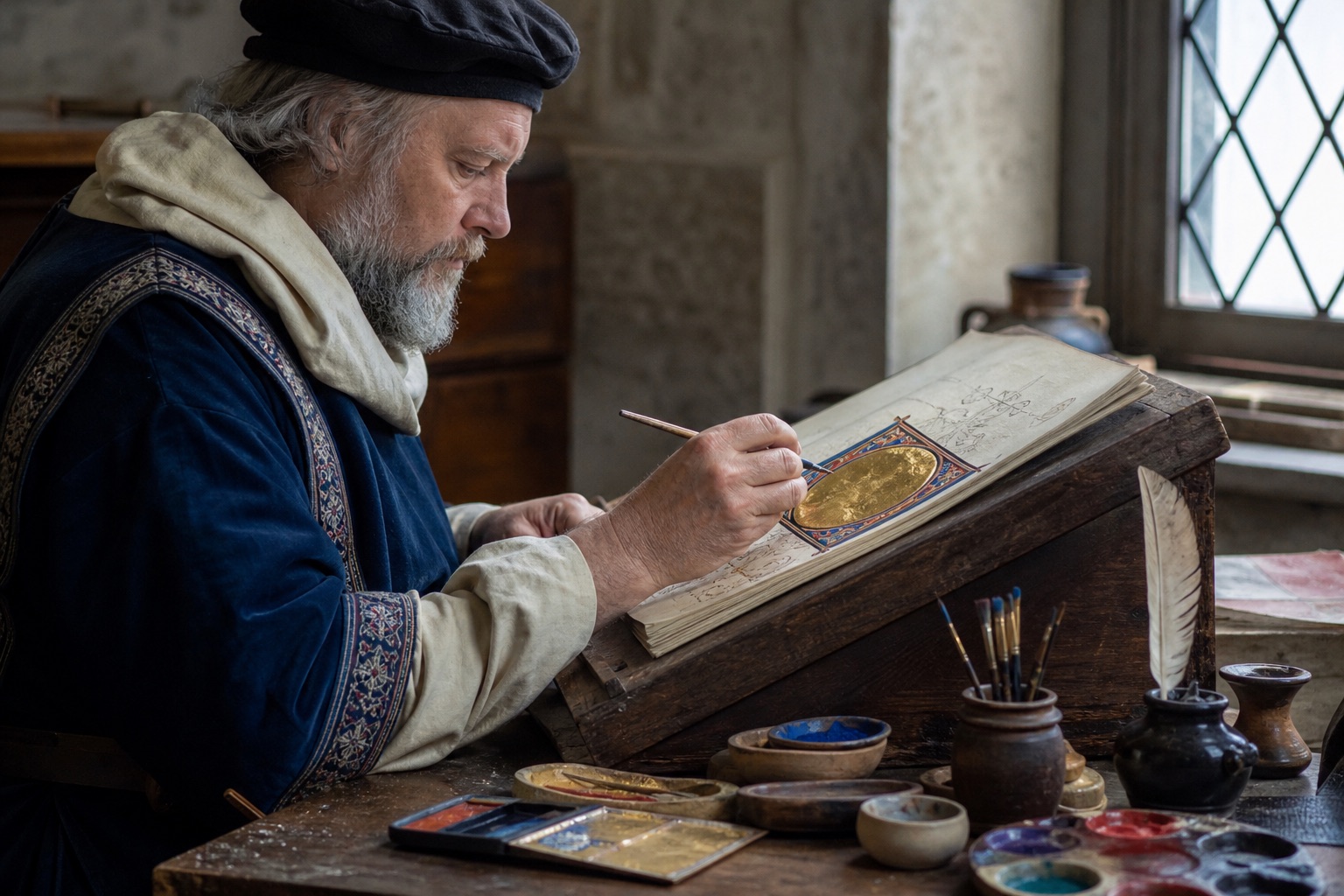 Past · Medieval EraIlluminatorAn illuminator painted the decorated letters, borders, and miniatures in a manuscript book, and was a different worker from the scribe who wrote the text. A quire often passed from one to the other: the scribe left blank spaces, and the illuminator filled them with an initial in gold and color or with a small picture. The materials were parchment or vellum, later paper, mineral and organic pigments, and gold leaf laid on a gesso ground and burnished. The work belonged to the medieval book, from the Romanesque scriptorium through the books of hours of the fourteenth and fifteenth centuries.
Monks and nuns did illuminate, especially in earlier centuries, and it is a mistake to stop the story there. By the later Middle Ages many illuminators were lay urban artisans, men and women in commercial workshops in Paris, Bruges, Ghent, Bologna, and London, hired by stationers who dealt with the patron. Christine de Pizan praised a Parisian illuminator named Anastasia. The Limbourg brothers worked for the Duke of Berry as professional painters, not as cloistered scribes. Printing, from the middle of the fifteenth century through the sixteenth, took the ordinary commission away. Luxury manuscripts lingered. The specialist trade of illuminating books by hand did not.
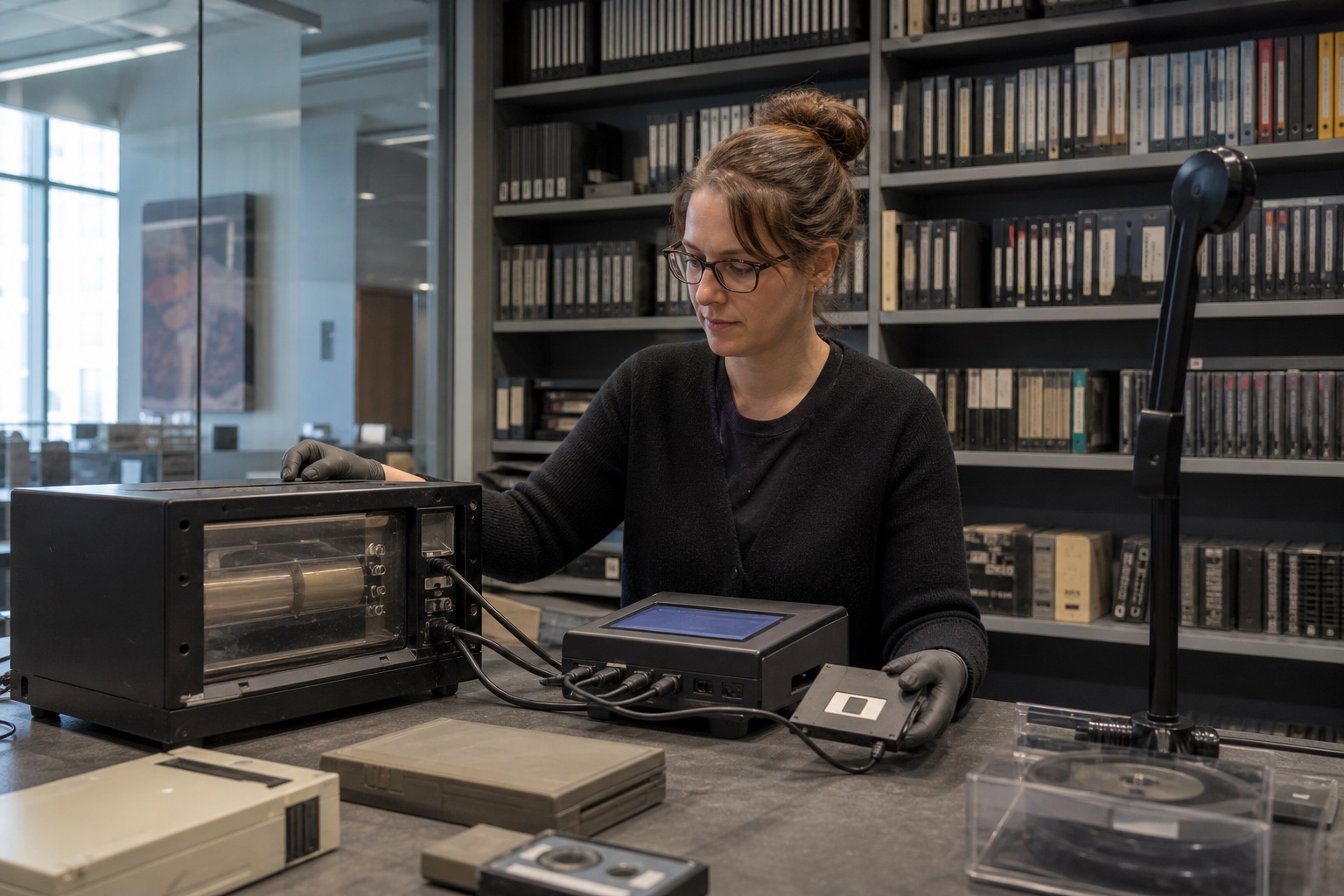 Projected · Automation AgeFormat Restoration LibrarianThe format-restoration librarian keeps obsolete digital and analog formats readable, and keeps the catalog honest about the degree of that readability. The shelf runs through tapes, disks, and codecs that current software will not open: U-matic, Betacam, DAT, floppies, Zip disks, and files wrapped in methods a vendor walked away from. Some carriers can still be played. Some can only be imaged as magnetic flux. Some are partly gone, and the record is supposed to say which part, in words a later reader can find.
A model that paints in the missing frames has made a new work. The librarian will not catalog that work as the original, however smoothly it plays. Migration, emulation, and guesswork are different acts, and the finding aid has to name the one that happened. Archives learned this with paper that had been improved by a helpful restorer. The same discipline now applies to a file that looks complete because a program was willing to invent the rest.