
Trade
The desk
Tallies, typing pools, punch cards, and the machines on the return route.
Calculation and record-keeping as a separate room of workers, mostly women by the twentieth century. The desktop took the room away.
In this trade
10
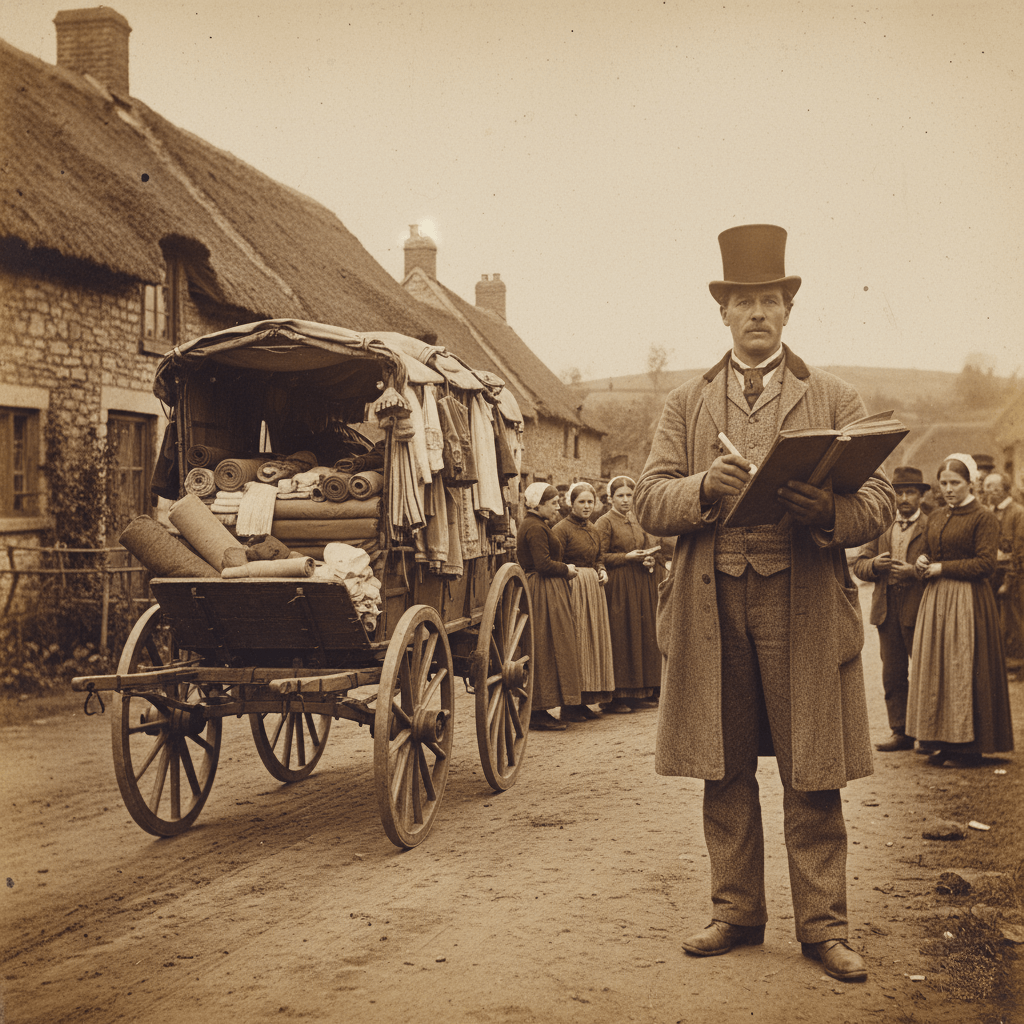
- Past · Victorian EraTallymanThe Tallyman was a crucial figure in the Victorian Era, primarily serving as a collector of debts and a record keeper for local businesses and tradesmen. Often seen as a bridge between the merchant and the consumer, the Tallyman would visit homes and businesses to collect payments for goods purchased on credit. This role was particularly significant in an era when many families relied on credit to manage their household expenses, especially in the burgeoning urban centers of England. The Tallyman would carry a tally stick, a wooden stick marked with notches to record transactions, and a ledger to keep detailed accounts of debts owed and payments made.
The Tallyman’s work was not merely transactional; it involved building relationships with customers, understanding their financial situations, and sometimes negotiating payment plans. This role required a keen sense of empathy and social awareness, as many customers were struggling to make ends meet. The Tallyman was often seen as a community figure, known by name and trusted to handle sensitive financial matters with discretion.
As the Victorian Era progressed, the role of the Tallyman began to change. The introduction of more formal banking systems and the rise of credit institutions started to diminish the need for personal debt collectors. The advent of modern accounting practices and the use of printed invoices further contributed to the decline of this occupation, as transactions became more standardized and less reliant on personal relationships. By the early 20th century, the Tallyman had largely disappeared from the economic landscape, replaced by more formalized financial systems.
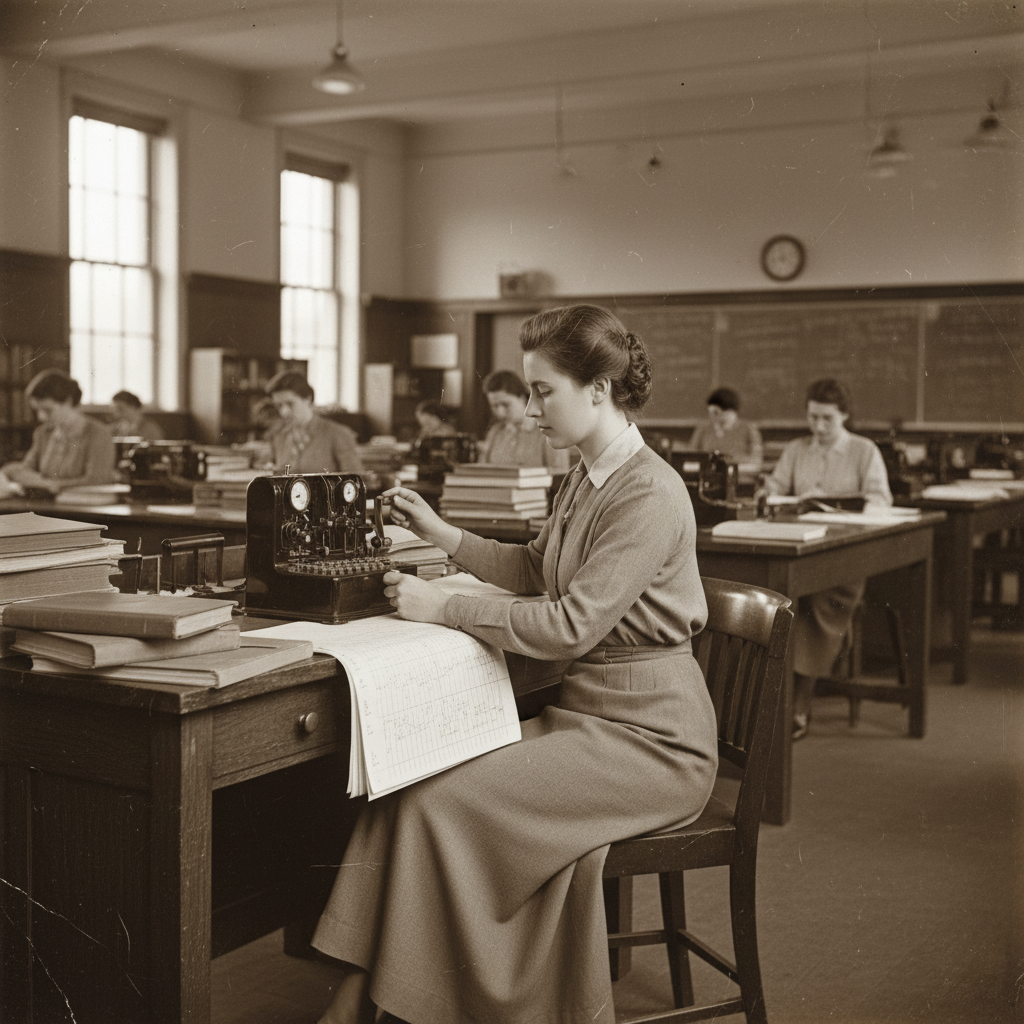 Past · 20th CenturyHuman ComputerThe role of a Human Computer emerged in the early 20th century, primarily during the 1930s to the 1950s, as a response to the growing need for complex calculations in fields such as astronomy, engineering, and military applications. Human Computers were predominantly women who performed mathematical calculations by hand, often using pencil and paper, and later, mechanical calculators. They worked in teams, meticulously calculating trajectories for rockets, analyzing astronomical data, and solving intricate mathematical problems that were essential for scientific advancements. Their work was critical in the development of early computers, as they laid the groundwork for the algorithms and processes that would later be automated.
These women, often referred to as "computers," were not only skilled mathematicians but also adept at problem-solving and critical thinking. They operated in environments that ranged from university laboratories to government research facilities, where they collaborated closely with scientists and engineers. The atmosphere was often intense, with deadlines looming and the pressure to produce accurate results being paramount.
The Human Computer's role was not just about numbers; it was about precision, attention to detail, and the ability to work under pressure. They were the unsung heroes behind many scientific breakthroughs, including the early space missions and the development of radar technology during World War II. Their contributions were vital, yet often overlooked in the historical narrative of computing and mathematics.
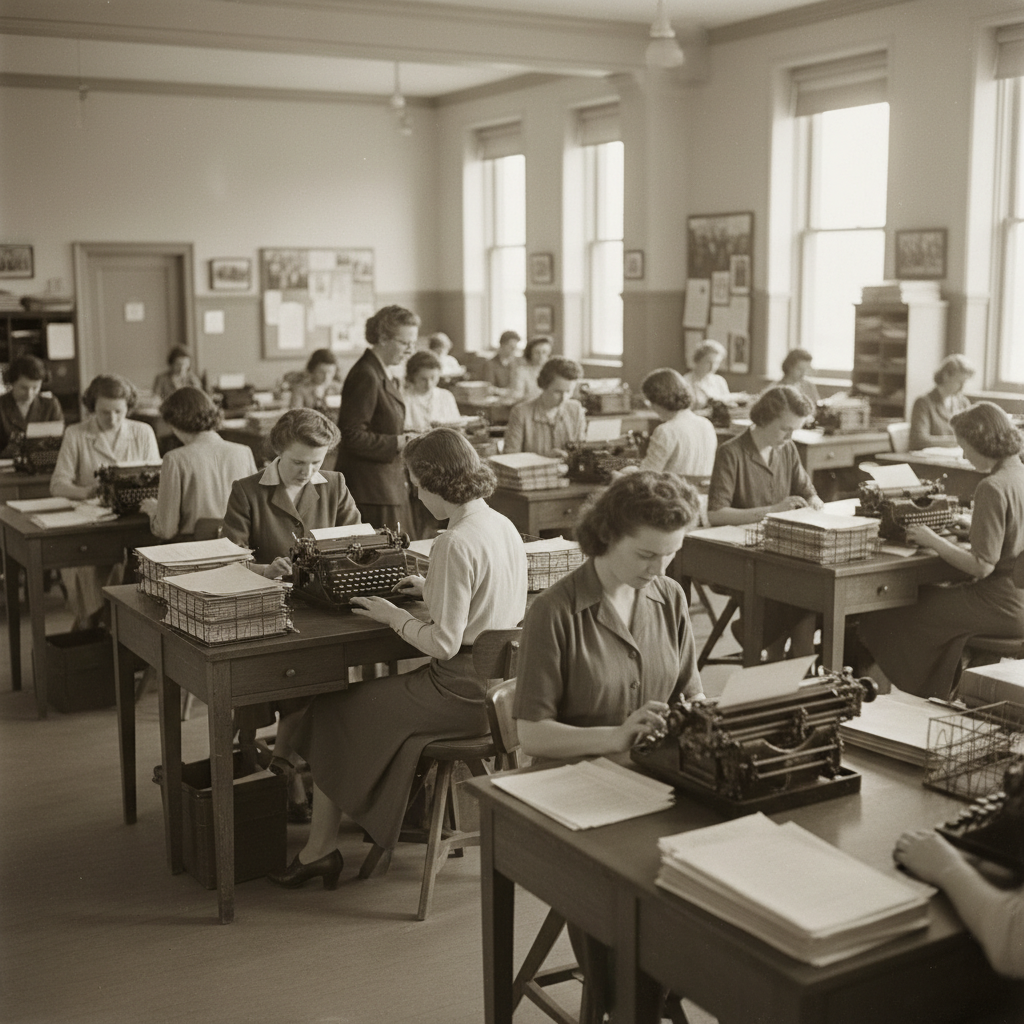 Past · Post-War EraTypist Pool WorkerThe Typist Pool Worker was a vital cog in the machinery of mid-20th century office life, particularly in the bustling corporate environments of the Post-War Era, from the late 1940s to the early 1980s. These skilled individuals were responsible for producing typed documents, correspondence, and reports, often under tight deadlines. They worked in a shared office space known as a 'typist pool,' where multiple typists would be stationed at rows of typewriters, each contributing to the efficiency of the office. The typist pool was a reflection of the era's burgeoning corporate culture, where the demand for clerical work surged as businesses expanded in the post-war economic boom.
The role required not only speed and accuracy in typing but also a keen understanding of office protocols and etiquette. Typist Pool Workers were often the first point of contact for incoming correspondence, and their ability to produce clear, professional documents was crucial for maintaining the image of the organization. They utilized carbon paper for duplicating documents and were adept at using various typewriter models, each with its own quirks and features. The job was often seen as a stepping stone for women entering the workforce, providing them with financial independence and a foothold in the corporate world.
 Past · Post-War EraEncyclopedia SalepersonThe Encyclopedia Salesperson was a vital figure in the dissemination of knowledge during the mid-20th century, particularly in the Post-War Era, when families sought to educate their children in an increasingly complex world. These salespeople were often employed by publishing companies that produced encyclopedias, which were considered essential household items. The role involved not only selling books but also acting as a trusted advisor to families, guiding them through the vast array of information available.
Encyclopedia Salespersons would typically visit homes, demonstrating the value of their products through engaging presentations. They would highlight the importance of having a comprehensive reference library, especially in an age where education was becoming more accessible and valued. The sales pitch often included a demonstration of how to find information quickly and effectively, showcasing the encyclopedias as indispensable tools for learning and research.
In addition to selling, these individuals were responsible for maintaining relationships with customers, providing follow-up support, and sometimes even offering additional educational materials. Their work was characterized by a strong emphasis on personal interaction, as they built rapport with families and understood their specific educational needs.
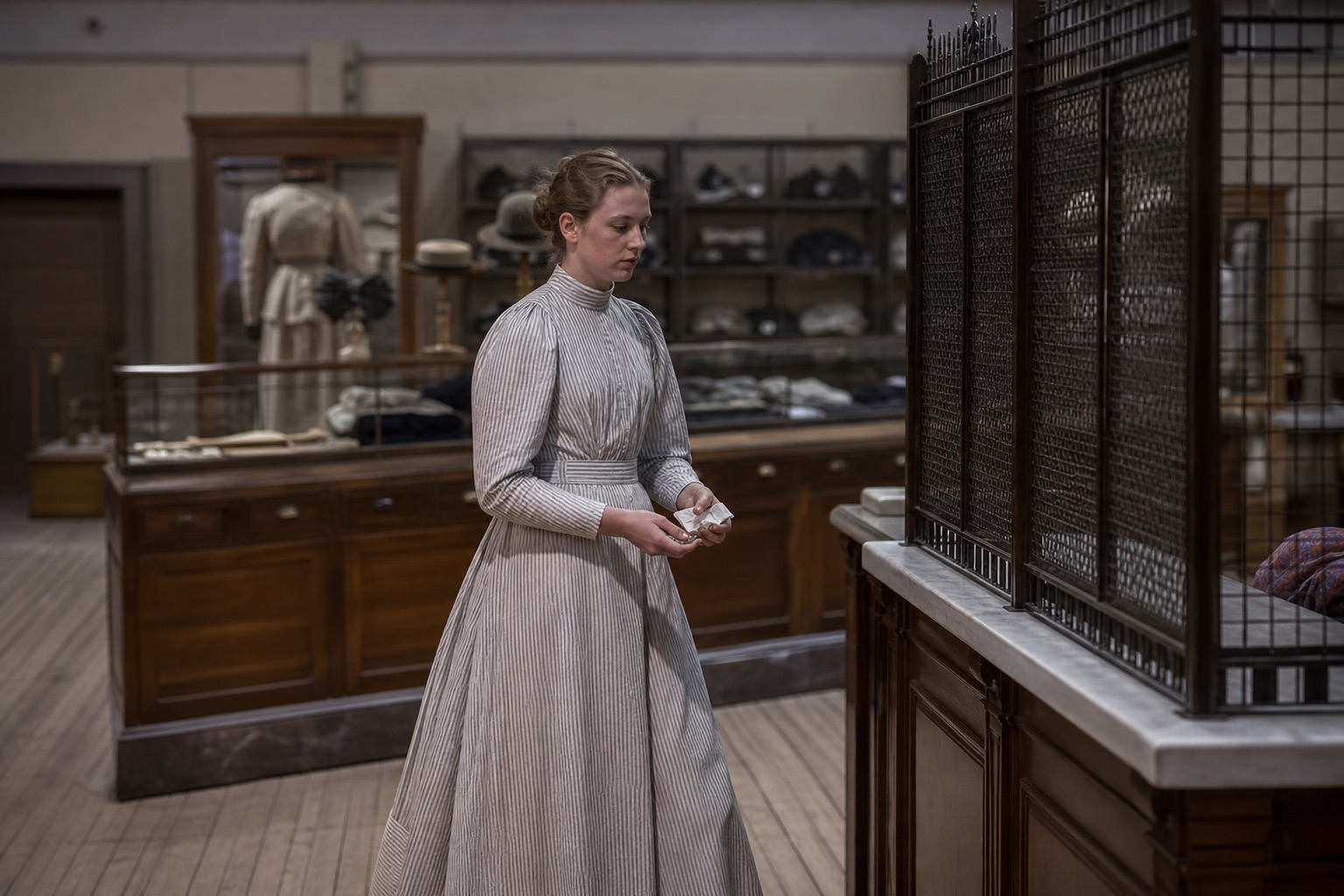 Past · Victorian EraCash GirlA cash girl was a department-store junior, often a girl or a young woman, who carried the customer's money and the written bill to a cashier and brought the receipt and the change back. The counter itself had no register yet. She waited where the sale was made, took the cash and the slip, walked the floor to the desk, and returned without mixing one purchase with another in a crowded aisle. The work was ordinary and public, a pair of errands repeated for every sale. This record keeps that walk concrete and calm.
The practice belongs to the late nineteenth century in the United States and in Britain, in dry-goods houses and the new department stores. Cable systems such as Lamson's cash railway, pneumatic tubes to a central desk, and the cash register on the counter each removed a reason to send a junior across the floor. She was not the buyer and not the cashier. She was the distance between them, and when that distance was mechanized the walk ended.
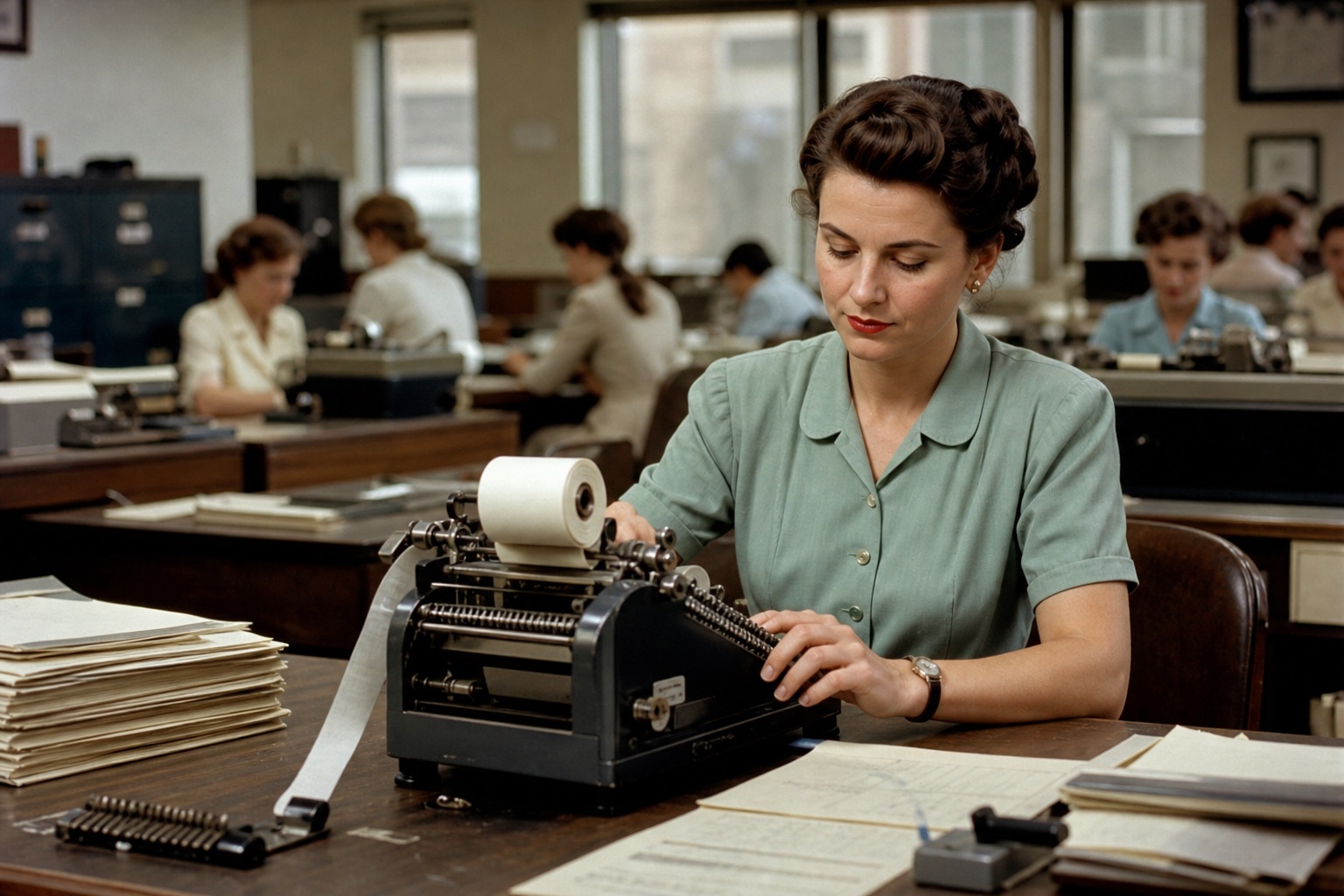 Past · Mid Twentieth CenturyComptometer OperatorA comptometer operator ran a Felt comptometer, the key-driven adding machine Dorr E. Felt brought out in 1887. Unlike a crank adder, it let several keys in a column go down together, so a trained hand could enter a number in one stroke. Banks, billing offices, railroads, and insurance rooms hired people, mostly women, to add and extend figures for hours at that keyboard. Operator schools taught the touch and certified speed. The product was a total the bookkeeper could trust, not a printed page of prose.
The machine's long life makes the job look Victorian at the start, and the honest center of the exhibit is the twentieth-century office, ending when electronic calculators and computers took the columns in the 1960s and 1970s. A comptometer bureau might sell the labor by the batch. An in-house operator sat beside the ledgers she fed. Either way the skill was in the hands, and it did not survive the cheap electronic key.
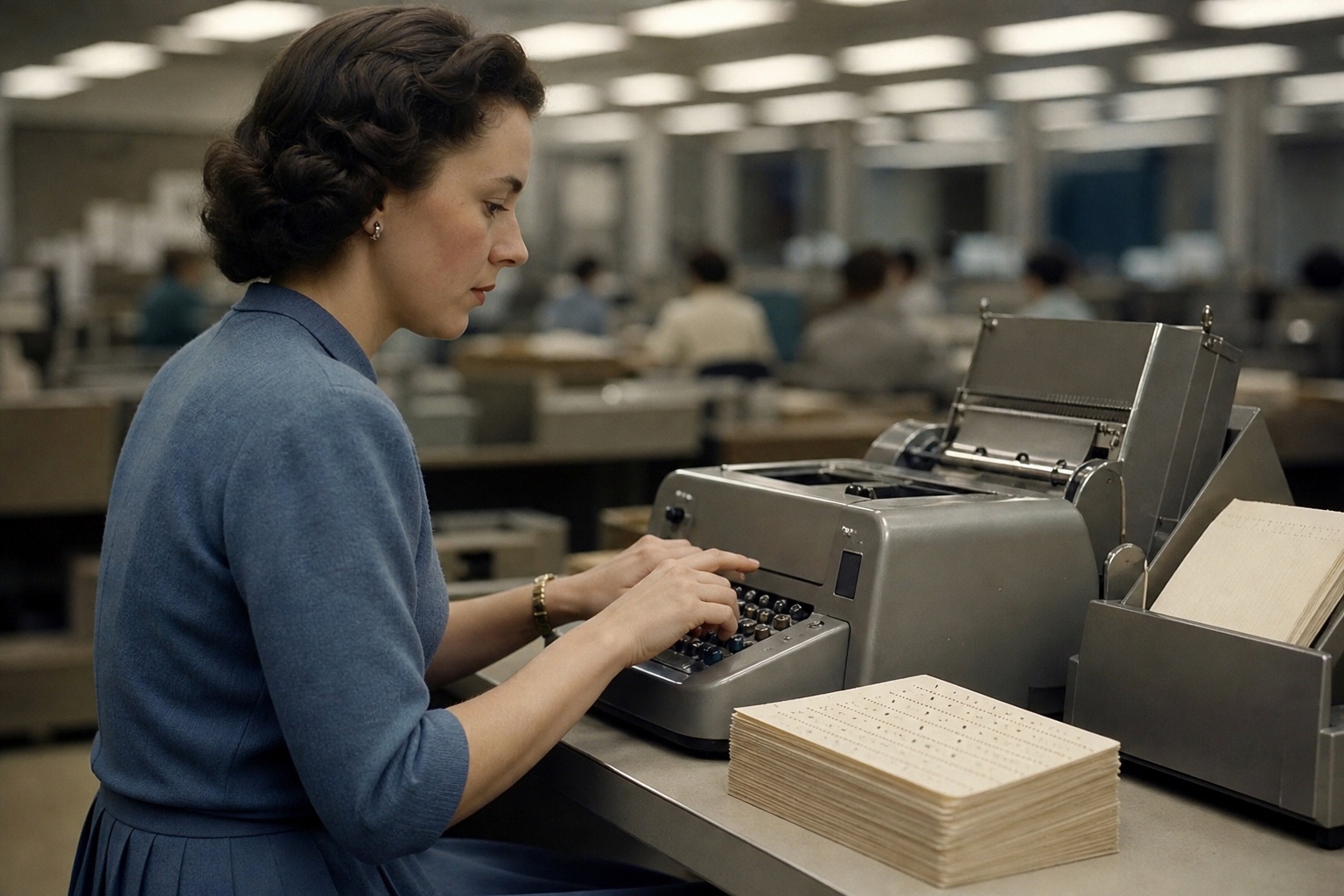 Past · Mid Twentieth CenturyKeypunch OperatorA keypunch operator turned source documents into Hollerith and later IBM cards by striking a punch, one character to a column, until a deck existed that a machine room could read. The mid-century room was often a floor of the same gray machines, program drums skipping fields the operator should not retype, hoppers of blank cards on one side and finished decks on the other. A second person at a verifier rekeyed to catch errors. The work flourished when payrolls, policies, censuses, and bills all had to become cards before a computer would accept them.
The operators were mostly women, and the job is a mid-twentieth-century mass occupation rather than a nineteenth-century curiosity. It thinned when key-to-disk machines, terminals, and direct data entry in the 1970s and 1980s let the same facts go into a system without a card. The exhibit is that punch room: the sheet, the keyboard, the deck, and the sound.
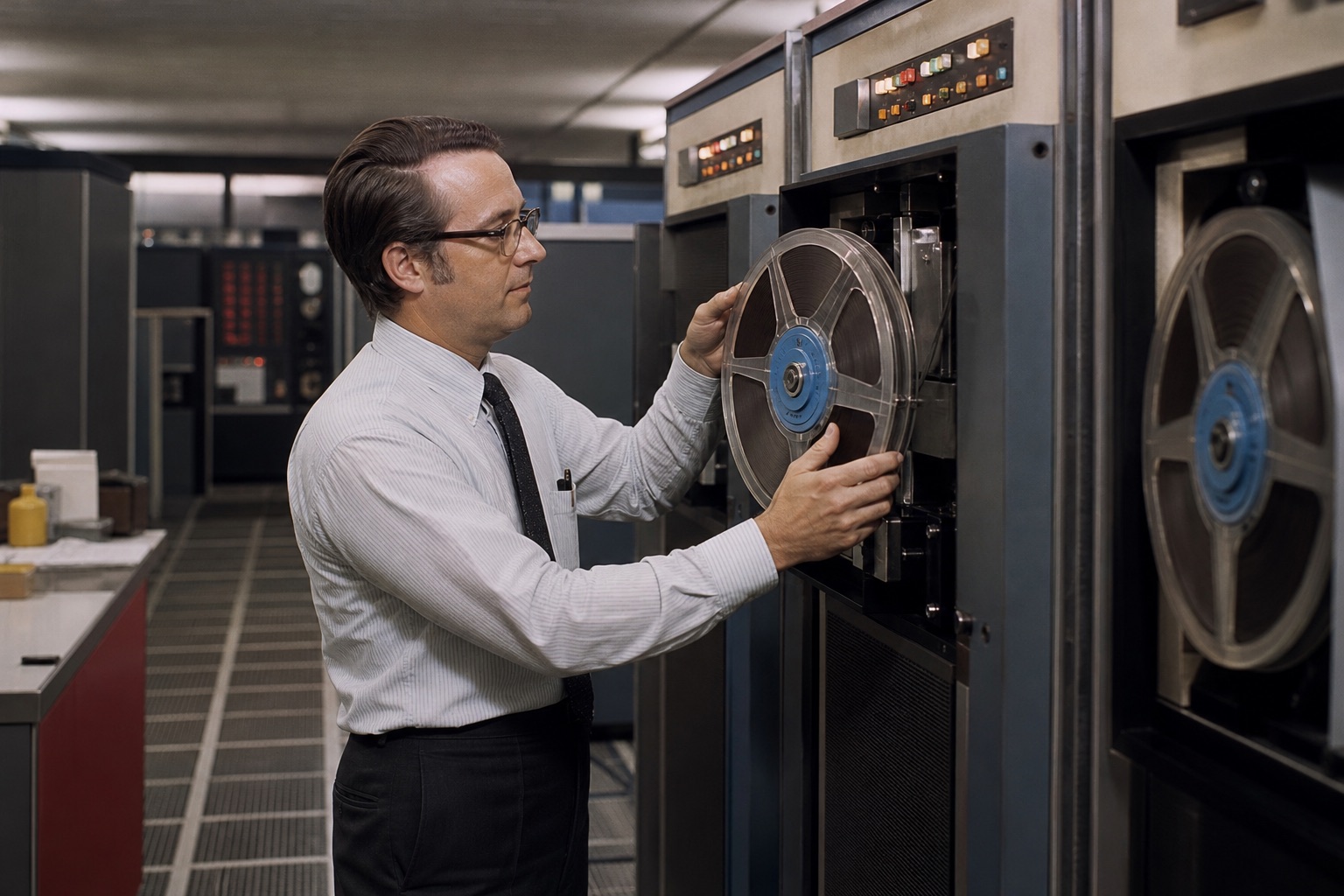 Past · Late Twentieth CenturyMainframe OperatorThe mainframe operator of this exhibit is the person in the raised-floor machine room who mounted tapes, started batch jobs, and answered the console. Glass walls made the room a show, which is why people called it a glass house. Reels went on drives, disk packs went into drawers, and a printer hammered through boxes of paper while the operator watched messages and typed the replies the system demanded. Programmers wrote the jobs. The operator made the night's queue actually run.
The decades are the 1960s through the 1980s. Automation, smaller machines, and later site-reliability roles replaced that chair. They did not abolish every kind of operations work. A later engineer who tends a service from a laptop is a different job, and this label refuses the claim that nobody operates computers anymore. It is the glass-room shift, the tapes, and the console, and no wider empire beyond that room.
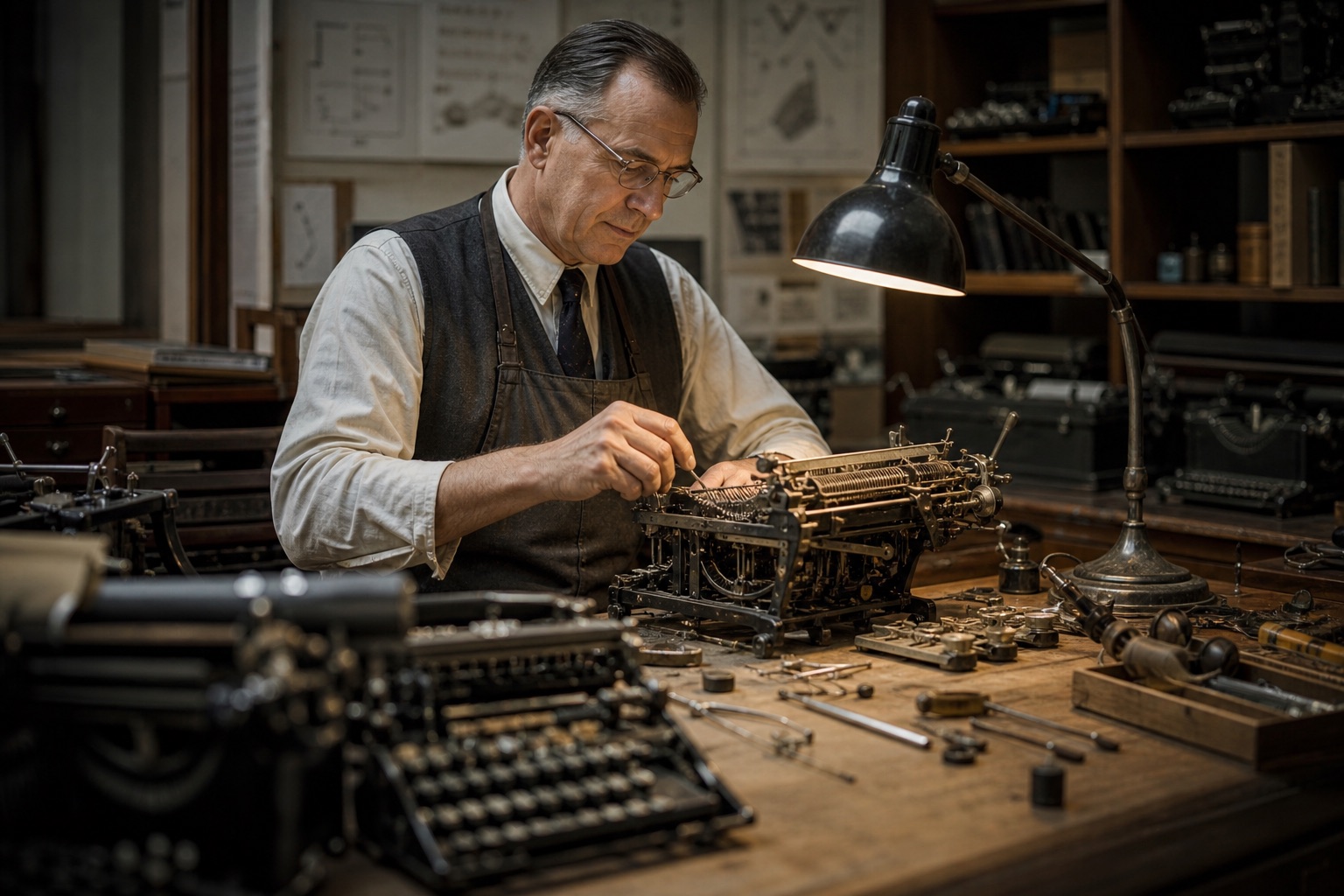 Past · Late Twentieth CenturyTypewriter RepairmanA typewriter repairman was the traveling or shop mechanic who kept office typewriters writing. He arrived with a case, cleaned a segment packed with eraser crumbs, replaced a broken drawband, aligned type that no longer struck in a straight line, and recovered or replaced a platen that had gone hard. Underwood, Remington, Royal, and the rest each had their own screws. The IBM Selectric, from 1961, added a golf-ball element and a different set of failures, and he learned those too if the route included them.
The job is a twentieth-century service trade that ends in the 1980s, when word processors and personal computers took the desks. A shop might still oil a machine for a loyal customer after that. The ordinary call, an office full of typewriters that had to be back before the mail, belongs to the decades when the typewriter was the instrument of the office and not a curiosity kept for show.
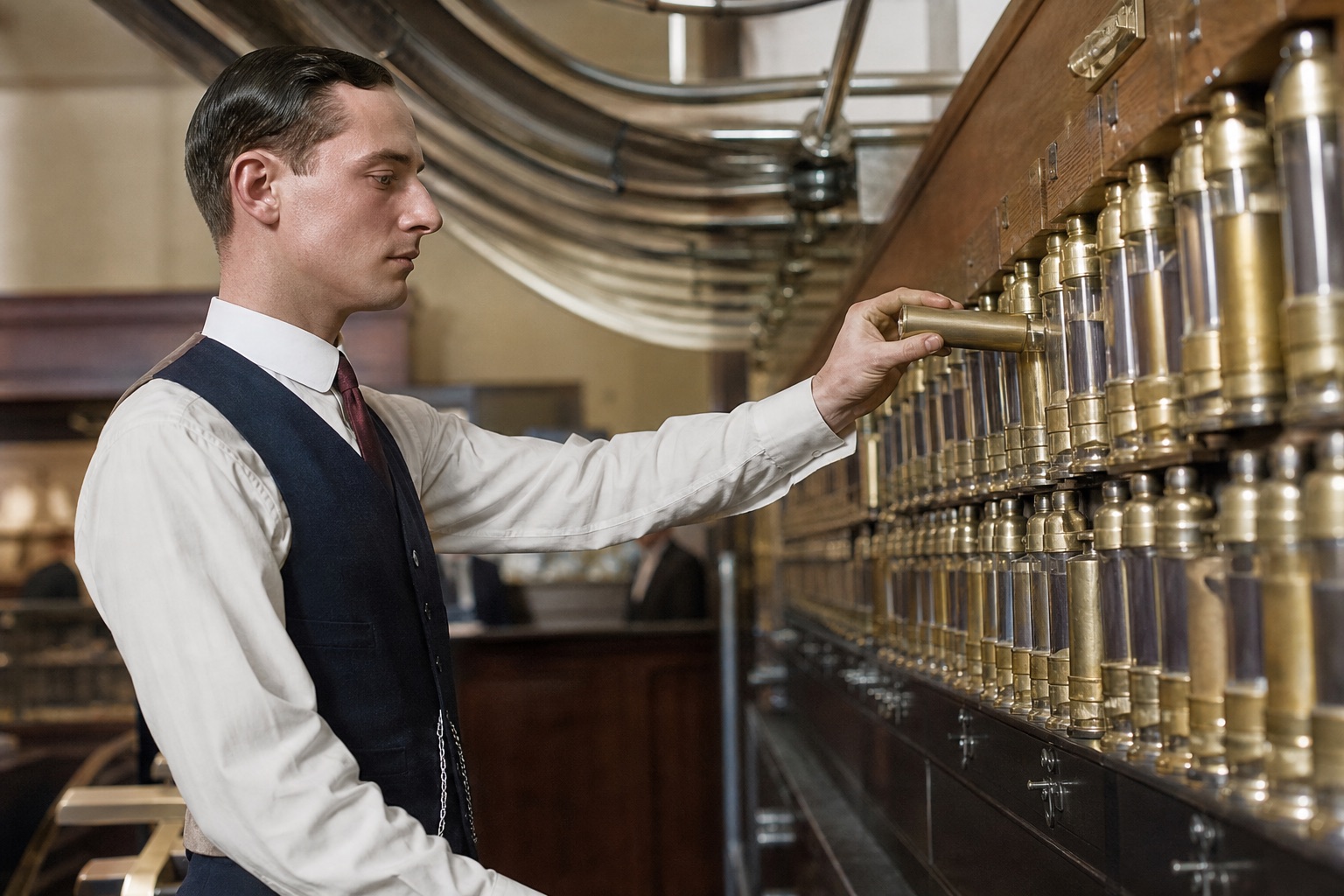 Past · Early Twentieth CenturyPneumatic Tube AttendantA pneumatic-tube attendant staffed the terminals of a store or office system that shot small carriers through tubes of air. In a department store the carrier brought a sale's cash and bill to a central cashier, and the attendant sent the change and the receipt back to the counter. In an office the same rush of air carried papers between floors, and the attendant opened, sorted, and returned them. The work was the mouth of the tube: a lever, a carrier, a drawer. This is the late nineteenth and early twentieth century. It is not the hospital tube, which still runs and is another job entirely.
Retail ended the attendant when the tubes and the central cashier's desk were ripped out and the money stayed on the selling floor. Office lines lingered in a few buildings and are not the center of this label. The earlier cash girl had walked what the carrier now flew; the register on the counter would later make even the flight unnecessary. The person with the pile of carriers is the exhibit.