
After the Film Projectionist
The digital cinema package
A reel, a changeover, and a carbon arc were replaced by a server and a playlist. Many houses no longer staff a booth.
The exhibitThe mid twentieth centuryThe lens and the recorded showThe recorded picture and its afterlife
From the exhibit
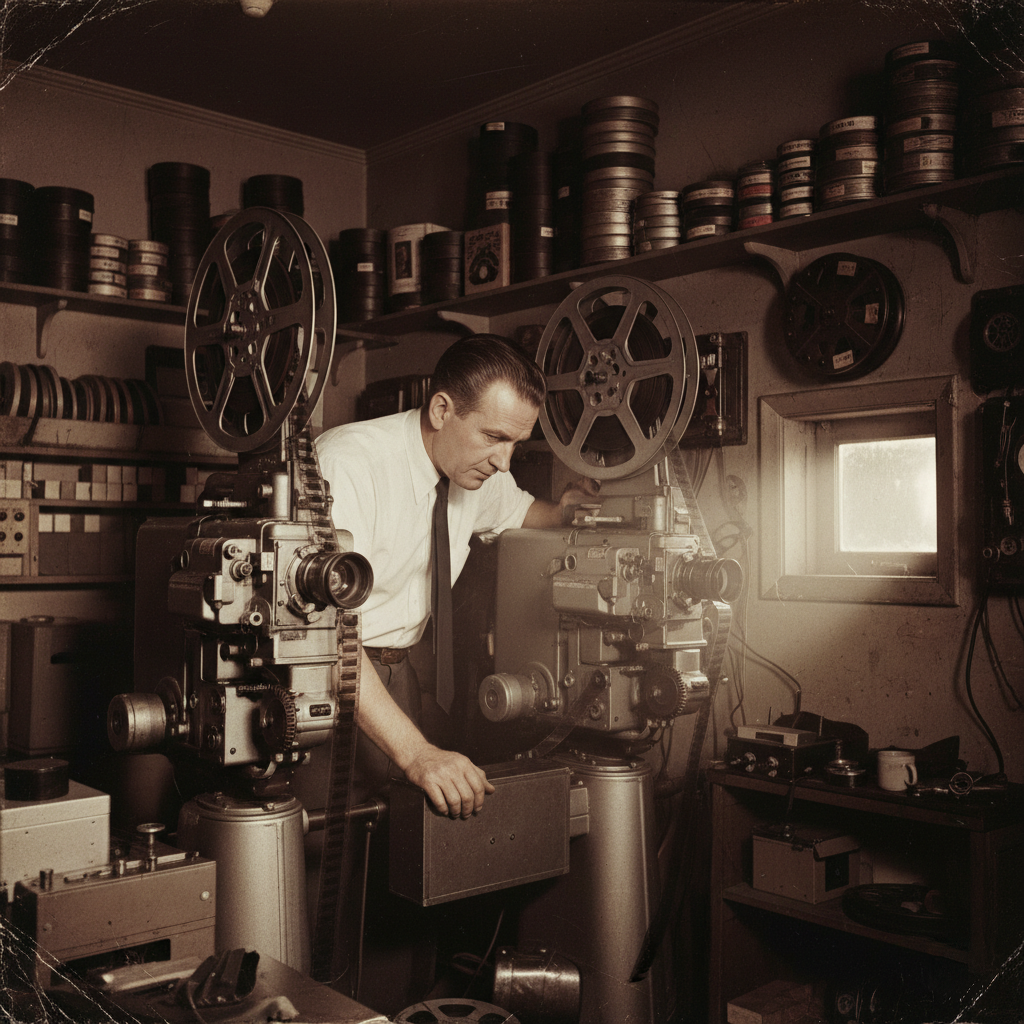
The role of the film projectionist began to decline in the late 20th century with the advent of digital cinema technology. Digital projectors, which require less manual operation and maintenance, became the industry standard, leading to a significant reduction in the need for skilled projectionists. Additionally, the rise of home video and streaming services further diminished the demand for traditional movie theaters, contributing to the obsolescence of this once-essential role. As theaters transitioned to digital formats, the intricate knowledge and skills of projectionists became less relevant, leading to the eventual extinction of the profession.
Future jobs that continue the work
2
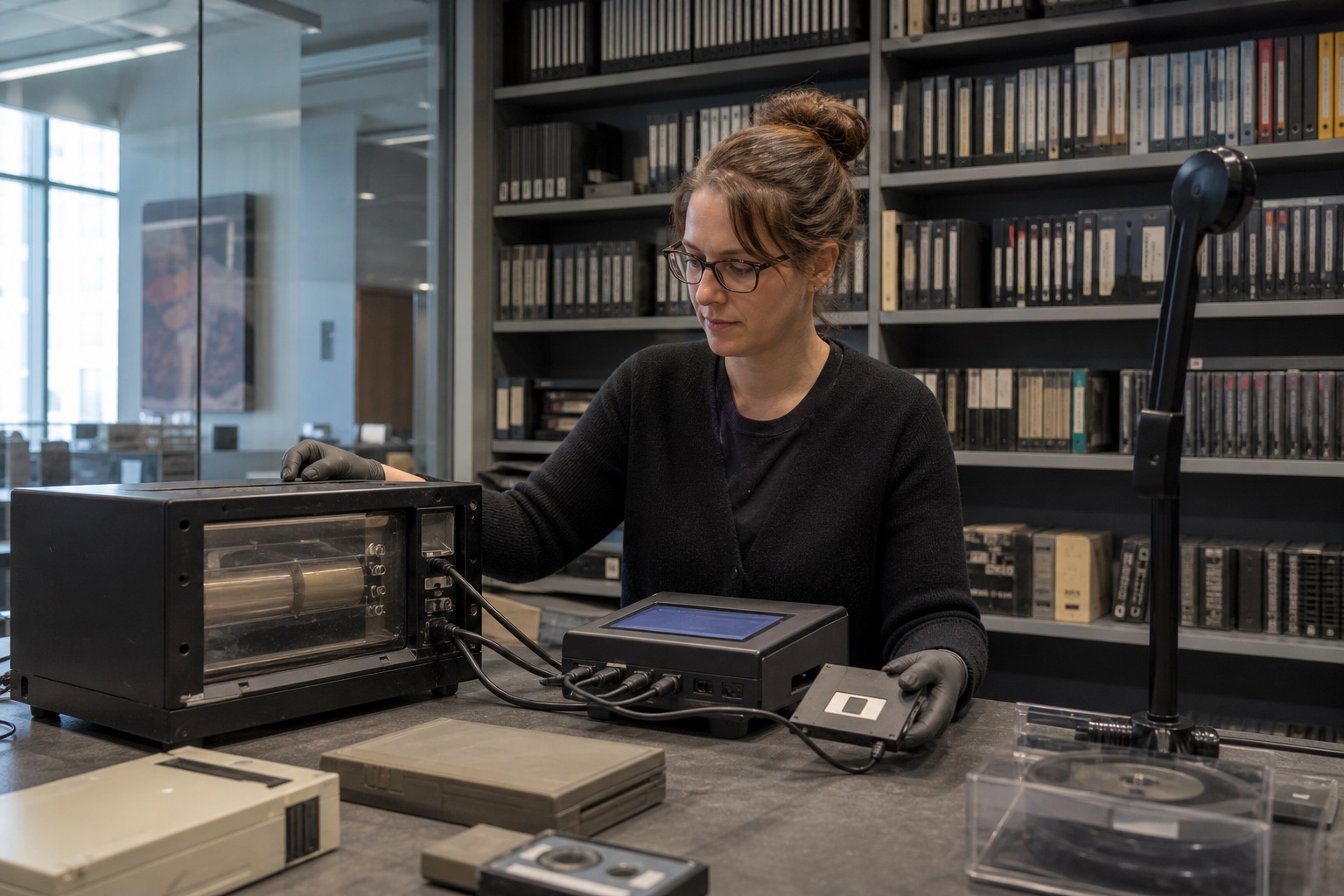 Projected · Automation AgeFormat Restoration LibrarianThe format-restoration librarian keeps obsolete digital and analog formats readable, and keeps the catalog honest about the degree of that readability. The shelf runs through tapes, disks, and codecs that current software will not open: U-matic, Betacam, DAT, floppies, Zip disks, and files wrapped in methods a vendor walked away from. Some carriers can still be played. Some can only be imaged as magnetic flux. Some are partly gone, and the record is supposed to say which part, in words a later reader can find.
A model that paints in the missing frames has made a new work. The librarian will not catalog that work as the original, however smoothly it plays. Migration, emulation, and guesswork are different acts, and the finding aid has to name the one that happened. Archives learned this with paper that had been improved by a helpful restorer. The same discipline now applies to a file that looks complete because a program was willing to invent the rest.
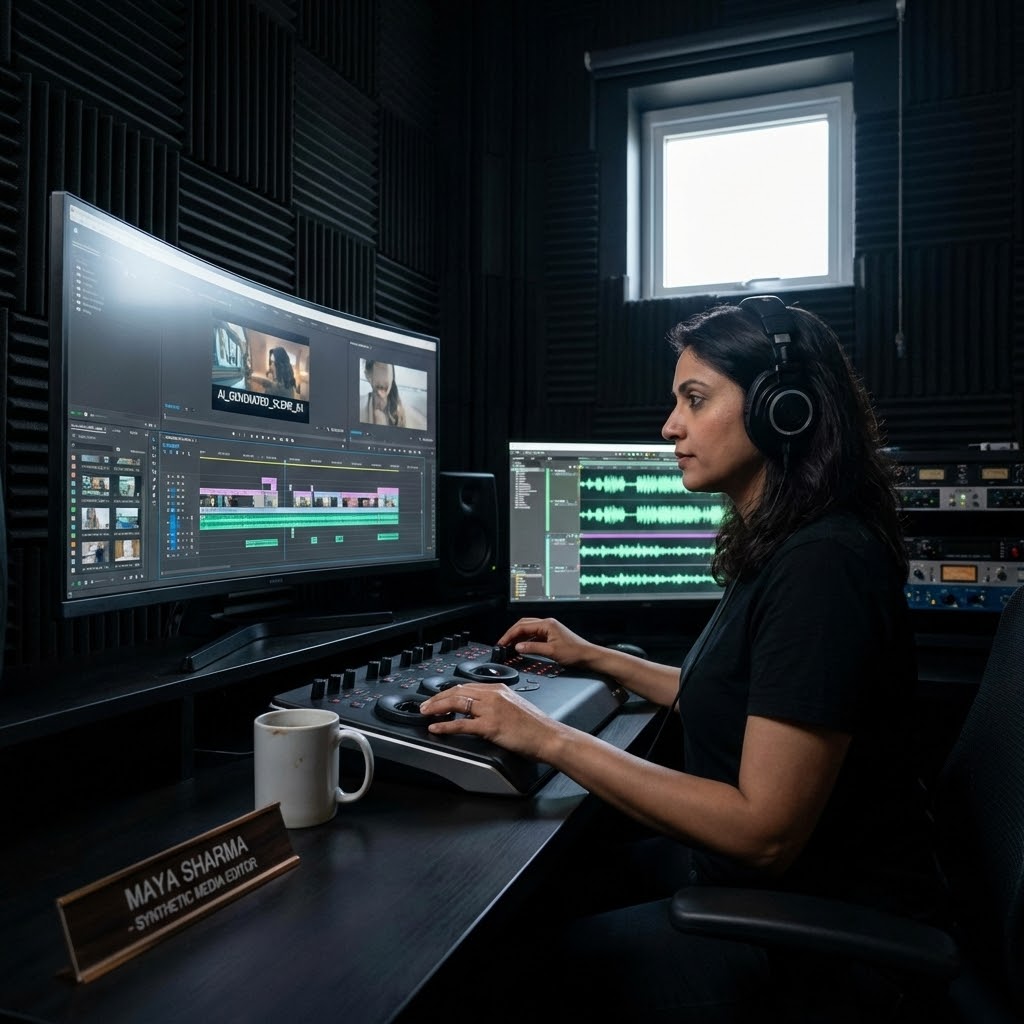 Projected · AI RevolutionSynthetic Media EditorIn the not-so-distant future, the role of a Synthetic Media Editor emerges as a pivotal profession in the landscape of digital content creation. As artificial intelligence continues to evolve, the ability to generate hyper-realistic media—ranging from video and audio to text—becomes commonplace. Synthetic Media Editors are the creative minds who harness these advanced technologies to produce compelling narratives, advertisements, and entertainment that resonate with audiences on a profound level. They blend human creativity with AI capabilities, ensuring that the final product is not only engaging but also ethically sound and culturally relevant. This role is crucial in a world where the line between reality and synthetic creation blurs, requiring a keen understanding of both technology and human emotion.