
AI Revolution
Synthetic Media Editor
A speculative career prediction for AI Revolution based on technological trends and societal evolution.
Media Gallery
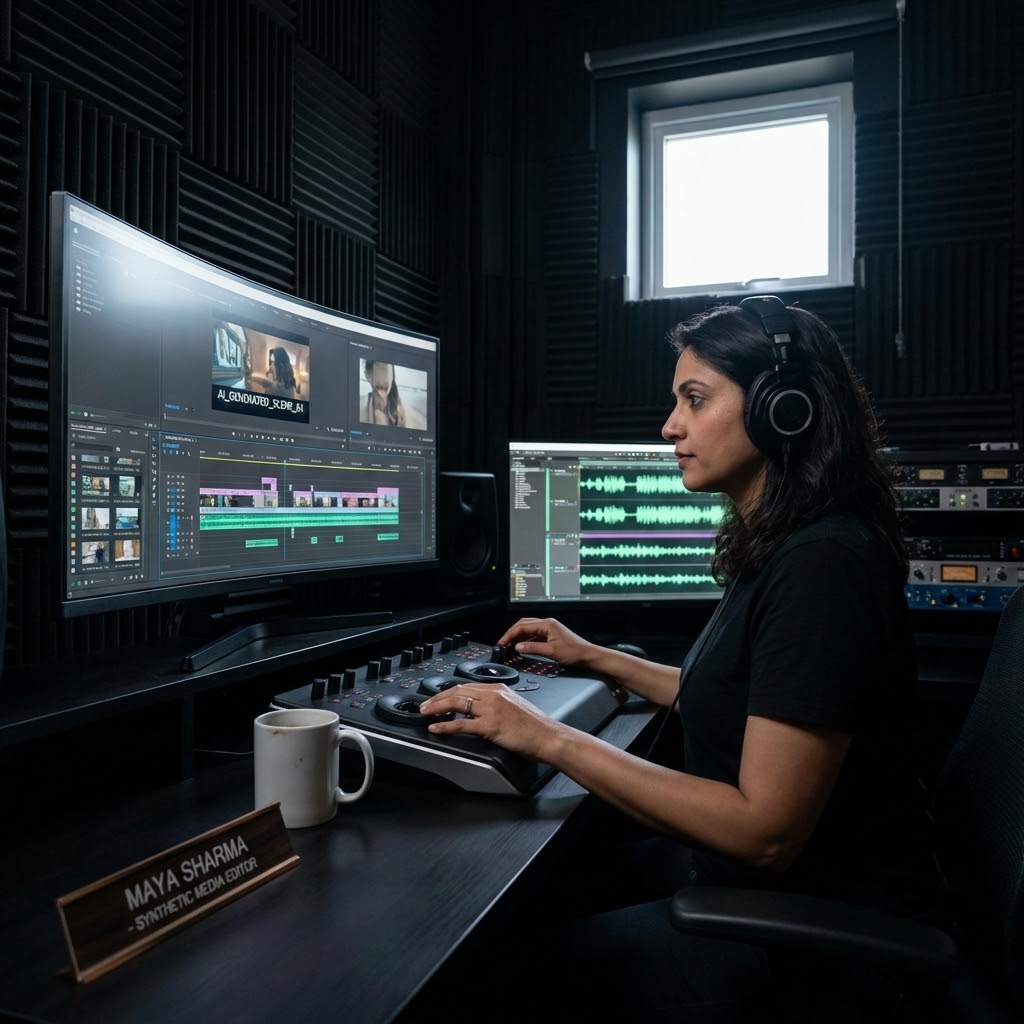
About the Synthetic Media Editor Career
In the not-so-distant future, the role of a Synthetic Media Editor emerges as a pivotal profession in the landscape of digital content creation. As artificial intelligence continues to evolve, the ability to generate hyper-realistic media—ranging from video and audio to text—becomes commonplace. Synthetic Media Editors are the creative minds who harness these advanced technologies to produce compelling narratives, advertisements, and entertainment that resonate with audiences on a profound level. They blend human creativity with AI capabilities, ensuring that the final product is not only engaging but also ethically sound and culturally relevant. This role is crucial in a world where the line between reality and synthetic creation blurs, requiring a keen understanding of both technology and human emotion.
Day in the Life of a Synthetic Media Editor
Morning: Creative Collaboration
The day begins with a virtual team meeting, where the Synthetic Media Editor collaborates with writers, designers, and AI specialists. They discuss upcoming projects, brainstorm ideas, and review the latest advancements in AI tools that can enhance their storytelling capabilities. The editor shares insights on audience engagement metrics, ensuring that the team’s creative direction aligns with viewer preferences.
Mid-Morning: Content Generation
After the meeting, the editor dives into the content generation phase. Using advanced AI software, they input parameters for a new advertisement campaign. The AI generates multiple variations of video clips, voiceovers, and even music tracks. The editor meticulously reviews these outputs, selecting the most compelling elements while ensuring that the content adheres to ethical standards and brand guidelines.
Afternoon: Editing and Refinement
In the afternoon, the editor focuses on refining the selected media. They employ both traditional editing techniques and AI-assisted tools to enhance visuals, adjust audio levels, and ensure seamless transitions. This process involves a delicate balance of human intuition and AI efficiency, as the editor adds personal touches that resonate with the target audience.
Late Afternoon: Ethical Review
As the day winds down, the editor conducts an ethical review of the content. They assess potential biases in the AI-generated material, ensuring that the representation of diverse groups is accurate and respectful. This critical step is essential in maintaining the integrity of the media produced and upholding the trust of the audience.
Evening: Final Presentation
The day concludes with a presentation of the final product to stakeholders. The Synthetic Media Editor showcases the polished advertisement, highlighting the innovative use of AI and the creative decisions made throughout the process. Feedback is gathered, and the editor prepares for any necessary revisions before the content goes live.
Related Exhibits
Vertical Farm Manager
As urban populations swell and climate change intensifies, the role of the Vertical Farm Manager emerges as a vital profession in the Climate Adaptation Era. This innovative job is at the intersection of agriculture, technology, and sustainability, focusing on the management of high-rise farms that utilize advanced hydroponics, aeroponics, and artificial intelligence to produce food in urban environments. Vertical farms, often located in repurposed buildings or purpose-built skyscrapers, are designed to maximize space and minimize resource use, providing fresh produce to city dwellers while reducing the carbon footprint associated with traditional farming methods. The Vertical Farm Manager oversees all aspects of these farms, from crop selection and growth cycles to the integration of smart technologies that monitor and optimize plant health. This role not only requires a deep understanding of agricultural science but also a keen awareness of urban ecology and community needs, making it a multifaceted and dynamic career.
Human-AI Creative Director
In the not-so-distant future, the role of the Human-AI Creative Director emerges as a pivotal position at the intersection of human creativity and artificial intelligence. As industries increasingly integrate AI into their creative processes, this role becomes essential in guiding and harmonizing the collaboration between human artists and AI systems. The Human-AI Creative Director is responsible for overseeing projects that leverage AI tools to enhance artistic expression, ensuring that the final outputs resonate with human emotions and cultural relevance. This position not only requires a deep understanding of both creative practices and AI technologies but also a visionary approach to how these two realms can coexist and elevate one another. The Human-AI Creative Director will curate experiences that challenge traditional notions of authorship and creativity, pushing the boundaries of what is possible in art, design, and media.
Explore More Exhibits
Discover the full collection of past and future professions in The Jobs Museum.