
machine
The telegraph and its successors
A key, a sounder, and the machines that printed or spoke instead.
Morse, the railway telegraph, the pony express, and the listening post. The telephone, the teleprinter, and radar are the replacements.
Under this force
7
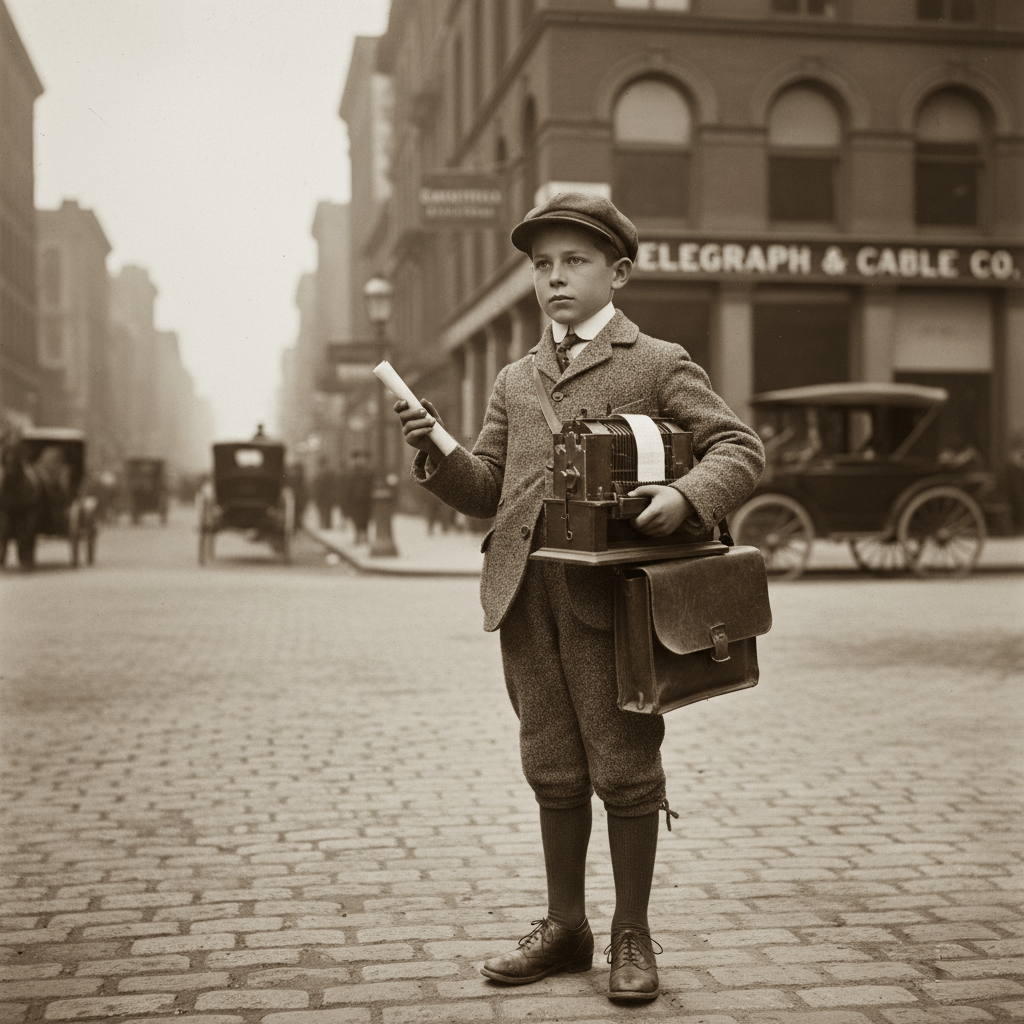
- Past · Victorian EraTelemark BoyThe role of the Telemark Boy emerged during the Victorian Era, a time marked by rapid industrialization and the expansion of the British Empire. These young boys, typically between the ages of 10 and 15, were employed in the bustling telegraph offices that dotted cities and towns across the United Kingdom. Their primary responsibility was to assist telegraph operators by delivering messages and relaying information between offices and clients. The telegraph was a revolutionary technology of the time, allowing for near-instantaneous communication over long distances, and the Telemark Boys were essential to its operation.
Dressed in simple, often worn clothing, these boys navigated the busy streets, carrying messages in leather satchels. They were known for their speed and agility, darting through crowds and dodging horse-drawn carriages to ensure that messages reached their destinations promptly. The job required not only physical stamina but also a keen sense of direction and the ability to read and write, as they often had to transcribe messages before delivering them.
The social context of the era saw many children entering the workforce at a young age, often out of necessity due to family financial pressures. The work of a Telemark Boy was seen as a stepping stone for many, providing them with a glimpse into the burgeoning world of communication and technology, while also exposing them to the harsh realities of child labor during this period.
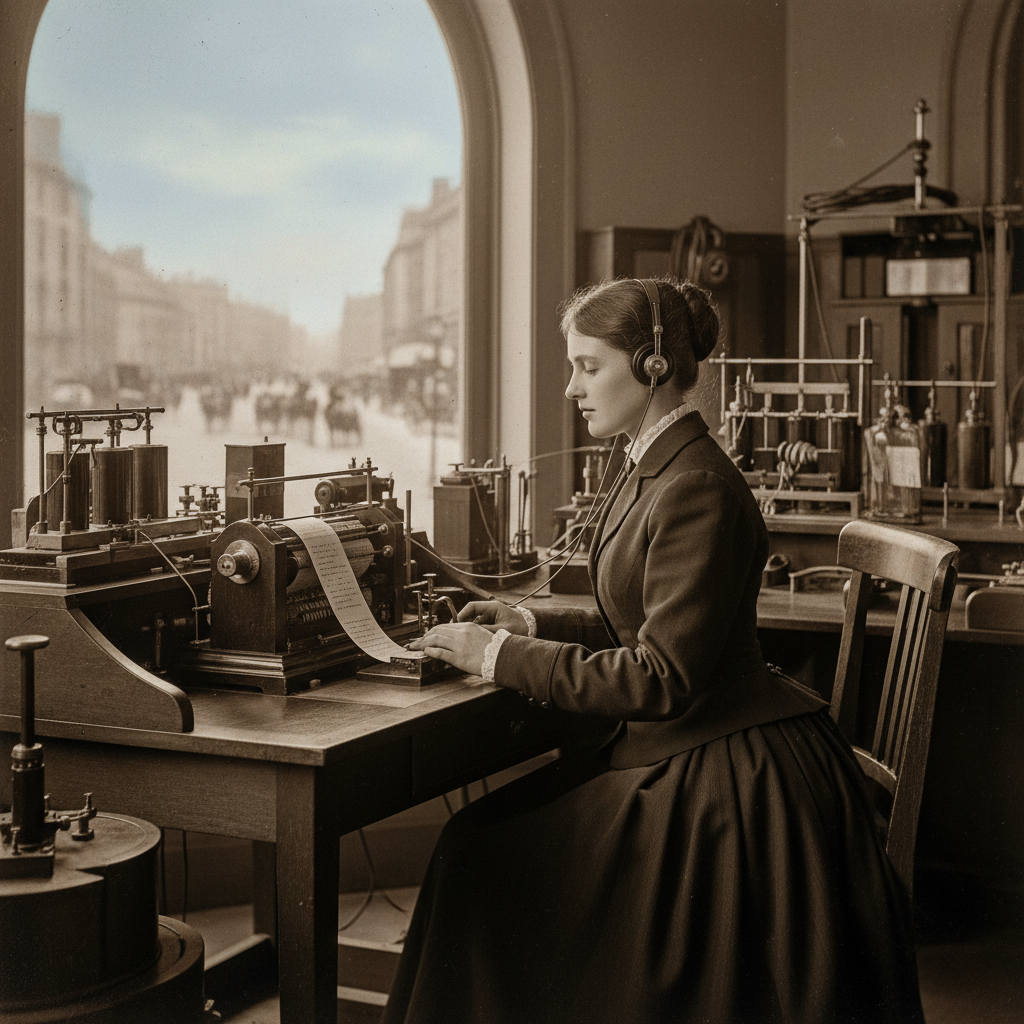 Past · 19th CenturyMorse Code DecoderThe role of a Morse Code Decoder emerged in the mid-19th century, coinciding with the advent of the telegraph. This job was pivotal in the communication revolution, allowing messages to be transmitted over long distances using a series of dots and dashes representing letters and numbers. Morse Code Decoders were responsible for interpreting these signals, translating them into readable text, and ensuring that vital information was accurately conveyed. They played a crucial role in various sectors, including military operations, maritime communication, and commercial enterprises, where timely information was essential for decision-making and coordination.
The work environment for a Morse Code Decoder was often dynamic and fast-paced. Decoders typically operated in telegraph offices, military command centers, or aboard ships, where they would listen intently to the rhythmic sounds of the telegraph machine. The ability to quickly and accurately decode messages was paramount, as delays could lead to misunderstandings or missed opportunities. The job required not only technical skill but also a keen sense of urgency and attention to detail, as decoders often worked under pressure, especially during critical communications.
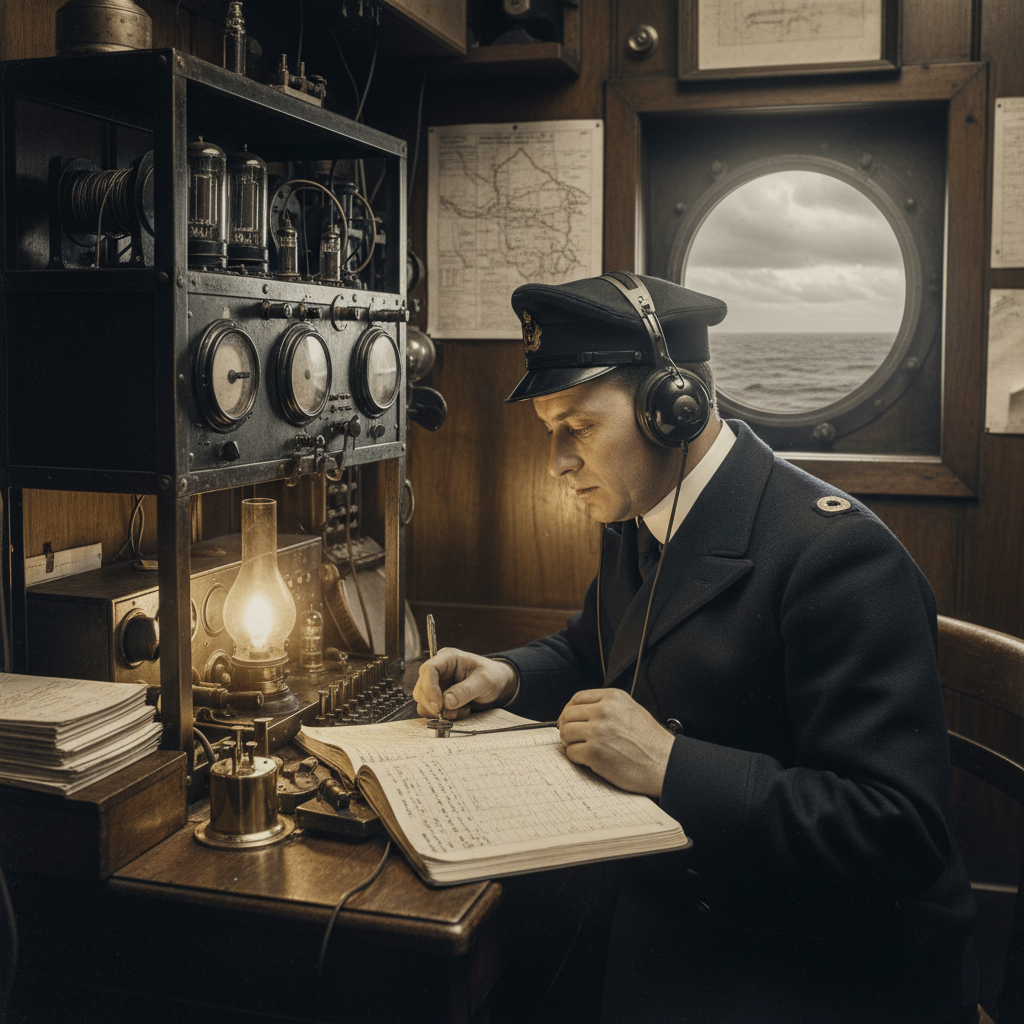 Past · Industrial RevolutionLog TelegraphistThe role of a Log Telegraphist emerged during the Industrial Revolution, a period marked by rapid technological advancement and the expansion of communication networks. These skilled workers were responsible for operating telegraph systems, which were crucial for transmitting messages over long distances using electrical signals. The Log Telegraphist specifically focused on the logging and recording of messages sent and received via telegraph, ensuring that communications were accurately documented and relayed. This job was vital for businesses, government agencies, and the military, as it facilitated timely decision-making and coordination across vast distances.
Log Telegraphists were often found in telegraph offices, railway stations, and military outposts, where they worked in close proximity to the telegraph equipment. Their work environment was typically bustling, filled with the sounds of clicking keys and the hum of electrical machinery. The Log Telegraphist's role required not only technical proficiency in operating the telegraph but also a keen attention to detail, as they meticulously recorded each message, noting the time of receipt and dispatch, and ensuring that no errors occurred in the transmission process.
As the world became increasingly interconnected, the demand for efficient communication grew, and the Log Telegraphist played a pivotal role in this transformation. However, as technology advanced, the telegraph system began to be replaced by more sophisticated communication methods, such as the telephone and eventually the internet, leading to the decline of this occupation.
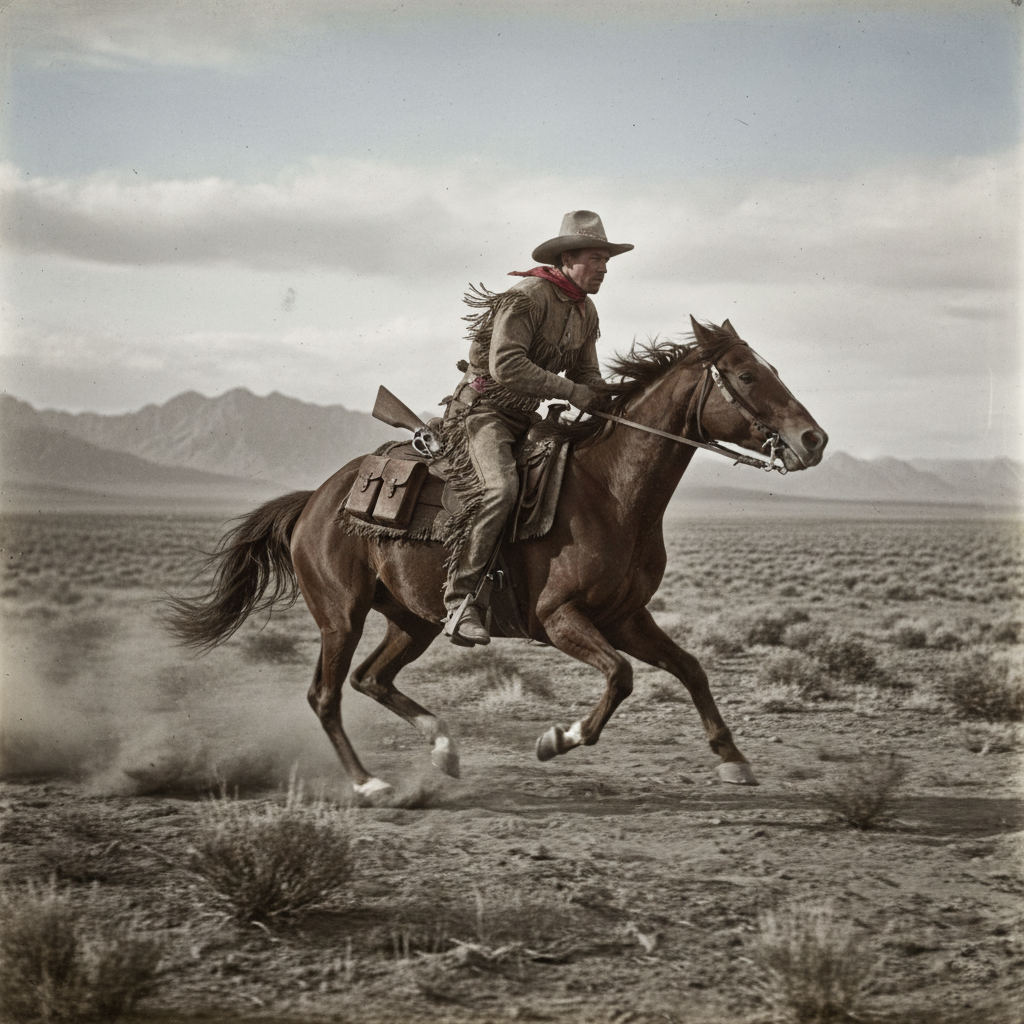 Past · Mid 19th CenturyPony Express RiderThe Pony Express was a mail service that operated in the United States from April 1860 to October 1861, providing a vital link between the East and West coasts during a time of rapid expansion and communication needs. Riders, known as Pony Express Riders, were young, brave men who undertook the perilous task of delivering mail across the vast and often treacherous terrain of the American frontier. Each rider was responsible for a segment of the route, which spanned approximately 1,900 miles from St. Joseph, Missouri, to Sacramento, California. The service was renowned for its speed, with letters often delivered in just ten days, a remarkable feat for the time.
Riders faced numerous challenges, including harsh weather conditions, rugged landscapes, and the threat of hostile encounters with Native American tribes or outlaws. They rode at a breakneck pace, often changing horses every 10 to 15 miles at designated relay stations, which were strategically placed along the route. The Pony Express was not just a job; it was a test of endurance, courage, and commitment to the mission of connecting a growing nation. Riders were often seen as heroes, embodying the spirit of adventure and the pioneering ethos of the American West.
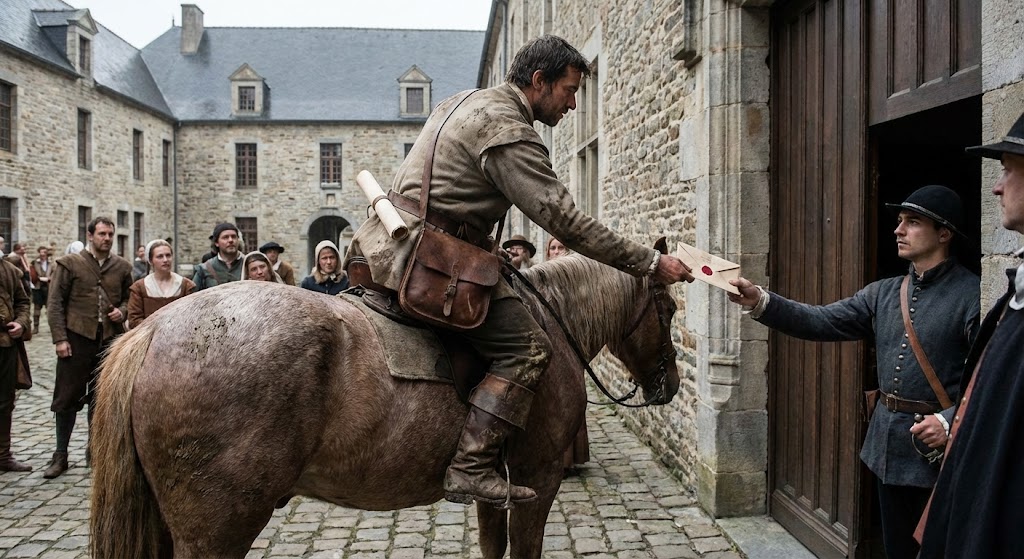 Past · Pre-Industrial EraMessengerThe role of a messenger was vital in the communication networks of ancient and medieval societies. These individuals were responsible for delivering messages, documents, and parcels across towns, cities, and even between countries. Often employed by merchants, government officials, or wealthy patrons, messengers played a crucial role in maintaining the flow of information. They navigated through various terrains, from bustling urban centers to remote rural areas, often relying on their knowledge of local geography and social networks to ensure timely delivery. The job required not only physical stamina but also a keen sense of direction and the ability to read and write, as many messengers were tasked with not just delivering but also composing messages on behalf of their employers. In times of war, messengers were particularly important, carrying orders and intelligence that could change the course of events. Their work was often perilous, as they faced the threat of bandits, harsh weather, and the challenges of navigating unfamiliar territories.
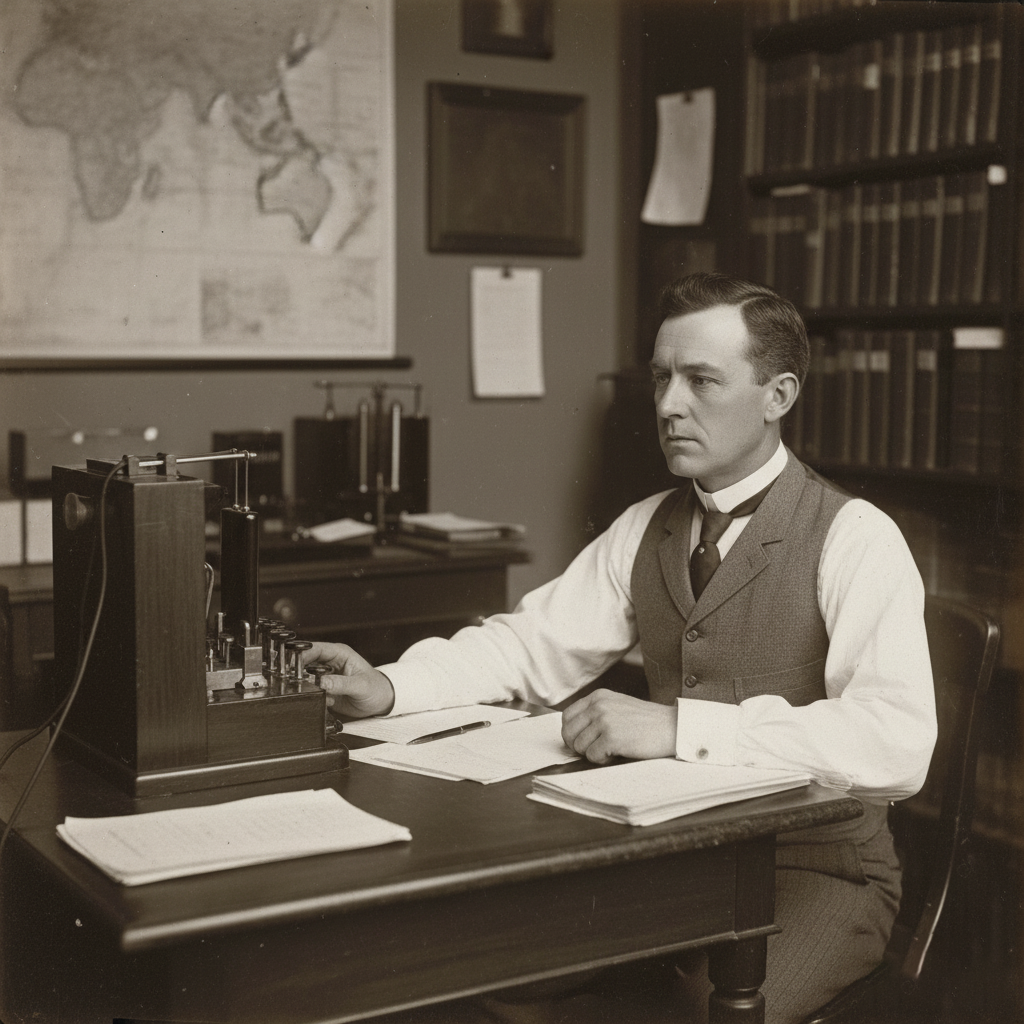 Past · Victorian EraTelegraph OperatorIn the bustling world of the Victorian Era, the telegraph operator stood as a vital link in the chain of communication that transformed society. With the advent of the electric telegraph in the early 19th century, this occupation emerged as a cornerstone of modern communication, allowing messages to traverse vast distances in mere moments. The telegraph operator was responsible for sending and receiving messages encoded in Morse code, a system of dots and dashes that conveyed information across wires.
Dressed in a crisp uniform, often adorned with a badge of the telegraph company, the operator would sit at a telegraph key, a device resembling a small lever, and tap out messages with precision and speed. The rhythmic clicking of the key became a familiar sound in telegraph offices, where operators worked in shifts, often in dimly lit rooms filled with the hum of machinery and the crackle of electrical currents.
The role of the telegraph operator was not merely mechanical; it required acute listening skills and a deep understanding of Morse code. Operators often had to decipher messages quickly, sometimes under pressure, as they relayed urgent news, weather reports, and personal correspondence. They played a crucial role in connecting people, businesses, and governments, facilitating trade and diplomacy in an increasingly interconnected world.
As the telegraph network expanded, so did the responsibilities of the operator, who often served as a point of contact for the public, answering inquiries and providing information. The job was both demanding and rewarding, offering a glimpse into the rapid technological advancements of the time and the profound impact of communication on society.
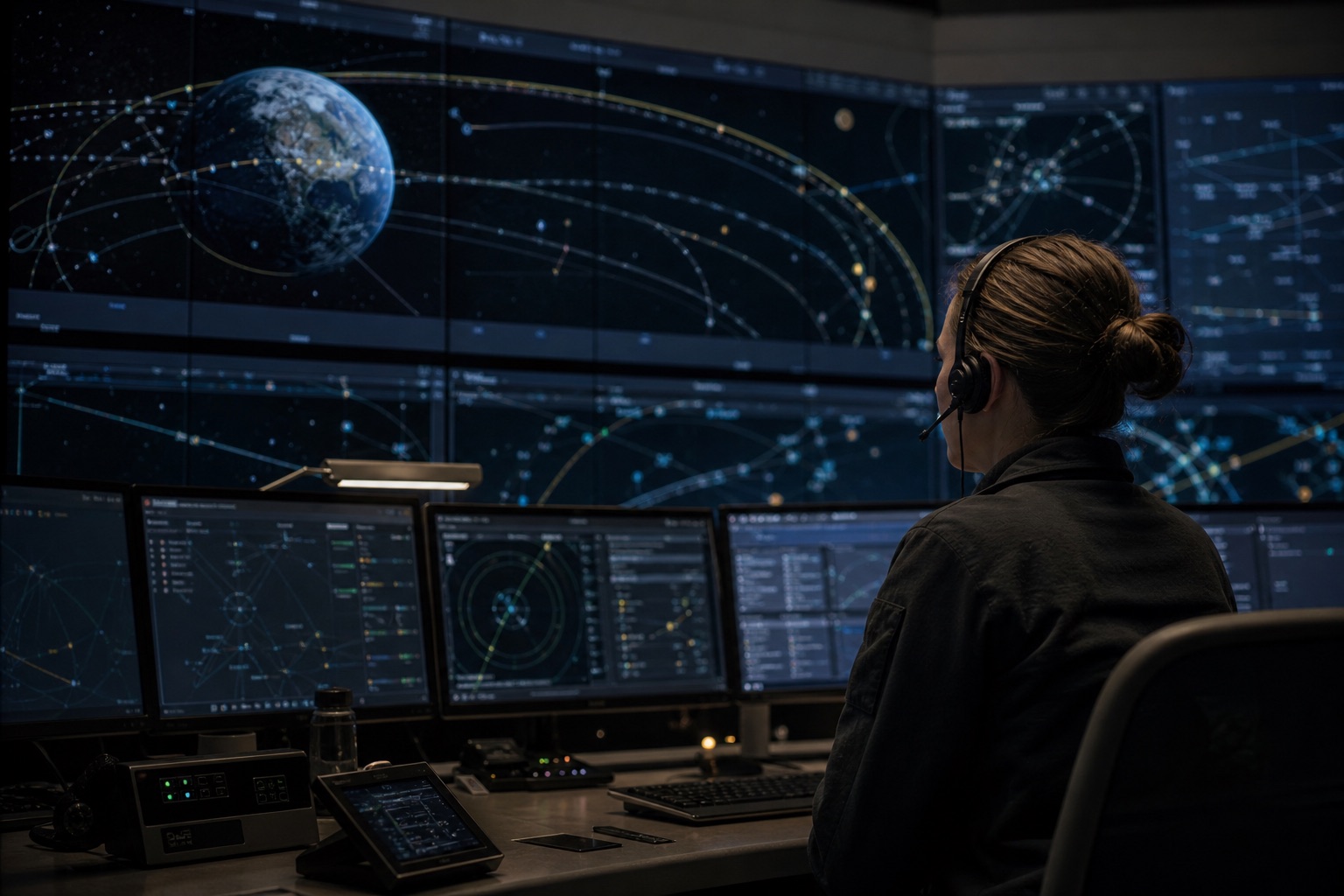 Projected · Spacefaring EraSpace Traffic ControllerThe space traffic controller watches crowded orbits for conjunctions and coordinates the maneuvers that keep two objects from trying to occupy the same place at the same time. The kinship with air traffic control is real, and the physics is different. There is no cab in a tower and no pair of binoculars on a console. Closing speeds are kilometers per second, the useful warning is often hours or days, and the remedy is a burn that spends a satellite's propellant and disturbs its schedule.
The controller usually does not fly the spacecraft. An owner-operator does. The controller screens the messages, decides which approaches matter, and gets the parties to agree on who moves. Large constellations have made this a daily screen rather than an occasional memo. Some objects are poorly tracked and some are only partly shared. The work is judgment under an incomplete catalog, written so the next shift can see what was risked and what was spent.