
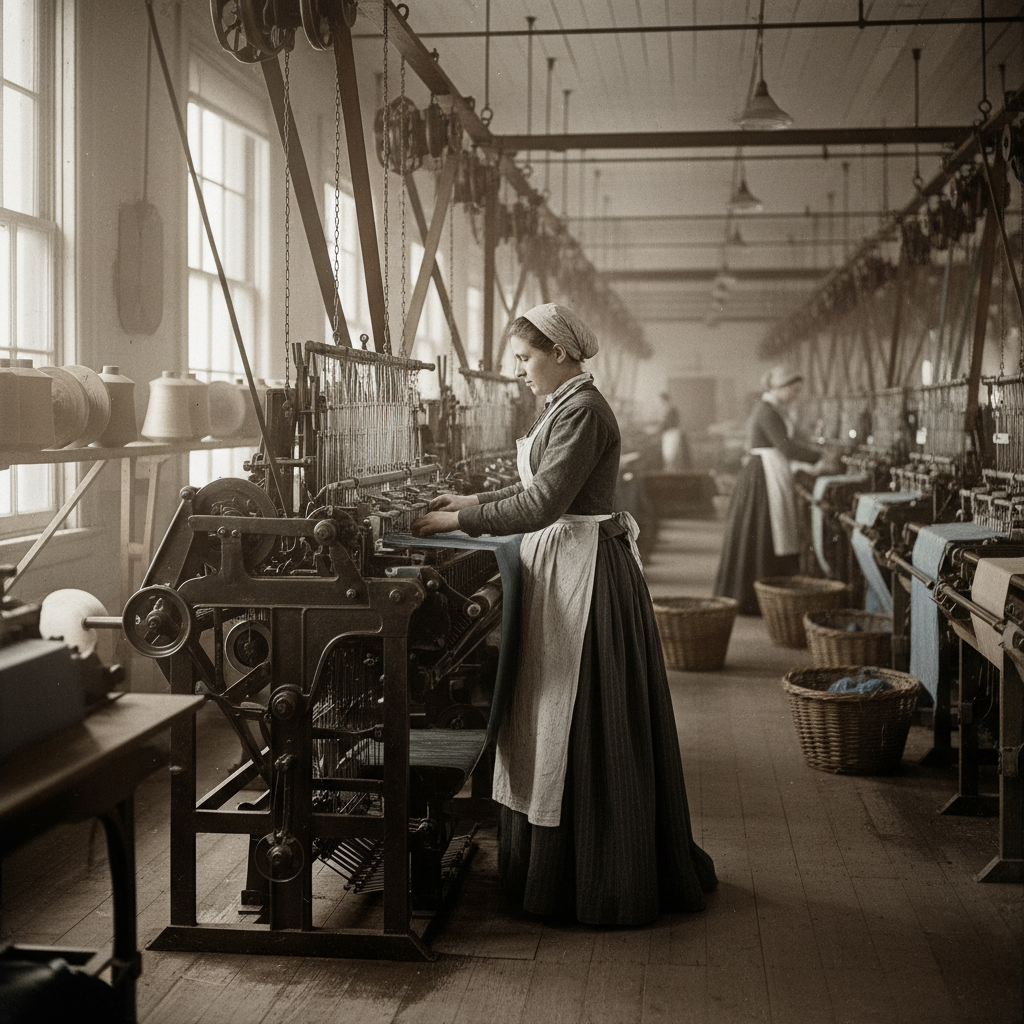
After the Knitting Mill Worker
The later knitwear factory, with fewer hands
Hand frames and early power frames were succeeded by faster knitting machines and by mills that needed fewer people at the frame.
The exhibitThe industrial revolutionCloth and clothingThe mill and the machine tool
From the exhibit
The knitting mill worker's role began to decline in the mid-20th century due to several factors, including the advent of automated knitting machines and the globalization of textile production. As technology advanced, machines became capable of producing knitted goods at a much faster rate and with greater precision than human workers. Additionally, the rise of overseas manufacturing, where labor costs were significantly lower, led to a decline in domestic knitting mills. This shift not only reduced the demand for knitting mill workers but also transformed the entire textile industry, leading to the closure of many local mills and the loss of traditional jobs.