
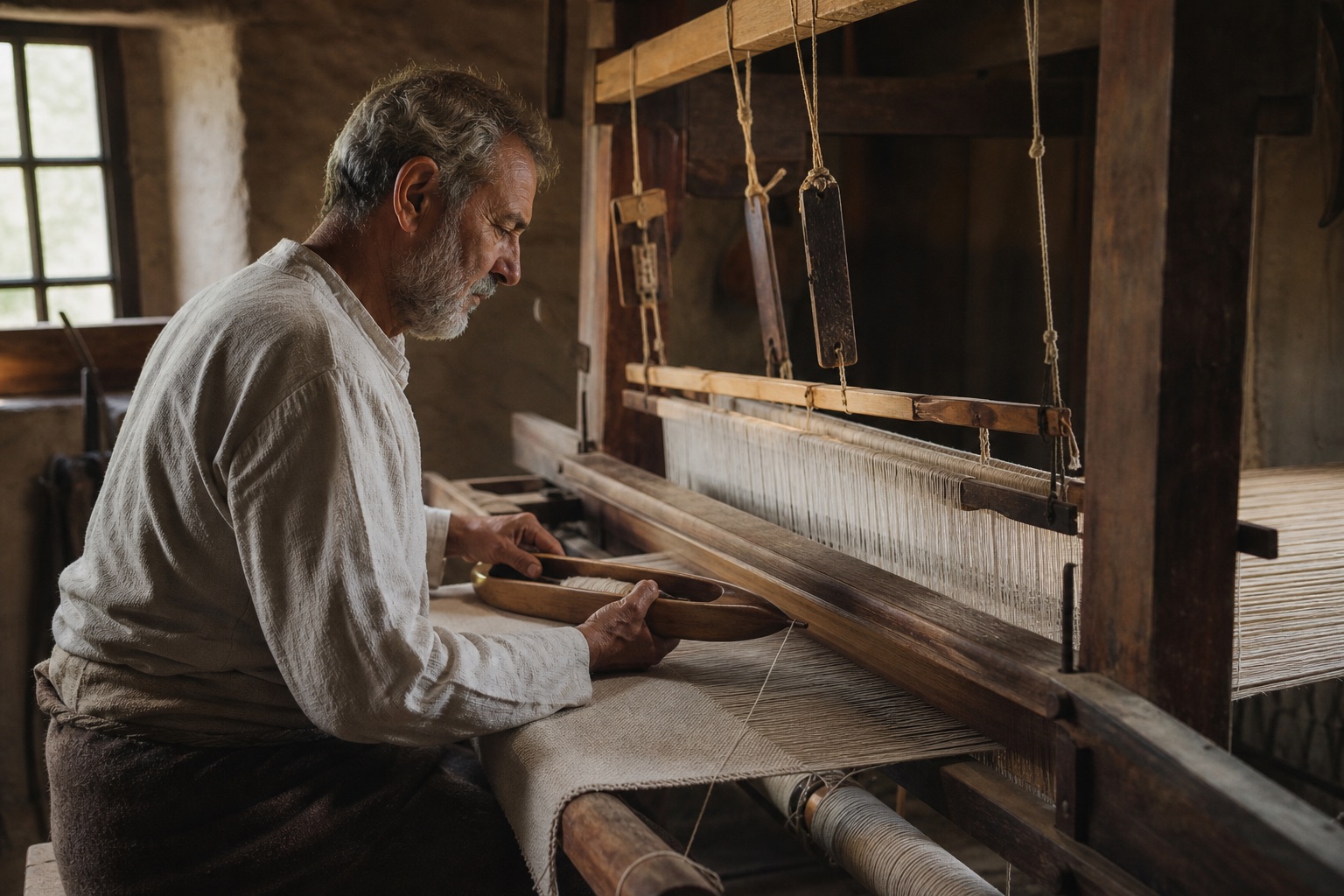
After the Handloom Weaver
The power-loom weaver
The domestic loom was undercut by the power loom in a mill, and the weaver's price fell with it.
The exhibitThe industrial revolutionCloth and clothingThe mill and the machine tool
From the exhibit
The power loom ended the living. Cartwright's patents of the 1780s were clumsy, but the improved looms that spread through Lancashire cotton from the 1810s to the 1840s, and then through wool, made plain cloth cheaper than a cottage piece rate could meet. Weavers answered by sitting longer for less money, and by petitioning for a minimum wage that Parliament would not grant. A few crowds smashed looms. The ordinary end was quieter and worse: the warehouse cut the rate until the handloom would not keep the household that worked it.