
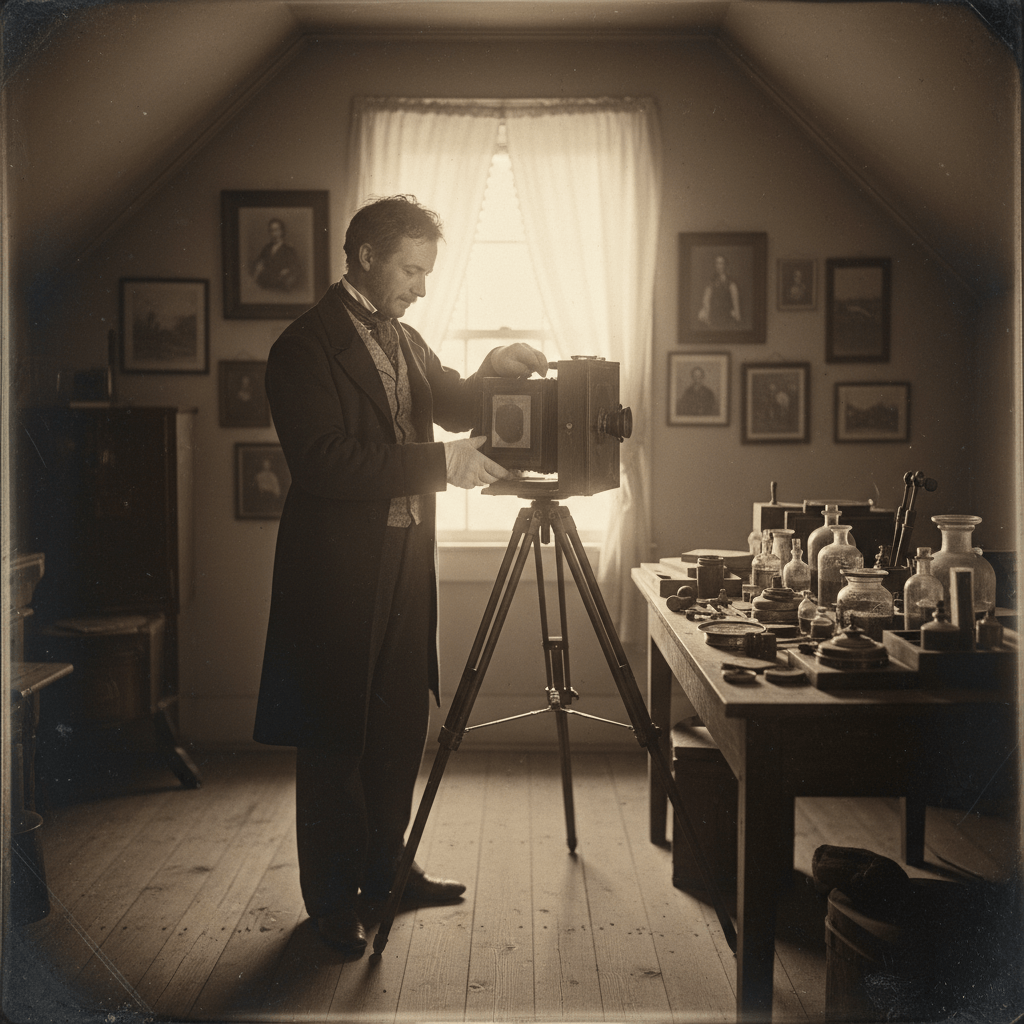
After the Daguerreotypist
The wet-plate photographer
The one-off silver plate lost to processes that made more than one print from a sitting.
The exhibitThe Victorian worldThe lens and the recorded showThe recorded picture and its afterlife
From the exhibit
The daguerreotypist profession began to decline in the late 1850s with the advent of newer photographic processes, such as the collodion wet plate process, which allowed for multiple copies of an image to be made and significantly reduced exposure times. The introduction of roll film and portable cameras in the late 19th century further revolutionized photography, making it accessible to the masses and leading to the obsolescence of the labor-intensive daguerreotype process. As photography evolved, the need for specialized daguerreotypists diminished, and the art form itself became a historical curiosity rather than a mainstream practice.