
1801–1885
Anthony Ashley-Cooper, Lord Shaftesbury
The politician who carried the 1842 mine act and spent decades on children's work.
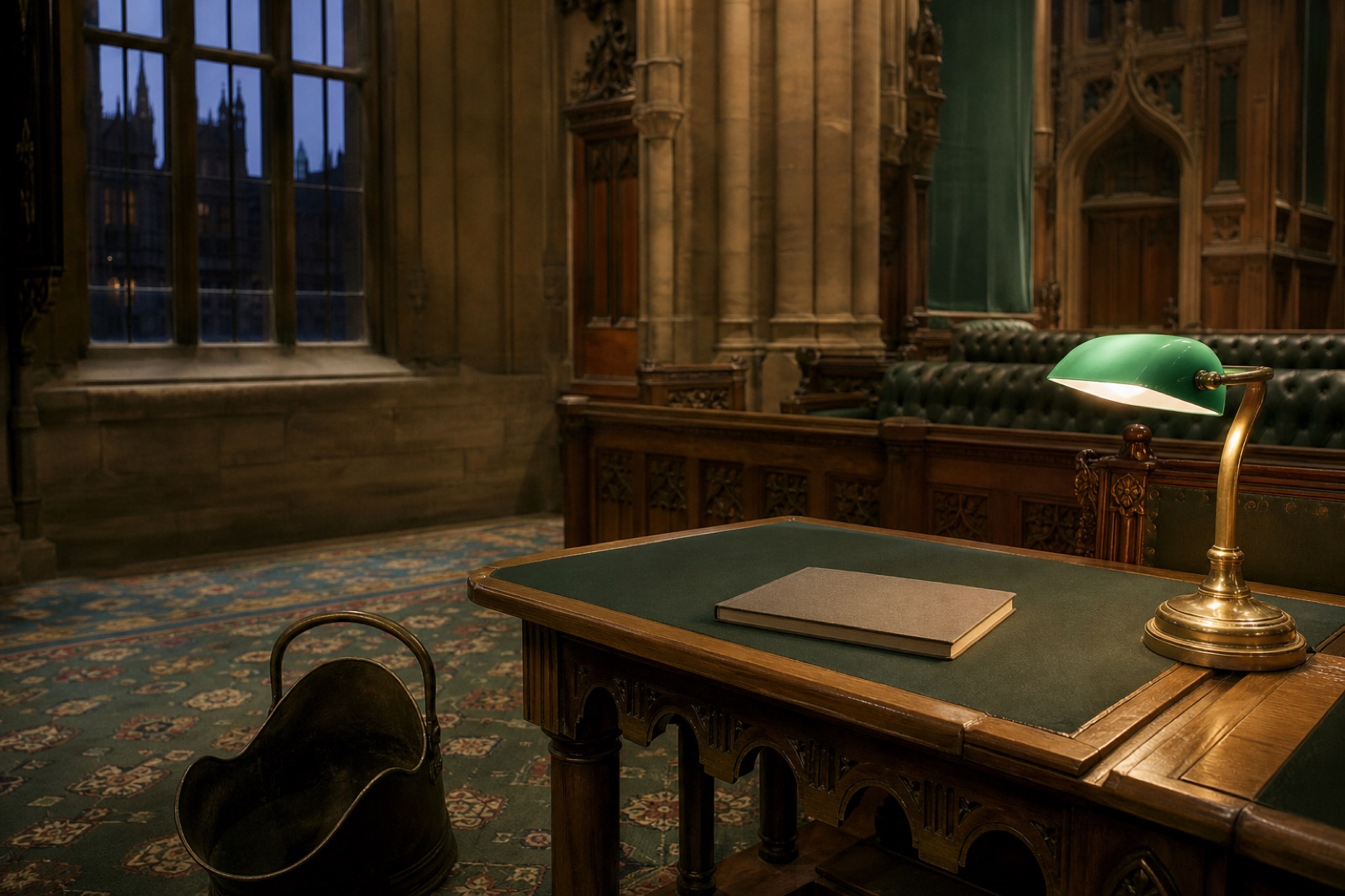
Shaftesbury, Lord Ashley when the bill passed, used the Children's Employment Commission to put hurriers and climbing boys in front of Parliament. The Mines and Collieries Act 1842 is the statute on the hurrier's page.
He did not end every children's trade. Match selling and homework outlived the act. The connection is the campaign, not a single victory.
Exhibits tied to this life
5
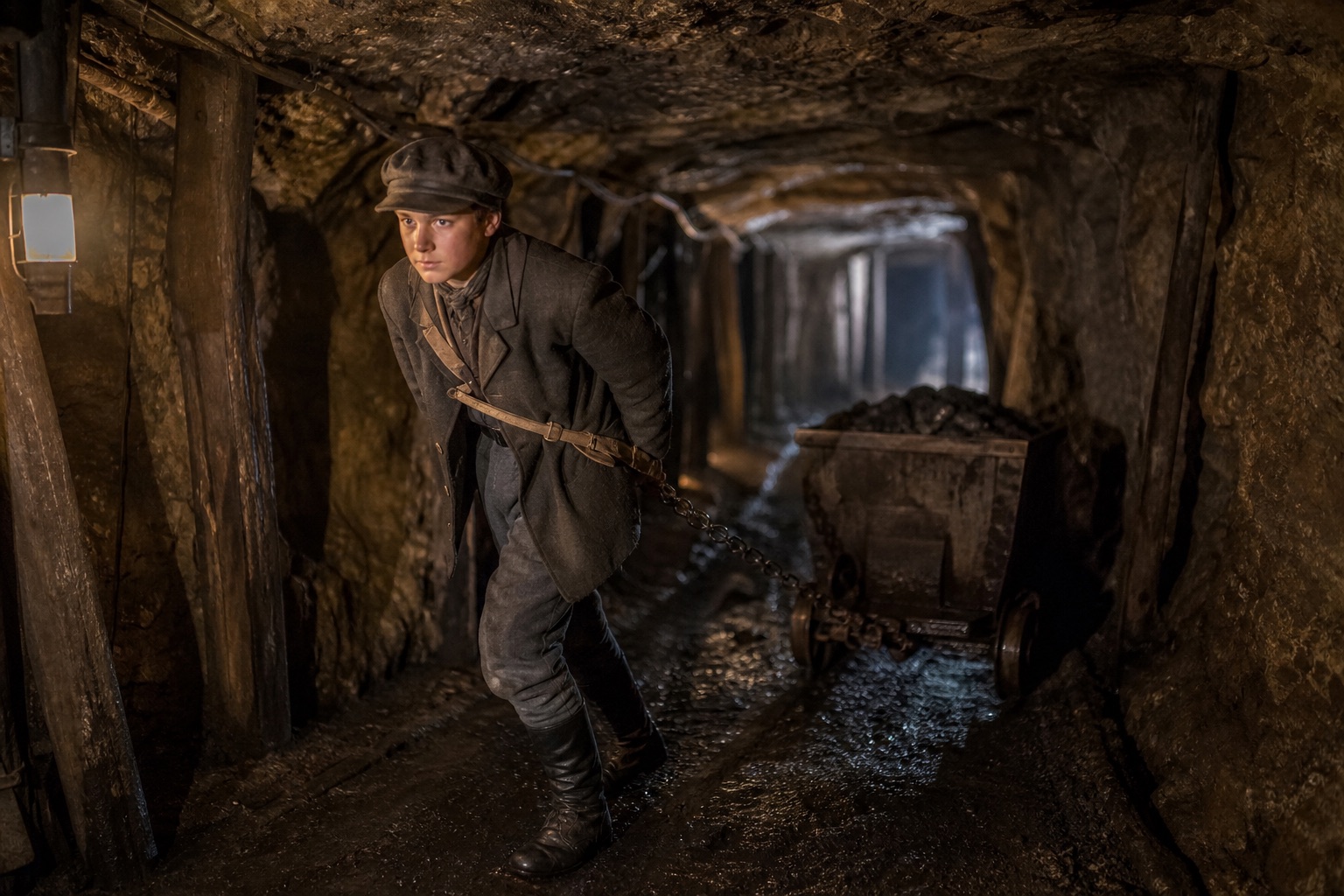 Past · Industrial RevolutionHurrierA hurrier moved coal along the low underground road between the face and the next stage of haulage. In thin British seams of the early nineteenth century that road was often too low for a pony, so a leather girdle was buckled at the waist and a chain ran back to a corve or a wooden tub. The hewer filled the box. The hurrier drew it, bent or on hands and feet, then returned for the next. In some pits a second child, the thruster, pushed from behind. Scottish coal bearers, usually women with creels, did a related but different carry, and this label stays with the chain and the tub.
Girls and boys both hurried, and adult women hauled underground in some districts, until the Mines and Collieries Act 1842. That Act barred every woman and girl from underground work and barred boys under ten. Lord Ashley's bill followed the Children's Employment Commission, whose sub-commissioners had gone into the pits and published the harness, the hours, and the ages. This exhibit is that pre-1842 haul. The wording stays on the road, the girdle, the tub, and the statute. It does not describe injuries. Parliament's answer was an age line, a sex line, and inspectors, which is the fact the label is built to carry.
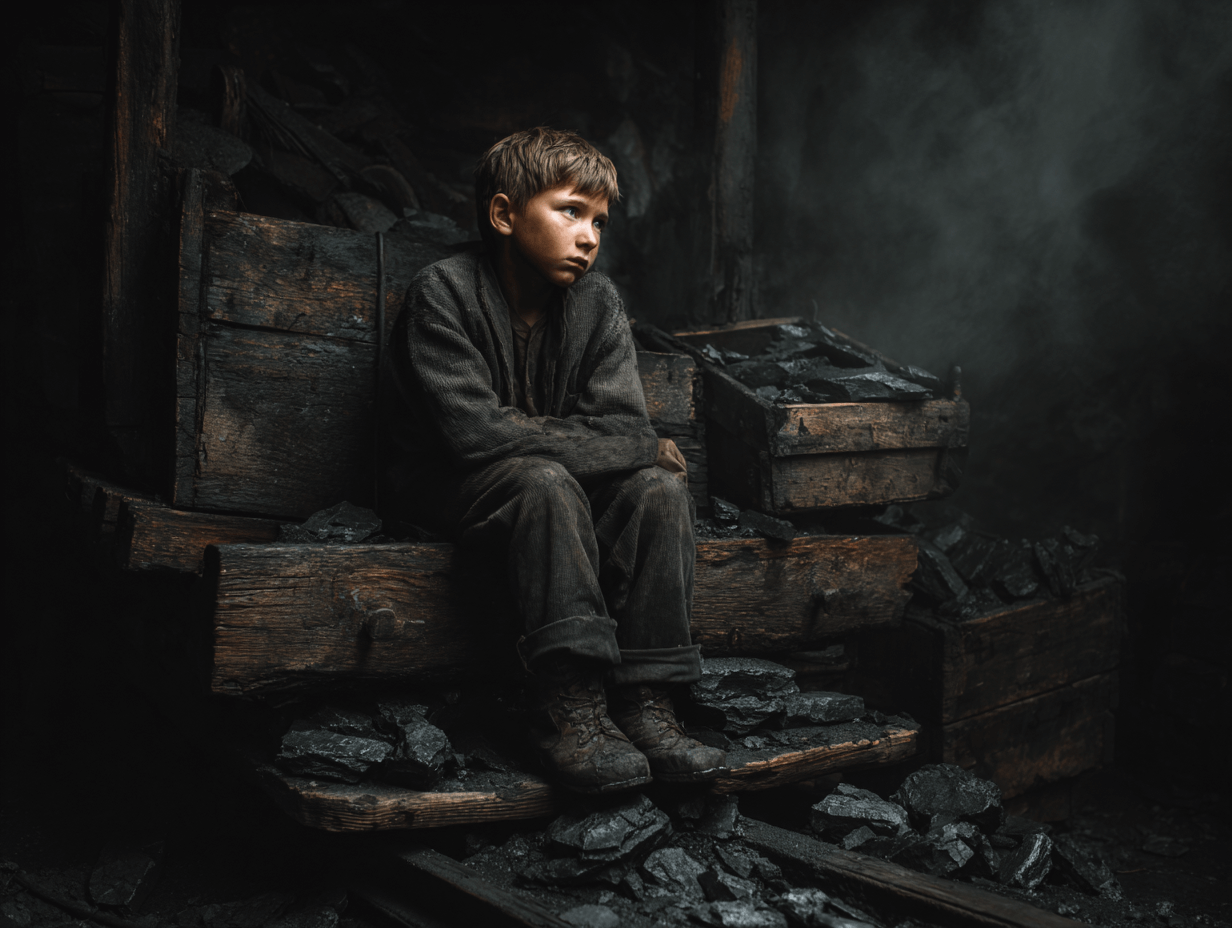 Past · Industrial RevolutionBreaker BoyThe role of a Breaker Boy emerged during the Industrial Revolution, particularly in the coal mining regions of the United States, where the demand for coal surged to fuel the burgeoning industries. Breaker Boys were young boys, often between the ages of 8 and 12, who worked in coal breaker facilities. Their primary responsibility was to separate impurities from coal, a crucial step in preparing the coal for market. This labor-intensive job involved sitting on a high platform above a conveyor belt, where they would pick out rocks, slate, and other debris from the coal as it passed by. The work was not only monotonous but also hazardous, as the boys were exposed to coal dust and the risk of injury from the machinery. Breaker Boys typically worked long hours, often from dawn until dusk, in poorly ventilated and unsafe conditions, earning a meager wage that reflected the exploitative labor practices of the time. The job was emblematic of the harsh realities faced by child laborers during the Industrial Revolution, highlighting the intersection of economic necessity and social injustice.
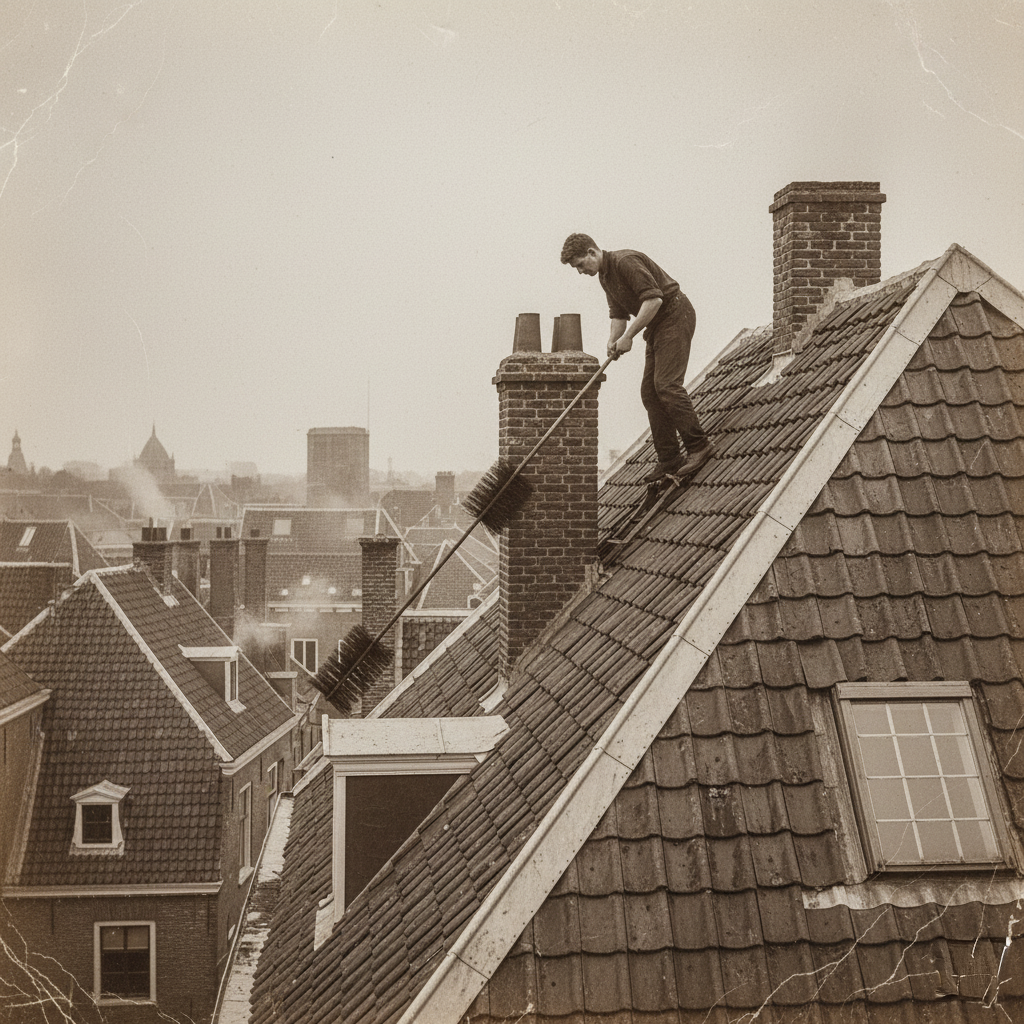 Past · Victorian EraChimney SweepThe role of a chimney sweep was crucial in the Victorian Era, particularly in urban areas where coal was the primary source of heating. As homes and factories proliferated, so did the need for clean chimneys to prevent dangerous chimney fires and ensure proper ventilation. Chimney sweeps were responsible for cleaning soot and creosote buildup from chimneys, which could lead to hazardous conditions if left unchecked. The job was often performed by young boys, some as young as six, who would climb into narrow flues to scrape away the soot. This labor-intensive work required not only physical agility but also a keen understanding of the structure of chimneys and the dangers associated with them. The job was often grueling, with sweeps working long hours in cramped, dark spaces, and it was not uncommon for them to suffer from respiratory issues due to the soot they inhaled. Despite the harsh conditions, chimney sweeps played a vital role in maintaining the safety of homes during a time when coal was the dominant fuel source.
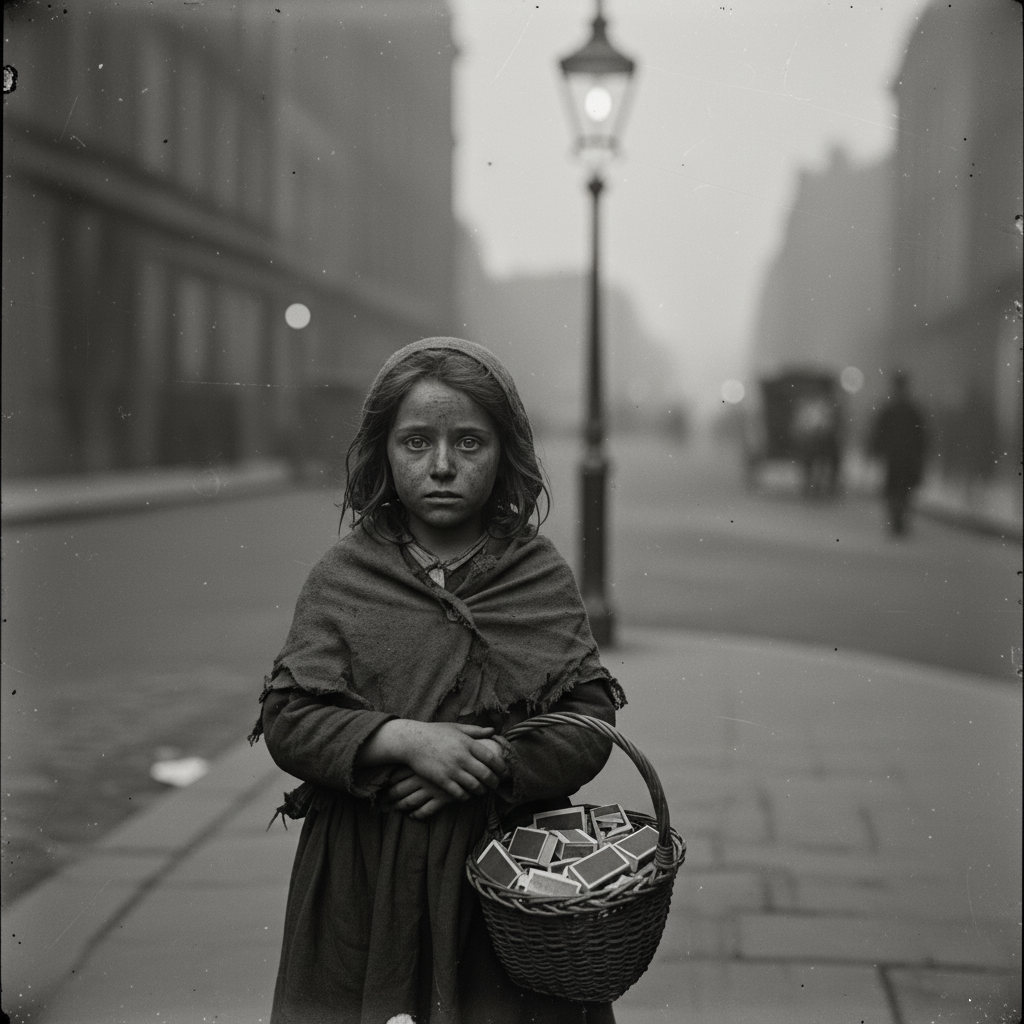 Past · Victorian EraMatchstick GirlThe role of a Matchstick Girl emerged during the Victorian Era, a time marked by rapid industrialization and urbanization in Britain. These young girls, often as young as six years old, were employed to sell matches on the streets of cities like London. The job was not only a means of survival for the girls and their families but also a reflection of the harsh realities of the working class during this period. The matchstick girls were typically from impoverished backgrounds, and their earnings were crucial for their families' subsistence. They would often work long hours, braving the elements, to sell boxes of matches to passersby, including shopkeepers and households. The matches were sold at a low price, and the girls would often carry their wares in small baskets or bags, calling out to potential customers in hopes of making a sale.
The work was grueling and dangerous; the girls were exposed to the elements, and many suffered from health issues due to malnutrition and the harsh conditions of street life. The matches themselves were often made with hazardous materials, leading to serious health risks, including phosphorus poisoning, which was a common affliction among those who worked with match production. Despite these dangers, the job was a vital source of income for many families, and the plight of the matchstick girls eventually drew public attention, leading to social reform movements aimed at improving working conditions for children.
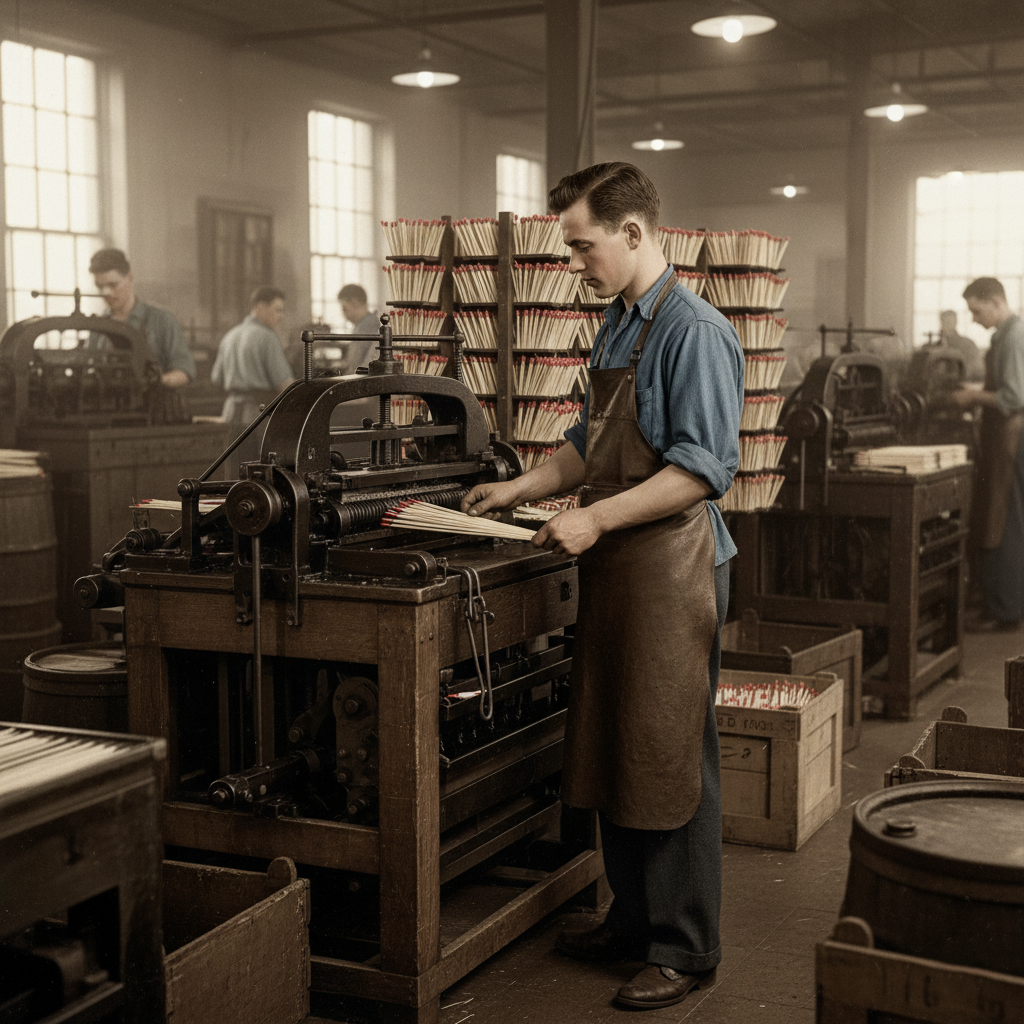 Past · Industrial RevolutionMatchstick MakerIn the bustling factories of the Industrial Revolution, the matchstick maker played a crucial role in the production of one of the era's most essential commodities: matches. These small, slender sticks, tipped with a flammable substance, revolutionized the way people ignited fires, making them a staple in households and businesses alike. The matchstick maker was responsible for crafting these vital tools, often working in dimly lit workshops filled with the scent of sulfur and wood.
The process of match production was labor-intensive and required a keen eye for detail. Workers would begin by cutting thin strips of wood, typically from readily available softwoods like aspen or pine. These strips were then meticulously dipped into a mixture of chemicals, including potassium chlorate, sulfur, and glass powder, to create the striking head of the match. The matchsticks were then dried, packaged, and prepared for distribution.
The job was not without its hazards; the chemicals used in match production were often toxic, leading to health issues such as 'phossy jaw,' a painful condition caused by exposure to phosphorus. Despite these dangers, matchstick makers were essential to the growing demand for convenience in lighting fires, which was a significant aspect of daily life during the Industrial Revolution.