
Company
DissolvedRCA
New York · 1919 – 1986
General Electric bought RCA in 1986 and broke it apart. The trademark lives on under license. The company does not.
The Radio Corporation of America was created in 1919, at the urging of the United States Navy, to keep British Marconi from controlling American long-distance radio. General Electric, Westinghouse, and AT&T put their radio patents in. David Sarnoff made it a broadcaster and a manufacturer.
RCA built radios, then television sets, ran NBC, and pressed records. It was a factory for receivers and a factory for what the receivers played. Both employed people the nineteenth century could not have named.
New rooms, new jobs
Engineers designed circuits. Line workers assembled cabinets. Announcers, musicians, and the technicians who ran a live studio were on a payroll that existed because a network needed a schedule. Sarnoff's company sold the set and filled it. The manufacturing was in Camden and Bloomington and other plants. The glamour was in New York. They were one firm, which is why a strike in a cabinet plant could embarrass a broadcast.
Bought and broken up
General Electric reacquired RCA in 1986 and dismantled it. NBC went one way, the consumer electronics brand another, the records another. The RCA trademark is still licensed onto televisions the original company does not make. The 1919 corporation ended with the breakup. The occupations it assembled, from studio engineer to line worker, scattered into other employers.
The work it organized
- Radio assembler
- Studio engineer
- Announcer
- Patent lawyer
In the exhibits
Jobs associated with this organization.
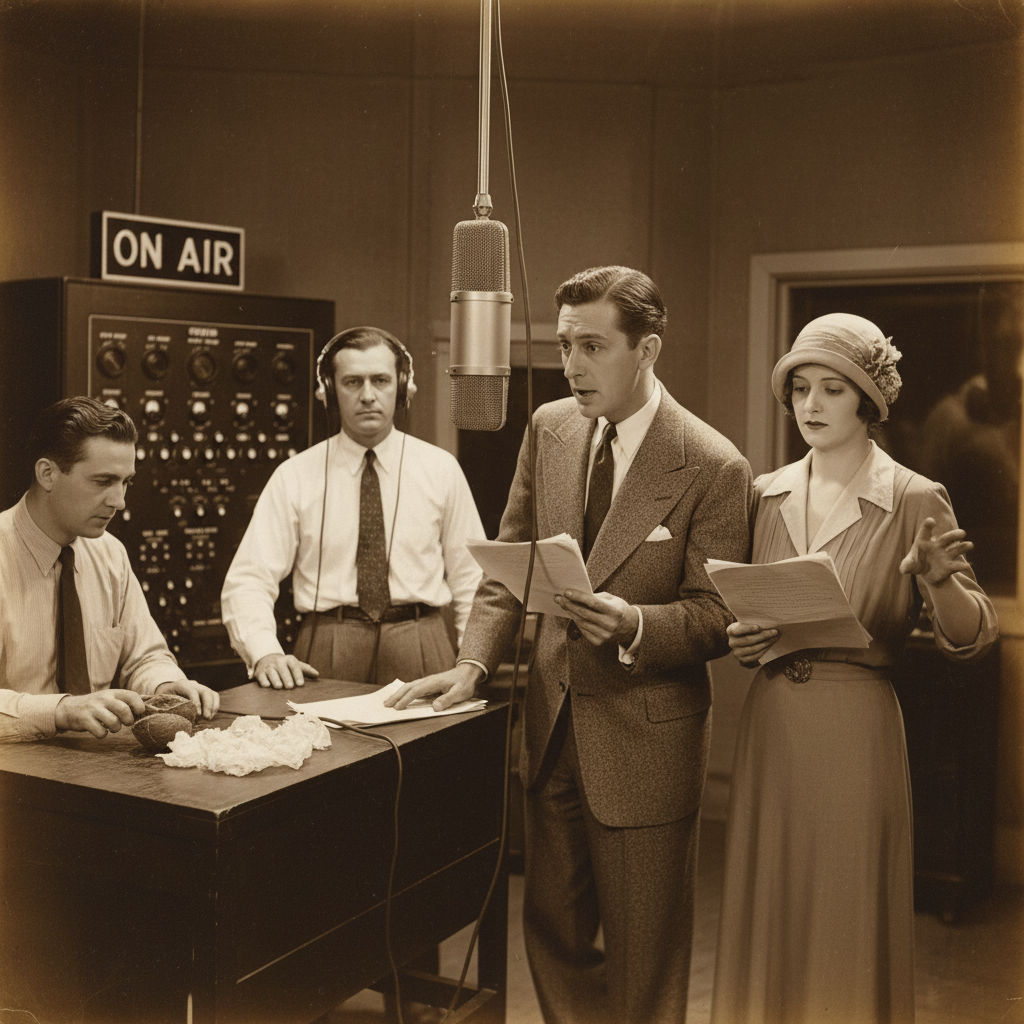 Past · Golden Age of Radio (1920s - 1950s)Radio ActorThe role of a radio actor was pivotal during the Golden Age of Radio, a time when families gathered around their radios to listen to serialized dramas, comedies, and news broadcasts. Radio actors were the voices behind beloved characters, bringing stories to life through their vocal talents alone. Unlike film or television, where visual elements play a significant role, radio actors relied solely on their voices to convey emotion, character, and narrative. They performed live or recorded scripts, often in front of a studio audience, and were skilled in various genres, from soap operas to thrillers. The ability to modulate their voices, create distinct characterizations, and engage listeners through sound alone was essential to their craft. Radio actors often worked with sound effects artists and musicians to enhance the auditory experience, creating a rich tapestry of sound that captivated audiences.
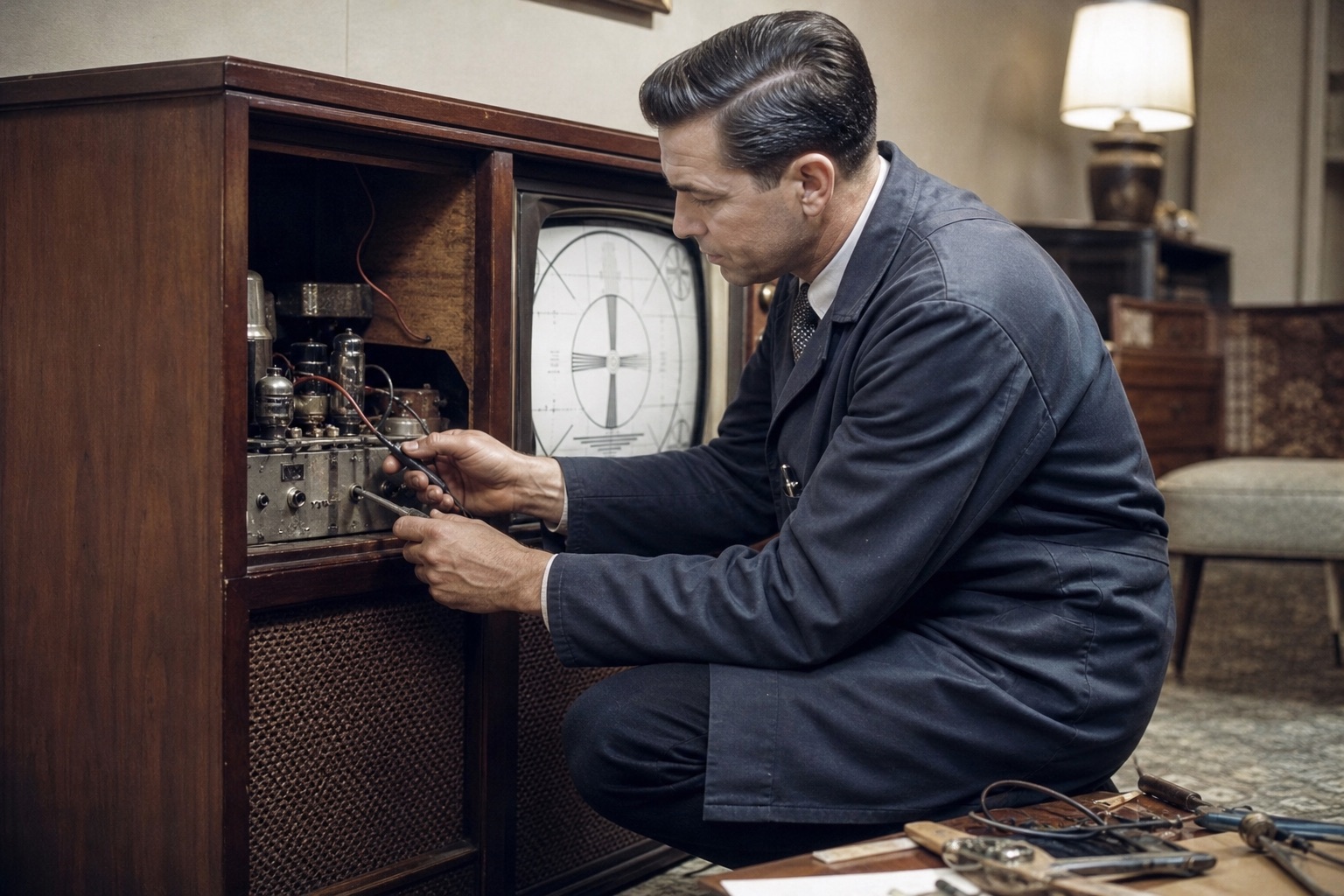 Past · Mid Twentieth CenturyTelevision RepairmanA television repairman made house calls on vacuum-tube sets in the years when a receiver was expensive enough to mend. He arrived with a caddy of common tubes, pulled the back, and tested the likely suspects, sometimes after the owner had already tried a drugstore tube checker and failed. Schematics, the Photofact kind above all, told him the chassis. If the fault was not a tube, the set might go to the shop. If it was, he replaced it in the living room and adjusted the picture before he left.
The exhibit is that mid-century visit, not every later person who swaps a board. Solid-state chassis, modular construction, and sets cheap enough to replace rather than repair ended the call. High voltage at the picture tube was a real property of the work and is named here calmly. The man with the caddy is the subject, and the glowing set is the thing he was hired to keep in the house each evening.
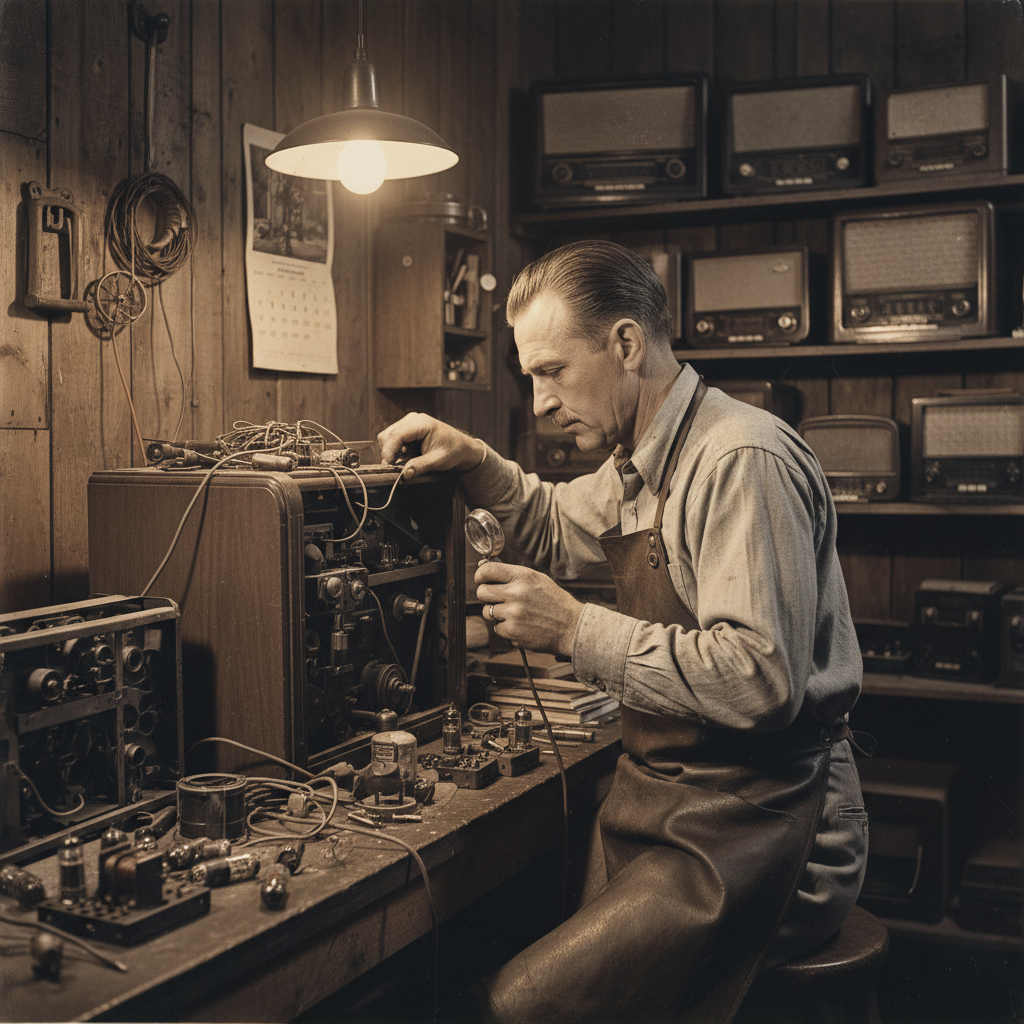 Past · Post-War EraRadio RepairmanThe Radio Repairman was a vital figure in the mid-20th century, particularly in the post-World War II era when radio became a staple of American households. As the popularity of radio surged, so did the need for skilled technicians who could diagnose and fix the myriad of issues that could arise in these complex devices. Radio Repairmen were often found in small shops, bustling with the sounds of static and the hum of electronic equipment, as they worked diligently to restore the voices of news anchors, music, and entertainment to life. Their expertise was not only technical but also deeply rooted in an understanding of the evolving technology of the time, as they navigated the transition from vacuum tubes to transistors, and later to integrated circuits.
In their workshops, Radio Repairmen would often encounter a variety of problems, from broken speakers to faulty wiring. They were adept at using a range of diagnostic tools, including multimeters and oscilloscopes, to troubleshoot issues. The job required a keen eye for detail and a methodical approach to problem-solving, as well as a solid understanding of electrical engineering principles. The Radio Repairman was not just a technician; he was a community figure, often providing advice on the best radio models and helping customers understand the technology that was rapidly changing their lives.
As the 1960s progressed, the landscape of audio technology began to shift dramatically. The advent of television, along with the rise of portable music devices, led to a decline in radio's dominance. Additionally, the increasing complexity of radio technology, coupled with the introduction of disposable consumer electronics, made repairs less common. By the late 1970s, the role of the Radio Repairman began to fade, as many consumers opted to replace rather than repair their devices, marking the end of an era for this once-essential profession.
On the timeline
Related
- General ElectricReorganized