
Company
ActiveIBM
Armonk, New York · Since 1911
Still operating. The Computing-Tabulating-Recording Company took the IBM name in 1924.
A later timeline chapter projects a role for this organization. That chapter is a projection. This page is about the institution as it exists, or as it existed.
The Computing-Tabulating-Recording Company was formed in 1911 from firms that made scales, time clocks, and Herman Hollerith's punched-card machines. Thomas J. Watson Sr. took it over, and in 1924 renamed it International Business Machines. The product was the card. The business was the rent.
A company leased the machines and sold the cards. Clerks who had counted by hand became keypunch operators who prepared cards a sorter could read. IBM did not invent the office. It mechanized the part of the office that was already a procedure.
From cards to systems
Watson built a sales force with a code of dress and a company song, and a service force that kept the machines running because a stopped sorter stopped the client's payroll. During and after the war, IBM moved into electronic computers without abandoning the lease. The System/360, announced in 1964, was a family of compatible machines. A customer could grow without throwing away the programs. That compatibility employed a new mass occupation: the programmer who wrote for one architecture and expected it to last.
Still the company, not the monopoly
The personal computer, including the IBM PC of 1981, ended the assumption that computing meant a glass room and a lease. IBM sold the PC division to Lenovo in 2005 and bet on services and software. It is still independent, still in Armonk, and still a large employer of engineers and consultants. The keypunch operator is gone. The company that hired her is not. Later timeline chapters that mention IBM and quantum machines are projections. This page is not.
The work it organized
- Keypunch operator
- Customer engineer
- Systems programmer
- Salesman
In the exhibits
Jobs associated with this organization.
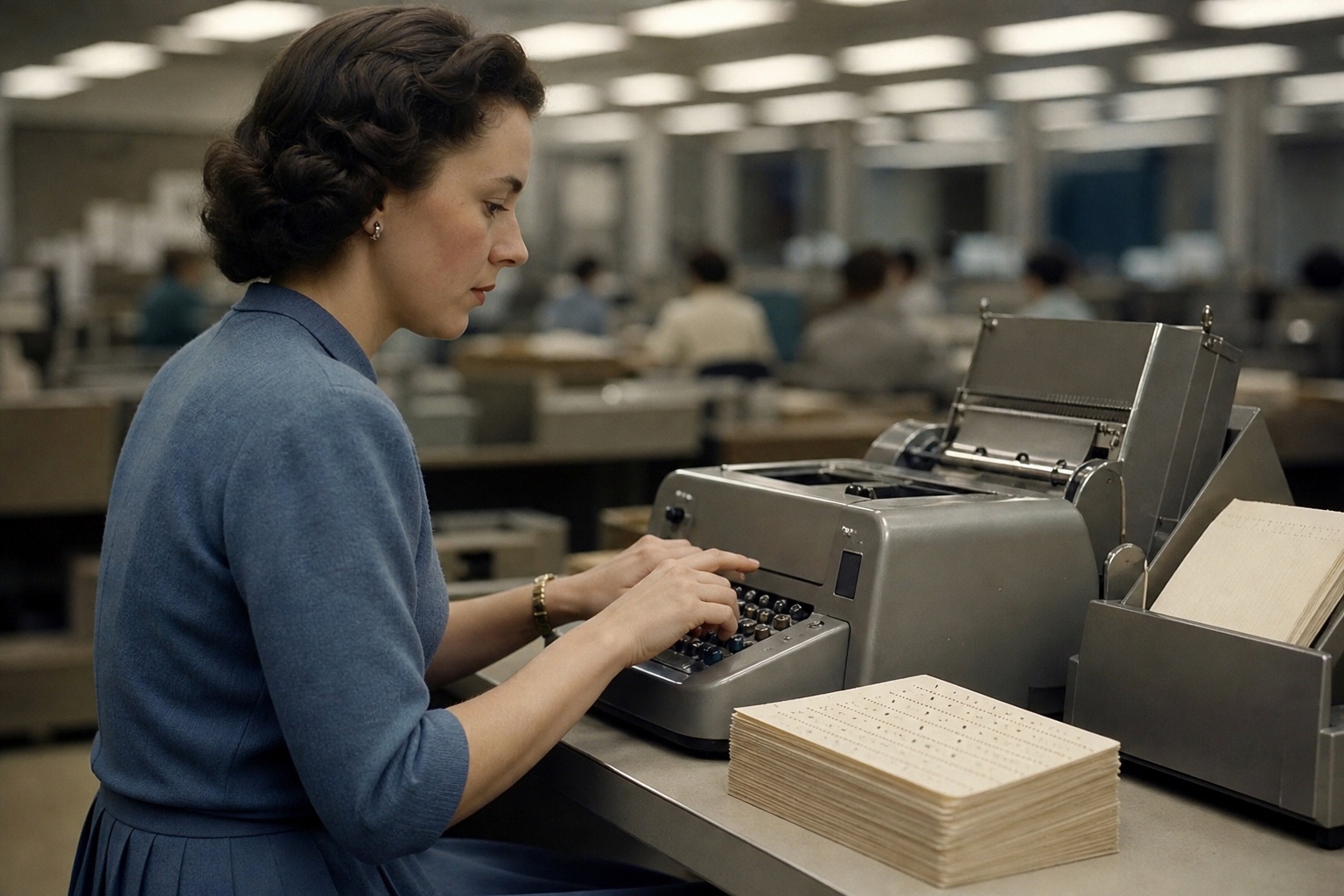 Past · Mid Twentieth CenturyKeypunch OperatorA keypunch operator turned source documents into Hollerith and later IBM cards by striking a punch, one character to a column, until a deck existed that a machine room could read. The mid-century room was often a floor of the same gray machines, program drums skipping fields the operator should not retype, hoppers of blank cards on one side and finished decks on the other. A second person at a verifier rekeyed to catch errors. The work flourished when payrolls, policies, censuses, and bills all had to become cards before a computer would accept them.
The operators were mostly women, and the job is a mid-twentieth-century mass occupation rather than a nineteenth-century curiosity. It thinned when key-to-disk machines, terminals, and direct data entry in the 1970s and 1980s let the same facts go into a system without a card. The exhibit is that punch room: the sheet, the keyboard, the deck, and the sound.
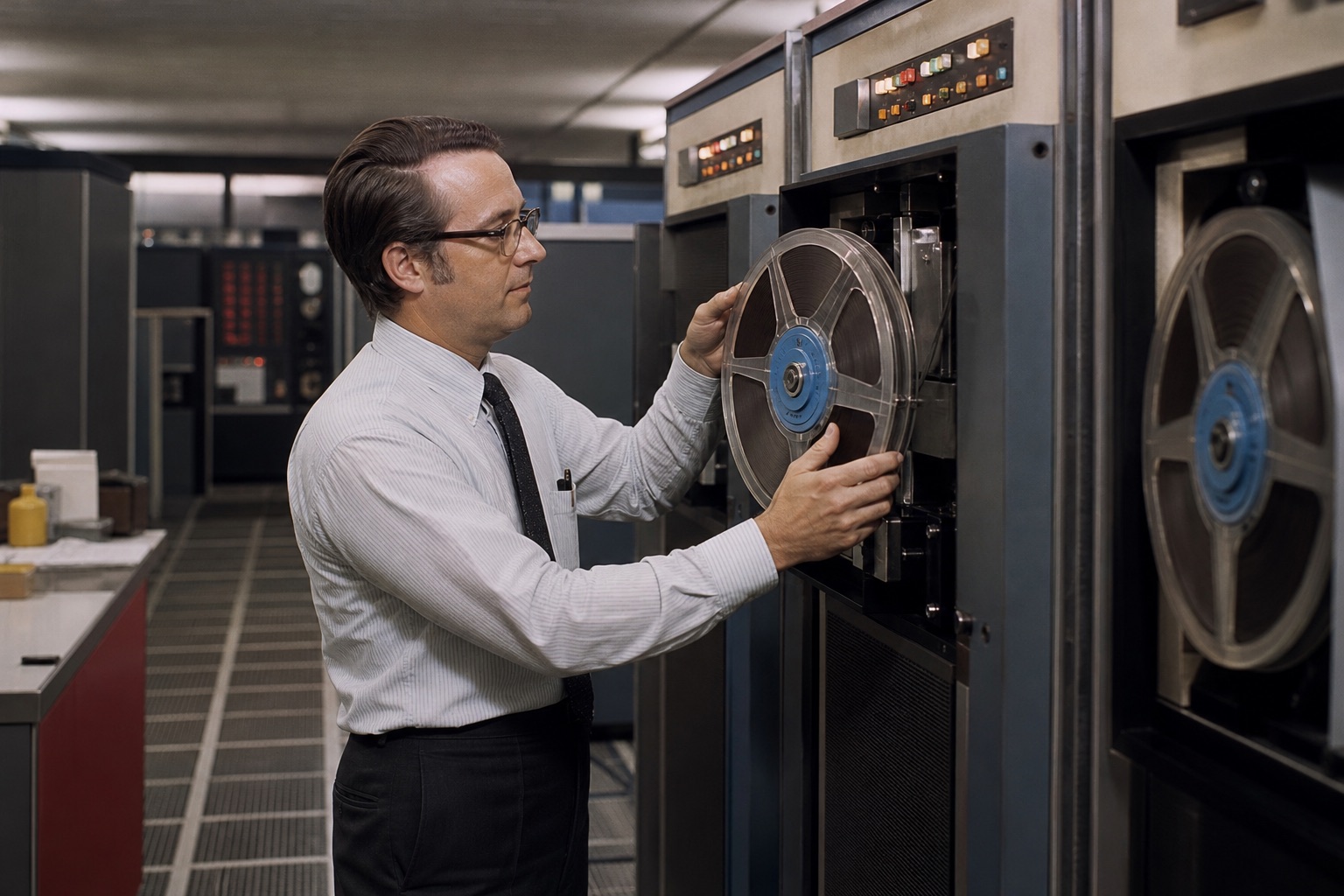 Past · Late Twentieth CenturyMainframe OperatorThe mainframe operator of this exhibit is the person in the raised-floor machine room who mounted tapes, started batch jobs, and answered the console. Glass walls made the room a show, which is why people called it a glass house. Reels went on drives, disk packs went into drawers, and a printer hammered through boxes of paper while the operator watched messages and typed the replies the system demanded. Programmers wrote the jobs. The operator made the night's queue actually run.
The decades are the 1960s through the 1980s. Automation, smaller machines, and later site-reliability roles replaced that chair. They did not abolish every kind of operations work. A later engineer who tends a service from a laptop is a different job, and this label refuses the claim that nobody operates computers anymore. It is the glass-room shift, the tapes, and the console, and no wider empire beyond that room.
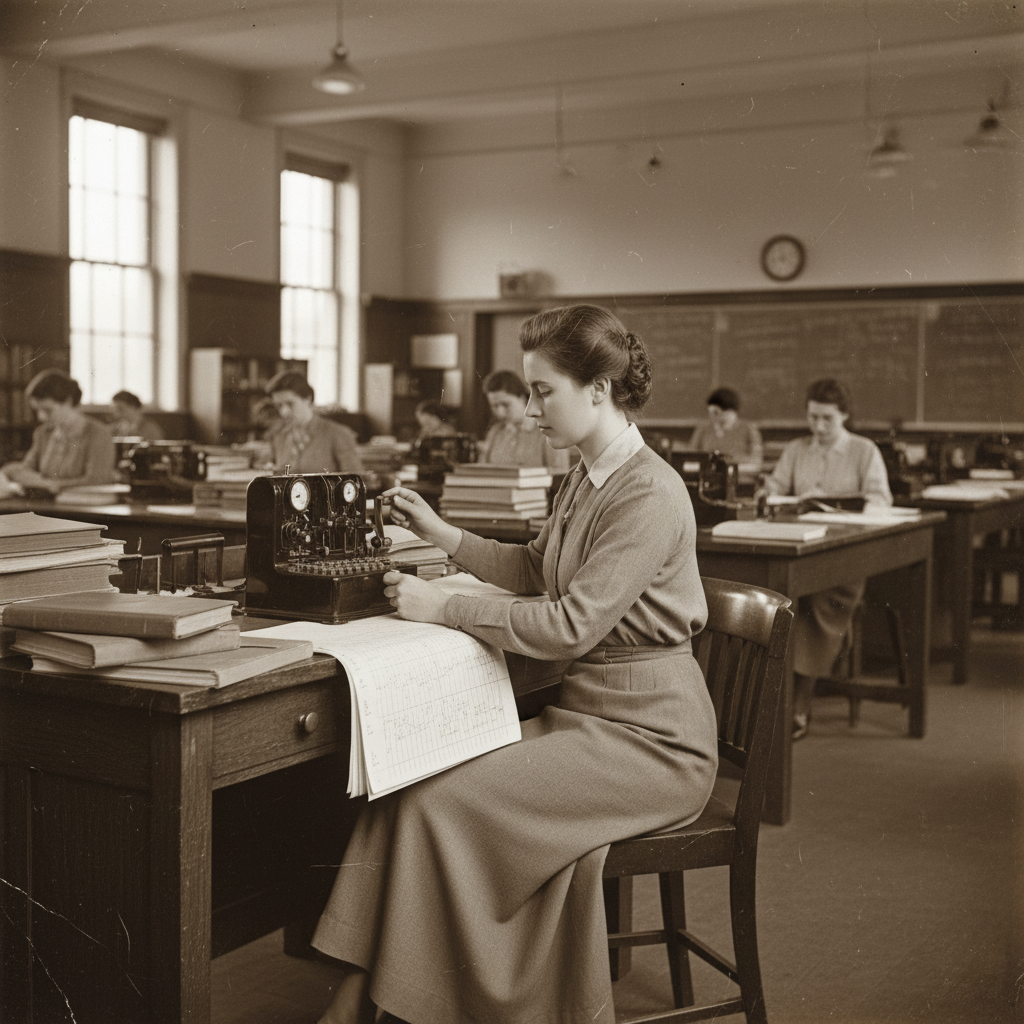 Past · 20th CenturyHuman ComputerThe role of a Human Computer emerged in the early 20th century, primarily during the 1930s to the 1950s, as a response to the growing need for complex calculations in fields such as astronomy, engineering, and military applications. Human Computers were predominantly women who performed mathematical calculations by hand, often using pencil and paper, and later, mechanical calculators. They worked in teams, meticulously calculating trajectories for rockets, analyzing astronomical data, and solving intricate mathematical problems that were essential for scientific advancements. Their work was critical in the development of early computers, as they laid the groundwork for the algorithms and processes that would later be automated.
These women, often referred to as "computers," were not only skilled mathematicians but also adept at problem-solving and critical thinking. They operated in environments that ranged from university laboratories to government research facilities, where they collaborated closely with scientists and engineers. The atmosphere was often intense, with deadlines looming and the pressure to produce accurate results being paramount.
The Human Computer's role was not just about numbers; it was about precision, attention to detail, and the ability to work under pressure. They were the unsung heroes behind many scientific breakthroughs, including the early space missions and the development of radar technology during World War II. Their contributions were vital, yet often overlooked in the historical narrative of computing and mathematics.
On the timeline
Related
- Remington RandAbsorbed