
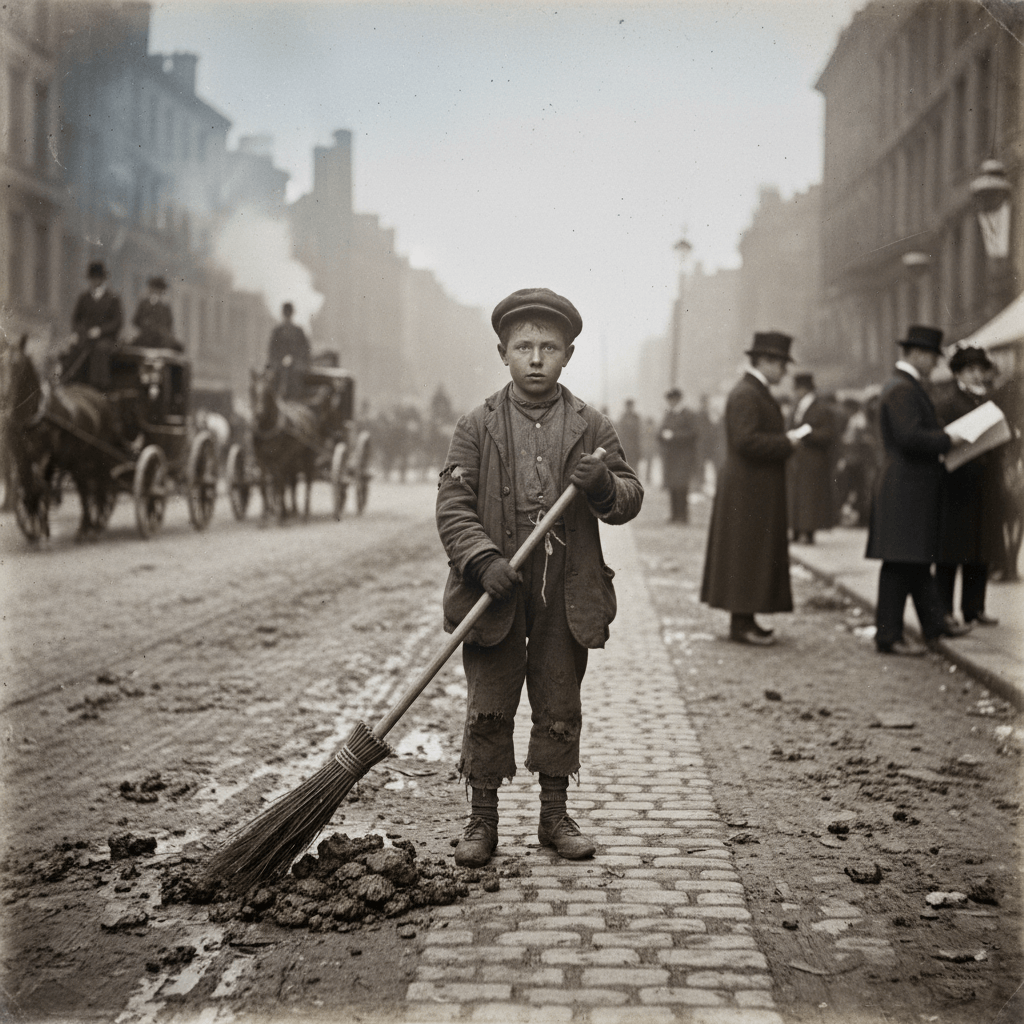
After the Crossing Sweeper
The paved and cleaned street
A broom at a crossing was unnecessary once the municipality paved, drained, and swept the road.
The exhibitThe Victorian worldThe streetPipes, paving, and public health
From the exhibit
The role of the Crossing Sweeper began to decline in the late 19th century due to several factors. The introduction of paved roads and improved sanitation systems reduced the amount of debris and waste on the streets, diminishing the need for such labor. Additionally, the rise of motor vehicles in the early 20th century transformed urban transportation, further decreasing the reliance on horse-drawn carriages and, consequently, the mess they left behind. Social reforms and labor laws also began to address child labor, leading to a decline in the number of children employed in such roles. By the early 20th century, the Crossing Sweeper had largely disappeared from the urban landscape, replaced by mechanized street cleaning and improved public sanitation.