
After the Charcoal-Burner
Coal, coke, and the retort
Wood colliers in the forest lost the iron trade to mineral coal and to charcoal made in closed retorts.
The exhibitThe medieval townCoal, ore, and the pitDiesel, oil, and the end of the coal fire
From the exhibit
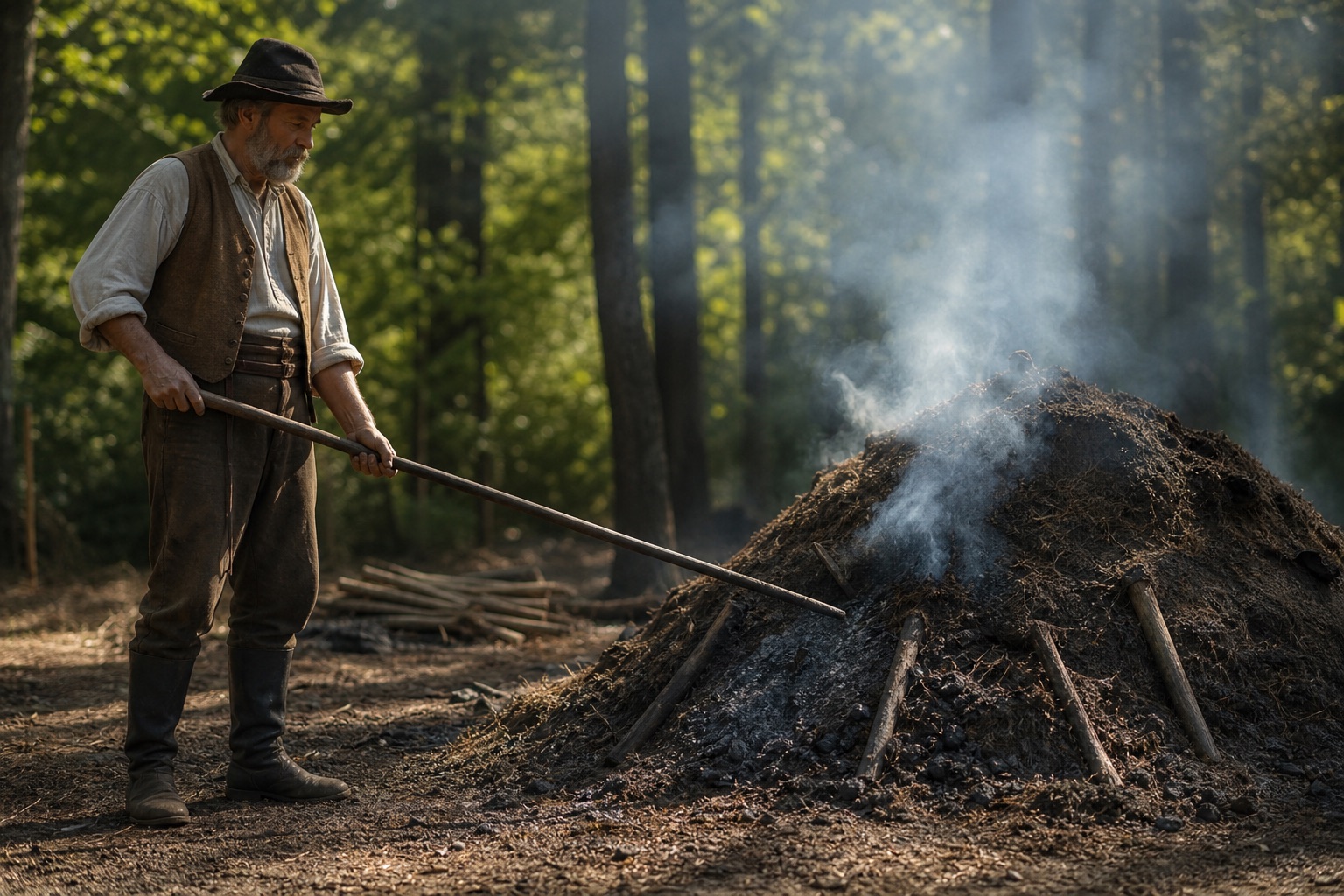
Mineral coal took the hearth, and coke, from Darby's Coalbrookdale practice of 1709 onward and through the eighteenth century, took the blast furnace that had been the clamp's great customer. Charcoal iron lingered for some quality work, but it was no longer the ordinary fuel of the trade. In the nineteenth century enclosed retorts made charcoal as one product of wood distillation, with tar and acid sold beside it, and that coal undercut a man watching an earth mound. Coppice charcoal did not vanish on a statute. It ceased to pay.