
AI Revolution
Deepfake Investigator
A speculative career prediction for AI Revolution based on technological trends and societal evolution.
Media Gallery
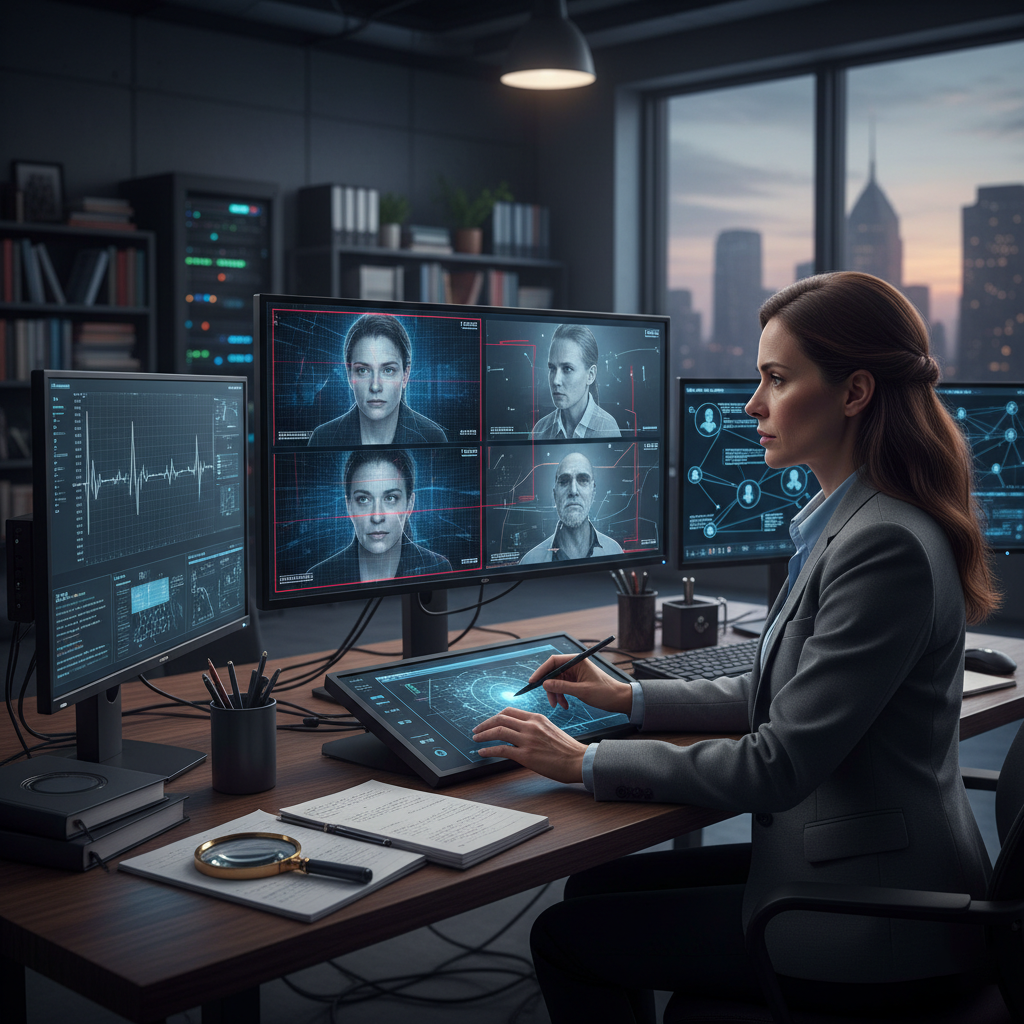
About the Deepfake Investigator career
In an era where artificial intelligence has advanced to the point of creating hyper-realistic digital forgeries, the role of the Deepfake Investigator emerges as a crucial guardian of truth. These specialists are tasked with identifying, analyzing, and mitigating the impact of deepfake technology, which can manipulate video and audio content to create convincing yet false narratives. As misinformation proliferates, the Deepfake Investigator stands at the forefront of digital forensics, employing cutting-edge tools and techniques to discern reality from fabrication. Their work is not only technical but also deeply intertwined with the ethical implications of trust, privacy, and the very nature of truth in the digital age.
Day in the Life of a Deepfake Investigator
Morning: Analyzing New Cases
The day begins early, with the investigator logging into a secure digital platform that aggregates reports of suspected deepfake content from various sources, including social media, news outlets, and private organizations. Each case is meticulously reviewed, with the investigator employing advanced AI algorithms to analyze the metadata and visual inconsistencies in the videos. They take notes on anomalies such as unnatural facial movements or mismatched audio, preparing for a deeper forensic analysis later in the day.
Midday: Collaboration and Strategy Meetings
By mid-morning, the investigator joins a virtual meeting with a team of digital forensics experts, legal advisors, and cybersecurity professionals. Together, they discuss recent trends in deepfake technology, share insights on emerging threats, and strategize on how to educate the public and organizations about the risks associated with deepfakes. This collaborative environment fosters a multidisciplinary approach to tackling the challenges posed by misinformation.
Afternoon: Field Investigations and Reporting
In the afternoon, the investigator may head out to meet with clients or stakeholders who have been affected by deepfake incidents. This could involve gathering evidence, conducting interviews, and providing guidance on how to respond to the misinformation. Back at the office, they compile detailed reports that outline their findings, including recommendations for legal action or public awareness campaigns.
Evening: Public Awareness and Education
As the day winds down, the investigator dedicates time to creating educational content aimed at raising awareness about deepfakes. This could involve writing articles, producing video explainers, or participating in webinars. They understand that prevention is key, and empowering the public with knowledge is a vital part of their role.
What it grew from
It grows out of the picture editor and the fraud investigator.
Related Exhibits
Identity Verification Analyst
In an increasingly digital world, the role of the Identity Verification Analyst emerges as a crucial safeguard against identity fraud and cybercrime. This position is pivotal in ensuring that individuals and organizations can trust the identities of those they interact with online. As technology evolves, so too do the methods of verification, requiring analysts to stay ahead of the curve in understanding both human behavior and technological advancements. The Identity Verification Analyst utilizes advanced AI algorithms, biometric data, and behavioral analytics to assess the authenticity of identities presented in various digital transactions. They work closely with cybersecurity teams, legal advisors, and compliance officers to develop robust verification protocols that protect sensitive information while ensuring a seamless user experience. This role not only demands technical expertise but also a deep understanding of the ethical implications surrounding privacy and data security, making it a vital component of the digital economy.
Human-AI Creative Director
In the not-so-distant future, the role of the Human-AI Creative Director emerges as a pivotal position at the intersection of human creativity and artificial intelligence. As industries increasingly integrate AI into their creative processes, this role becomes essential in guiding and harmonizing the collaboration between human artists and AI systems. The Human-AI Creative Director is responsible for overseeing projects that leverage AI tools to enhance artistic expression, ensuring that the final outputs resonate with human emotions and cultural relevance. This position not only requires a deep understanding of both creative practices and AI technologies but also a visionary approach to how these two realms can coexist and elevate one another. The Human-AI Creative Director will curate experiences that challenge traditional notions of authorship and creativity, pushing the boundaries of what is possible in art, design, and media.
Explore More Exhibits
Discover the full collection of past and future professions in The Jobs Museum.