
law
The mine statutes and the winding house
Children taken out of the pit, and the banksman taken off the open shaft.
The Mines and Collieries Act 1842 is the legal center. Mechanical haulage, enclosed winding, and the later closing of pits are the technical center.
Under this force
5
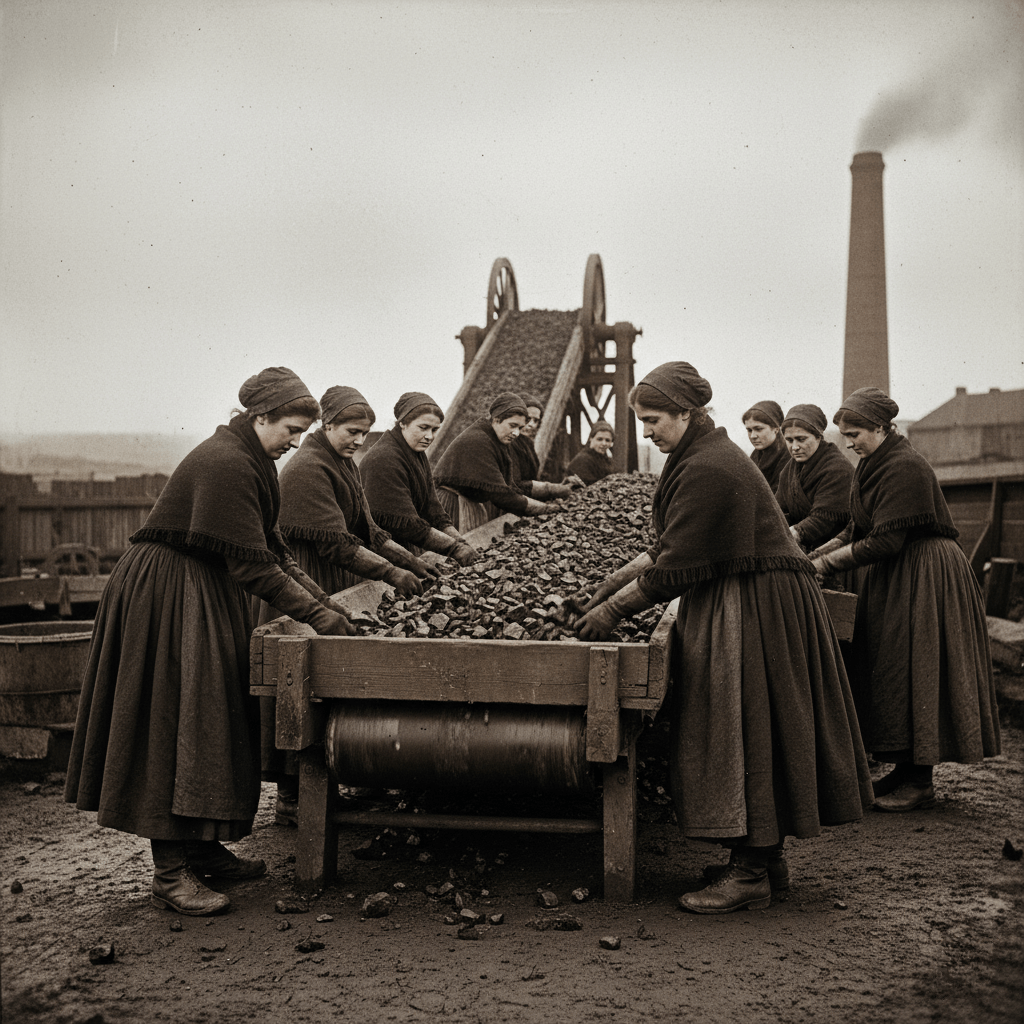
- Past · Victorian EraPit Brow LassThe Pit Brow Lass was a vital yet often overlooked figure in the coal mining industry during the Victorian Era, particularly in the northern regions of England. These women worked at the surface of coal mines, known as the 'pit brow,' where they played a crucial role in the extraction and processing of coal. Their responsibilities included sorting coal from the waste material, loading it onto carts, and ensuring that the coal was ready for transport to markets. The work was physically demanding and often conducted in harsh conditions, with women frequently exposed to the elements and the dangers of the mining environment. Despite the grueling nature of their labor, Pit Brow Lasses were known for their resilience and camaraderie, often forming close-knit communities among themselves as they navigated the challenges of their work.
 Past · Industrial RevolutionBreaker BoyThe role of a Breaker Boy emerged during the Industrial Revolution, particularly in the coal mining regions of the United States, where the demand for coal surged to fuel the burgeoning industries. Breaker Boys were young boys, often between the ages of 8 and 12, who worked in coal breaker facilities. Their primary responsibility was to separate impurities from coal, a crucial step in preparing the coal for market. This labor-intensive job involved sitting on a high platform above a conveyor belt, where they would pick out rocks, slate, and other debris from the coal as it passed by. The work was not only monotonous but also hazardous, as the boys were exposed to coal dust and the risk of injury from the machinery. Breaker Boys typically worked long hours, often from dawn until dusk, in poorly ventilated and unsafe conditions, earning a meager wage that reflected the exploitative labor practices of the time. The job was emblematic of the harsh realities faced by child laborers during the Industrial Revolution, highlighting the intersection of economic necessity and social injustice.
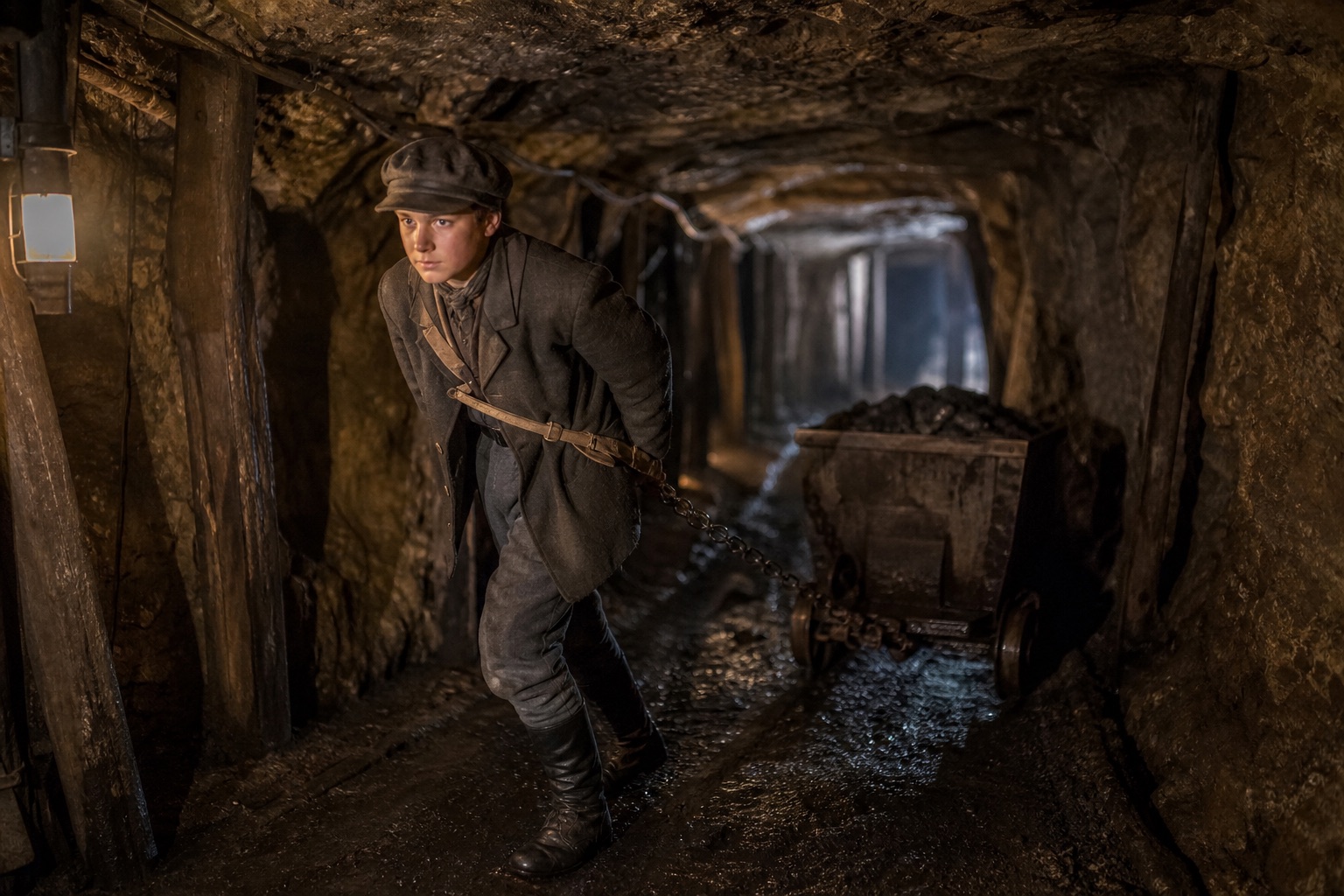 Past · Industrial RevolutionHurrierA hurrier moved coal along the low underground road between the face and the next stage of haulage. In thin British seams of the early nineteenth century that road was often too low for a pony, so a leather girdle was buckled at the waist and a chain ran back to a corve or a wooden tub. The hewer filled the box. The hurrier drew it, bent or on hands and feet, then returned for the next. In some pits a second child, the thruster, pushed from behind. Scottish coal bearers, usually women with creels, did a related but different carry, and this label stays with the chain and the tub.
Girls and boys both hurried, and adult women hauled underground in some districts, until the Mines and Collieries Act 1842. That Act barred every woman and girl from underground work and barred boys under ten. Lord Ashley's bill followed the Children's Employment Commission, whose sub-commissioners had gone into the pits and published the harness, the hours, and the ages. This exhibit is that pre-1842 haul. The wording stays on the road, the girdle, the tub, and the statute. It does not describe injuries. Parliament's answer was an age line, a sex line, and inspectors, which is the fact the label is built to carry.
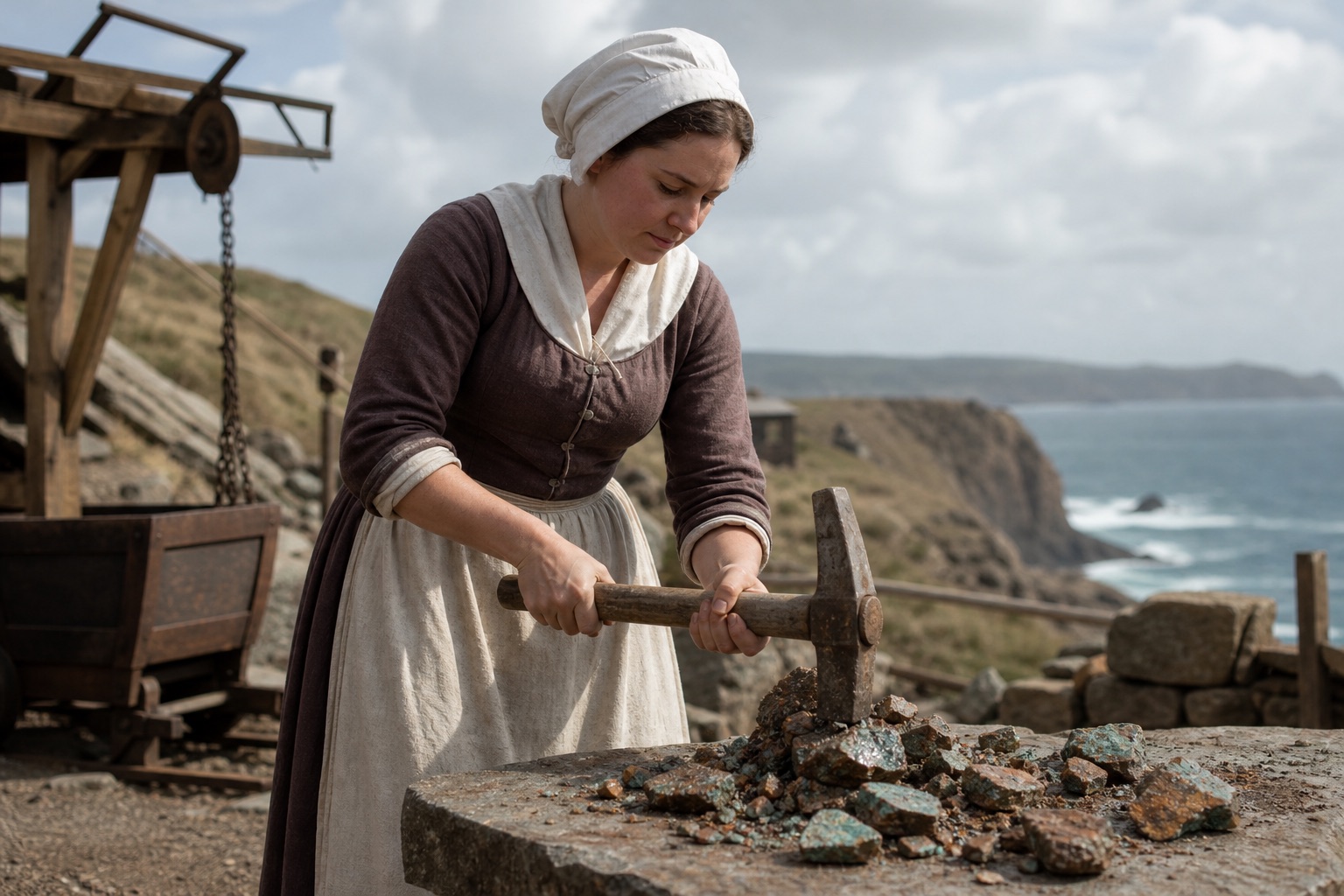 Past · Industrial RevolutionBal-maidenA bal-maiden broke and sorted copper ore, and sometimes tin, on the surface dressing floor of a Cornish or West Devon mine. She was not underground. The word bal is the mine itself. On a paved or boarded floor open to the weather she used a bucking hammer, a short-handled flat-faced tool, to crush ore small enough to be washed, and a heavier cobbing hammer on the larger stones. Waste rock was picked out by eye. Dressed ore went on to buddles and the rest of the surface plant, where water separated the heavier mineral.
The trade runs from the eighteenth century, when these copper mines expanded, into the early twentieth, when the same mines closed and mechanical stamps, crushers, and later flotation did the breaking. The Mines and Collieries Act 1842 cleared women from underground work. It did not clear the dressing floor, and bal-maidens remained a normal part of the surface payroll long after that Act. Census returns use the title in Cornwall and around Tavistock. Devon Great Consols was among the large employers. The label is this hand floor, not a romantic pit woman and not a child-haulage job.
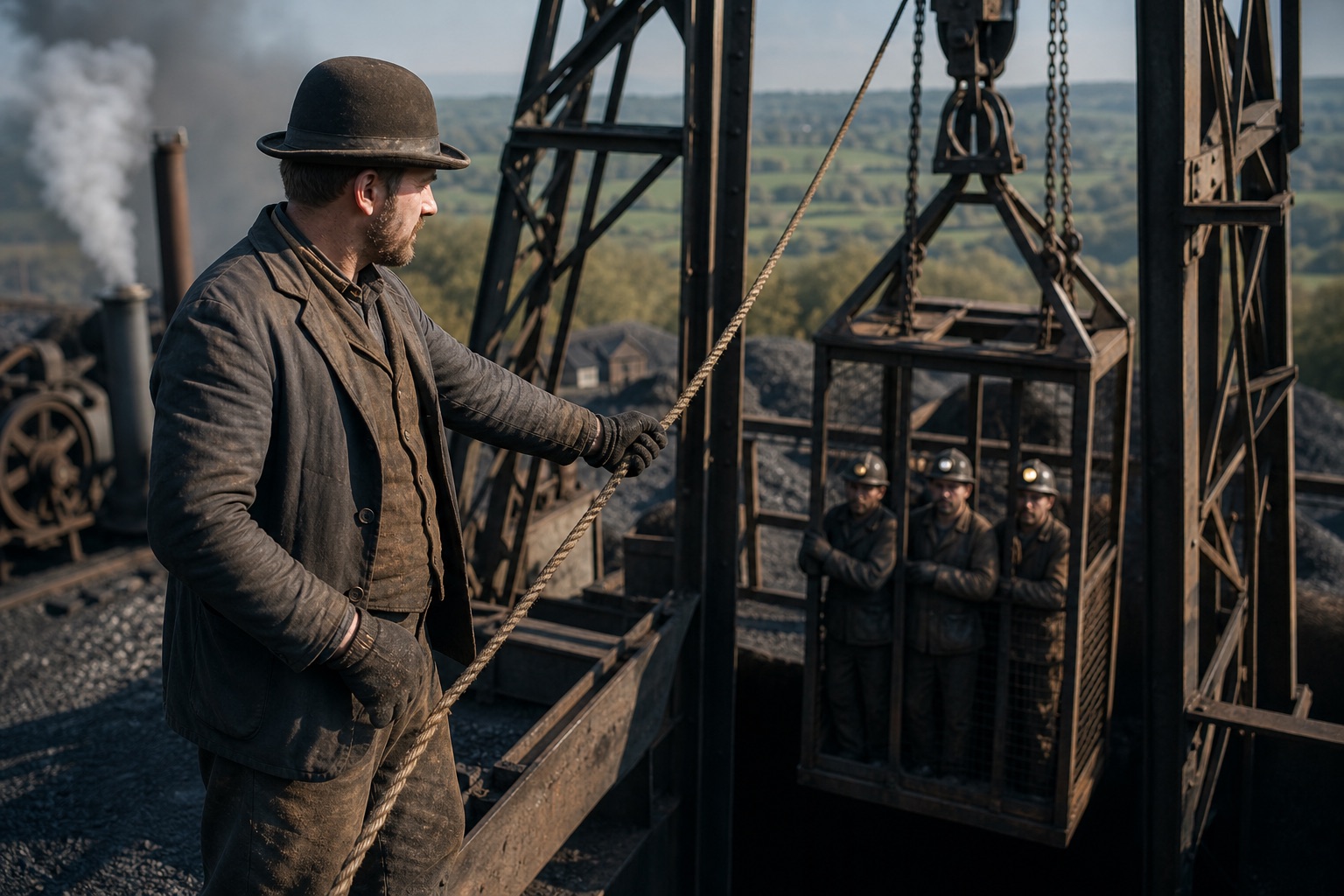 Past · Victorian EraBanksmanThe banksman was the man at the pithead who controlled the cage and signaled the winding engineman. He stood on the bank, the surface mouth of the shaft, in the decades when British collieries wound coal and men by a steam engine, a rope, and a cage. A code of bell raps, later pushed toward a standard code by the mines acts, told the engineman to raise, lower, or stop. The banksman opened the gates, saw that keps or chairs were set or clear, and decided when the cage was free to move. He did not drive the engine. The onsetter, down the shaft, was his counterpart at the pit bottom.
This exhibit is that cage-and-bell job of the steam-winding era, roughly from the spread of cages in the mid-nineteenth century through the years when many pits still wound that way. The word banksman did not die with those pits. It remains in use for the person who directs a crane or a hoist, and mining law kept a banksman's duties wherever a shaft was wound by hand signals. What thinned was this particular post: the appointed man on an open bank, ringing a bell to a steam engineman, as collieries closed and winding was enclosed, automated, and run from a control room.