
machine
Manufactured cold
Ice that is no longer cut from a lake or carried up the stairs.
Ice harvests, ice routes, and hand freezers. The refrigerator is the last step, and it is a consumer machine, which is why the worker disappears rather than moving to a plant.
Under this force
3
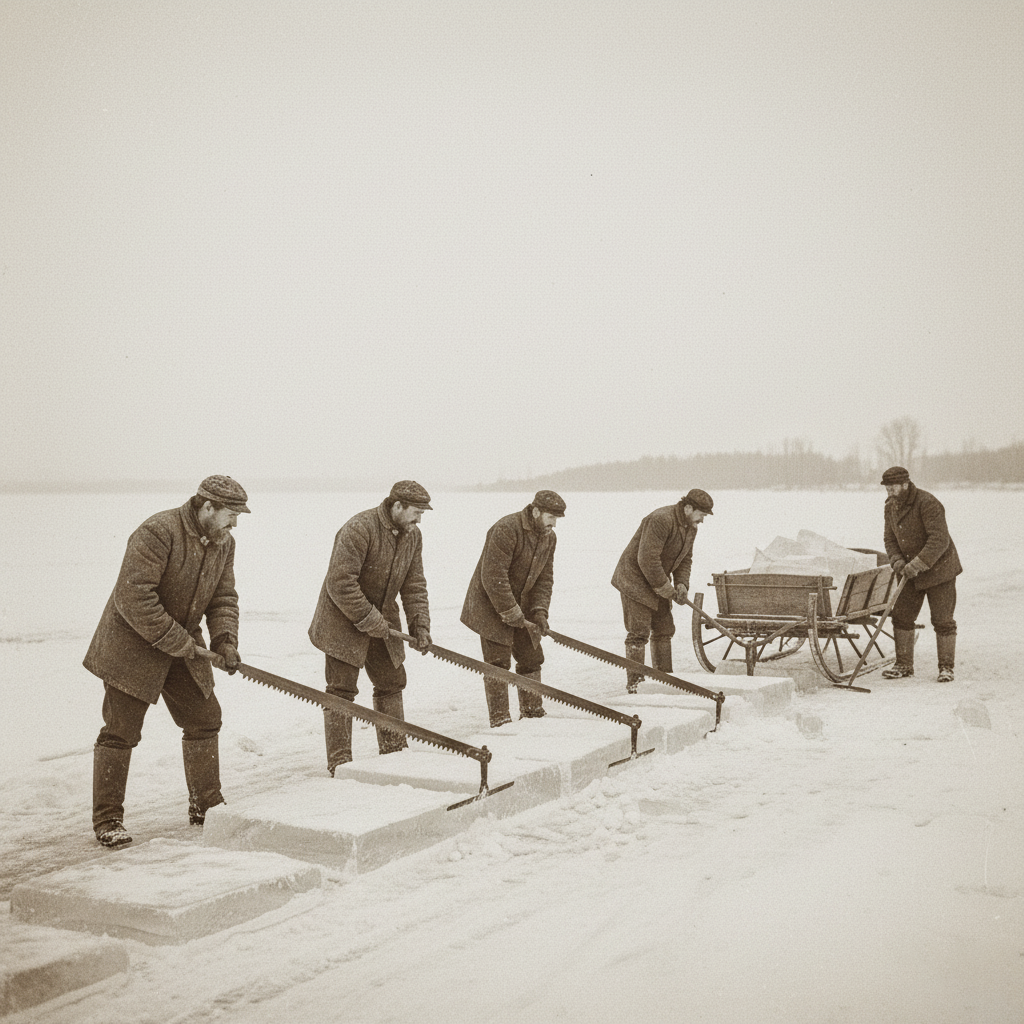
- Past · 19th CenturyIce CutterIn the 19th century, before the advent of modern refrigeration, the Ice Cutter was a vital occupation, especially in regions where lakes and rivers froze during the winter months. These skilled laborers harvested ice from frozen bodies of water, which was then stored in icehouses and used to preserve food and cool drinks in the sweltering summer heat. The process was labor-intensive and required not only physical strength but also a keen understanding of the ice's thickness and quality. Ice was cut into large blocks, often weighing several hundred pounds, and transported to markets and homes, where it played a crucial role in daily life. The Ice Cutter's work was not just about brute force; it involved precision and technique to ensure that the ice remained intact during the cutting and hauling process. As the demand for ice grew, so did the complexity of the job, with cutters often working in teams to maximize efficiency and safety.
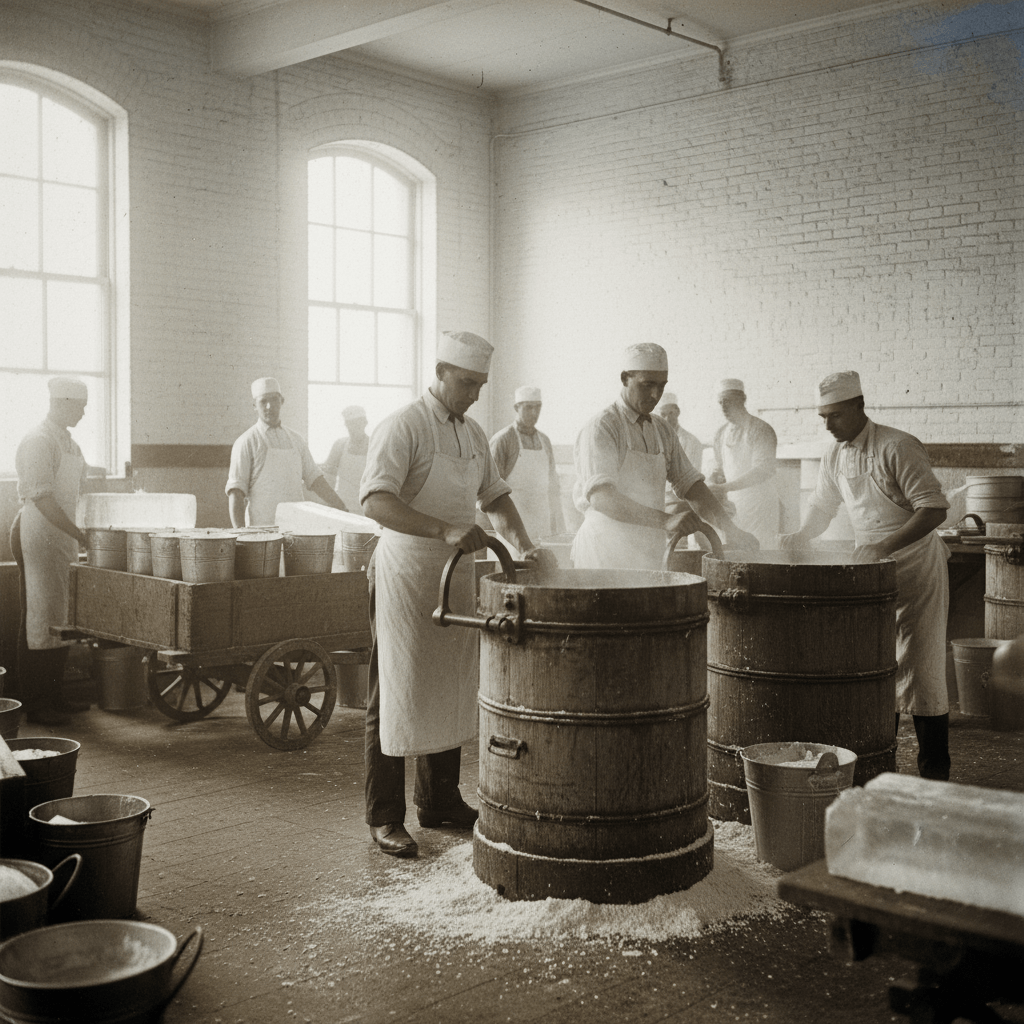 Past · Industrial RevolutionIce Cream FreezerThe Ice Cream Freezer was a vital role in the production of one of the most beloved treats in history. Emerging during the Industrial Revolution, this occupation involved the manual freezing of ice cream mixtures, a process that required both skill and precision. Ice cream freezers were responsible for ensuring that the mixture reached the perfect consistency and temperature, creating a smooth and creamy texture that delighted consumers. They worked in ice cream parlors, factories, and even at fairs, where they would often be seen churning large batches of ice cream in traditional ice cream makers, surrounded by blocks of ice and salt, which were essential for the freezing process. The job required not only a keen understanding of the freezing process but also an ability to adapt to varying temperatures and ingredient qualities, making it a unique blend of art and science.
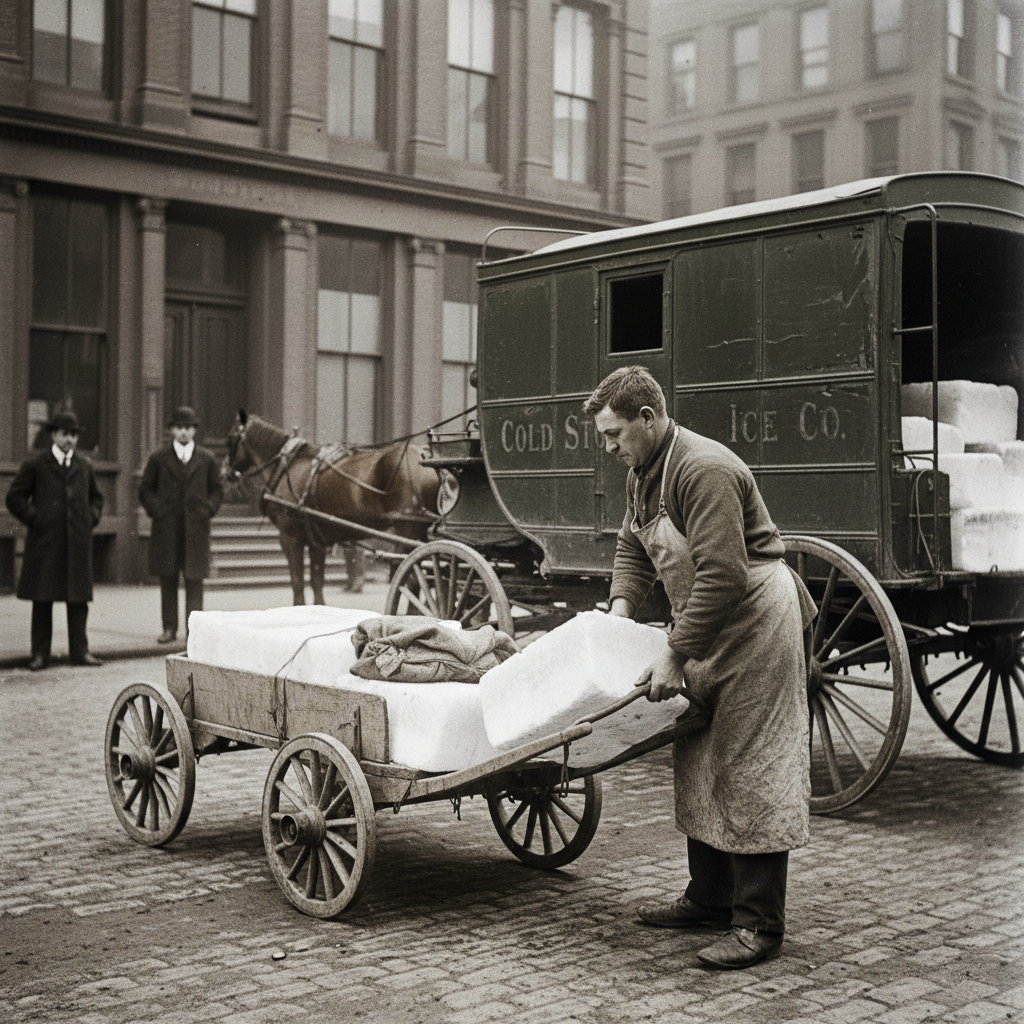 Past · Gilded AgeIce Delivery ManThe Ice Delivery Man was a vital figure in the late 19th and early 20th centuries, responsible for transporting large blocks of ice from ice houses to homes and businesses. Before the advent of modern refrigeration, ice was essential for preserving food, cooling drinks, and providing comfort during the sweltering summer months. Ice delivery men would often rise before dawn, preparing for a long day of labor that involved hauling heavy blocks of ice, sometimes weighing up to 300 pounds, using specialized tools and horse-drawn wagons. They navigated through city streets, delivering ice to households, restaurants, and markets, often shouting 'Ice!' to announce their arrival. The job required not only physical strength but also knowledge of customer preferences, as many clients had specific requests for the size and quantity of ice needed. The ice delivery man was a familiar sight in urban areas, contributing to the daily rhythm of life and commerce.