
Company
AbsorbedThe Coalbrookdale works
Coalbrookdale · 1709 – 1929
The company passed into a larger foundry group in 1929. The valley is now the Ironbridge Gorge Museum.
In 1709 Abraham Darby, a Quaker ironmaster, succeeded in smelting iron ore with coke at Coalbrookdale in Shropshire. Charcoal had limited where a furnace could stand, because the trees ran out. Coal, turned to coke, did not. The furnace could grow.
The works cast pots, then parts, then, in 1779, the ribs of the Iron Bridge, the first large bridge made of cast iron. A valley of furnaces, forges, and plateways became a landscape organized around one material.
The furnace as an employer
A coke furnace does not stop for the season. It needs fillers, keepers, moulders, and the carters who brought ore and took pots away. Darby's descendants ran the Coalbrookdale Company as a family firm and trained a local workforce that knew iron the way a wool town knew cloth. The jobs were hot, skilled, and tied to the site. You did not take a furnace home.
From company to museum
The company continued long after the Darbys, and in 1929 it was absorbed into Allied Ironfounders. Production on the historic site ended over the following decades. The Iron Bridge and the furnaces are now the Ironbridge Gorge Museum, a place that exhibits the work the company used to pay for. Few firms in this catalogue end as their own exhibit. This one did.
The work it organized
- Furnace keeper
- Moulder
- Pattern maker
- Carter
In the exhibits
Jobs associated with this organization.
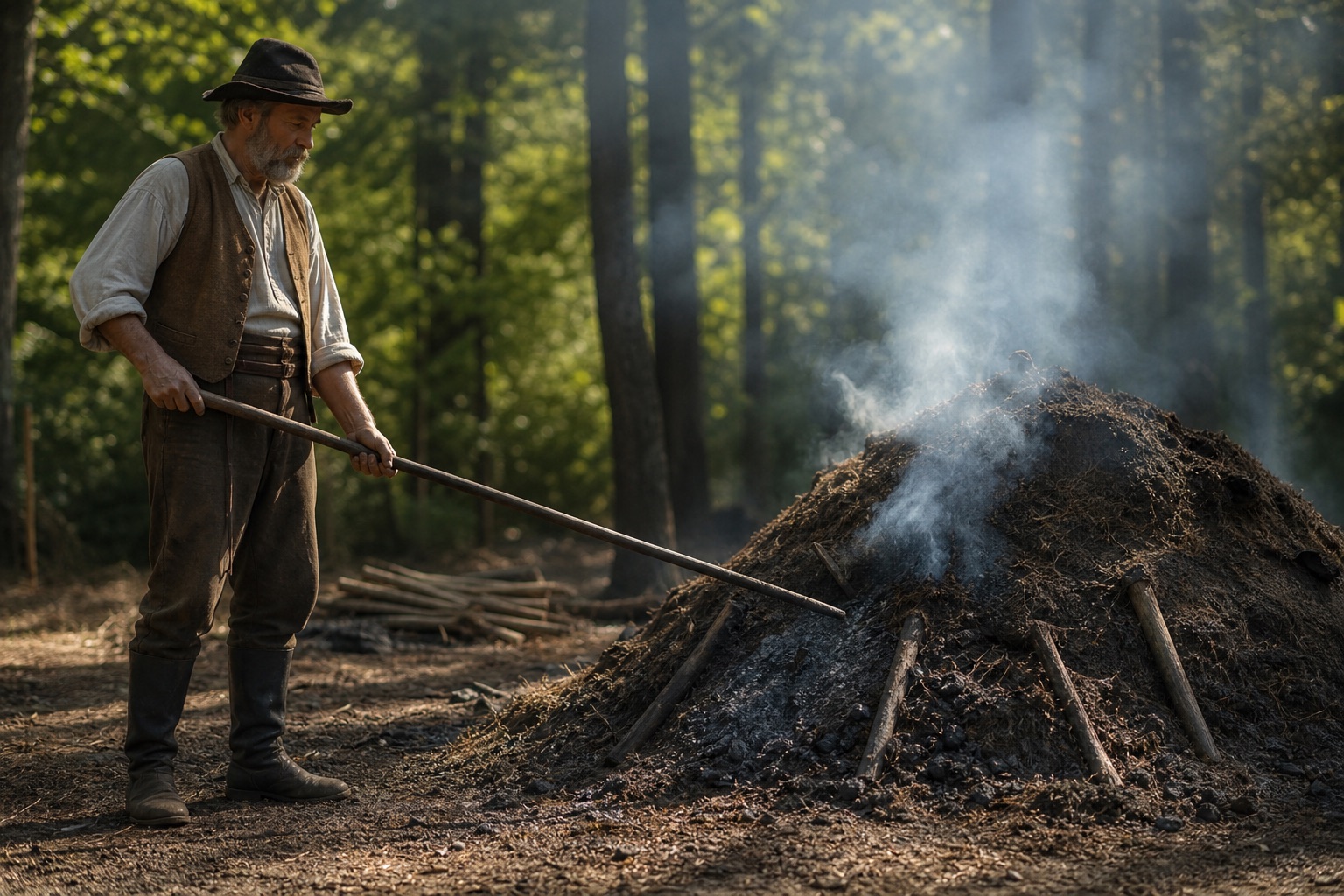 Past · Medieval EraCharcoal-BurnerThe charcoal-burner, the collier of the woods, was not a coal miner. He stacked cordwood from the coppice into a mound, covered it with straw, turf, and earth, and set it to smoulder rather than to flame. Too much air and the stack burnt to ash, which nobody would buy. Too little and the sticks stayed half raw. He slept in a hut beside the clamp, sometimes for several days, opening and closing vents as the smoke changed colour, and he stopped leaks in the mound with a fresh sod before a bright spot could run away. When the heap had cooled he raked out black coal and bagged it for the furnace, the powder mill, or the brazier.
Coppice woods in the Weald, the Forest of Dean, the Wyre, and a hundred smaller falls were cut on a cycle of years so that underwood, not the great timber trees, supplied him. The craft runs from medieval woodland custom into the late nineteenth century, long after Abraham Darby's coke had begun to feed furnaces. Mineral coal took the domestic grate. Coke took the ordinary blast furnace. In the nineteenth century, enclosed retorts carbonised wood in iron vessels and collected tar and acid along with a cheaper charcoal. The clamp in the coppice could not match that price. The last burners were remnants, coaling for hop kilns, braziers, and a few special trades, not for the ironworks that had once kept the woods smoking.
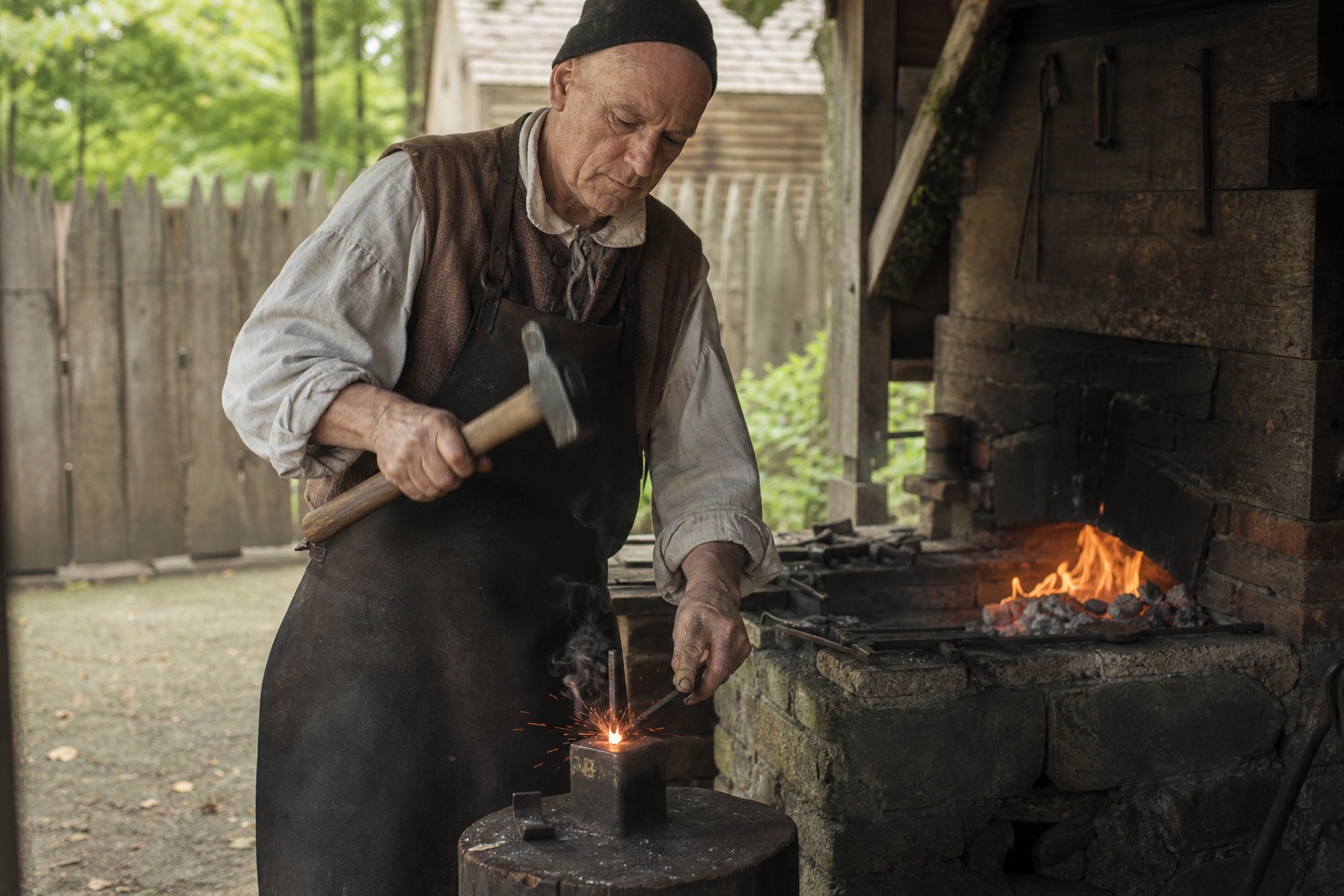 Past · Victorian EraNailerA nailer in the Black Country made nails one at a time at a hearth in the house. Rod iron, taken from a fogger, was heated, pointed, cut, and headed in a bore, often under an oliver, the foot-worked hammer that put a heavier blow behind a small hand. Dudley, Sedgley, Gornal, Lye, Halesowen, and the shops toward Bromsgrove were dense with these hearths. The count was the thousand. The fogger who had supplied the rod bought the nails back, and his prices on both sides of the bargain were deducted before the family saw cash. It was outwork, not a factory bell, and the workshop was the room where the household also lived.
Cut nails, sheared from sheet by machine from the early nineteenth century, undercut the common wrought nail. Wire nails, cheap in quantity by the 1880s and 1890s, destroyed what was left of the price. Reporters for the children's employment inquiries of the 1840s already found whole families at the block, children old enough to heat a rod or head a small nail working a long day inside a tally of a few shillings. The reports list hours and prices. Horse nails and a few special sorts lingered as hand work after general nails had gone. The nail in an ordinary carpenter's bag had become a machine nail, and the hearth could not sell against it.
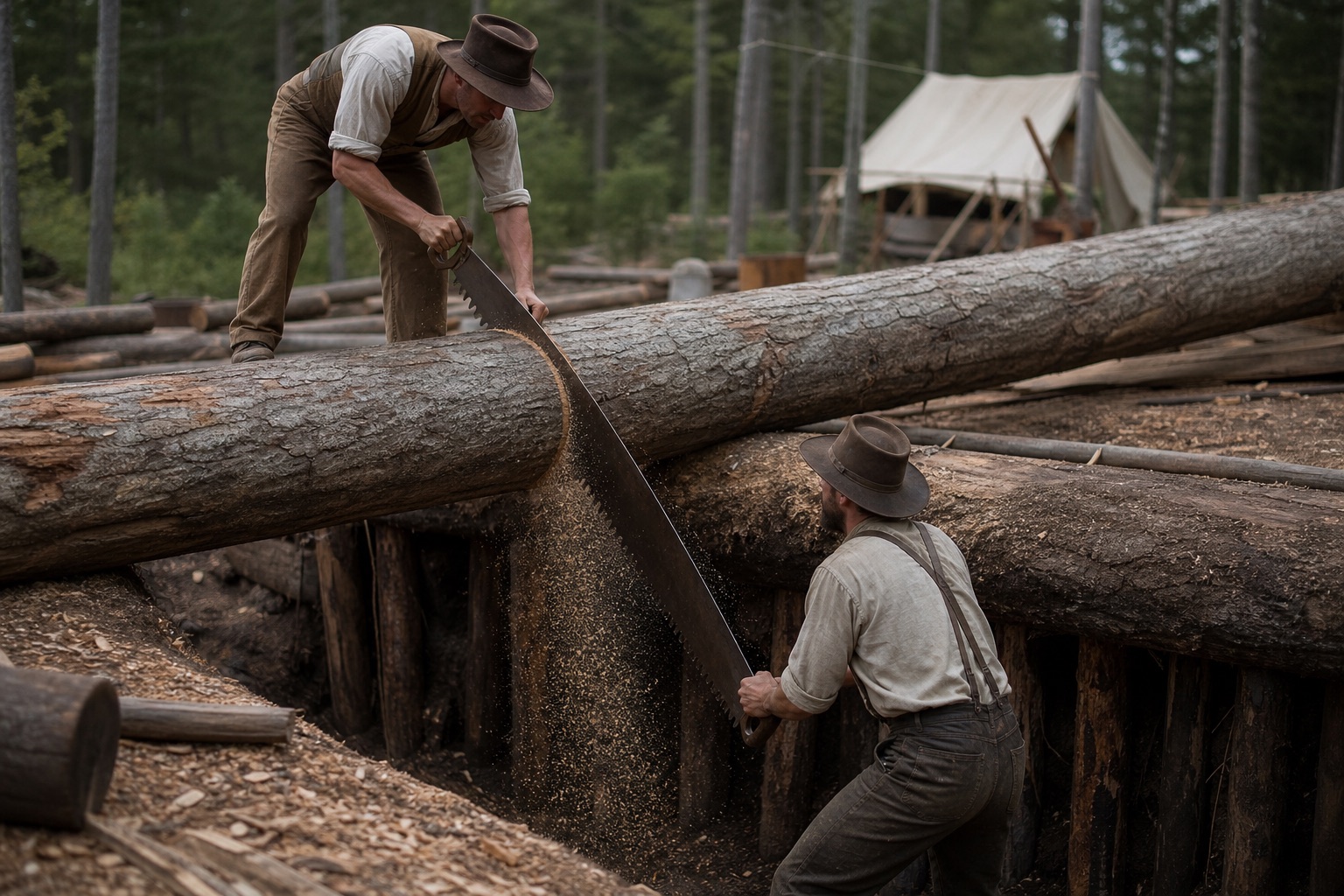 Past · Georgian EraPit-SawyerTwo men and one long saw turned a balk of timber into boards. The top-sawyer stood on the log, chalk line between his boots, and guided the blade. The pitman stood in the pit beneath, hauling the saw down through oak, elm, or deal while the dust settled on him. Iron dogs held the balk. Wooden wedges kept the kerf from pinching the plate. In a royal dockyard the pit might be a dug hole or a raised cradle; in a country yard it was often opened where the trees had been felled. A straight deal could come off in a morning. Compass timber for a shipwright, curved and stubborn, took the rest of the day and a higher price on the tally.
From the seventeenth century into the middle of the nineteenth this pair supplied house carpenters and shipyards in Britain, and the same pit was dug in colonial timber towns that had logs and no mill. Water-driven saws already existed in some districts, yet a pit could be set up wherever a merchant landed timber, and British yards were slow to give the work up. The top-sawyer's name even passed into ordinary speech for the person who stood first at a job. What ended the pit was the steam sawmill in the timber ports, which cut the same balk faster and sold the deals cheaper. The pits were not closed by proclamation. Builders bought mill-sawn stock, and the hundred-foot bargain stopped being offered.
On the timeline
Related
- Boulton & WattDissolved