

Trade
Orbit
Traffic, debris, habitats, and a guide for a civilian who is leaving the ground.
Most of the work is still a ground job with a radio.
In this trade
4
- Projected · Spacefaring EraSpace Tourism GuideAs humanity ventures beyond the confines of Earth, the role of the Space Tourism Guide emerges as a pivotal profession in the burgeoning industry of space travel. These guides are not merely tour leaders; they are educators, safety officers, and cultural ambassadors, tasked with ensuring that the experience of space travel is both exhilarating and safe for the adventurous tourists who dare to leave the planet.
Imagine a world where individuals from all walks of life can book a trip to the edge of space, experiencing the breathtaking view of Earth from above, the sensation of weightlessness, and the thrill of traveling at incredible speeds. The Space Tourism Guide is there to facilitate this journey, providing insights into the science of space travel, the history of human exploration, and the environmental considerations of our ventures into the cosmos.
Guides will be equipped with advanced training in astrophysics, emergency protocols, and customer service, ensuring that every traveler feels informed and secure. They will also play a crucial role in promoting sustainable practices in space tourism, advocating for responsible exploration that respects the delicate balance of our universe.
As the industry grows, so too will the responsibilities of the Space Tourism Guide, who will need to adapt to new technologies and evolving safety standards, all while fostering a sense of wonder and respect for the cosmos among their clients.
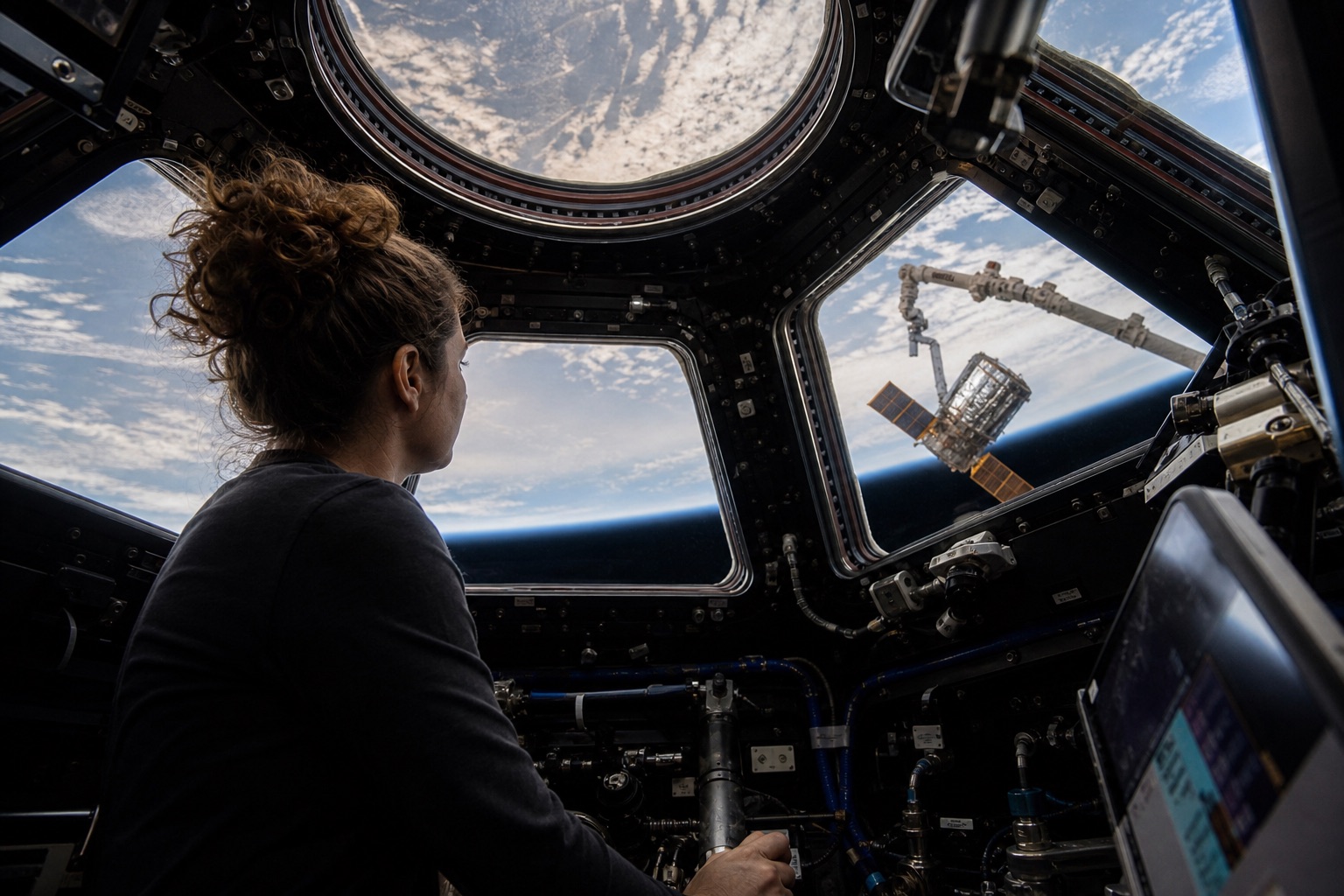 Projected · Spacefaring EraOrbital Debris Retrieval TechnicianThe orbital-debris retrieval technician operates or supports a mission that meets a dead satellite or a fragment and takes it out of the way. Most of the occupation sits in a ground control room: relative navigation, a slow approach after the orbits are matched, a capture mechanism, and an abort call if the corridor goes bad. A few specialists may work on orbit. The present edge is uncrewed and flown from the ground, already rehearsed by inspection missions and by small demonstration captures.
The hazard is making more debris while trying to remove some. A poorly chosen capture, a botched grapple, or a push in the wrong direction turns one tracked object into many. The object may still have an owner, and a clean video is not a license. The technician's standard is ordinary and strict: the target was identified, the approach stayed inside its limits, the capture held, and the catalog was updated with whatever remains in the sky.
 Projected · Spacefaring EraSpace Traffic ControllerThe space traffic controller watches crowded orbits for conjunctions and coordinates the maneuvers that keep two objects from trying to occupy the same place at the same time. The kinship with air traffic control is real, and the physics is different. There is no cab in a tower and no pair of binoculars on a console. Closing speeds are kilometers per second, the useful warning is often hours or days, and the remedy is a burn that spends a satellite's propellant and disturbs its schedule.
The controller usually does not fly the spacecraft. An owner-operator does. The controller screens the messages, decides which approaches matter, and gets the parties to agree on who moves. Large constellations have made this a daily screen rather than an occasional memo. Some objects are poorly tracked and some are only partly shared. The work is judgment under an incomplete catalog, written so the next shift can see what was risked and what was spent.
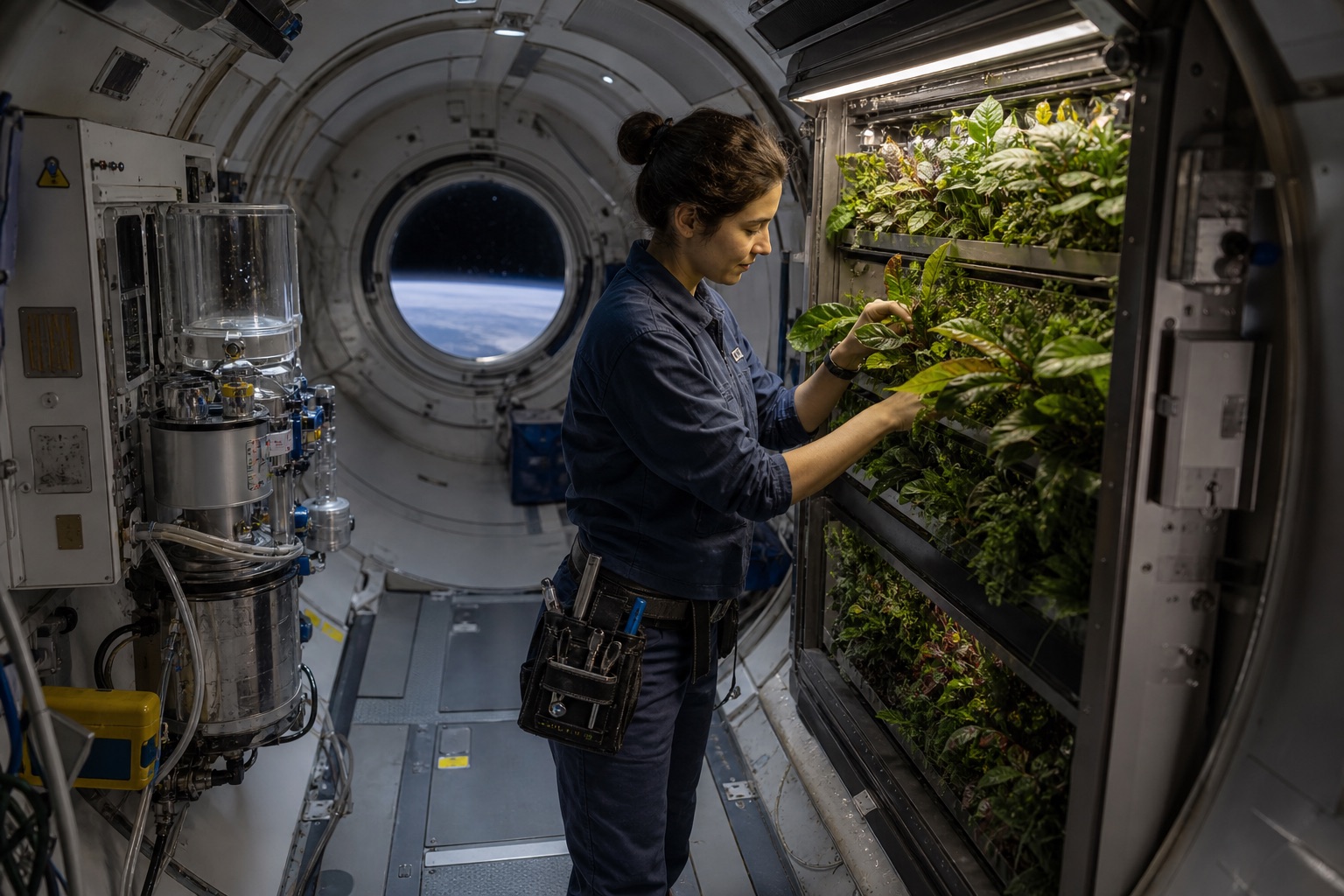 Projected · Spacefaring EraHabitat TechnicianThe habitat technician keeps people alive in a sealed volume: a station, a lunar habitat, or an analog on Earth that is closed on purpose. Air, water, waste, and pressure are one loop. Carbon dioxide has to leave the air, oxygen has to be made or supplied, and water is recovered from wash water and from urine. Filters load up. Sensors drift. The alarms are the job. Drills are practice. The alarm that is not a drill sets the rest of the day.
Present work sits mostly on the station already in orbit and in sealed analogs, where crews know that a closed system will look healthy on a tired sensor. A lunar habitat, where it is more than a drawing and a field trial, will inherit these habits. The technician trusts a round of the panels and a sample of the water more than a green summary. When the loop fails, it fails on a clock that ignores the mission timeline posted on the door. The oxygen drop inside Biosphere 2 remains the cautionary case: a sealed experiment can fail in the air while the public story still sounds intact.