
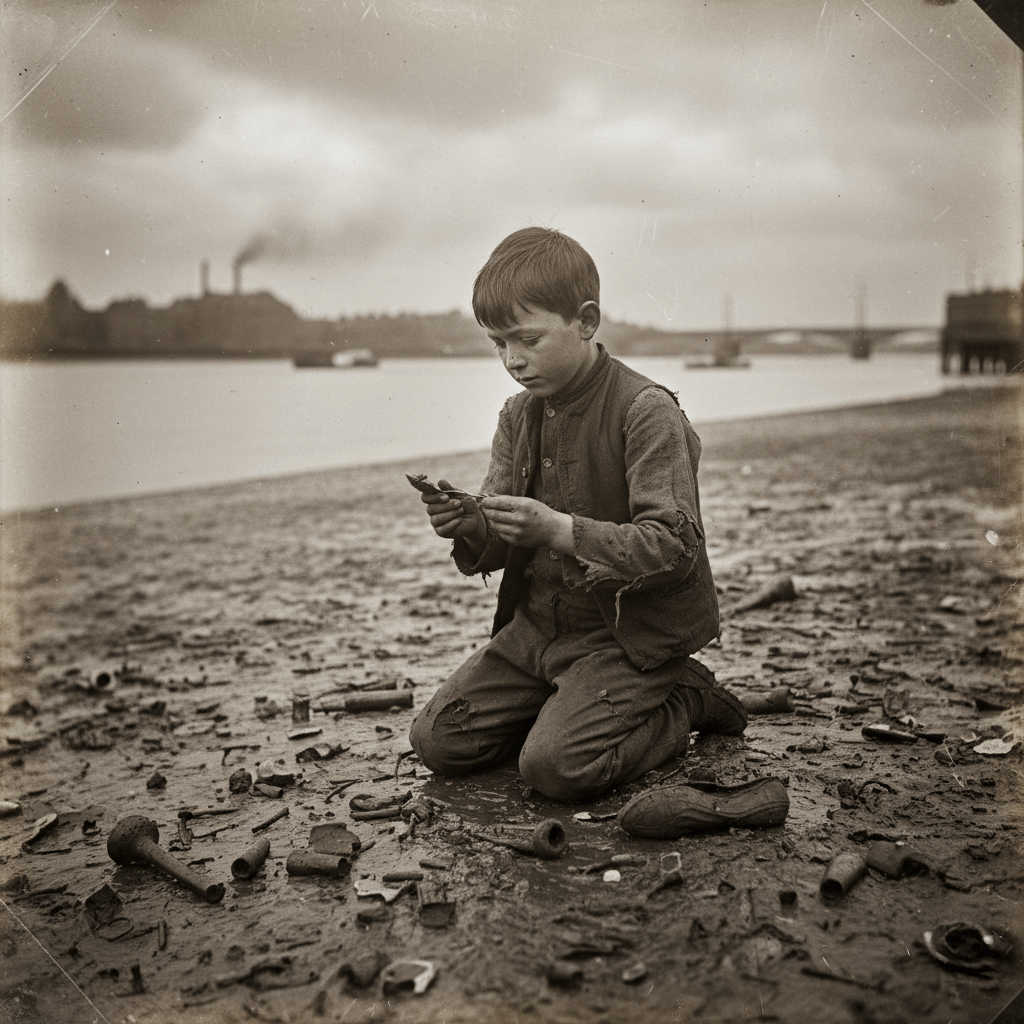
After the Mudlark
The foreshore archaeologist, who is not the same trade
Children searching the Thames mud for coal and rope were cleared by the river police, better embankments, and a city that stopped dumping its fuel in the tide.
The exhibitThe Victorian worldThe streetPipes, paving, and public health
From the exhibit
The role of the mudlark began to decline in the late 19th century as industrialization transformed the landscape of London. The River Thames became increasingly polluted due to the rise of factories and urban waste, making scavenging less viable and more hazardous. Additionally, the introduction of waste management systems and the establishment of recycling programs diminished the need for individuals to scavenge for materials. By the early 20th century, the romanticized image of the mudlark faded, replaced by a more structured approach to waste and recycling.