
1880–1921
Mary Macarthur
The union leader of the 1910 chainmakers' strike at Cradley Heath.
Macarthur and the National Federation of Women Workers made the small-chain makers' wages a national story. The strike and the Trade Boards Act produced a minimum rate.
The nailers of the same district are the neighboring exhibit: the same domestic forge, a different product, the same collapse of the hand price.
Exhibits tied to this life
2
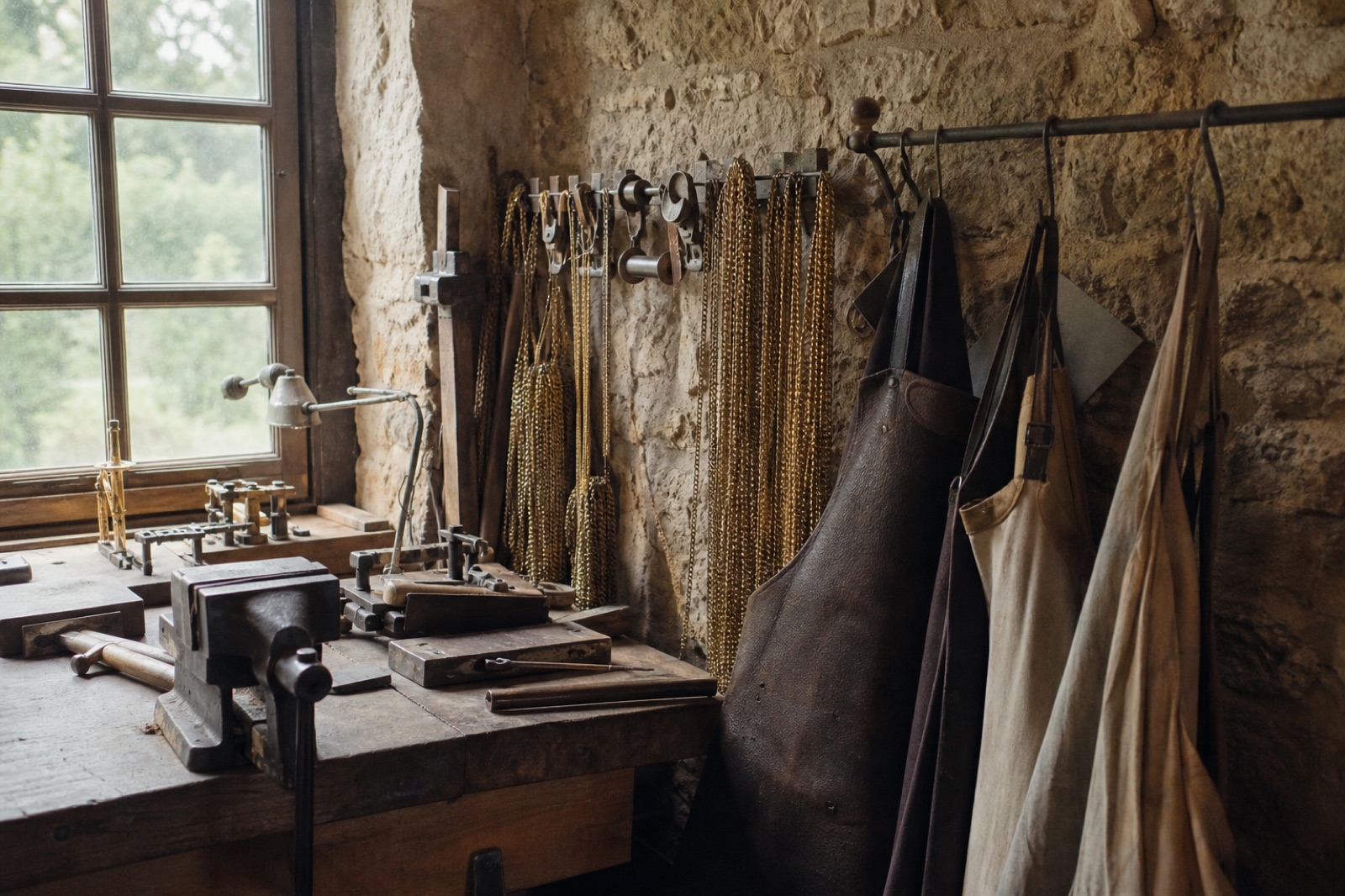
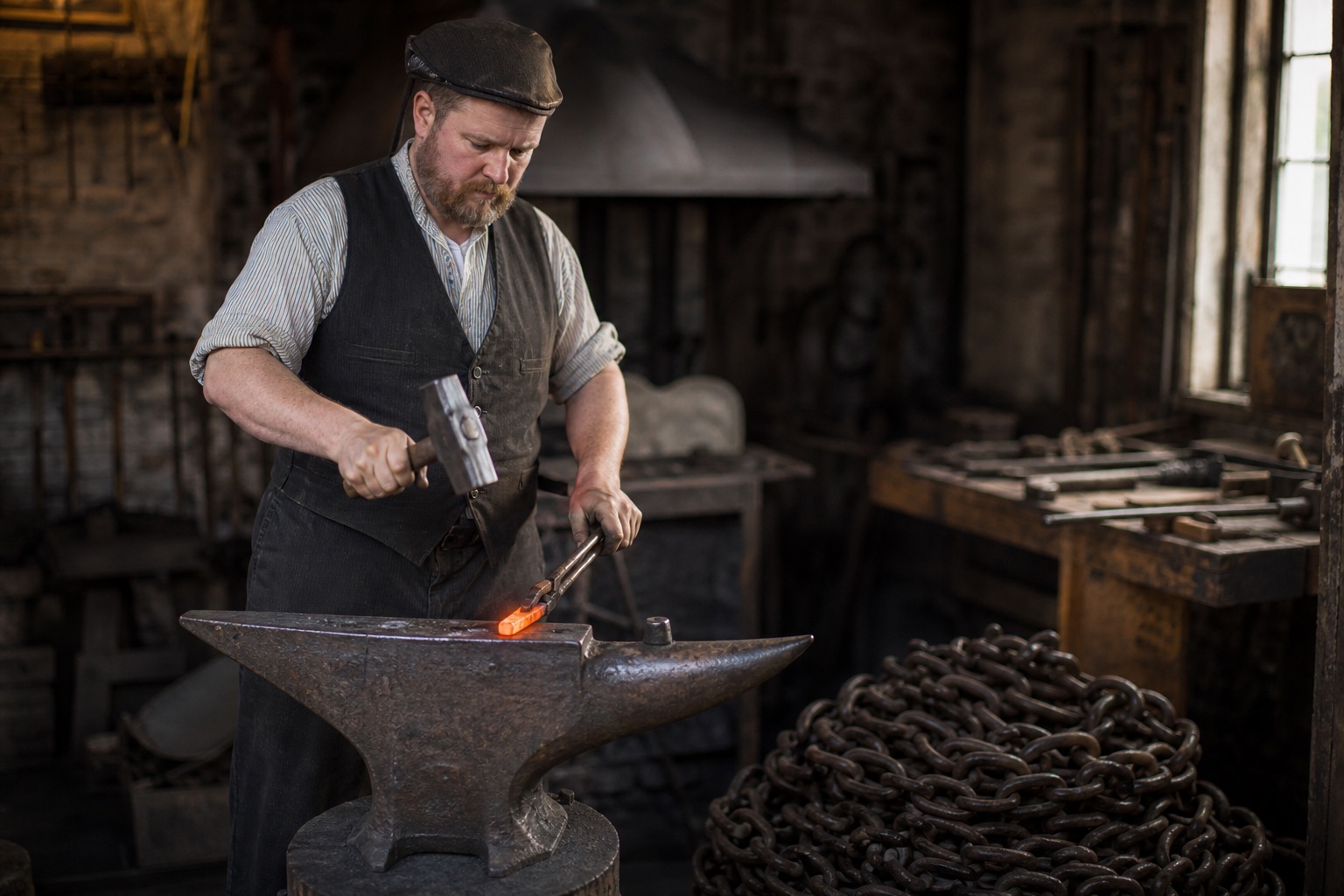 Past · Early Twentieth CenturyChainmakerAt Cradley Heath, and in the small-chain streets of Old Hill and the neighbouring towns, chain was hammered link by link. A woman scarfed a short iron rod, bent it through the previous link, and welded the join on a bick in a backyard shop, a dolly shop, paid by the hundredweight. This was the small work: common chain, dog chain, the lighter sizes. Heavy cable was men's work in larger shops. Before 1910 the backyard bargain was a sweated one. A woman could be at the hearth from morning into the evening and take home five or six shillings for the week, girls learning beside her at a still smaller share of that weight.
Mary Macarthur and the National Federation of Women Workers led the chainmakers' strike of 1910 so that employers would actually pay the minimum the Chain Trade Board had fixed under the Trade Boards Act of 1909, twopence-halfpenny an hour. The strike succeeded. It put a floor under the wage. It did not preserve the backyard hammer as the way ordinary chain would be made. Machine-made chain, and then welded chain from factories, supplied common links more cheaply than a legal hand rate could. The women had stopped the starvation price. Across the early twentieth century the market took the bulk orders to the factory, and the old domestic shops thinned away.
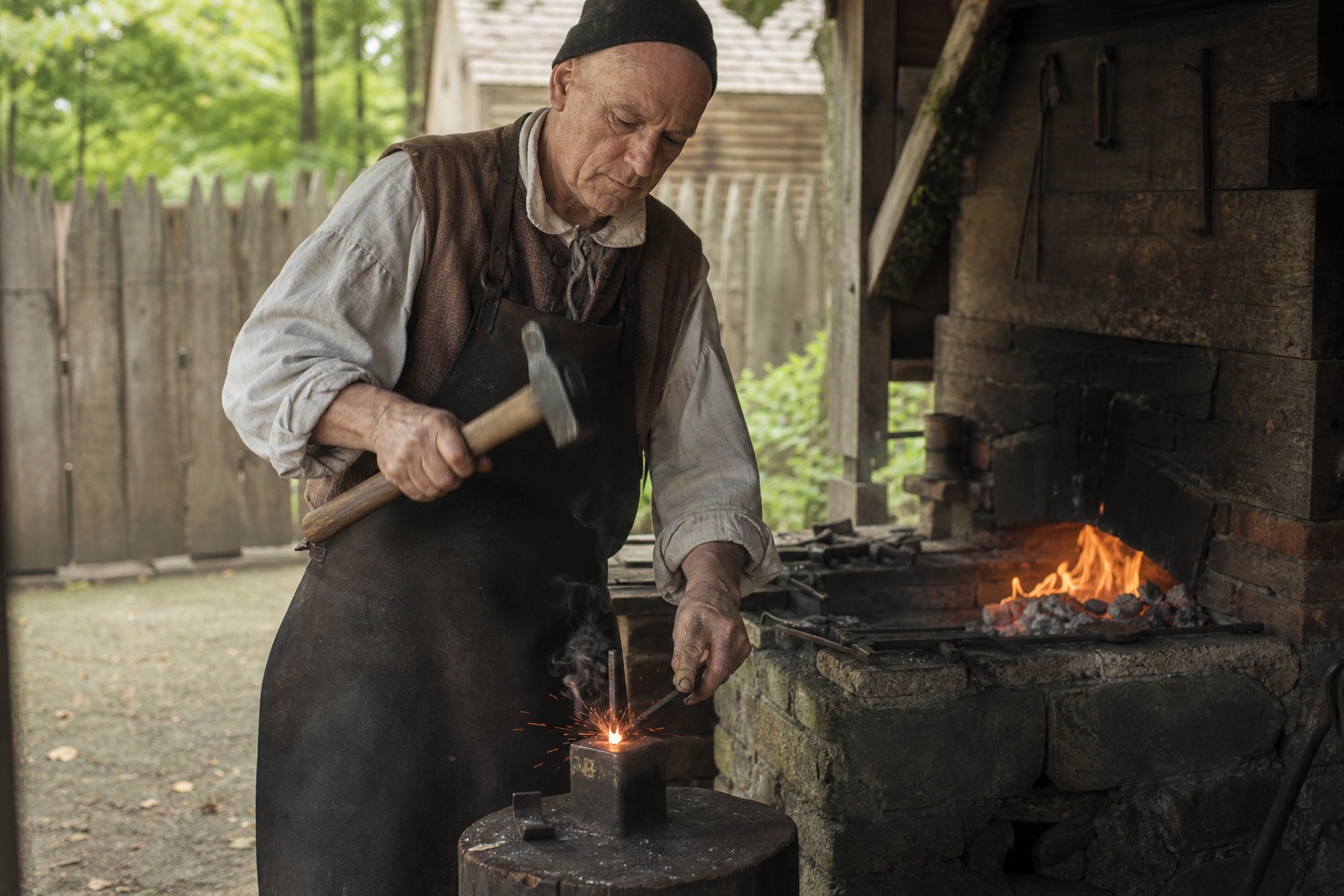 Past · Victorian EraNailerA nailer in the Black Country made nails one at a time at a hearth in the house. Rod iron, taken from a fogger, was heated, pointed, cut, and headed in a bore, often under an oliver, the foot-worked hammer that put a heavier blow behind a small hand. Dudley, Sedgley, Gornal, Lye, Halesowen, and the shops toward Bromsgrove were dense with these hearths. The count was the thousand. The fogger who had supplied the rod bought the nails back, and his prices on both sides of the bargain were deducted before the family saw cash. It was outwork, not a factory bell, and the workshop was the room where the household also lived.
Cut nails, sheared from sheet by machine from the early nineteenth century, undercut the common wrought nail. Wire nails, cheap in quantity by the 1880s and 1890s, destroyed what was left of the price. Reporters for the children's employment inquiries of the 1840s already found whole families at the block, children old enough to heat a rod or head a small nail working a long day inside a tally of a few shillings. The reports list hours and prices. Horse nails and a few special sorts lingered as hand work after general nails had gone. The nail in an ordinary carpenter's bag had become a machine nail, and the hearth could not sell against it.