
1819–1891
Joseph Bazalgette
The engineer of London's intercepting sewers, which closed the freelance sewer.
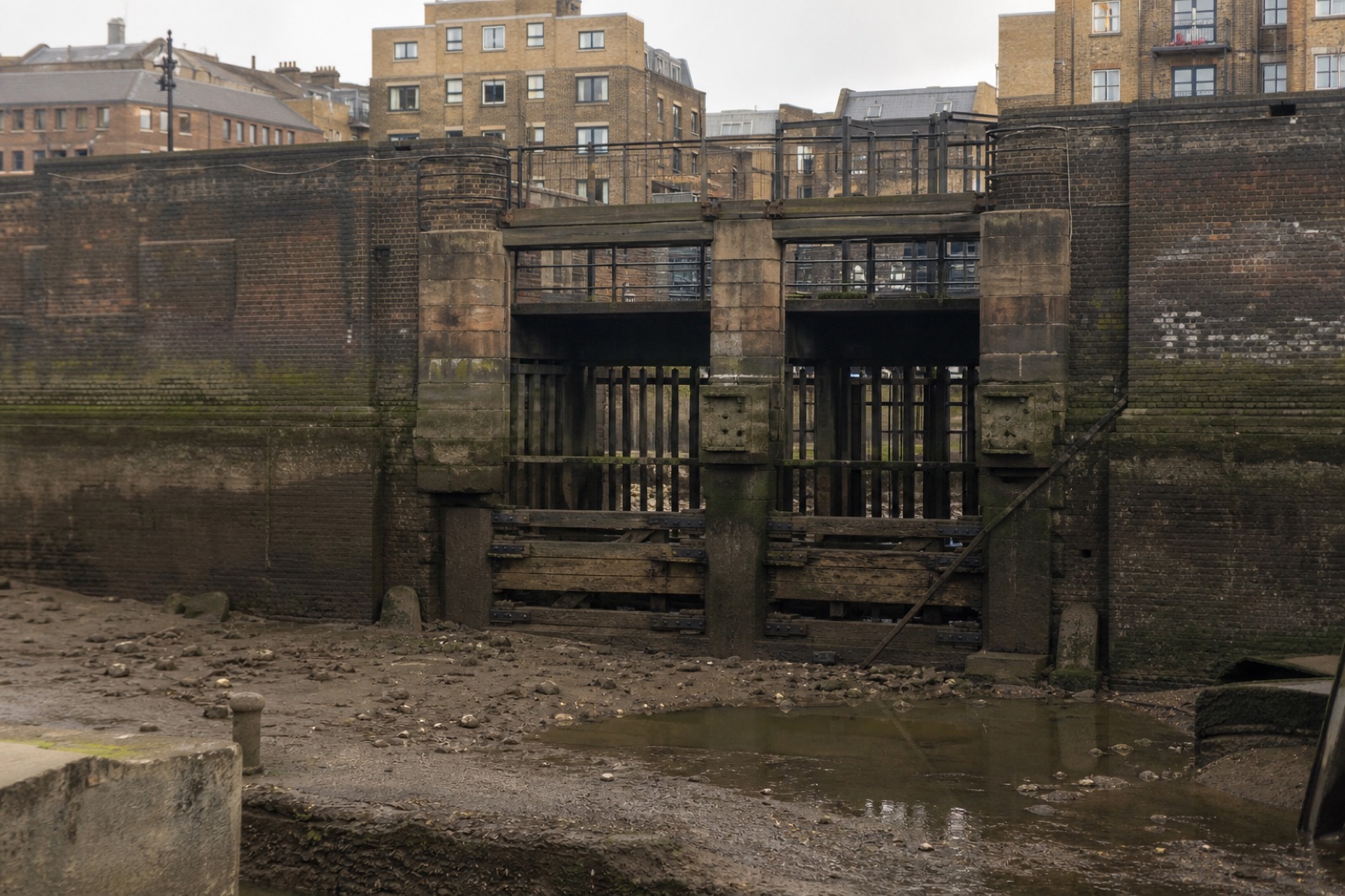
Bazalgette's system, built after the 1858 Thames, gave the city tunnels worth maintaining and a workforce employed to flush them. The tosher had been an illegal scavenger in the old sewers.
The mudlark and the gong farmer belong to the same unfinished city: a river and a cesspit used as a dump, then engineered.
Exhibits tied to this life
3
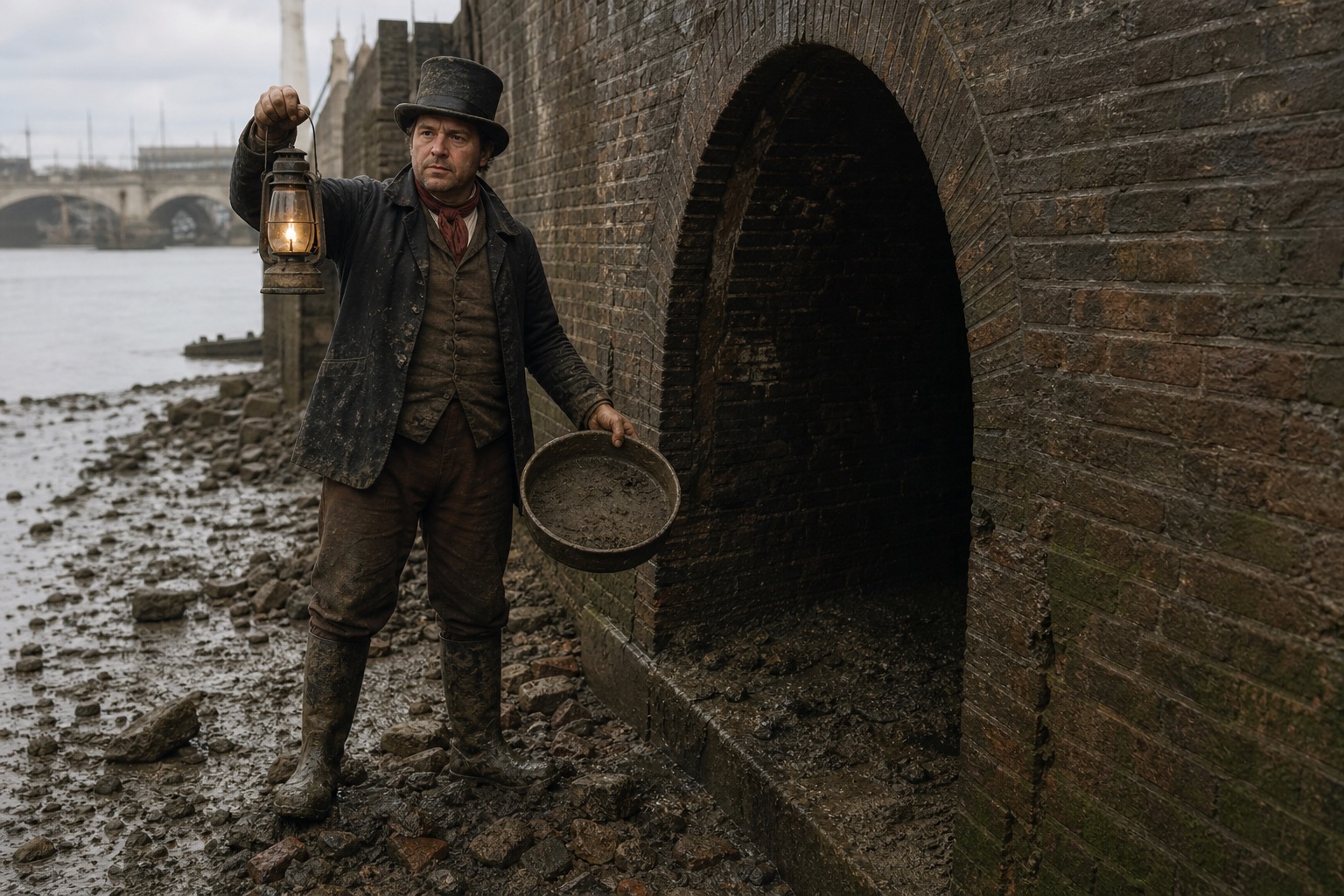 Past · Victorian EraTosherA tosher scavenged the older sewers of London for coins, metal, and other objects that had washed in from the streets. Henry Mayhew recorded the men in London Labour and the London Poor as sewer-hunters who entered the brick tunnels at low tide, usually in a small gang, with a lantern and a bag. They raked the invert, the curved floor where heavy objects settled, and sold what they brought out to dealers. The work was illegal. The sewers belonged to the commissioners, and a tosher was a trespasser, not a parish employee. Tosh was the scrap itself. The word names both the find and the man.
The workplace was sewage. That is stated here because it was the fact of the job, not as a joke and not as a shudder for the reader. The men Mayhew interviewed described a calculated round: in on the ebb, out before the water returned, avoiding the flushers and the foremen who would turn them away. Joseph Bazalgette's intercepting sewers for the Metropolitan Board of Works, begun in 1859 and built through the 1860s and 1870s, replaced the old creek outlets these gangs used. Employed flushers maintained the new system. Freelance toshing did not survive that rebuilding.
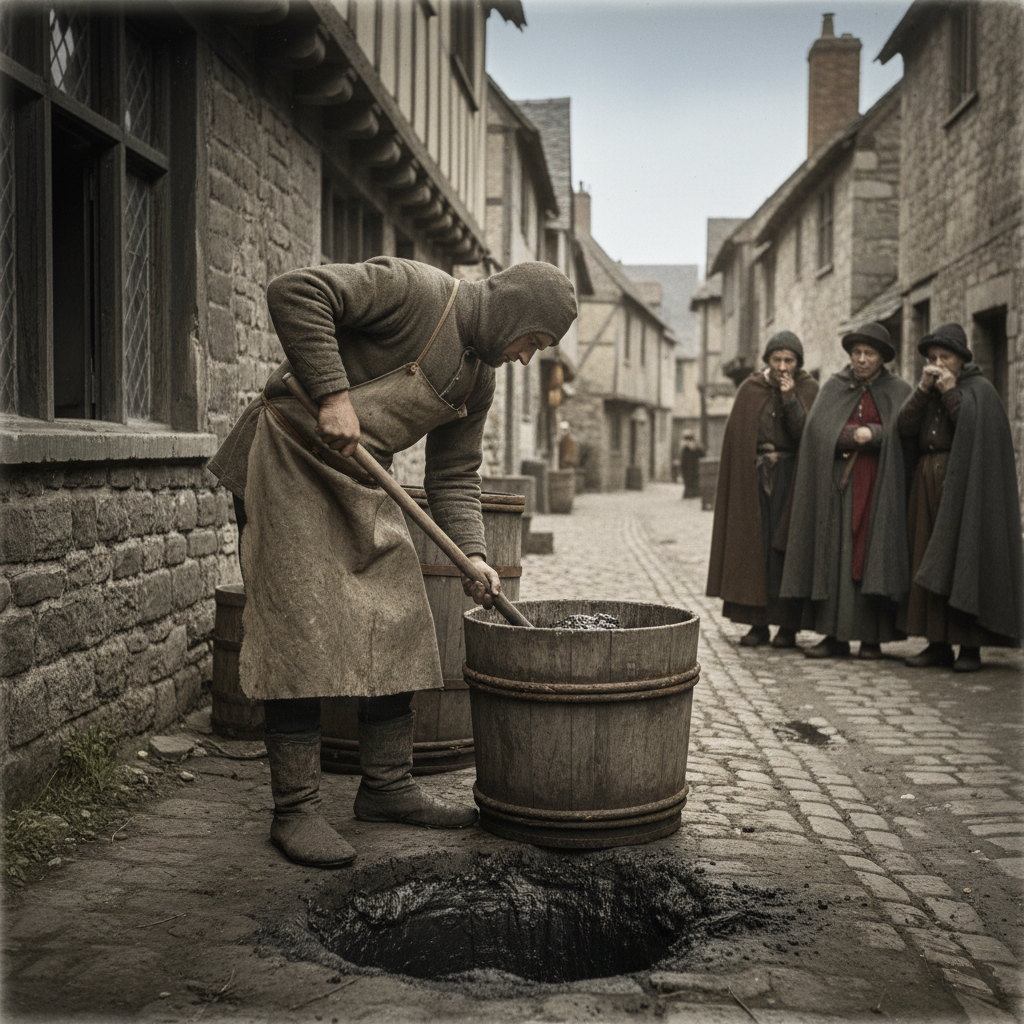 Past · Medieval PeriodGong FarmerThe gong farmer was a crucial yet often overlooked figure in medieval society, responsible for the removal of human waste from cesspits and privies. Operating primarily in urban areas, these workers played an essential role in maintaining public health and sanitation during a time when hygiene practices were rudimentary at best. The term 'gong' is derived from the Old English word for excrement, and the job itself was often considered one of the lowest on the social ladder, leading to a significant stigma attached to it. Despite the unpleasant nature of their work, gong farmers were vital in preventing the spread of disease in densely populated towns and cities, where waste management was a pressing concern.
Gong farmers typically worked at night, using the cover of darkness to carry out their tasks with minimal public exposure. They would dig out the contents of cesspits, often using rudimentary tools, and transport the waste to designated dumping grounds outside the city. This labor was not only physically demanding but also fraught with health risks, as workers were frequently exposed to harmful pathogens. The job required a strong constitution and a willingness to endure unpleasant odors and unsanitary conditions. Despite the challenges, gong farmers were compensated for their work, albeit at a lower wage than many other laborers, reflecting their marginalized status in society.
 Past · Victorian EraMudlarkThe term 'mudlark' refers to individuals, often children or the impoverished, who scavenged the banks of rivers, particularly the River Thames in London, during the Victorian Era. These individuals would sift through the mud and debris left behind by the receding tide, searching for anything of value that could be sold or repurposed. The job was born out of necessity, as many families faced extreme poverty and relied on the meager earnings from scavenging to survive. Mudlarks would find items such as old coins, jewelry, pottery, and even discarded household goods, which they could sell to local traders or at markets. The work was physically demanding and often dangerous, as the muddy banks could be treacherous, and the waters of the Thames were known for their strong currents and pollution. Despite the harsh conditions, mudlarks played a crucial role in the urban economy, contributing to the recycling of materials long before the concept became mainstream.