
Automation Age
Urban Drone Delivery Coordinator
A speculative career prediction for Automation Age based on technological trends and societal evolution.
Media Gallery
About the Urban Drone Delivery Coordinator Career
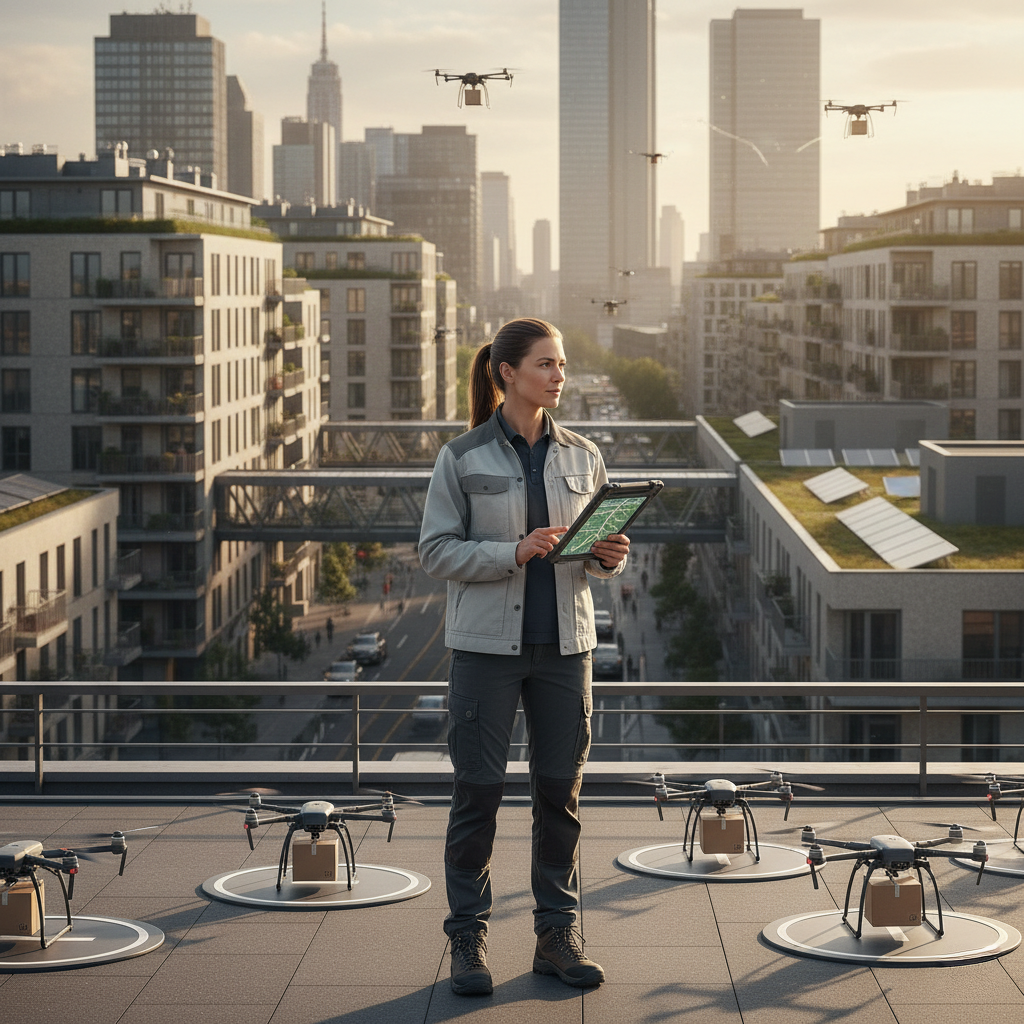
In the bustling cities of the Automation Age, where technology seamlessly integrates into daily life, the role of the Urban Drone Delivery Coordinator emerges as a vital link in the logistics chain. This innovative position is responsible for overseeing the deployment and management of drone delivery systems that transport goods swiftly and efficiently across urban landscapes. As cities become increasingly congested and the demand for rapid delivery services escalates, the Urban Drone Delivery Coordinator ensures that these aerial vehicles operate safely, adhere to regulations, and meet the expectations of consumers.
The coordinator's responsibilities extend beyond mere logistics; they are also tasked with optimizing delivery routes, managing drone fleets, and coordinating with local authorities to ensure compliance with airspace regulations. They utilize advanced software and AI algorithms to analyze traffic patterns, weather conditions, and delivery demands, making real-time adjustments to enhance efficiency. In this role, the coordinator acts as a bridge between technology and community, ensuring that drone deliveries are not only effective but also considerate of urban environments and public safety.
As cities evolve into smart ecosystems, the Urban Drone Delivery Coordinator plays a crucial role in shaping the future of urban mobility, contributing to a more connected and efficient society.
Day in the Life of an Urban Drone Delivery Coordinator
Morning: Fleet Management and Planning
The day begins early, with the Urban Drone Delivery Coordinator arriving at the operations center, a hub filled with screens displaying real-time data from the drone fleet. The coordinator reviews the previous day's performance metrics, analyzing delivery times, customer feedback, and any incidents that occurred. After a quick team briefing, they dive into planning the day's operations, utilizing AI-driven software to optimize delivery routes based on current traffic conditions and weather forecasts.
Mid-Morning: Coordination with Local Authorities
Next, the coordinator heads to a meeting with city officials and regulatory bodies. Here, they discuss airspace regulations, potential no-fly zones, and community concerns regarding noise and safety. The coordinator advocates for the drone delivery program, presenting data on its benefits, such as reduced traffic congestion and lower carbon emissions. This collaboration is essential for ensuring that drone operations align with urban planning initiatives.
Afternoon: Monitoring Deliveries
Back at the operations center, the coordinator monitors live drone flights through a sophisticated dashboard. They track each drone's location, ensuring that deliveries are on schedule and addressing any issues that arise, such as unexpected weather changes or technical malfunctions. Communication with drone pilots is constant, as they provide updates and receive instructions on rerouting if necessary.
Late Afternoon: Community Engagement
As the day winds down, the coordinator participates in a community outreach program, engaging with residents to educate them about the benefits of drone deliveries. They address concerns about privacy, noise, and safety, fostering a positive relationship between the drone service and the community. This proactive approach helps build trust and acceptance of the technology.
Evening: Data Analysis and Reporting
The day concludes with data analysis, where the coordinator reviews performance reports and customer satisfaction surveys. They prepare a summary for the executive team, highlighting successes and areas for improvement. This data-driven approach is crucial for refining operations and enhancing the overall delivery experience.
Related Exhibits
Circular Economy Strategist
In the Climate Adaptation Era, the role of a Circular Economy Strategist emerges as a pivotal force in reshaping industries and communities towards sustainability. This innovative profession is dedicated to designing and implementing systems that minimize waste, maximize resource efficiency, and promote the continual use of materials. Circular Economy Strategists work at the intersection of environmental science, economics, and social responsibility, crafting strategies that not only benefit businesses but also contribute to the health of our planet. They are the architects of a new economic model that prioritizes regeneration over depletion, ensuring that products are designed for longevity, reuse, and recycling. As advocates for sustainable practices, they engage with stakeholders across various sectors, from manufacturing to retail, to foster a culture of sustainability that permeates every level of the supply chain.
Deepfake Investigator
In an era where artificial intelligence has advanced to the point of creating hyper-realistic digital forgeries, the role of the Deepfake Investigator emerges as a crucial guardian of truth. These specialists are tasked with identifying, analyzing, and mitigating the impact of deepfake technology, which can manipulate video and audio content to create convincing yet false narratives. As misinformation proliferates, the Deepfake Investigator stands at the forefront of digital forensics, employing cutting-edge tools and techniques to discern reality from fabrication. Their work is not only technical but also deeply intertwined with the ethical implications of trust, privacy, and the very nature of truth in the digital age.
Explore More Exhibits
Discover the full collection of past and future professions in The Jobs Museum.