
AI Revolution
AI-Powered Eldercare Companion Designer
A speculative career prediction for AI Revolution based on technological trends and societal evolution.
Media Gallery
About the AI-Powered Eldercare Companion Designer Career
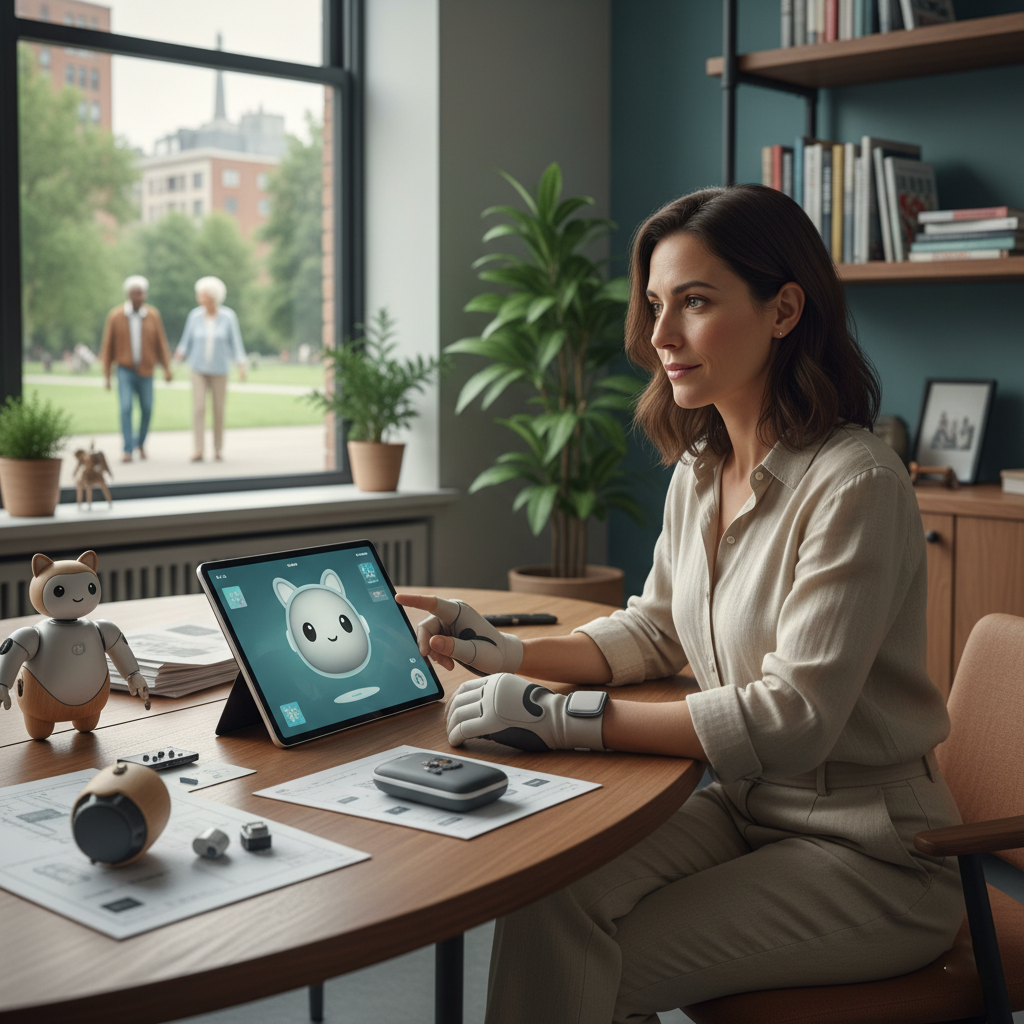
In the not-so-distant future, as the global population ages and the demand for personalized care increases, the role of the AI-Powered Eldercare Companion Designer emerges as a vital profession. This innovative job combines the fields of artificial intelligence, healthcare, and human-centered design to create intelligent companions that assist the elderly in their daily lives. These companions, equipped with advanced AI algorithms, are designed to provide emotional support, monitor health conditions, and facilitate social interactions, all while adapting to the unique needs and preferences of each individual. The designer's role is not only to develop the technology but also to ensure that these companions foster meaningful connections, enhance quality of life, and promote independence among seniors. As society grapples with the challenges of an aging population, this profession stands at the intersection of compassion and technology, paving the way for a more inclusive future.
Day in the Life of an AI-Powered Eldercare Companion Designer
Morning: Ideation and Collaboration
The day begins early, with the designer arriving at a collaborative workspace filled with bright colors and interactive displays. After a quick coffee, they join a morning meeting with healthcare professionals, gerontologists, and software engineers. Together, they brainstorm ideas for new features that could enhance the emotional intelligence of their AI companions. The designer takes notes on user feedback from recent trials, focusing on how to improve the companion's ability to recognize and respond to emotional cues.
Midday: Prototyping and Testing
After lunch, the designer heads to the prototyping lab, where they work on the latest version of the AI companion. Using advanced simulation software, they test various scenarios to see how the AI responds to different emotional states, such as loneliness or anxiety. They adjust algorithms to improve the companion's conversational abilities, ensuring it can engage users in meaningful dialogue. The designer also collaborates with UX/UI specialists to refine the companion's interface, making it intuitive for elderly users.
Afternoon: User Engagement and Feedback
In the afternoon, the designer visits a local senior living community to observe the AI companions in action. They interact with residents, gathering insights on how the companions are being used and what improvements can be made. This hands-on experience is crucial, as it allows the designer to empathize with the users and understand their needs on a deeper level. They take notes on the emotional responses of the seniors, noting how the companions impact their daily lives.
Evening: Reflection and Future Planning
As the day winds down, the designer reflects on the feedback received and begins drafting a report on potential enhancements. They also spend time researching emerging technologies in AI and eldercare, considering how to integrate these advancements into future designs. The day ends with a sense of fulfillment, knowing that their work contributes to a more compassionate and supportive environment for the elderly.
Related Exhibits
Urban Drone Delivery Coordinator
In the bustling cities of the Automation Age, where technology seamlessly integrates into daily life, the role of the Urban Drone Delivery Coordinator emerges as a vital link in the logistics chain. This innovative position is responsible for overseeing the deployment and management of drone delivery systems that transport goods swiftly and efficiently across urban landscapes. As cities become increasingly congested and the demand for rapid delivery services escalates, the Urban Drone Delivery Coordinator ensures that these aerial vehicles operate safely, adhere to regulations, and meet the expectations of consumers. The coordinator's responsibilities extend beyond mere logistics; they are also tasked with optimizing delivery routes, managing drone fleets, and coordinating with local authorities to ensure compliance with airspace regulations. They utilize advanced software and AI algorithms to analyze traffic patterns, weather conditions, and delivery demands, making real-time adjustments to enhance efficiency. In this role, the coordinator acts as a bridge between technology and community, ensuring that drone deliveries are not only effective but also considerate of urban environments and public safety. As cities evolve into smart ecosystems, the Urban Drone Delivery Coordinator plays a crucial role in shaping the future of urban mobility, contributing to a more connected and efficient society.
Virtual Fashion Designer
In the not-so-distant future, the role of the Virtual Fashion Designer emerges as a pivotal force in the fashion industry, blending creativity with cutting-edge technology. As the world becomes increasingly digitized, the demand for virtual clothing—garments designed for avatars in virtual environments, augmented reality, and social media platforms—grows exponentially. Virtual Fashion Designers harness advanced software, artificial intelligence, and 3D modeling tools to create stunning, immersive clothing experiences that transcend the limitations of physical fabrics. They work closely with brands, influencers, and consumers to craft unique digital wardrobes that reflect personal style and identity in the virtual realm. This role not only redefines fashion aesthetics but also challenges traditional notions of sustainability, as virtual garments eliminate the environmental impact associated with physical production.
Explore More Exhibits
Discover the full collection of past and future professions in The Jobs Museum.