
Cybernetic Age
Neuro-Interface Technician
A speculative career prediction for Cybernetic Age based on technological trends and societal evolution.
Media Gallery
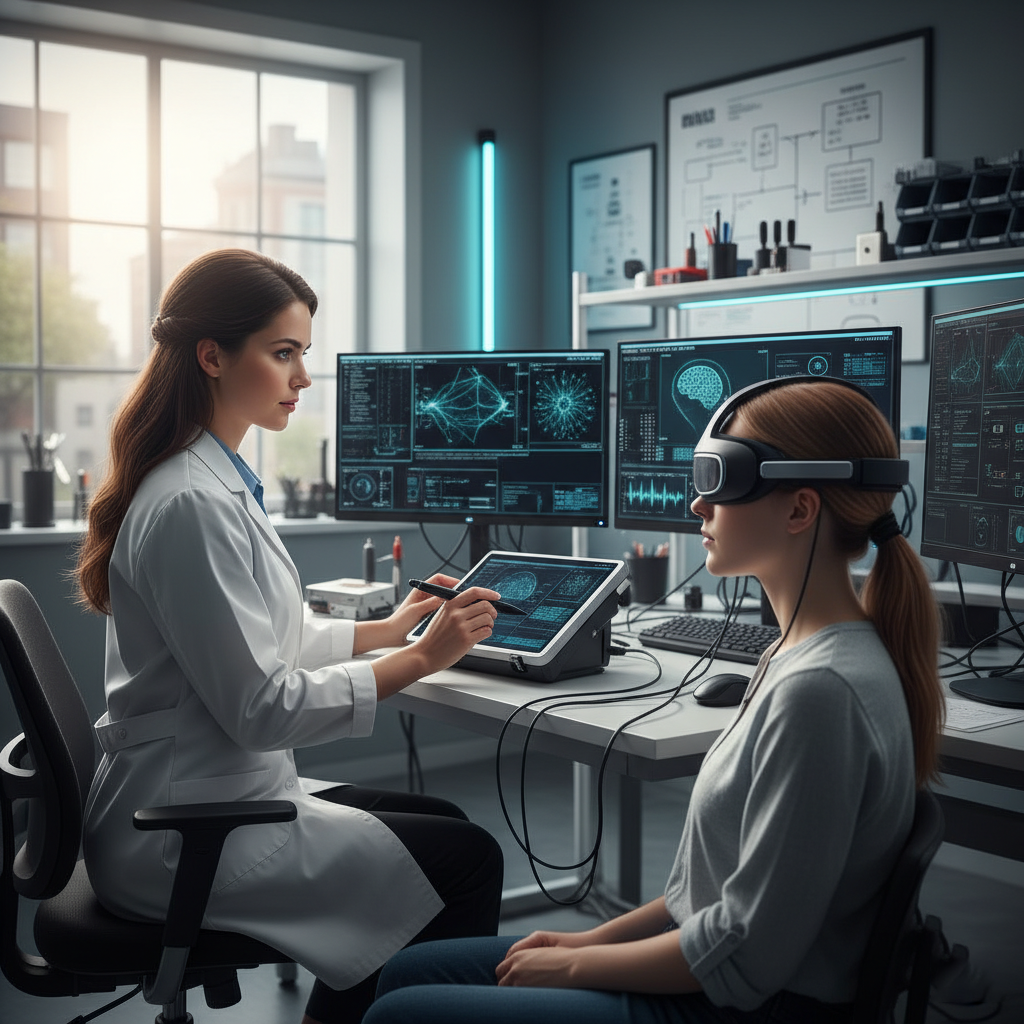
About the Neuro-Interface Technician Career
In the Cybernetic Age, where the boundaries between human cognition and machine intelligence blur, the role of the Neuro-Interface Technician emerges as a pivotal occupation. These skilled professionals are responsible for the installation, maintenance, and troubleshooting of advanced neuro-interface systems that connect human brains to digital networks. As society increasingly relies on these interfaces for enhanced communication, cognitive augmentation, and even virtual reality experiences, Neuro-Interface Technicians become essential in ensuring that these systems function seamlessly and safely. They work at the intersection of neuroscience, engineering, and ethics, navigating the complexities of human-machine interaction while prioritizing user safety and mental well-being.
Day in the Life of a Neuro-Interface Technician
Morning: Diagnostics and Maintenance
The day begins early, with the Neuro-Interface Technician arriving at a state-of-the-art facility equipped with the latest neuro-technological tools. After a quick briefing with the team, they dive into diagnostics, checking the functionality of neuro-interfaces installed in clients' homes and workplaces. Using specialized software, they assess the performance of these systems, ensuring that the neural connections are stable and that users are experiencing optimal cognitive enhancements.
Midday: Client Consultations
By midday, the technician meets with clients who have recently undergone neuro-interface installations. They conduct thorough consultations, discussing any issues the clients may have encountered and providing guidance on how to maximize the benefits of their interfaces. This involves educating clients on the ethical use of their enhancements, addressing concerns about privacy, and ensuring they understand the implications of their new capabilities.
Afternoon: Research and Development
In the afternoon, the technician collaborates with neuroscientists and software engineers to develop new features for neuro-interfaces. This could involve brainstorming sessions to enhance user experience or troubleshooting complex issues that arise from the integration of AI with human cognition. They may also participate in workshops to stay updated on the latest advancements in neurotechnology and ethical standards.
Evening: Community Outreach
As the day winds down, the technician engages in community outreach programs, educating the public about the benefits and risks of neuro-interfaces. They lead discussions on ethical considerations, such as consent and the potential for cognitive inequality, ensuring that the community is informed and empowered to make decisions about their neuro-technological futures.
Related Exhibits
Robot Pyschologist
In the not-so-distant future, as artificial intelligence continues to evolve and integrate into daily life, a new profession emerges: the Robot Psychologist. This innovative role is dedicated to understanding, diagnosing, and treating the psychological needs of robots and AI systems, ensuring they function optimally within human environments. As machines become more autonomous and capable of complex interactions, the emotional and cognitive well-being of these entities becomes paramount. The Robot Psychologist will work at the intersection of technology and psychology, employing a blend of therapeutic techniques and advanced programming to foster healthy AI behavior and emotional responses. This role not only addresses the mental health of robots but also enhances human-robot relationships, paving the way for a harmonious coexistence in a world increasingly populated by intelligent machines.
Climate Adaptation Specialist
As the world grapples with the profound impacts of climate change, the role of the Climate Adaptation Specialist emerges as a beacon of hope and innovation. These specialists are tasked with developing and implementing strategies that help communities, ecosystems, and economies adapt to the changing climate. They work at the intersection of science, policy, and community engagement, ensuring that vulnerable populations are equipped to face the challenges posed by rising sea levels, extreme weather events, and shifting agricultural patterns. In this role, specialists analyze climate data, assess risks, and collaborate with local governments, NGOs, and businesses to create sustainable solutions. They might design urban green spaces that mitigate flooding, develop policies that promote resilient infrastructure, or lead educational initiatives that empower communities to take proactive measures. The Climate Adaptation Specialist is not just a planner; they are a visionary, crafting a future where humanity can thrive despite the uncertainties of a warming planet.
Explore More Exhibits
Discover the full collection of past and future professions in The Jobs Museum.