
1797–1866
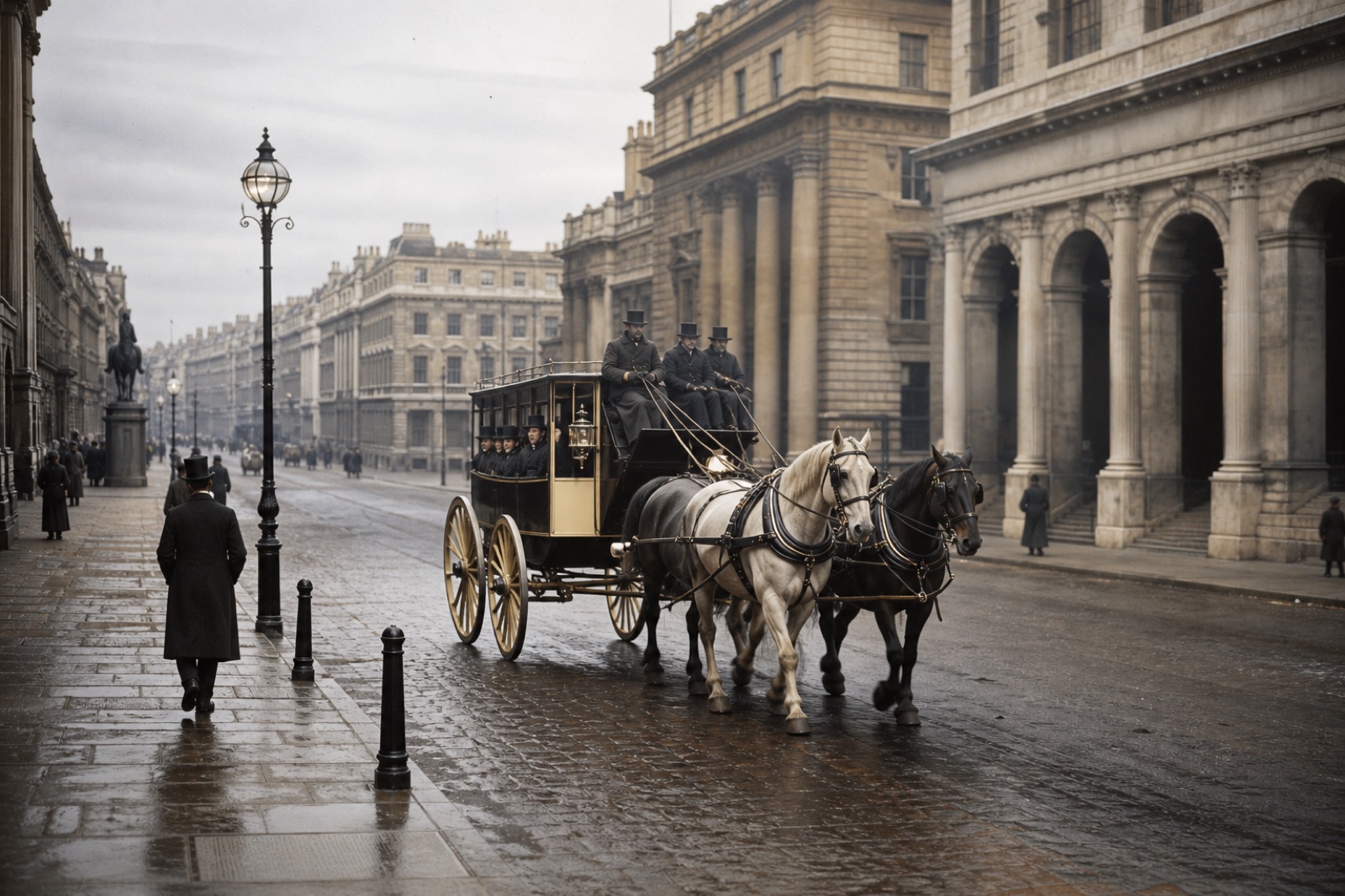
George Shillibeer
The operator who put the first London omnibus on the road in 1829.
Shillibeer's omnibus gave the conductor a step and a fare to collect. The hansom, patented in 1834, is the other new vehicle of the same decades, with a driver and no conductor.
The horse bus is one job. The motor bus, with one person to drive and take fares, is what replaced it.
Exhibits tied to this life
2
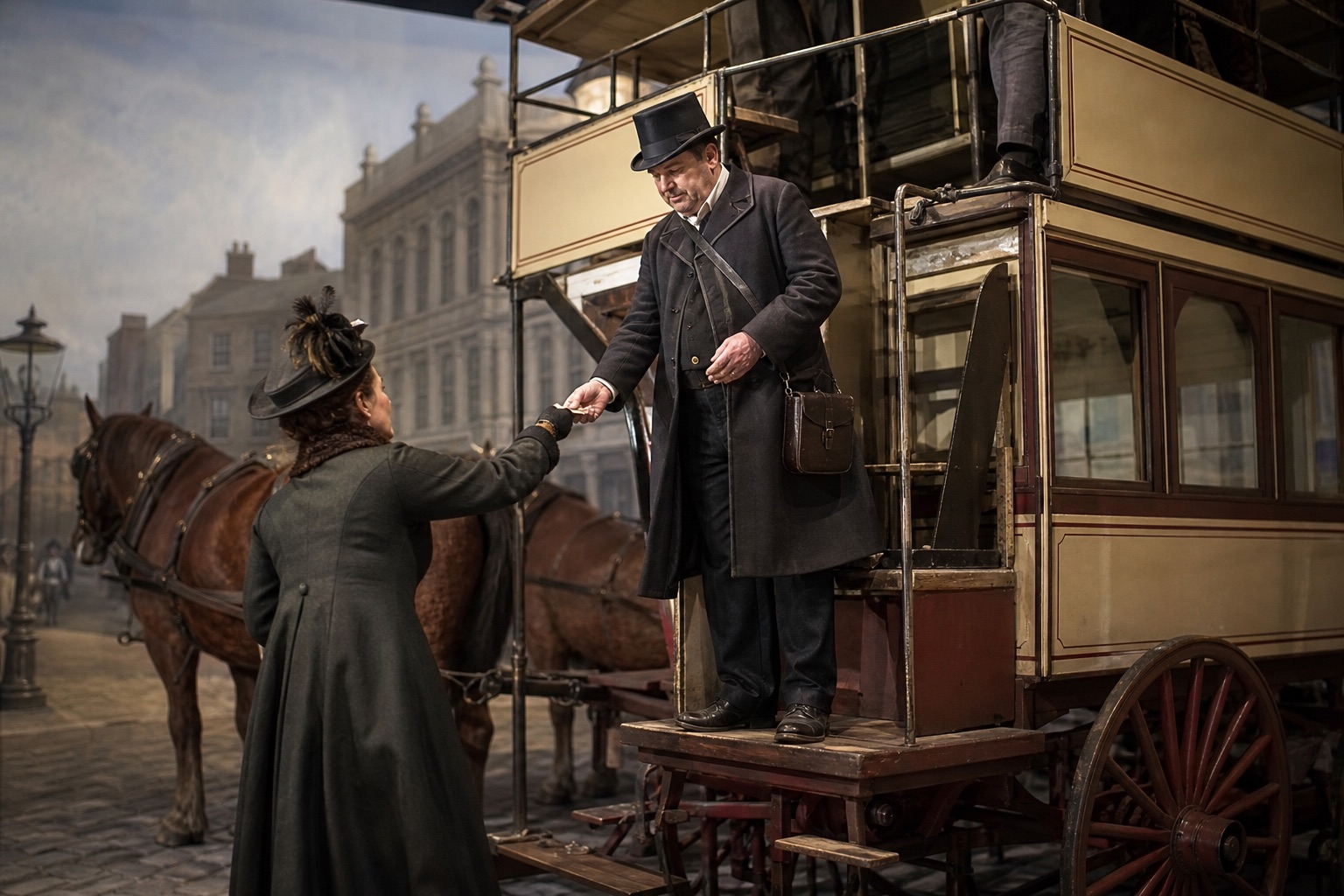 Past · Victorian EraOmnibus ConductorThe omnibus conductor of this exhibit stood on the step of a horse bus and collected the fares. George Shillibeer put such a vehicle on London streets in 1829, running from Paddington to the Bank, and the form spread through the city and into other towns. The conductor rode outside at the rear, announced stops, helped people on and off, and signaled the driver when the step was clear. He was not seated at a motor wheel and not sheltered in a cab. The horse, the rear step, and the coins in his hand are the picture.
Motor buses later took the horses off those routes. One-person operation, much later, ended even the conductor who still stood on a motor step. This record stops with the horse bus and does not follow the job onto petrol or into a modern cab. Victorian cities knew him as a weekly-wage man in a badged coat, exposed to traffic and weather, and answerable for every penny that was supposed to reach the proprietor.
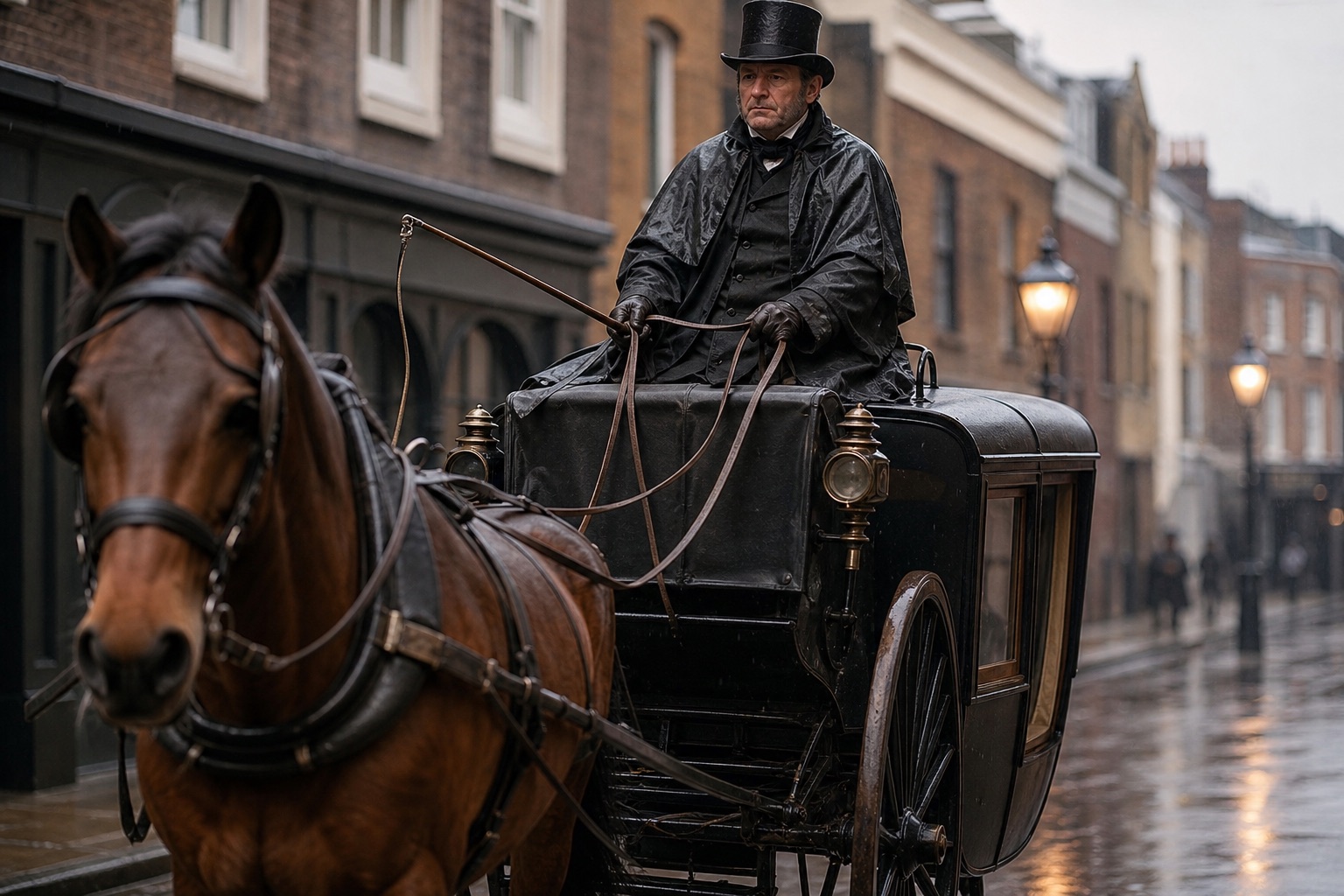 Past · Victorian EraHansom Cab DriverJoseph Hansom patented his low, two-wheeled cab in 1834, and the driver who sat it became one of the distinctive figures of Victorian streets. He did not sit in front, as a coachman did. He sat high at the back, above the roof, and drove with reins that ran over the top of the passenger compartment. The passengers sat low, between the large wheels, with a good view and almost no conversation with the man who was driving them.
The cab was fast, tippy, and cheap enough to threaten the older hackney coach. Drivers hired the vehicle and often the horse from a proprietor and lived on the difference between the legal fare and the day's costs. The trade was loud, competitive, and thickly regulated. A driver who did not know the tariff, or who took the long way, was the villain of a thousand newspaper paragraphs.