
machine
The cash register and the tube
Money that no longer had to be carried to a cashier.
Cash girls and pneumatic-tube attendants in shops. The register let the counter finish the sale. Hospital tubes are a different system and are still in use.
Under this force
2
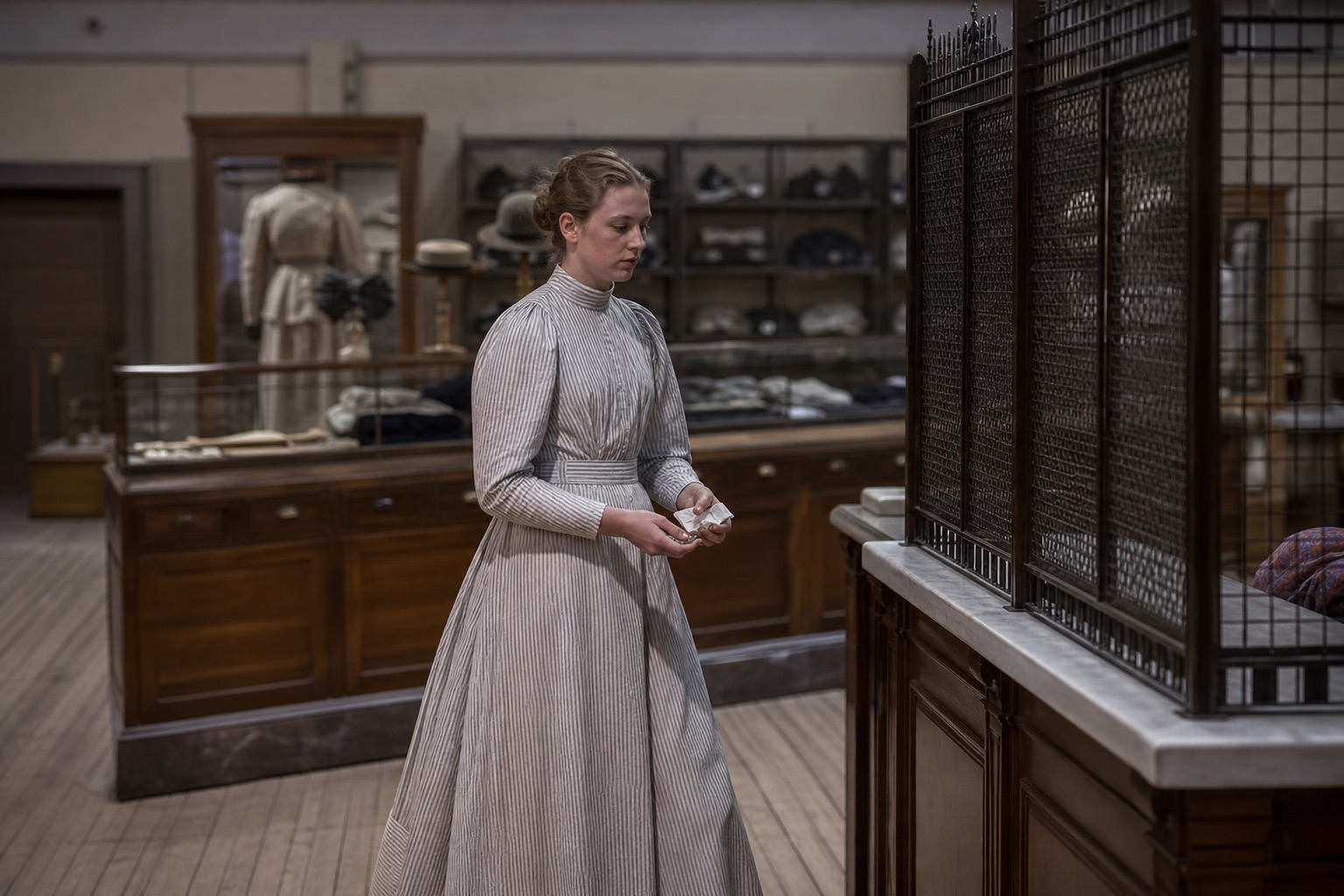
- Past · Victorian EraCash GirlA cash girl was a department-store junior, often a girl or a young woman, who carried the customer's money and the written bill to a cashier and brought the receipt and the change back. The counter itself had no register yet. She waited where the sale was made, took the cash and the slip, walked the floor to the desk, and returned without mixing one purchase with another in a crowded aisle. The work was ordinary and public, a pair of errands repeated for every sale. This record keeps that walk concrete and calm.
The practice belongs to the late nineteenth century in the United States and in Britain, in dry-goods houses and the new department stores. Cable systems such as Lamson's cash railway, pneumatic tubes to a central desk, and the cash register on the counter each removed a reason to send a junior across the floor. She was not the buyer and not the cashier. She was the distance between them, and when that distance was mechanized the walk ended.
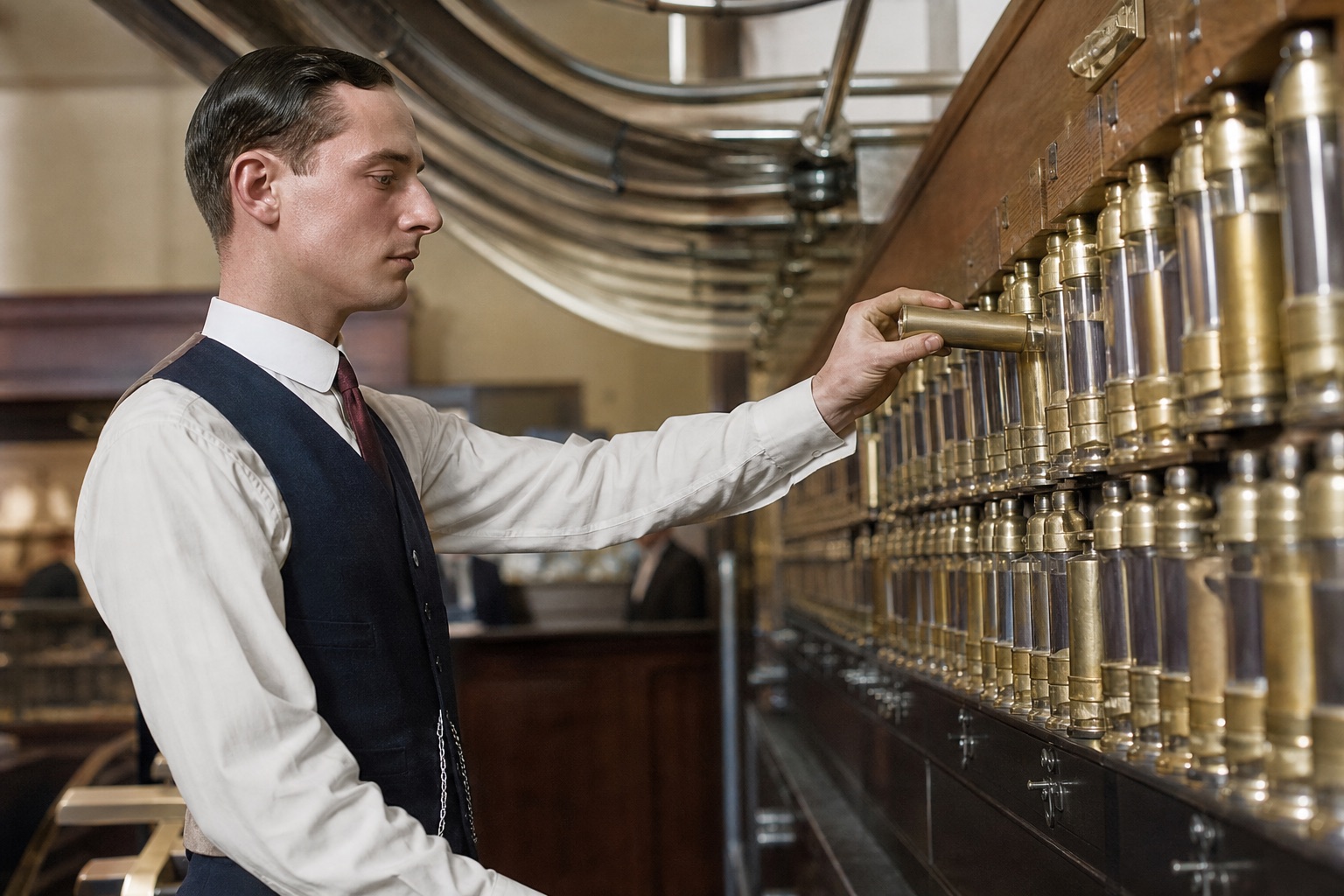 Past · Early Twentieth CenturyPneumatic Tube AttendantA pneumatic-tube attendant staffed the terminals of a store or office system that shot small carriers through tubes of air. In a department store the carrier brought a sale's cash and bill to a central cashier, and the attendant sent the change and the receipt back to the counter. In an office the same rush of air carried papers between floors, and the attendant opened, sorted, and returned them. The work was the mouth of the tube: a lever, a carrier, a drawer. This is the late nineteenth and early twentieth century. It is not the hospital tube, which still runs and is another job entirely.
Retail ended the attendant when the tubes and the central cashier's desk were ripped out and the money stayed on the selling floor. Office lines lingered in a few buildings and are not the center of this label. The earlier cash girl had walked what the carrier now flew; the register on the counter would later make even the flight unnecessary. The person with the pile of carriers is the exhibit.