
machine
The automatic exchange
The cord and the night chair.
Manual switchboards, including the night watch, ended when the exchange completed the call. The operator's skill was real and was designed out.
Under this force
2
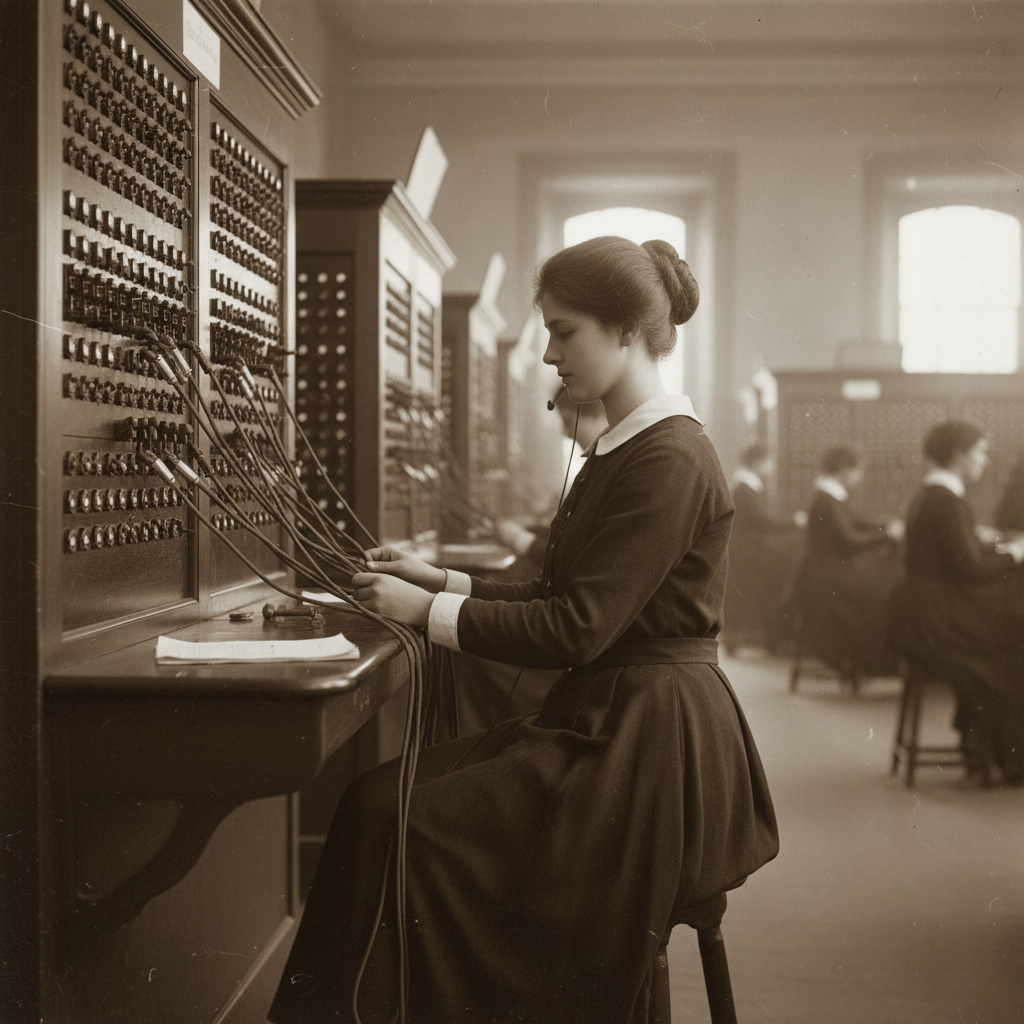
- Past · Industrial RevolutionSwitchboard OperatorIn the bustling world of the late 19th and early 20th centuries, the role of the switchboard operator emerged as a vital cog in the machinery of communication. These skilled individuals were the unsung heroes of the telephone network, connecting calls and facilitating conversations that bridged distances and brought people together. With the advent of the telephone, the need for a human intermediary became apparent, and thus, the switchboard operator took center stage in the realm of telecommunications.
Switchboard operators worked in large, often crowded rooms filled with rows of switchboards, each adorned with a myriad of plugs and wires. Their primary responsibility was to connect callers by manually plugging and unplugging telephone lines into the appropriate jacks on the switchboard. This intricate dance of wires required not only dexterity but also a keen ear for voices and an ability to quickly assess and respond to the needs of callers. Operators were often the first point of contact for individuals seeking to connect with friends, family, or businesses, making their role both crucial and highly regarded.
The job was not without its challenges. Operators had to manage multiple calls simultaneously, often dealing with a cacophony of voices and requests. They were trained to handle emergencies, providing vital assistance during crises, such as connecting calls to hospitals or fire departments. The work environment was typically fast-paced and required a high level of concentration, as even a small mistake could lead to misdirected calls or delays in communication.
As technology advanced, the role of the switchboard operator began to wane. The introduction of automated switching systems in the mid-20th century marked the beginning of the end for this once-essential occupation. These systems could connect calls without human intervention, leading to a decline in demand for operators. By the 1980s, the role had largely disappeared, replaced by automated systems that could handle the volume of calls with greater efficiency and reliability.
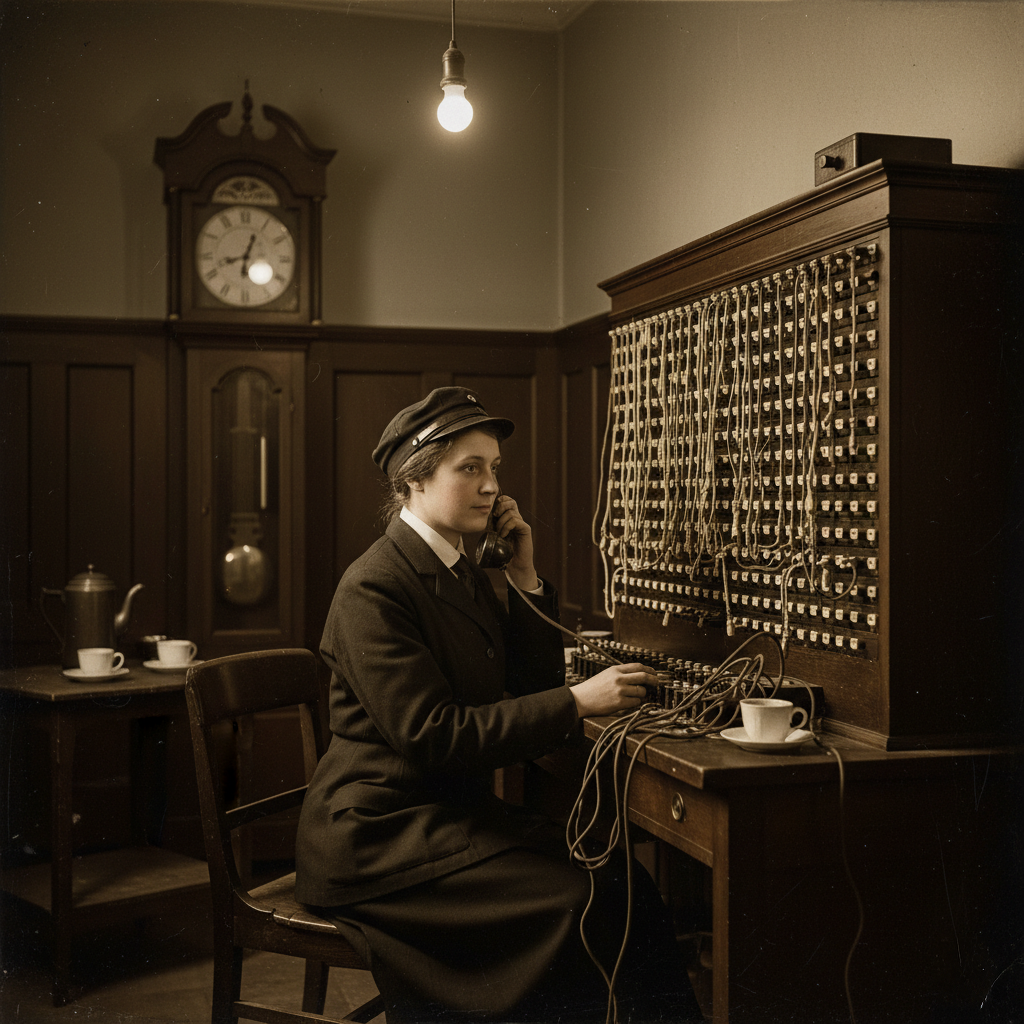 Past · Early 20th CenturySwitchboard Night WatchThe Switchboard Night Watch was a crucial role in the early 20th century, particularly during the rise of telephone communication. As cities expanded and the demand for instant communication grew, telephone switchboards became the backbone of urban connectivity. The Switchboard Night Watch was responsible for overseeing the operation of these switchboards during the night hours, ensuring that calls were connected efficiently and that any issues were promptly addressed. This role required a keen sense of responsibility and a deep understanding of the switchboard's mechanics, as well as the ability to handle emergencies and troubleshoot problems in the dark hours of the night.
Night watch operators worked in dimly lit rooms filled with the hum of electrical equipment and the soft clicks of switches being flipped. They were often the only person on duty, tasked with maintaining the flow of communication for hospitals, police stations, and other essential services that operated around the clock. The job was not only about connecting calls but also about providing a sense of security and reliability to the community, as the night watch was often the first point of contact in emergencies.
As technology advanced, the need for manual switchboard operators diminished. The introduction of automated switching systems in the mid-20th century rendered the role of the Switchboard Night Watch obsolete, as machines could perform the tasks more efficiently and without the need for human oversight.