

machine
Gas and the electric street
A parish lamp replacing a hired torch, and then a lamp replacing the lamplighter.
Linkboys and lamplighters are the pair. Gas did not finish the story. Electricity, clocks, and photocells did.
Under this force
2
- Past · Victorian EraLamplighterIn the dimly lit streets of the Victorian Era, where gas lamps flickered to life at dusk, the lamplighter emerged as a vital figure in urban life. Tasked with the responsibility of illuminating the night, lamplighters were the unsung heroes of the city, ensuring that the streets were safe and navigable after sunset. With a long pole equipped with a flame, they would traverse their designated routes, igniting the gas lamps that lined the thoroughfares, alleyways, and public squares. Each lamp was a small beacon of light, a symbol of progress in an age that was rapidly industrializing and urbanizing.
The lamplighter's work was not merely about lighting lamps; it was a ritual that involved careful attention to detail. They would check each lamp for proper function, ensuring that the gas supply was adequate and that the glass was clean and intact. In addition to lighting the lamps, they were also responsible for extinguishing them at dawn, marking the transition from night to day. This job required a keen sense of time, as the lamplighter had to complete their rounds before the city fully awoke.
As cities grew and the demand for street lighting increased, lamplighters became a common sight, often working in pairs or teams to cover larger areas. Their presence was a reassurance to the public, a reminder that the city was alive even in the darkest hours. However, the lamplighter's role was not without its challenges; they braved the elements, working in rain, snow, and the chill of winter nights, often climbing ladders to reach the higher lamps.
The lamplighter was a figure of community, often known by name and face, fostering a sense of familiarity and safety among the residents. They were also a part of the social fabric, as their rounds often coincided with the evening strolls of townsfolk, creating a shared experience of urban life.
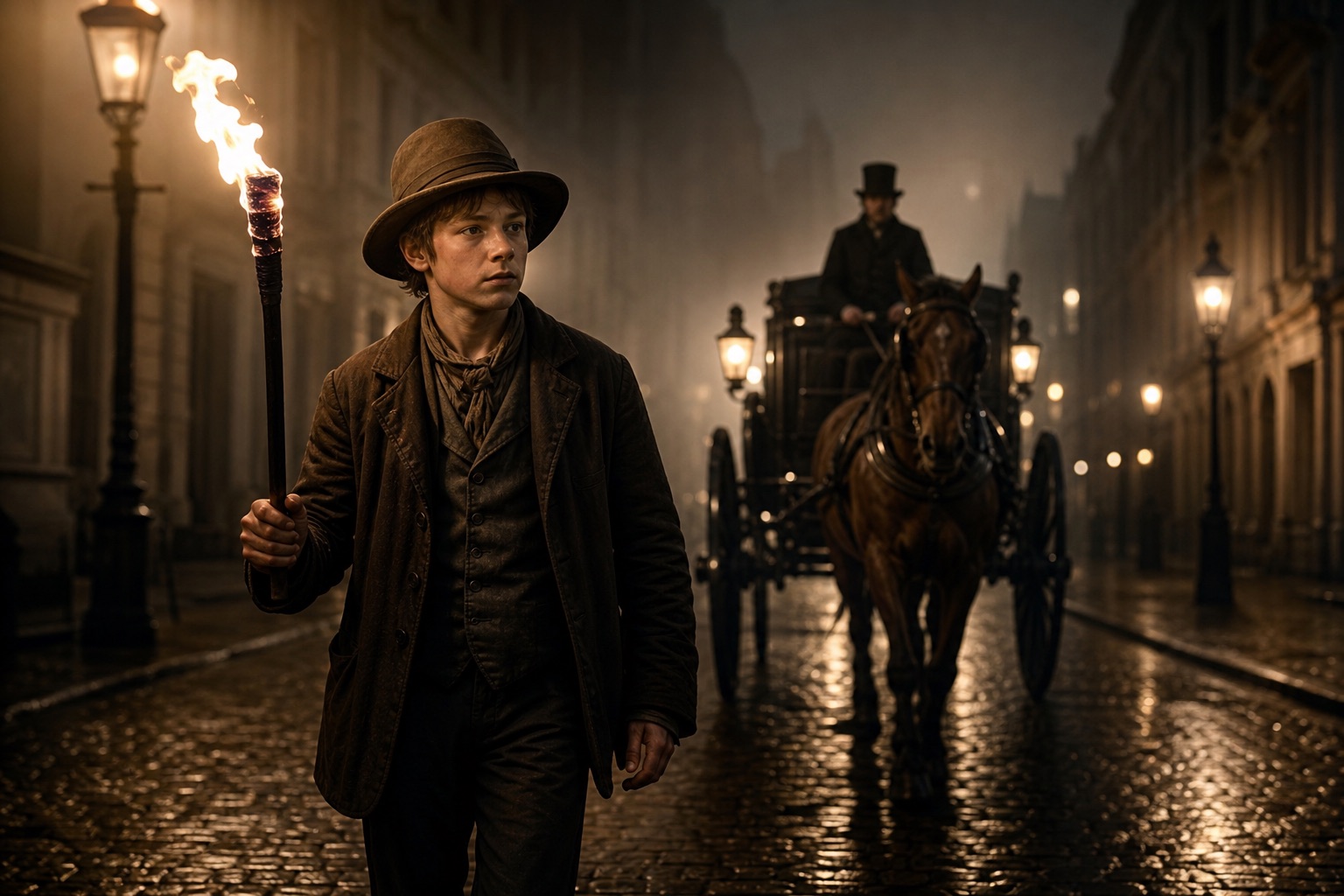 Past · Georgian EraLinkboyA linkboy carried fire through a city that had not yet been given street lamps. In London, from the later seventeenth century into the early nineteenth, anyone who left a playhouse, a tavern, or a private house after dark had to cross streets that were muddy, uneven, and often deliberately dark. The link was a torch of rope, pitch, or resin on a pole. The boy, or sometimes a grown man in the same trade, walked ahead of the fare and sold the light by the journey.
The work sat in a bad reputation as well as a useful one. An honest linkboy was a piece of street infrastructure. A dishonest one could lead a drunk customer into a court where companions were waiting. Parish officers and satirists treated the whole trade as a nuisance, which did not stop theater crowds from shouting for a light when the doors opened. The job lasted as long as the darkness did.