
Company
ActiveMunich Re
Munich · Since 1880
Still independent, and still one of the reinsurers whose models decide which risks can be insured at all.
A later timeline chapter projects a role for this organization. That chapter is a projection. This page is about the institution as it exists, or as it existed.
Munich Re was founded in 1880 by Carl von Thieme to insure the insurers. A primary company can pay one fire. It cannot pay a city of fires. A reinsurer takes a share of many primary companies' risks, and is ruined only if the shares default together.
The work is a model and a contract. Munich Re employs actuaries, geoscientists, and underwriters whose decision about a coastline is, downstream, a decision about whether a house can be mortgaged there. The 2050 chapter names the firm for that reason.
The quiet payroll
There is no shop floor. There are people who read catastrophe models, people who draft the clause that excludes a flood, and people who sit with a primary insurer after the storm and adjust what is owed. The staff is educated and relatively small. The effect on other people's jobs, the builder who can get a permit, the farmer who can insure a crop, is where the employment consequence actually lands.
Still pricing the risk
Munich Re is independent and still among the largest reinsurers. Climate change is already in its models, which is present work, not a 2050 story. The projection is about how large a stewardship workforce becomes when those models withdraw cover. The reinsurer that would force the question is already in Munich.
The work it organized
- Actuary
- Catastrophe modeler
- Underwriter
- Claims specialist
In the exhibits
Jobs associated with this organization.
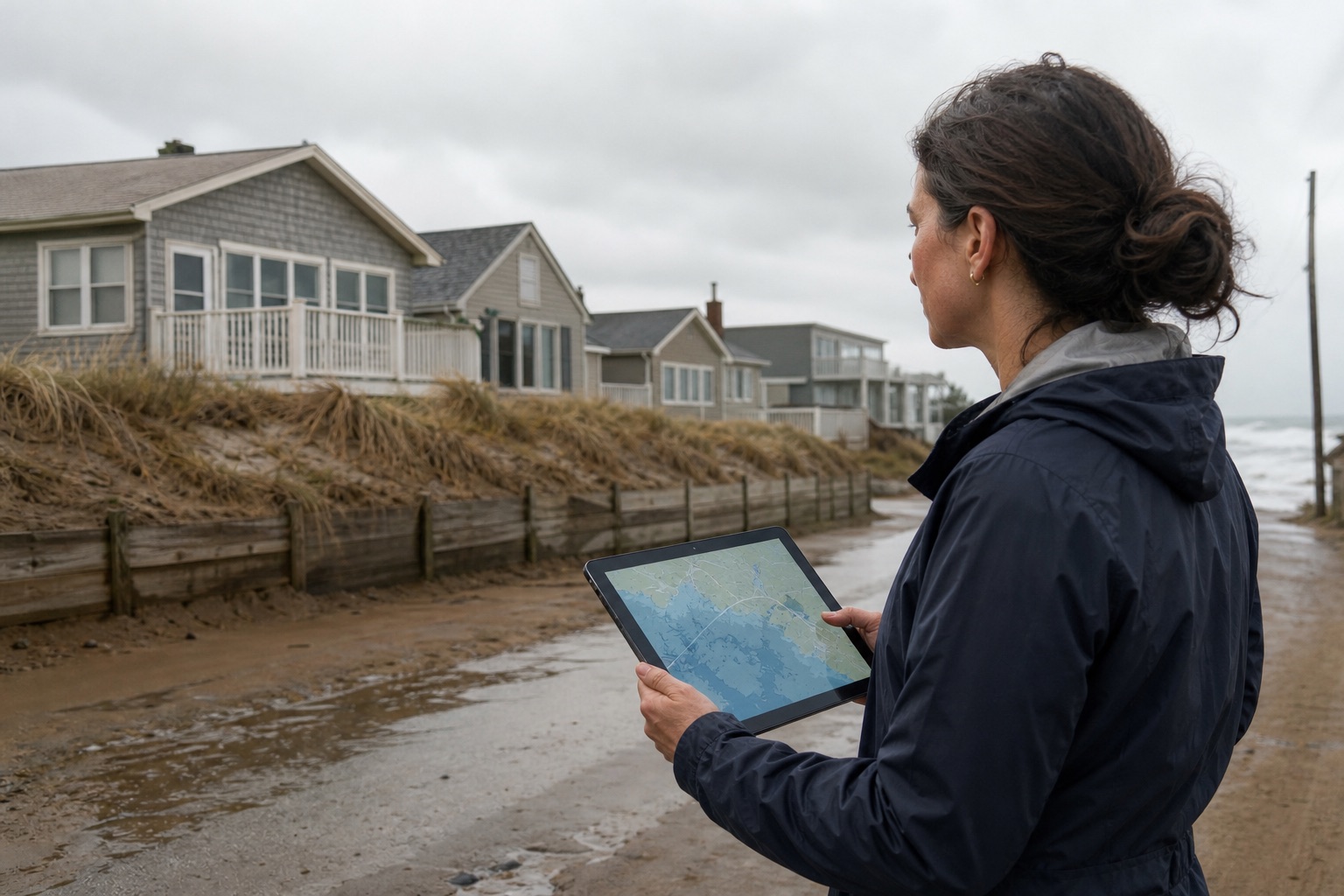 Projected · Climate Adaptation EraManaged Retreat PlannerThe managed-retreat planner works where a shore or a floodplain cannot be held for the life of the people who live there. The tasks are practical and slow: buyout offers, house elevation, and relocation to ground that stays dry, carried out with residents, insurers, and public agencies. A map that moves a line is the easy object. The hard object is a street of owners, renters, heirs, and people who intend to stay in the house they have.
Equity is the part that makes the job real rather than a planning exercise. Buyouts have paid owners and left tenants. Appraisals have come in low in neighborhoods that were already underpriced. Tribal and coastal communities have been asked to move on a grant calendar. The planner's work is to put those facts in the same file as the flood map, and to say who keeps a place, who is paid to leave, and who is merely told to go. Cases already on the shelf include Isle de Jean Charles, the move from Newtok to Mertarvik, and the Oakwood Beach buyouts after Sandy.
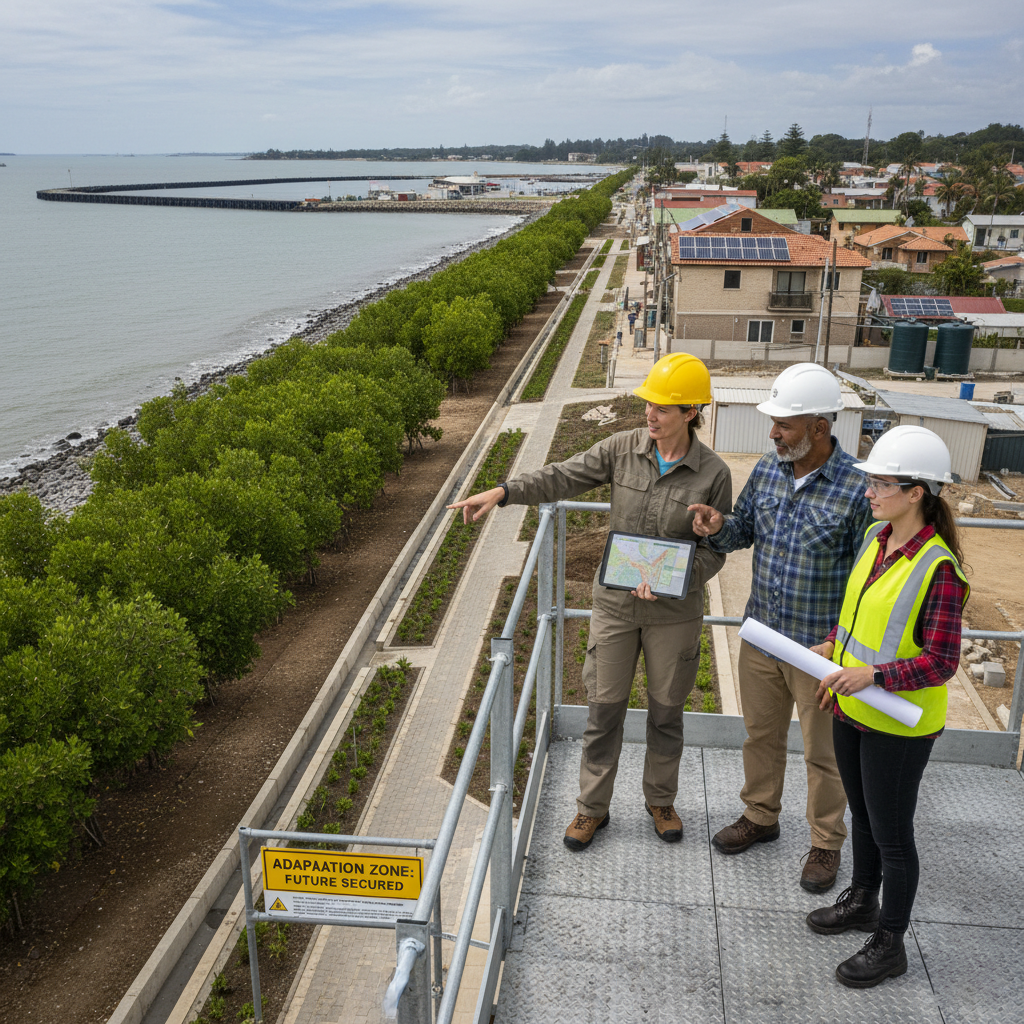 Projected · Climate Adaptation EraClimate Adaptation SpecialistAs the world grapples with the profound impacts of climate change, the role of the Climate Adaptation Specialist emerges as a beacon of hope and innovation. These specialists are tasked with developing and implementing strategies that help communities, ecosystems, and economies adapt to the changing climate. They work at the intersection of science, policy, and community engagement, ensuring that vulnerable populations are equipped to face the challenges posed by rising sea levels, extreme weather events, and shifting agricultural patterns.
In this role, specialists analyze climate data, assess risks, and collaborate with local governments, NGOs, and businesses to create sustainable solutions. They might design urban green spaces that mitigate flooding, develop policies that promote resilient infrastructure, or lead educational initiatives that empower communities to take proactive measures. The Climate Adaptation Specialist is not just a planner; they are a visionary, crafting a future where humanity can thrive despite the uncertainties of a warming planet.