
Company
AbsorbedThe Liverpool and Manchester Railway
Liverpool · 1823 – 1846
Absorbed into the London and North Western Railway in 1846. The line it opened in 1830 is still in use.
The Liverpool and Manchester Railway opened on 15 September 1830, between the port that landed the cotton and the town that spun it. It was not the first railway. It was the first to run steam locomotives on a timetable, for goods and for passengers, and to pay its owners.
George Stephenson and his son Robert built the line and the Rocket, which had won the Rainhill trials the year before. The opening day also killed William Huskisson, a member of Parliament, who stepped onto the track. The accident did not stop the railway. It advertised the speed.
A new payroll beside the track
Drivers, firemen, guards, porters, and clerks at the stations were employed by the company, not by a contractor who came and went. Signalmen followed rules written down because a mistake was fatal. The work was shift work, outdoors, and tied to a clock other industries then copied. Maintenance of the permanent way created a gang that walked the line for a living. None of these jobs existed, in this combination, before the company.
Absorbed into a larger line
The company was amalgamated into the Grand Junction and then, in 1846, into the London and North Western, one of the giants that later nationalization swept up. The 1830 route is still in use. The company that proved the idea lasted sixteen years as itself, which is long enough to invent a workforce and not long enough to become an institution.
The work it organized
- Engine driver
- Fireman
- Signalman
- Station clerk
In the exhibits
Jobs associated with this organization.
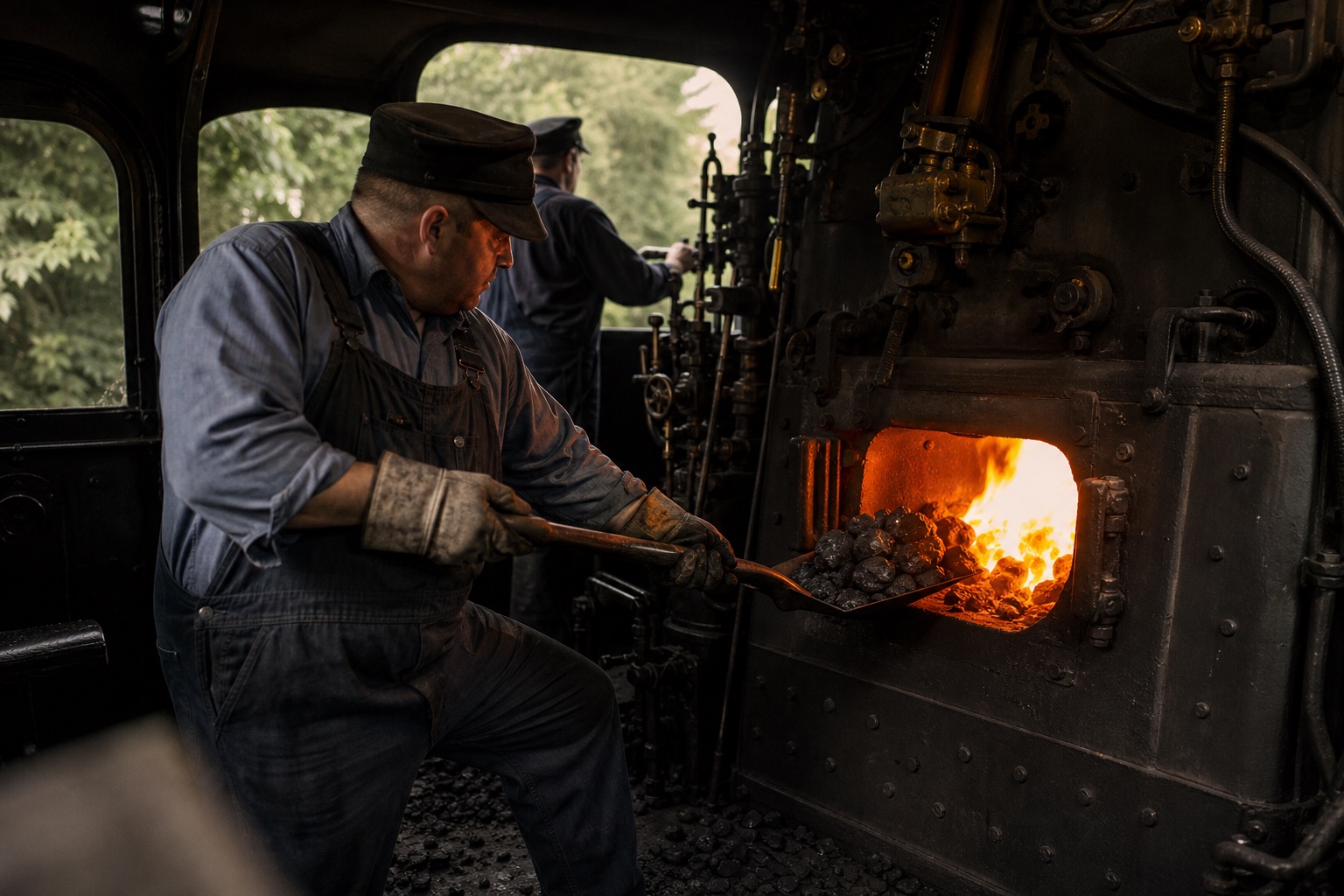 Past · Mid Twentieth CenturyLocomotive FiremanThe locomotive fireman was the second person on a steam engine, the one who fed the fire and watched the boiler while the engineer ran the train. On a coal burner that meant a shovel, a firebox door, and a footplate that punished a lazy fire with falling steam. On an oil burner the feed was a valve and a flame, and the watch on water and pressure remained. The water glass, the injector, and the gauge were his instruments together with the shovel. He was half the engine crew, not a passenger and not a shed cleaner.
This exhibit is that steam fireman. American roads dieselized through the 1940s and 1950s and had largely finished with main-line steam by the early 1960s. British Rail ran its last main-line steam in 1968. Some agreements kept a second person on diesel crews afterward, and that helper did not feed a fire or mind a boiler. The label stops where the fire stops. Yard switchers and branch engines used the same watch on the glass.
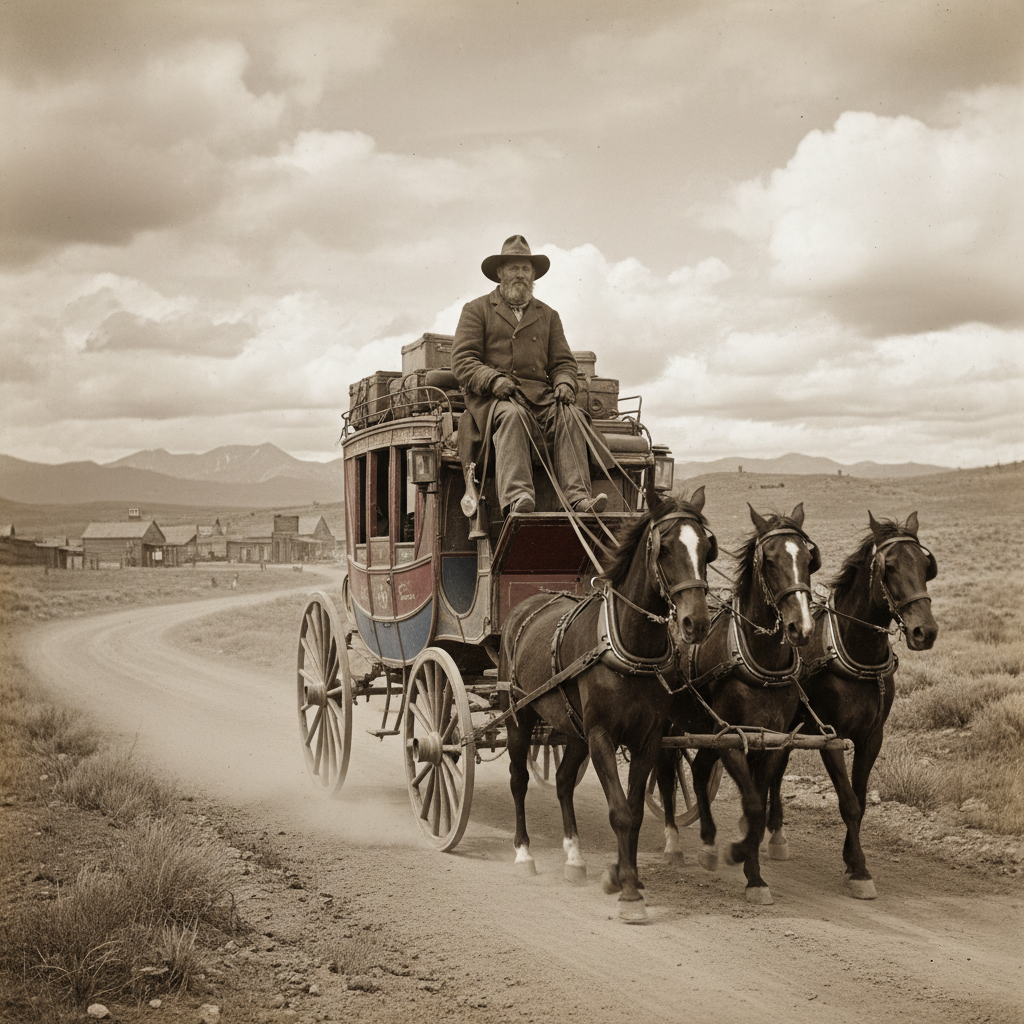 Past · 19th CenturyStagecoach DriverThe stagecoach driver, a vital figure in the 19th century, was responsible for transporting passengers and goods across vast distances in horse-drawn coaches. These drivers navigated rugged terrains, often through treacherous weather conditions, ensuring the safety and comfort of their passengers. The stagecoach itself was a marvel of engineering, designed to carry multiple passengers and their luggage, while the driver skillfully managed a team of horses, often up to six, to pull the heavy vehicle. The role required not only a deep understanding of the horses and the coach but also an intimate knowledge of the routes, including potential hazards such as rough roads, rivers, and bandit-infested areas. Stagecoach drivers were often seen as the lifeline of communication and commerce in the expanding American West, connecting remote settlements with urban centers and facilitating the movement of mail and goods.
On the timeline
Related
- The London and Birmingham RailwayAbsorbed
- The Great Western RailwayDissolved
- The British railway companiesReorganized